
NEW
Font size
 Worksheets
25-26: Ancient Greece Test
Total questions: 40
Worksheet time: 20mins
Greece is surrounded by water on three sides, making it a(n) _________.
continent
archipelago
peninsula
island
__________ and seas made it difficult to travel between Greek communities.
Deserts
Plateaus
Mountains
Lakes
When existing farmland wasn't enough to feed the people of Greece, they turned to:
China
city-states
colonization
cannibalism
Greek colonists had to find an ideal location with good farmland and a natural ________.
river
lake
harbor
bridge
Which of the following was NOT a location that Greece established colonies?
Italy
France
Asia Minor
India
Which of the following was NOT grown by ancient Greek farmers?
grapes
olive trees
nut trees
barley
Which of the following animals did the ancient Greeks NOT keep?
sheep
chickens
goats
cattle
Because each city had its own laws, army, and currency, they became known as:
countries
provinces
nations
city-states
When did the power of the aristocrats increase in an ancient Greek monarchy?
when they collected taxes
during the assembly
times of war
their power never increased
Some laws created by the oligarchs forced the poor to ________ if they couldn't pay their debts.
go to prison
leave the city-state
serve the king's army
sell themselves into slavery
What was a military leader that promised positive change in ancient Greece?
oligarchy
aristocrat
citizen
tyrant
A tyranny is also called a(n) ________.
elected power
constitutional monarchy
direct democracy
dictatorship
Democratic city-states had lawmaking groups called ________.
tyrants
oligarchs
aristocrats
assemblies
Which ancient Greek city-state depended on trade because they couldn't produce enough food?
Athens
Sparta
Which ancient Greek city-state had an ideal location near the sea, with a good harbor?
Athens
Sparta
The Spartan economy relied on _________ and conquests of other people.
trading
education
tourism
farming
Which ancient Greek city-state used iron bars as a form of currency?
Athens
Sparta
In which ancient Greek city-state was book learning and physical training equally important?
Athens
Sparta
In which ancient Greek city-state were sickly infants likely to be abandoned?
Athens
Sparta
Which of the following was NOT a right of women in Sparta?
they could speak to their husband's friends
they could join the army
they could own and control their own property
they could marry a second time
Which of the following could women in ancient Athens do?
become citizens and vote
choose their husband
become a priestess
own property
What did Athens and Sparta do to the Persian ambassadors?
imprisoned them
tortured them
killed them
allowed them to return to Persia
Where did the Persian Empire originate?
northern India
western Spain
central Italy
southern Iran
In the fight against the Persians, did Athens or Sparta have a stronger navy? (navy = battling on the sea)
Athens
Sparta
In the fight against the Persians, did Athens or Sparta have a stronger army? (army = battling on the land)
Athens
Sparta
Where did the Athenians build their magnificent temples?
the agora
the courtyard
the marketplace
the acropolis
Each city-state had a special god or goddess that...
...fought in special wars.
...sang a special song.
...connected to a special king.
...provided special protection.
The Greeks utilized long rows of columns, which provided temples with _____.
protection
security
beauty
balance
Socrates was a famous Athenian philosopher that encouraged his followers...
...to do excessive research.
...to follow their hearts.
...to question everything.
...to win at all costs.
The Olympics were held every ___ years to honor Zeus.
2
4
6
8

What country is this?
Greece
Turkey
Bulgaria
Albania

What country is this?
North Macedonia
Serbia
Greece
Turkey
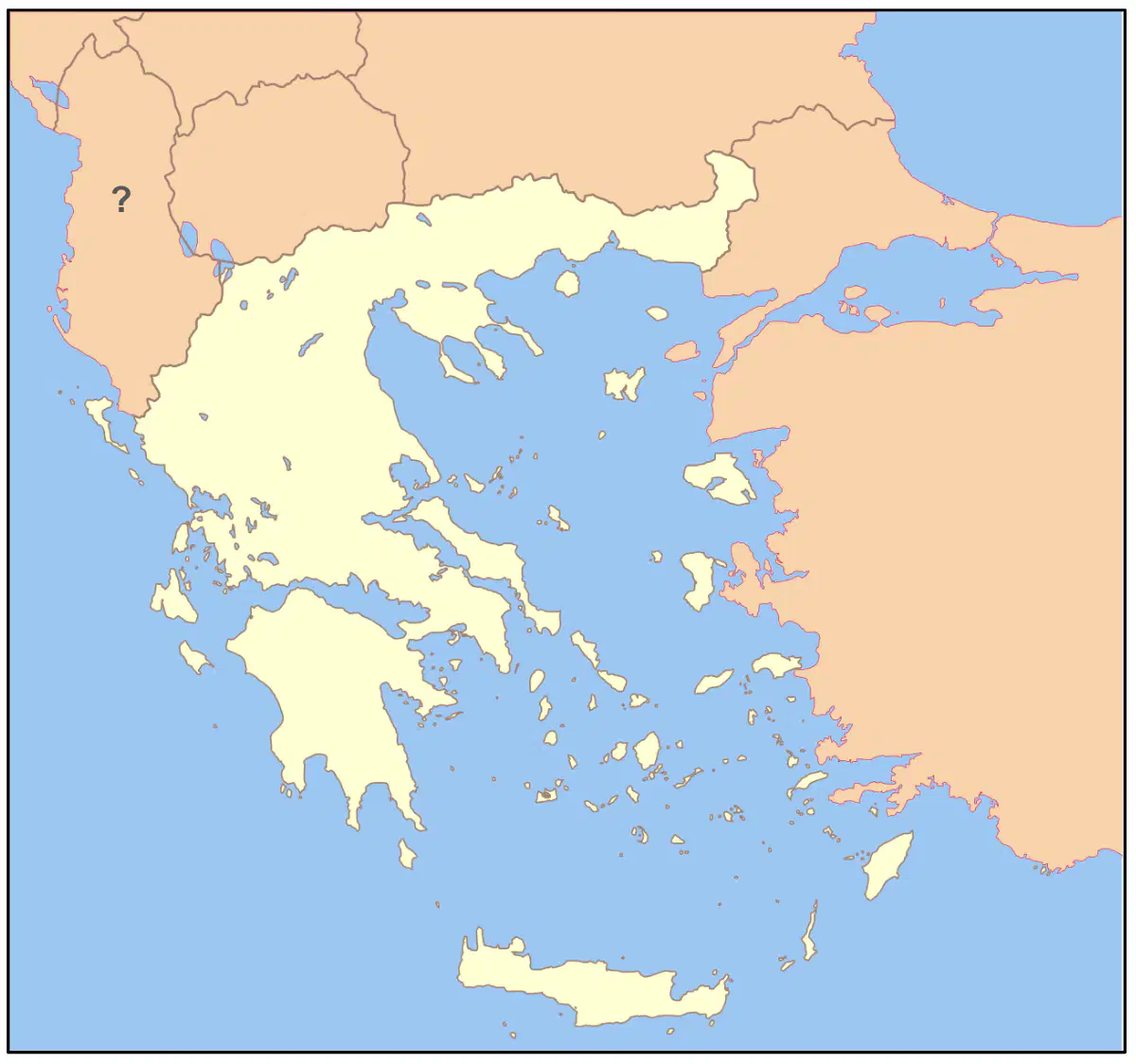
What country is this?
Bulgaria
North Macedonia
Serbia
Albania

What country is this?
Albania
North Macedonia
Bulgaria
Serbia

What country is this?
Bulgaria
Serbia
North Macedonia
Albania

What country is this?
Bulgaria
North Macedonia
Serbia
Albania

What body of water is this?
Black Sea
Mediterranean Sea
Ionian Sea
Aegean Sea

What body of water is this?
Black Sea
Mediterranean Sea
Ionian Sea
Aegean Sea

What body of water is this?
Black Sea
Mediterranean Sea
Ionian Sea
Aegean Sea

What body of water is this?
Black Sea
Mediterranean Sea
Ionian Sea
Aegean Sea

