wayground logo

Free Printable Worksheets

Font size

S
M
L
XL
Worksheets

Quizziz 3

Total questions: 46

Worksheet time: 36mins
Name
Class
Date
1.
Survival of the fittest or when favorable adaptations reproduce faster is called what?
a)
Evolution
b)
Adaptation
c)
Natural selection
d)
Fossilization
2.
Structures with the same parts have different functions; suggests that organisms share a common ancestry
a)
vestigial structures
b)
homologous structures
c)
adaptive radiation
d)
fossil
3.
The diagram shows fossils in different rock layers. Which of these statements about the age of these fossils is most likely correct?
a)
Fossil A and C are the same age
b)
Fossil B is older than fossil C
c)
Fossils A is older than fossil B
d)
Fossil D is older than fossil C
4.

What do we call a change in a species over time?

a)

Adaptation

b)

Evolution

c)

Extinction

d)

Environmental influences

5.
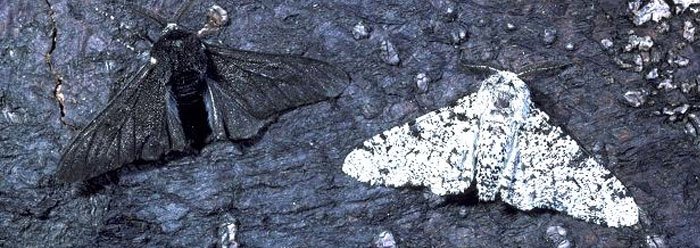
The environment around Manchester, England, changed during the Industrial Revolution.  How did this change affect peppered moths living in the area?
a)
Natural selection favored moths with dark wings because predators could not see them on the soot-colored trees.
b)
Natural selection favored moths with white wings that were easy for predators to see.
c)
Natural selection favored moths with white wings because predators could not see them on the soot-colored trees.
d)
Natural selection caused moths with white wings to become extinct.
6.
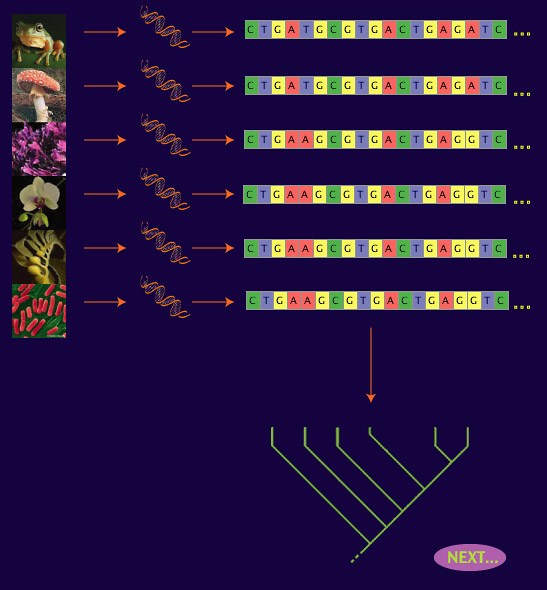
Two organisms that are closely related would have
a)
very similar DNA sequence
b)
exactly the same DNA sequences
c)
no proteins in common
d)
completely different DNA sequence
7.
Comparing human hemoglobin of chimpanzees, horses, kangaroos, and chickens, reveal that humans have the fewest amino acid differences with 
a)
Kangaroos
b)
Horses
c)
chickens
d)
chimpanzees
8.
Which layer is oldest?
a)
A
b)
W
c)
G
d)
Z
9.
Why are advantageous traits more likely to be passed onto offspring?
a)
Because they are more likely to survive and reproduce.
b)
Because they come from dominant alleles.
c)
Because they come from recessive alleles.
d)
Because the trait is an acquired phenotype.
10.
The trees these moths used to live on were white, but have been covered in soot from coal factories. Which moth will be more successful in this environment?
a)
Dark moth
b)
Light moth
c)
Both will be equally successful
d)
Neither will be successful
11.

An organisms with the “best” traits (adaptations) will live longer and

reproduce more than others, causing changes in the population over time by acting on traits that are heritable

a)

Evolution

b)

Natural Selection

c)

Fitness

d)

Variation

12.

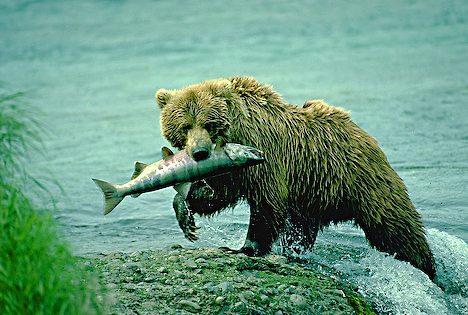
A grizzly bear survives because he is well-adapted to his environment. When he reproduces he passes on those traits to his offspring. This process is called

a)

Natural Selection

b)

Selective Breeding

c)

Random mutations

d)

Variations in a species

13.

Based on the number of differences in amino acid sequence, which pair of organisms is least related to each other?

a)

Fruit fly-wheat

b)

Human - wheat

c)

Fruit fly- pigeon

d)

Human-horse

14.

Scientists have found evidence that about 2.4 million years ago a gene regulating jaw muscles mutated and may have led to the more graceful human jaw we see today. The diagram below shows the skulls of 3 hominid species. Which statement below most closely explains the link between jaw size and hominid evolution?

a)

The jaws of hominids evolved to be smaller and less protruding over time as did the skull.

b)

The jaws of hominids evolved to be larger and more protruding over time.

c)

There appears to be no change in the jaws of hominids over time.

d)

The jaws of hominids changed over time due to a change in brain size
15.

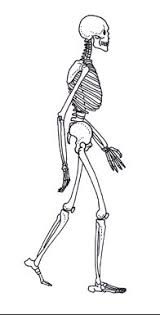
The ability to walk upright on two legs is called:

a)

bipedalism

b)

quadropedalism

c)

bicyclepedalism

d)

tripedalism

16.
Which of the following correctly summarizes the physical changes that early humans went through over the past million years or so?
a)
Brain size increased as jaw size decreased
b)
Brain size decreased as jaw size increased
c)
Bipedalism increased as use of tools increased
d)
Bipedalism decreased as the use of tools increased
17.
what is the function of xylem tissue?
a)
transports water and minerals salt 
b)
control the opening and closing of stoma
c)
carry out photosynthesis
d)
provide support for young plant
18.
what is the function of phloem tissue?
a)
transport water and minerals
b)
support plants
c)
photosynthesis process occur
d)
transport organic nutrients
19.

A tissue whose cells are capable of dividing and re-dividing is called

a)

complex tissue

b)

permanent tissue

c)

connective tissue

d)

meristematic tissue

20.
Which of the following structures allows for gas exchange between a leaf and the atmosphere?
a)
Cuticle
b)
Phloem
c)
Stomata
d)
Xylem
21.
Vascular tissue not only transports material it also
a)
 protects the plant
b)
supports the plant structurally
c)
transports minerals
d)
transports energy
22.

Where do the reactions of photosynthesis take place in autotrophs?

a)

Chloroplast

b)

Mitochondria

c)

Cell Walls

d)

Cytoplasm

23.

What is the chemical equation for photosynthesis? Choose the BEST answer

a)

C6H12O6 + O2 -> CO2 + H2O

b)

CO2 + H2O --> C6H12O6 + O2

c)

6 CO2 + 6 H2O --> C6H12O6 + 6 O2

d)

C6H12O6 + 6 O2 -> 6 CO2 + 6 H2O

24.

What are the products of photosynthesis?

a)

water and carbon dioxide

b)

oxygen and glucose

c)

oxygen and carbon dioxide

d)

oxygen and water

25.

What are the reactants of photosynthesis?

a)

carbon dioxide and oxygen

b)

water and oxygen

c)

carbon dioxide and water

d)

oxygen and glucose

26.

What is the formula for cellular respiration?

a)

6CO2+6H2O+Light Energy-->C6H12O6+6O2

b)

6CO2+6H2O+ATP-->C6H12O6+6O2

c)

C6H12O6+6O2-->6CO2+6H2O+Light Energy

d)

C6H12O6+6O2-->6CO2+6H2O+ATP

27.

Which organelle does cellular respiration happen in?

a)

Nucleus

b)

Mitochondria

c)

Chlorophyll

d)

Chloroplast

28.

True or False?: The products of photosynthesis are the reactants for cellular respiration.

a)

True

b)

False

29.

What are the four nitrogenous bases found in DNA?

a)

Adenine

b)

Thymine

c)

Glucose

d)

Guanine

e)

Cytosine

30.

Where is Eukaryotic DNA generally located?

a)

In the cytoplasm

b)

In the nucleus

c)

In space

31.
What determines the code, or information, of a DNA molecule?
a)
the shape (structure) of the nitrogen bases
b)
the order (sequence) of the nitrogen bases
c)
the color of the nitrogen bases
d)
the frequency (number) of nitrogen bases
32.
DNA replication results in two DNA molecules,
a)
each one with two original strands
b)
each one with two new strands
c)
each one with one new strand and one original strand
d)
one with two new strands and the other with two original strands
33.

Which stage facilitates cell growth and preparation for mitosis?

a)

Interphase

b)

Metaphase

c)

Prophase

d)

Anaphase

34.

DNA is replicated in which stage?

a)

Interphase

b)

Prophase

c)

Anaphase

d)

Metaphase

35.

What cell cycle process' prupose is to divide the nucleus to make 2 nuclei with identiacal DNA; split the DNA so the correct half can go in the new cell?

a)

mitosis

b)

meiosis

c)

interphase

d)

cytokinesis

36.

What stage of the cell cycle is this?

a)

Prophase

b)

Anaphase

c)

Metaphase

d)

Telophase

37.

Which phase of mitosis is this?

a)

Metaphase

b)

Anaphase

c)

Prophase

d)

Telophase

38.

What phase of the cell cycle is this?

a)

anaphase

b)

metaphase

c)

telephase

d)

cytokinesis

39.

Which type of cells are used for mitosis?

a)

Somatic Cells

b)

Germline Cells

c)

Sperm Cells

d)

Gametes

40.

One benefit of asexual reproduction is that it produces genetic diversity

a)

true

b)

false

41.

What is the final result of meiosis?

a)

4 genetically different haploid cells

b)

4 genetically identical haploid cells

c)

4 genetically different diploid cells

d)

4 genetically identical diploid cells

42.

A fertilized egg is also known as a(n)

(a)  

43.
Snapdragon flowers come in red, pink and white.  What type of inheritance is this?
a)
Complete Dominance
b)
Incomplete Dominance
c)
Codominance
d)
Polygenic Inheritance
44.
Genotype refers to the ...
a)
physical expression of the genes
b)
the possible combination of alleles in a gene
c)
whether an allele is dominant or recessive
d)
how an organism will appear
45.
Two brown eyed parents (Bb) have a baby. What is the chance the baby is blue eyed?
a)
0 %
b)
25%
c)
50%
d)
75%
46.
Brown fur color is dominant over black fur color. Which of the following is the actual genotype of ALL of the offspring in the next generation of this cross for fur color?
AA x aa
a)
AA
b)
Aa
c)
aa
d)
brown fur