
Font size
 Worksheets
RAD 121 Unit 1 Test
Total questions: 132
Worksheet time: 2hrs 39mins
The speed of an object
Amplitude
Radiation
Photon
Velocity
The intensity of the wave
Frequency
Wavelength
Amplitude
mA
The energy of the x-ray beam is referred to as
kV
Radiation
mA
Photon
Energy emitted and transferred through matter
Frequency
Wavelength
Radiation
kV
This symbol "f" represents
Frequency
Velocity
Photon
Wavelength
X-ray current is referred to as
Velocity
mA
Photon
Radiation
A small bundle of energy traveling through space at the speed of light
Photon
Velocity
Wavelength
Frequency
The distance between each crest
mA
Radiation
Frequency
Wavelength
This symbol "λ" represents
Amplitude
Wavelength
Frequency
kV
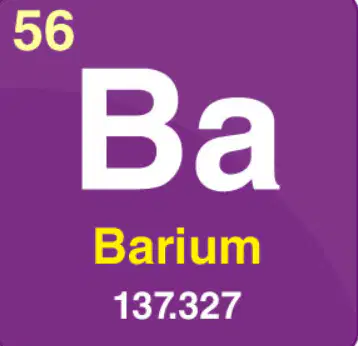
Determine the number of electrons
(a)
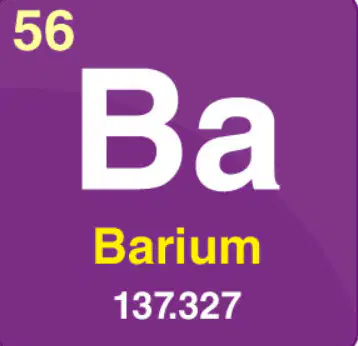
Determine the atomic number
(a)
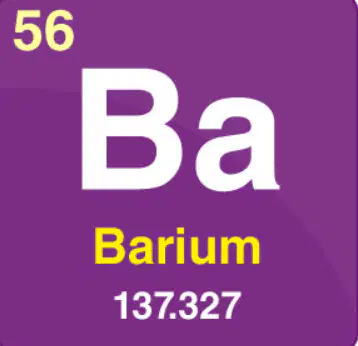
Determine the number of neutrons
(a)
The study of electrons in motion
Electrodynamics
Electrostatic
The study of electrons at rest
Electrodynamics
Electrostatic
like repels, unlike attracts
Attraction
Charge distribution
Charge concentration
Movement
Coulomb's
the conductor allows flow of electrons
Attraction
Charge distribution
Charge concentration
Movement
Coulomb's
electrons are dense at the sharpest curvature of a conductor
Attraction
Charge distribution
Charge concentration
Movement
Coulomb's
only electrons can move along a conductor
Attraction
Charge distribution
Charge concentration
Movement
Coulomb's
the closer to an object the stronger the attraction
Attraction
Charge distribution
Charge concentration
Movement
Coulomb's
If there is a break in the pathway there is no alternate flow
Series
Parallel
It has an alternate pathway for the flow of electrons
Series
Parallel
The sum of voltage across each circuit element is equal to the the total circuit voltage
Series
Parallel
The sum of the current through each circuit element is equal to the total circuit current
Series
Parallel
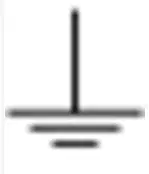
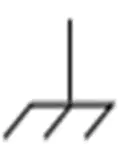
Which grounding symbol is above
Earth
Chassis
Signal
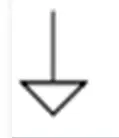
Which grounding symbol is above
Earth
Chassis
Signal
Which grounding symbol is above
Earth
Chassis
Signal
An atom that gains or loses a proton.
Isotope
Nucleons
Ion
Atom
What "(Z)'" represent?
Isotope
Atomic number
Atomic Mass
Quarks
An atom that loses an electron
Nucleons
Isotope
Ion
Nucleons
What's "(A)" represent?
Isotope
Atomic Number
Atomic Mass
Ion
the smallest unit of an element
Atom
Ion
Isotope
Quarks
proton and neutrons together
Atomic Number
Atomic Mass
Quarks
Nucleons
Hertz is the unit of measurement
Wavelength
Frequency
Amplitude
Measured in angstroms
Wavelength
Frequency
Amplitude
Greek symbol lambda
Wavelength
Frequency
Amplitude
cps
Wavelength
Frequency
Amplitude
Measured from crest to crest
Wavelength
Frequency
Amplitude
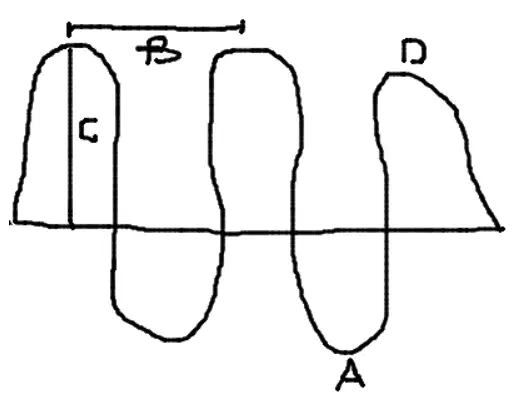
What represent letter "C"
Amplitude
Crest
Wavelength
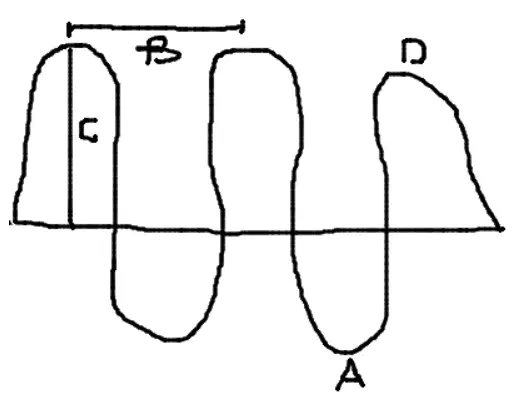
What represent letter "D"
Amplitude
Crest
Wavelength
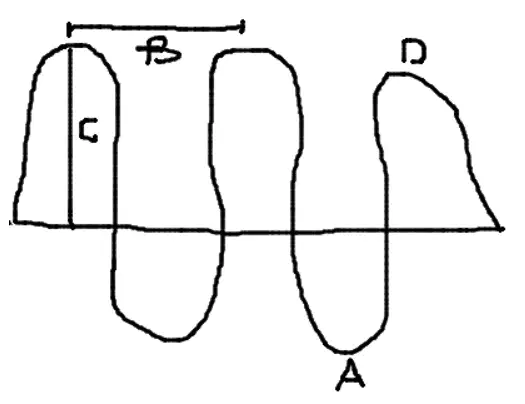
What represent letter "B"
Amplitude
Crest
Wavelength
A change in the number of protons of an atom will cause the atom to:
become unstable
become a nucleon
become an ion
change the identity of the element
The binding energy of an electron is greatest in which of the following shells?
N
P
Q
K
400 mA x .2 sec = _____________________ mAs
8
800
80
An exposure of 310 mR is detected at 20”. What is the new exposure if the distance is changed to 60”?
27mR
34mR
The smallest part of an element is referred to as a(n):
Electron
Atom
Proton
Neutron
The nucleus of an atom contains _______ and _______.
photons, neutrons
neutrons, protons
electrons, neutrons
protons, electrons
Electrons have a _______ charge.
no charge
positive
negative
neutral
A change in the number of protons results in:
ionization
new element
isotope
ion pair
In a stable atom, the number of protons equals the number of:
electrons
Photons
Atomic mass
neutrons
Which of the following shells is considered to be level 3?
M
K
N
O
How many electrons can occupy the Q shell?
32
108
98
18
Protons have a _______ charge.
neutral
no charge
positive
negative
An atom that gains or loses an electron is said to have undergone:
ionization
a classical interaction
photodisintergration
a nuclear reaction
Electrons in the N shell will:
never exceed 32 electrons
have higher binding energies than electrons in the L-shell
never have more than 18 electrons
orbit around the nucleus faster than electrons in the K-shell
Elements in period two on the Periodic Table of Elements:
have the M-shell as the outermost shell
have the same atomic number
have two electron shells
have two electron in the outermost shell
_________________________________ is measured in amperage or milliamperage
Power
Resistance
Current
Electricity
If a current of 0.8 amps passes through a conductor that has a resistance of 7 ohms, what is the voltage across the conductor?
5.6 V
8.75 V
.11 V
A radio draws a current of 3.5 A. If the voltage is 120 V, what is the electric resistance of the radio?
34 ohms
.02 ohms
420 ohms
A portable x-ray machine that draws a current of 90 A is supplied with 210 V. What is the power consumed?
18900W
.42 W
2.3 W
The study of electrons in motion is termed:
Electromagnetism
Electrostatics
Electrification
Electrodynamics
Current is measured in:
volts
amps
ohms
kilovolts
A(n) ______________________ allows electricity to flow through it
resister
inhibitor
insulator
conductor
The method of electrification whereby objects do not touch is referred to as:
electrostatics
magnetism
induction
friction
Potential Difference is another term for:
amperage
current
resistance
voltage
This type of circuit consists of resistors that are not connected in a continuous line.
parallel
perpendicular
induction
series
Resistance is measured in:
volts
ohms
amps
watts
Electrons can be transferred from one object to another. This process is referred to as:
Electromagnetism
electrification
electrostatics
electrodynamics
A toaster is supplied with a current of 4.0. If the voltage is 110, what is the resistance?
no correct answer
440
27.5
.036
An x-ray machine is supplied with a current of 60 and 220 V. What is the power in kilowatts?
132
13.2
13,200
13,200,000
Which of the following is/are laws of electrostatics?
1. Coulomb’s Law
2. charge concentration
3. current flows in one direction
4. unlike charges attract
1 and 4
1, 2, and 4
2 and 3
2, 3, and 4
Providing a path for excessive electrical charges is the definition for:
friction
static electricity
electrodynamics
grounding
A coil wrapped around an iron core is referred to as a(n);
natural magnet
electromagnet
artificial permanent magnet
no correct answer
The force of attraction surrounding a magnet is referred to as:
magnetic domain
bipolar
magnetic field
magnetic induction
Lodestone is an example of what type of magnet?
natural magnet
electromagnet
artificial permanent magnet
no correct answer
If a magnet is split in half, what happens to the poles?
1. one magnet will have two north poles
2. both magnets will have a north pole and a south pole
3. one magnet will have two south poles
4. it is impossible to split a magnet
2 only
1 and 3
4 only
A coil of wire that carries a current is referred to as a(n):
solenoid
autotransformer
electromagnet
generator
Electric current that is produced by placing stationary magnets around a stationary coil is occurs by:
mutual induction
rectification
self induction
electrodynamics
This individual who determined that magnetic fields could generate electricity.
Lenz
Faraday
Fleming
Oersted
This device transforms AC to DC
rectifier
electric motor
generator
transformer
This device converts mechanical energy into electrical energy.
rectifier
generator
transformer
electric motor
The rotor and stator of an x-ray tube operate due to:
electrodynamics
electromagnetism
rectification
self induction
This device can increase or decrease the intensity of current or voltage.
transformer
generator
electric motor
rectifier
Which of the following is referred to as an induction motor?
rectifier
transformer
rotating anode
generator
A change in the number of protons results in:
ion pair
new element
isotope
ionization
The Greek letter lambda (l) represents:
speed of light
photon energy
frequency
wavelength
Which of the following types of electromagnetic radiation has the highest frequency and shortest wavelength?
radiowaves
microwaves
x-rays
ultraviolet
Which of the following types of electromagnetic radiation can we see?
radiowaves
x-rays
white lights
microwaves
X-rays have
low frequency, long wavelength
high frequency, short wave length
high frequency, long wavelength
low frequency, long wavelength
The Hertz (Hz) is the unit of measurement for:
frequency
photon velocity
wavelength
speed of light
What is the relationship between photon frequency and energy?
indirect
no relationship
direct
sometimes direct, sometimes indirect
X-rays travel through space at the speed of light which is:
3x10⁸ meters/second
186,400 meters/second
186,000 meters/second
2n2
The distance from the crest of one wave to another is termed:
photon velocity
meters
frequency
wavelength
How many electrons can occupy the Q shell?
32
108
18
98
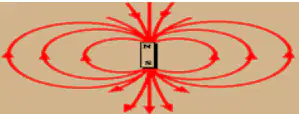
What is the name of the area around the magnet
Bipolar
magnetic domain
Tesla
Magnetic field
_____ is an electrical and magnetic disturbance that travels through space at the speed of light.
ionizing radiation
electromagnetic radiation
radiation
visible light
The distance from the crest of one wave to the crest of another is called:
velocity
amplitude
wavelength
frequency
Wavelength and frequency are _____ related
sometimes
inversely
directly
not
Another term for an x-ray photon is:
quantum
amplitude
radiation
wavelength
Consider the following types of radiation that are found in the electromagnetic spectrum. Which one has the highest frequency?
microwaves
visible light
x-rays
radio waves
The letter “Z” represents:
the number of neutron
the number of electrons
the number of protons
the number of atoms
X-rays exist at the speed of light or not at all. What is the speed of light?
180,000 meters/second
3 X 10 meters/second
18,000 miles/second
3 X 10⁸ meters/second
The small dense center of the atom is referred to as the _____________
neutron
electron
nucleus
proton
When determining the number of electrons a shell can hold, the "M" shell can hold how many electrons?
18
12
32
6
Elements are listed on the Periodic Table in ascending order based on the _______
Atomic mass
total number of electrons
total number of electrons in the outermost shell
Atomic number
An element that is said to have 3 electrons in the outermost shell has a valence of
+5
-5
-3
+3
An element that has six electrons in the outermost shell is said to have a valence of
+6
+2
-6
-2
The typical wave of an x-ray is
.1- 1.1 Angstroms
1-2 Angstroms
.1 - 1 Angstroms
.1 - 2 Angstroms
_____ is an electrical and magnetic disturbance that travels through space at the speed of light.
ionizing radiation
electromagnetic radiation
radiation
visible light
The atomic number is the number of neutrons in the nucleus
True
False
The atomic mass is represented by the letter "m"
True
False
The atomic mass is the number of protons plus the number of electrons
True
False
There is a transfer of energy when an atom is ionized
True
False
The less humid the air, the more likely static electricity will occur
True
False
During the electrification process, friction occurs by touching a metal door knob
True
False
An increase in resistance will result in an increase in current
True
False
A conductor is any substance through which electrons flow easily
True
False
An insulator is any substance through which electrons flow easily
True
False
All matter is composed of fundamental building blocks called atoms
True
False
All matter is composed of fundamental building blocks called atoms
True
False
The center of the atom is referred to as the nucleus
True
False
A stable atom is said to have the same number of proton and neutrons
True
False
A stable atom is said to have the same number of proton and neutrons
True
False
The protons of an atom are the same as the atomic number
True
False
The protons and the neutrons equal the atomic number
True
False
Electrons at rest are capable of producing magnetic fields.
True
False
All matter is electrically neutral
True
False
An increase in the humidity with increase the chance of static occuring
True
False
Radiation is a term that only refers to x-rays
True
False
Electrons circle around an atom and they have a positive charge
True
False
The binding energy of electrons is measured in keV.
True
False
An element that loses an electron undergoes ionization.
True
False
The shorter the wavelength the higher the frequency.
True
False

