
NEW
Font size
 Worksheets
Weathering, Erosion, and Deposition
Total questions: 21
Worksheet time: 12mins

The flash flood is caused by a heavy rain. Once saturated with water, a large section of the mountainside slides down into the reservoir, causing the dam to break and the water to rush downstream. The mountainside slide demonstrates the process of ______________________.
Weathering
Erosion
Deposition
The driveway is long and winding because it bends around a huge old oak tree. The pavement near the tree bulges upward and has many more cracks than the other sections of the driveway. The root action on the pavement demonstrates the process of __________________.
Weathering
Erosion
Deposition
When camping in west Texas, we wake one morning to discover that our car and tent are covered with a thin layer of sand. The presence of the sand demonstrates the process of __________________.
Weathering
Erosion
Deposition
Liquid water can seep into cracks and crevices in rock. When the temperature drops low enough, the water freezes and expands, and can eventually split the rock. The ice acting as a wedge in the rock demonstrates the process of __________________.
Weathering
Erosion
Deposition
Where the river makes a sharp bend to the right, there is a beautiful sandbar. We sometimes can find fossil turtle shells partially buried in this sand. The formation of the sandbar demonstrates the process of __________________.
Weathering
Erosion
Deposition
It is fun to wade in the shallow areas of the river; the smooth rocks are rounded and sometimes slippery. The action of smoothing and rounding the sharp edges of the rocks demonstrates the process of __________________.
Weathering
Erosion
Deposition
Walking in the shallow coastal waters, you can feel the rows of bumps in the sand from the rippling wave action of the ocean. The movement of the sand by wave action demonstrates the process of __________________________.
Weathering
Erosion
Deposition
Years ago, the rancher dug out an area to build a pond for his cattle, but over time, the pond filled with sediment, so now, there is very little room for the water. The presence of the sediment in the pond demonstrates the process of ______________.
Weathering
Erosion
Deposition
A beautiful display of bluebonnets bloomed along the bank of the river, but after the storm last night, the flowers and a large section of the soil in which they grew is gone. The disappearance of the soil demonstrates the process of ______________________.
Weathering
Erosion
Deposition
We have to take a detour in our walk along the field by the river because there is a thick, sticky layer of mud and debris on top of the grasses and wildflowers. The presence of the mud and debris demonstrates the process of ______________.
Weathering
Erosion
Deposition
What is the breaking down of rocks and minerals into smaller pieces by physical, chemical, or biological processes?
Erosion
Weathering
Deposition
Melting
A large garage-sized boulder breaks free from a hillside and falls to the base of the hill, crushing two vehicles and crashing into a house. The movement of the boulder demonstrates the process of ______________________.
Weathering
Erosion
Deposition
Erosion and weathering are similar because they both involve the breaking down of rocks. However, what is a key difference between the two?
Erosion involves movement, while weathering does not.
Weathering can only happen with water, while erosion does not need water.
Erosion happens only on the Earth's surface, while weathering happens below the surface.
Weathering is a man-made process, while erosion is natural.
We love to go rock climbing on the rugged cliffs in the mountains, but our first challenge is to scramble up the large pile of sand and pebbles at the base of the cliff. The formation of the pile of sand and pebbles demonstrates the process of ___________________.
Weathering
Erosion
Deposition
The homeowner had clearly labored hard to hold the steep hillside in place by constructing a stone wall, but now, sections of the wall and soil have tumbled onto the sidewalk. The movement of the wall and soil demonstrate the process of ____________________.
Weathering
Erosion
Deposition

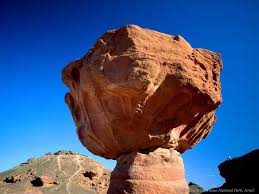
The process that breaks down rocks and other materials on Earth's surface is called
Weathering
Erosion
Deposition
Decomposition
What is abrasion?
A) The grinding away of rock by other rock particles carried in water, ice, or wind
B) The chemical reaction between water and rock
C) The expansion of water when it freezes in cracks of rocks
D) The process of rocks breaking down into soil

The soil is rich and dark; however, on closer inspection, you can still identify small grains of quartz and feldspar from the granite bedrock. The breakdown of bedrock demonstrates the process of __________________.
Weathering
Erosion
Deposition

