
 Worksheets
29 April 2024
Total questions: 50
Worksheet time: 4hrs 10mins
Which of the following is a unit of rate of reaction?
s-1
Ms-1
M
M-1s-1
For the reaction below, which of the following is the correct differential rate equation?
NH3(g) + O2(g) → NO(g) + H2O(g)
rate = −dtd[NH3]=−dtd[O2]=dtd[NO]=dtd[H2O]
rate = −21dtd[NH3]=−31dtd[O2]=41dtd[NO]=21dtd[H2O]
rate = dtd[NH3]=dtd[O2]=−dtd[NO]=−dtd[H2O]
rate = −41dtd[NH3]=−51dtd[O2]=41dtd[NO]=61dtd[H2O]
Write a balanced chemical equation based on the given differential rate equation:
rate = −dtd[C2H6]= −72dtd[O2]=21dtd[CO2]=31 dtd[H2O]
C2H6 + 72 O2 → 21 CO2 + 31 H2O
undefined CO2 + undefined H2O → C2H6 + O2
C2H6 + 27 O2 → 2 CO2 + 3 H2O
C2H6 +3 O2 → 2 CO2 + 3 H2O

What is the overall order of reaction?

The catalyst alters the rate of a chemical reaction by,
providing an alternative pathway with a lower Ea
changing the products formed in the direction of the reaction
providing a surface on which the molecules react
increasing the frequencies of collisions between molecules
Liz observes 2 reactions, A and B.
Reaction A is performed in a beaker placed on top of a hotplate.
Reaction B is is performed in a beaker placed within a container of ice.
Which of the following statements is true?
Reaction A will react slower because the higher temperature will cause more collisions because the heat makes the molecules tired.
Reaction A will react slower because the higher temperature will cause give the reactants higher speed and kinetic energy.
Reaction B will react faster because the lower temperature causes the particles to move slower, allowing them to have more time to attach to one another.
Reaction B will react slower because the lower temperature makes the particles move slower, resulting in less collisions.

During an endothermic reaction in a beaker if we are part of the surroundings and touched the beaker, it would feel _______.
Warm
Cold
Bubbly
Damp
A 300 gram sample of a metal is cooled from 120 oC to 60 oC, and releases 4230 J of energy. What is the specific heat of the metal?
7.61 x 10⁷ J/goC
4.26 J/goC
0.47 J/goC
0.235 J/goC
Galvanic cells convert
mechanical energy in to electrical energy
potential energy in to electrical energy
electrical energy in to chemical energy
chemical energy in to electrical energy
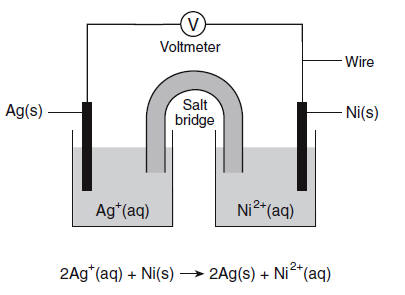
Reactions in galvanic/voltaic cells are
Given their standard reduction potentials, which of the species is going to be oxidized?
Cu2+/Cu = 0.34V
Zn2+/Zn = -0.76V
Cu
ZnSO4
CuSO4
Zn
Which compound below is aromatic?


What is the IUPAC name for the following compound?
3-chlorophenol
3-hydroxychlorobenzene
1-chloro-3-hydroxybenzene

What is reagent B?
CH3CH2Br, AlBr3
CH3Cl, AlCl3
CH3CH2Cl, FeCl3
CH3CH(CH3), AlCl3

Identify the product for the following reaction (R) ?


The only compound that will yield benzoic acid when reacted with acidified potassium dichromate (VI) solution is
CH2=CH2
C6H5C(CH3)3
C6H5CH(CH2CH3)2
Cyclohexane
How would you classify 2-bromopropane as a haloalkane?
Primary
Secondary
Tertairy
Methyl
The name of the mechanism when 1-bromopropane reacts with aqueous sodium hydroxide is...
Nucleophilic addition
Nucleophilic substitution
Electrophilic addition
Electrophilic substitution
What is the organic product when 2-chlorobutane reacts with aqueous sodium hydroxide?
Butene
Butane
Butan-2-ol
Sodium butanoate

CH3CH2OH + Na ------>
What is the product of this reaction?
CH3CH2O-Na+
CH3CH2Na+
CH2=CH2
CH3CH2CH3
CH3CH2COOH + CH3CH2OH ------>
what is the product of this reaction?
CH3CH2OOC+
CH3CH2OH
CH3CH2OCH3
CH3CH2COOCH2CH3
An organic compound X has the following chemical properties.
· Forms a yellow precipitate when tested with 2,4-dinitrophenylhydrazine.
· Forms a yellow precipitate when it reacts with an excess iodine in alkaline solution.
Which of the following compounds is X?
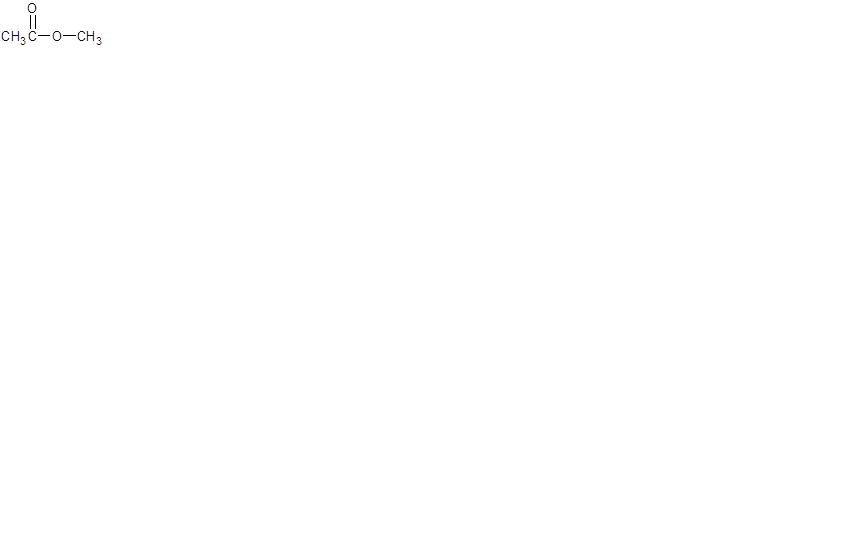
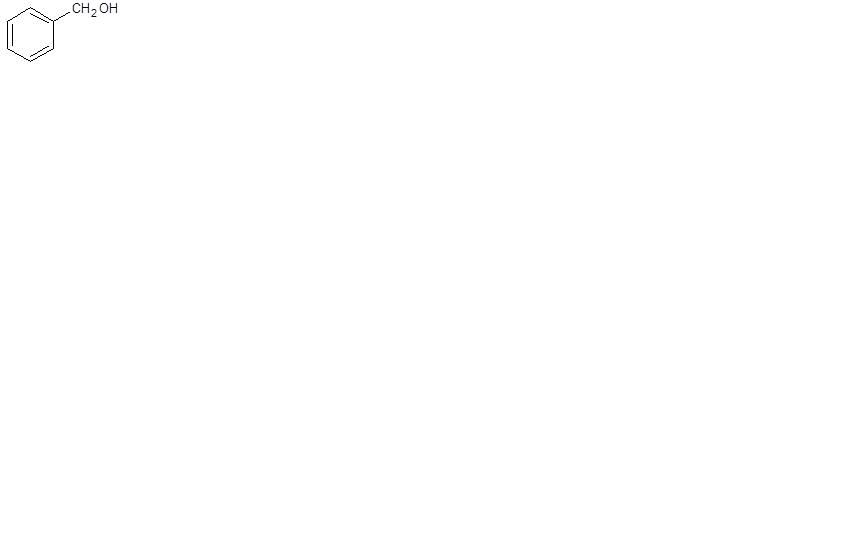
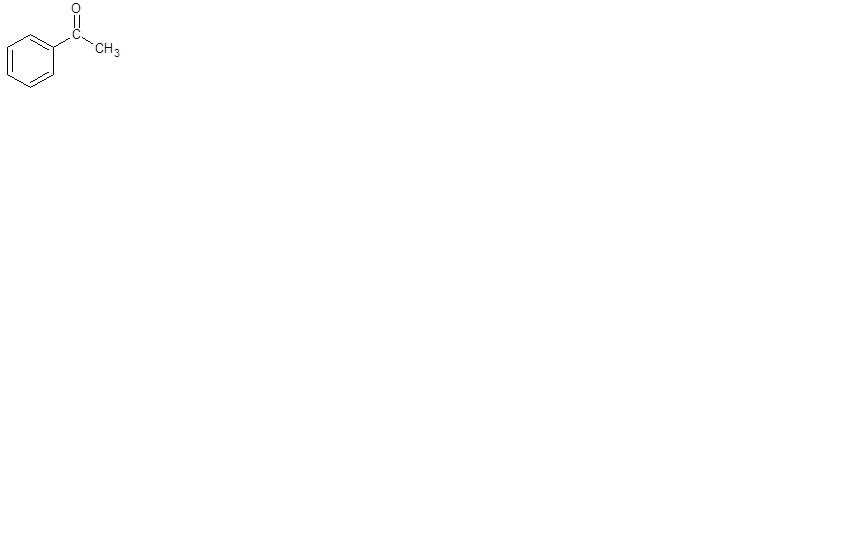
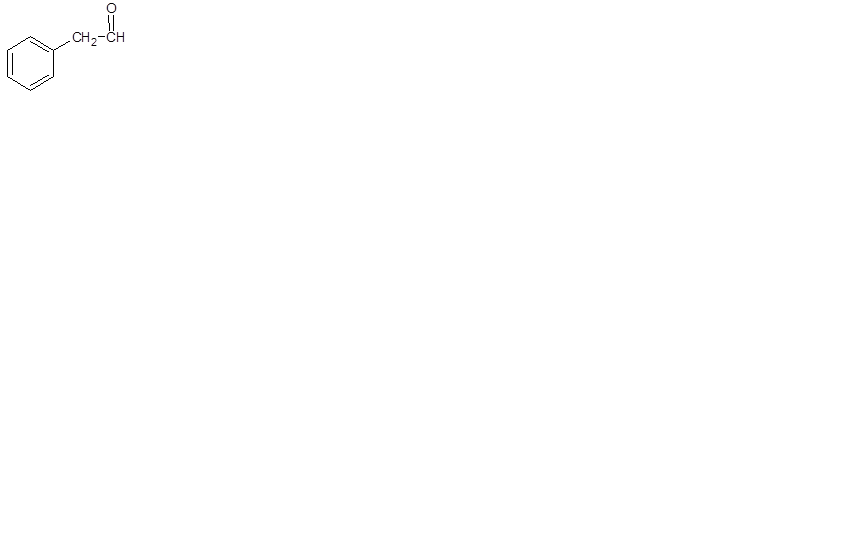
Which of the following alcohols can be oxidised to 2-methyl-3-pentanone?
CH3CH2CH(OH)CH3
CH3CH(OH)CH2CH2CH3
(CH3)3CCH(OH)CH3
(CH3)2CHCH(OH)CH2CH3
The following reaction scheme shows how propene can be prepared from propanal in two stages using reagents X and Y. Which of the following are the reagents X and Y?
X Y
CH3CH2CHO → CH3CH2CH2OH → H3CH=CH2
X: LiAlH4 ; Y: KOH, ethanol, reflux
X: NaBH4 ; Y: conc.H2SO4, heat
X: dillute H2SO4 ; Y: conc.ethanol, reflux
X: dillute H2SO4 ; Y: KOH, ethanol, reflux
On heating compound X with acidified KMnO4, compound Y is obtained. Compound Y does not react with Fehling’s solution. X and Y are most likely to be,
Compound X Compound Y
CH3COCH3 CH3COOH
CH3CH(OH)CH3 CH3COCH3
CH3CH2CH2OH CH3COCH3
CH3CH2CH2OH CH3CH2CHO
Which substance would test positively with 2,4-DNPH but negatively with Tollens’ reagent?
Propanal
Propanone
Propanoic acid
1-propanol
What gas is produced when magnesium reacts with ethanoic acid?
hydrogen
carbon dioxide
oxygen
chlorine

Give the name for the below structure based on IUPAC nomenclature.
A 2-methyl-4-butanoic acid
B 2-methyl-4-pentanoic acid
C 3-methylbutanoic acid
D 3-methylpentanoic acid
Boiling points of carboxylic acids is higher than those of corresponding alcohols is due to
Strong London dispersion forces
Strong dipole dipole interaction
Strong hydrogen bonded dimer
Strong covalent bond
Which of the following acids is the most soluble in water?
ethanoic acid
benzoic acid
hexanoic acid
octanoic acid
Which carboxylic acid is most acidic?
CH3CH2CH2COOH
CH3CH2CH(Cl)COOH
CH3CH(Cl)CH2COOH
(Cl)CH2CH2CH2COOH
Which of the following carboxylic acids is expected to have the highest boiling point?
CH3CH2COOH
CH3CH(OH)COOH
CH2(COOH)2
CH3CH(Cl)COOH
What factor can decrease the solubility of carboxylic acid in water?
The increase in length of the hydrocarbon chain.
The decrease in length of the hydrocarbon chain.
The increase in number of carboxyl group.
The number of hydrogen bond.
Which of the following amines do you expect to have the highest boiling point?
Triethanamine
Dimethanamine
Methanamine
Diethanamine
Which is the correct arrangement of compounds based on decreasing order of Kb value?
methyl amine > ammonia > phenyl amine
phenyl amine > ammonia > methyl amine
ammonia > phenyl amine > methyl amine

Name the compound.
N,N-dimethyl-3-pentanamine
N,N-dimethyl-3-hexanamine
N,N-dimethyl-3-ethylpropanamine
N,N-dimethyl-5-ethylpropanamine
The following statements are true about amines EXCEPT
Only primary and secondary amines can form hydrogen bonding with water molecules.
Amino compound can be prepared by reduction of nitrile compounds.
The boiling point of tertiary amine is the lowest because it cannot form hydrogen bonding between molecules.
Amino compound undergoes nucleophilic substitution with haloalkanes.
Amino acid is a compound that consists of at least one group of
amino and one amide group
hydroxyl and one amine group
amino and one hydroxyl group
amino and one carboxyl group
Which of the following statement is true about aminoethanoic acid?
It exhibits optical isomerism.
It exists in the anionic form in acidic solution.
It forms zwitterions in aqueous solution
It is soluble in non-polar solvents.

