
 Worksheets
Post Test Review
Total questions: 50
Worksheet time: 30mins
Where would you most expect to find a major city in the world?
Near mountains for easy access to metals and other minerals
In or around valleys for protection
Near major water ways
In or around forests for building materials
The diversion of water for irrigation purposes has been the main cause of the shrinking of the Aral Sea.
True
False
The leaders of Arab countries often set high oil prices for Israel. Why are those Arab leaders able to do this?
The Israeli President has extra money to spend
Oil prices continuously rise and the leaders have no control over the market
Arab countries paid a lot of money for their oil and want to make a profit
The Arab countries have large oil reserves and work together to set prices
What is OPEC's main purpose?
To regulate and stabilize the price of oil on the world market
To increase the supply of oil available to the world markets
Coordinate peace agreements between Middle Eastern nations and the United States
Each of the following demonstrates the global influence of North American countries EXCEPT...
Both the United States and Canada are members of a powerful governmental alliance known as NATO.
North American countries have strong economies with high GDP per capita that influence the global economy.
Aspects of North American culture are found in countries all around the world due to globalization and exporting their culture around the world through social media, trade, etc.
Both the United States and Canada are culturally influential because they are responsible for colonizing the majority of other countries around the world.
Which of the following best describes where most of the population of Canada lives?
50% of Canada's population lives in cities with the rest spread fairly evenly throughout rural areas.
90% of Canada's population lives near either the Atlantic or Pacific coasts.
90% of Canada's population lives within 150 miles of the US border.
74% of Canada's population lives in the Western half of the country.
Which of the following is NOT one of the factors that contribute to economic inequality in many Latin American countries?
The legacy and trickle-down effects of colonialism and the Encomienda System
Much of the population cannot access jobs or education due to poor infrastructure.
Countries in South America have been constantly warring with one another for the past 100 years.
Large US companies have an oversized level of power in the region, which leaves many local citizens landless and powerless.

Which of the following best describes why the Amazon rain forest is shrinking?
Companies and individuals clear parts of the forest to make way for new farms and infrastructure.
New research continues to demonstrate that it is not as important an ecosystem as previously believed.
Diseases introduced by invasive species are destroying many of the key plants in the rain forest ecosystem.
It is the main source of wood that is used for housing around the world.
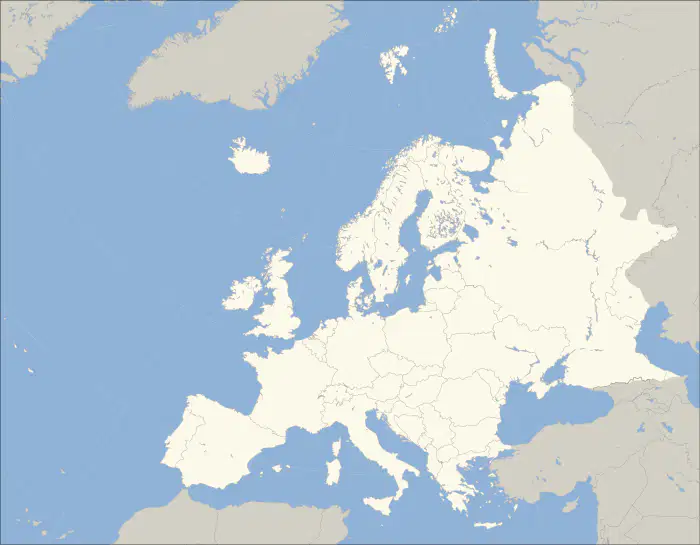
Which of the following is NOT one of the major peninsulas in Europe?
The Iberian
The Balkan
The Scandinavian
The English
Which of the following is NOT true of the differences between Eastern and Western Europe?
Western Europe tends to be more religious (especially Christian) than Eastern Europe.
Western Europe has a higher GDP per capita that Eastern Europe.
Eastern European countries tend to have aspects of Soviet culture.
Eastern European countries have experienced many border changes over the past century due to local and regional conflicts.

Which of the following best describes the influence that Siberia has on the global climate?
It contributes to global warming because most of the world's crude oil supply comes from there.
It creates the oceanic and atmospheric phenomena known as El Nino and La Nina that affect North and South America on certain years.
It contributes to global warming because its many volcanoes are constantly releasing smoke and ash that are creating a stronger greenhouse effect in the atmosphere.
It regulates the climate by storing tremendous amounts of CO2 in its widespread forests and peatland surfaces.
Which of the following is NOT one of the factors that contributes to widespread poverty and inequality in Sub-Saharan Africa?
Many landlocked countries
Borders drawn by imperial powers in Europe
Economies centered around mining and agriculture
Involvement in both world wars left the entire continent in dire poverty
Which of the following world religions is incorrectly paired with its birthplace?
Judaism: Israel
Christianity: Israel
Buddhism: India
Hinduism: Thailand
Islam: Saudi Arabia
Which of the following best describes the influence of ASEAN?
It has stabilized the governments and economies of Southeast Asian countries.
It has driven up oil prices for many countries around the world.
It has led to widespread inequality in the Middle East.
It has resulted in massive destruction of rain forest ecosystems on the Malay peninsula.
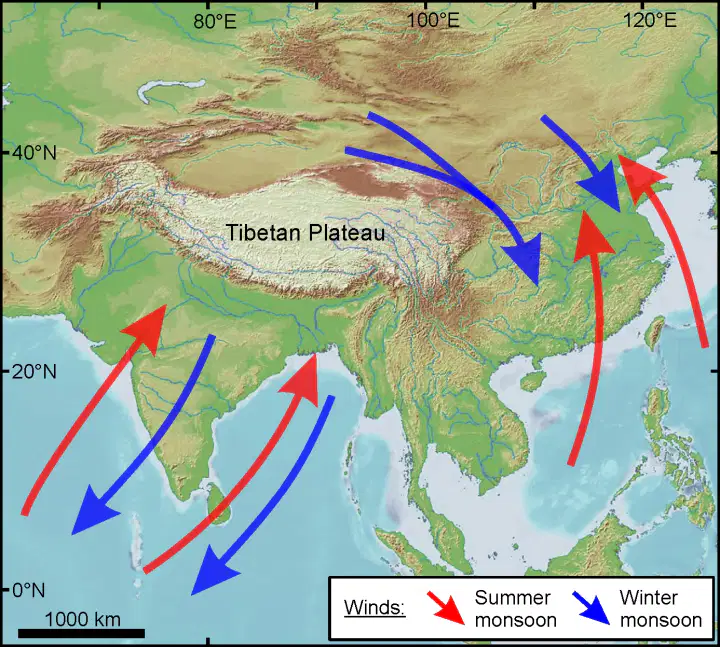
What are monsoons?
Hurricane-like storms that sweep in from the coast in many South Asian countries
Large waves that cause widespread destruction in coastal areas
Massive lava flows from underwater volcanoes
Seasonal winds
Select each example of globalization from the list.
An American teenager listens to K-pop.
A 7th grade student in Canada watches anime in his spare time.
Mrs. Broyan eats Indian food at Taste of Spice
The Patagonia sweater Mr. Slater wears every day is made in Thailand.
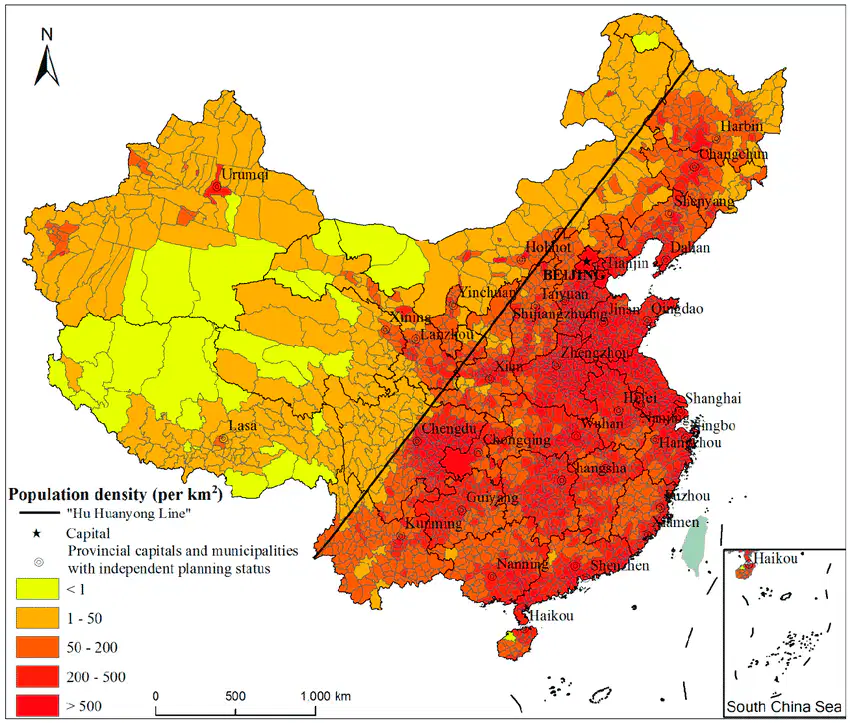
Which of the following best describes the population distribution in China?
Most of the population is located in areas of high elevation
Most of the population is located along the coast and in river/rain basins
Most of the population is located in the Western half of the country
Which of the following is the result of a rain shadow?
Singapore has better social infrastructure than countries around it.
The Amazon Rain Forest receives a tremendous amount of rain each year.
It is extremely dark in the winter in Iceland.
Western China is particularly dry.
Each of the following is contributing to the destruction of the Great Barrier Reef EXCEPT...
Invasive species like the crown of thorns starfish
Hurricanes that batter the reef each year
Ocean acidification due to CO2 pollution
Ocean temperatures rising due to climate change
Which of the following best describes the climate of the MAJORITY of Australia?
Tropical rain forest
Humid subtropical
Arid
Temperate
Which of the following is NOT one of the effects of the Pacific Ring of Fire?
Japan has over 1000 active volcanoes
Mongolia is the least densely populated country in the world
Earthquakes are common throughout Indonesia
Coastlines along the Pacific in both East and Southeast Asia are vulnerable to tsunamis

What river is this?
Amazon River
Nile River
Yangtze River
Ganges River

Which physical feature is drawn in blue on the map?
Amazon River
Amazon Rainforest
Caribbean Sea
Gulf of Mexico

Which physical feature is drawn in green on the map?
Amazon River
Amazon Rainforest
Caribbean Sea
Gulf of Mexico

What mountain range is the 2nd largest in the world stretching 4,500 miles along the western coast of South America?
The Himalayas
The Sierra Madre Mountains
The Alps
The Andes

What mountain range is being highlighted on this map of South Asia?
Atlas
Zagros
Hindu Kush
Himalayas

Which river, sacred to Hindus, is being identified by the red arrow on the map?
Indus
Yangtze
Brahmaputra
Ganges

What is the country in red?
Columbia
Guyana
Suriname
Venezuela

Match the highlighted country on the map.
France
Italy
Ireland
Romania

In what area of the world is the Ganges and Indus River located?
the Amazon
the Indian subcontinent
the Sahara desert
the Antarctic peninsula

What country is shown by the number 2 on the map?
China
Vietnam
Japan
India

What country is labeled #3?
Japan
India
China
Russia

Which letter on the map identifies the Danube River?
A
B
C
D
What are the Ural Mountains?
A mountain range in eastern Russia
A desert in northern Africa
A river in South America
A forest in Europe

What country is this?
Uruguay
Argentina
Peru

What country is this?
Japan
South Korea
Indonesia

1. What are the names of New Zealand’s two main islands?
North Island and South Island
Southern Alps and Kawanawa Range
Steward Island and White Island

Which country is marked on the map?
Israel
Turkey
Afghanistan
Saudi Arabia
This river connects the state of Minnesota to the Gulf of Mexico.
Missouri River
Mississippi River
Ohio River
Rio Grande
Toronto and Ottawa can both be found in what province
British Columbia
Quebec
Nunavut
Ontario

Ethiopia is in what region?
West Africa
Central Africa
Horn of Africa
Southern Africa

Countries that border Russia
Belarus, Spain, Kyrgyzstan, China, Taiwan, Georgia
China, Georgia, Kazakhstan, Mongolia, Finland, Ukraine
Great Britain, Japan, North Korea, Taiwan, India, Azerbaijan
Mongolia, Turkmenistan, Georgia, Uzbekistan, South Korea, China
Which Latin American nation was mostly influenced by Portugal?
Argentina
Brazil
Venezuela
Peru
Which body of water is the source of 1/3 of the worlds oil?
Panama Canal
Suez Canal
The Red Sea
Persian Gulf

Which number on the map is the Gobi Desert?
1
2
3
4
Which characteristic is most associated with developed economies
Low literacy
Low pollution
High infant mortality
High GDP
What is a major factor behind the political dispute between China and Taiwan?
The Yellow Sea includes disputed Chinese islands
Taiwan wants recognition as an independent country
China controls Japan
The Taiwan strait is a choke point

