
 Worksheets
The Land - test
Total questions: 50
Worksheet time: 2hrs 39mins
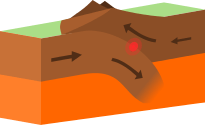
Divergent
Convergent - collision
Convergent - subdcutive

What type of event most likely will occur at this boundary?
Earthquake
Volcano Eruption
Tornado
Mountain Building

Which of the following is the name of the ancient supercontinent formed 28 Million Years ago.
Pangaea
Gondwanda
Laurasia
Neverland
Which of the following is NOT evidence to support the theory of plate tectonics?
Fossils
Mountains
earthquakes
erosion
The theory that says Earth's continents once made up an ancient supercontinent, and have been drifting apart ever since, is called the theory of...
Pangea
Continental Drift
Natural Selection
Gravity
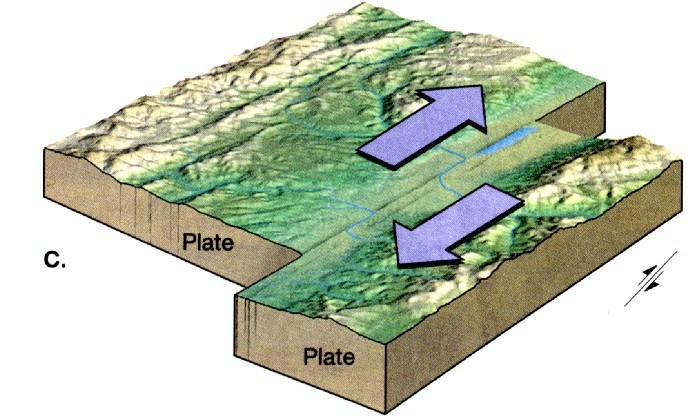
A fault line is formed by the movement of a __________ plate boundary
Transform
Convergent
Divergent

Islands can form from magma which is pushed up at a __________ plate boundary
Divergent
Convergent
Transform
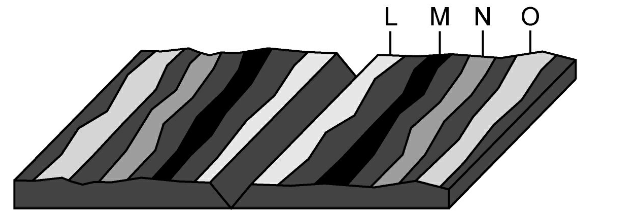
Where would the oldest rock be found on this mid-ocean ridge?
L
M
N
O

The presence of the same ________ on several continents supports the idea of continental drift.
animals
fossils
weather
people


_________ currents carry heat from the hot inner core to the cooler outer mantle and back again.
River
Radiation
Convection (heat)
Conduction


The San Andreas Fault in California is an example of a ________.
divergent boundary
convergent boundary
transform boundary
subduction zone

Which type of plate boundary occurs at B?
convergent
divergent
transform
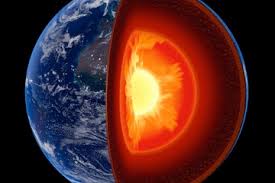
As you travel from the inner core to the crust, how would temperature, pressure and density of the material change?
They would all increase
They would all decrease.
They would stay the same.
Temperature would decrease, but pressure and density would increase.
What type of boundary can form new land (hint: under water)?
divergent
convergent
transform
How fast do earth's plates move?
About 200 miles per hour
About as fast as our fingernails grow
a mile a year
One mile each day
Theory that the outer rigid layer of the earth is divided into a couple of dozen rock layers that move around across the earth's surface
Continental drift
Plate tectonics
Pangea
Magma formation

What is the definition of dormant?
sleeping
extinct
active
invisible

What are scientists that study volcanoes called?
geologist
pyrologist
volcanologist
seismologist

What is molten rock when it reaches the surface of Earth?
Lava
Magma

When an explosive eruption forms a mixture of hot rock, ash, and gas, this material is called a...?
Landslide
Lava
Eruption trail
Pyroclastic flow
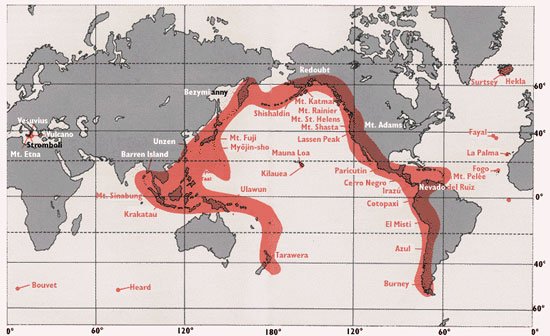


Where is Mt. St Helens located?
New Jersey
Nebraska
Washington state
Oregon

River of ash and debris that can form several days after an eruption.
lahar
conduit
tempest
land slide

Pyroclastic flows can travel as high as _______ m.p.h
25
75
150
400
What is the major cause of erosion to form canyons?
wind
ice
glaciers
moving water
Which agents break down earth materials?
wind only
earthquakes and gravity
volcanoes and magma
wind, water, and ice
How does vegetation in the soil affect the rate of erosion?
It doesn't affect erosion.
It decreases erosion.
It increases erosion.
What is an enormous mass of ice moving over land?
Ice wedging
Glacier
Iceberg
Dune

the general terms for the movement of sediment by wind, water, glaciers
weathering
erosion
deposition

What are the biggest glaciers called?
mountain glaciers
sheet or continental glaciers
ocean glacier
What causes high mountains to have jagged peaks?
mountain glaciers
heavy rains
sheet glaciers
strong winds
Which agent causes the most erosion?
water
wind
glaciers
chemicals

Hawaiian volcanic eruptions cause many deaths and destruction.
true
false

What causes a volcano to erupt?
gasses within the Earth
convection current within the Earth
both



