
 Worksheets
G7 FOURTH QUARTER EXAM REVIEWER
Total questions: 55
Worksheet time: 38mins
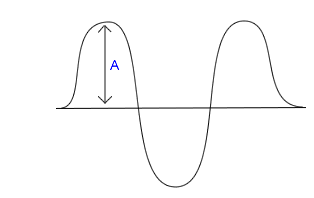


membrane in the ear that vibrates when sound hits it
cochlea
stererocilia
ear drum
wavelength

What is the function of the ridges on your outer ear?
They prevent germs from entering your middle ear.
They direct sound into your middle ear.
They prevent loud noises from damaging your inner ear.
They filter out very high and low-frequency sounds.


The pinna and ear canal belong to:
outer ear
middle ear
inner ear

Inner ear includes:
pinna and ear canal
ossicles
eardrum
cochlea - auditory nerve
Why is a light wave not considered a mechanical wave?
A light wave is visible to humans.
A light wave moves faster than most waves.
A light wave does not have a wavelength.
A light wave travels through the vacuum of space.
How is an electromagnetic wave different from a mechanical wave?
An electromagnetic wave travels slower than a mechanical wave.
An electromagnetic wave has a larger amplitude than a mechanical wave.
An electromagnetic wave can travel through a vacuum, but a mechanical wave cannot.
An electromagnetic wave has no wavelength, but a mechanical wave has a wavelength.
Which of the following are not a part of the Electromagnetic Spectrum?
Gamma Rays
Radio waves
Magnetic waves
x-rays
Gamma Rays are
High energy
Low energy
Medium energy
Just right

Based on your observations of the prism, select the true statements.
When light travels through a prism, the light is separated by wavelength.
Humans see the different wavelengths of visible light as different colors.
The prism is being used to combine different colors of light.
The light bends when it enters the prism and again when it leaves the prism.
The wave of energy we can see is ___________
visible light
radio waves
microwaves
x-rays
When light bounces off something it is known as _____________
reflection
refraction
light energy
mechanical energy
The definition of the word refract is __________
to make warm
to go through
to bend
to create energy
What color of the rainbow has the longest wavelength?
red
blue
green
violet
What type of wave is a light wave?
A sound wave
A seismic wave
A electromagnetic wave
A mechanical wave


How does heat move?
In many directions
from warm places to cooler places
from cold places to warm places
Both B and C
If you burn your hand on the handle of a hot pot, heat was transferred to your skin by
conduction
convection
radiation
equilibrium
What type of energy transfer occurs when hot water flows through cool water?
insulation
radiation
conduction
convection
The transfer of energy by waves or particles is called
conduction
convection
radiation
insulation
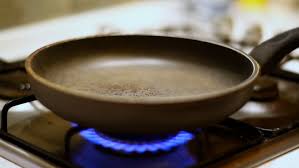
What type of heat transfer is occurring in the picture below? (the pan is touching the burner)
conduction
convection
radiation
insulation
A material that reduces the flow of heat is a(n)
conductor
insulator
metal
radiator
Objects with equal amounts of positive and negative charges are ______________.
electrically charged
electrically neutral
positively charged
negatively charged
An object that has more electrons than protons carry an excess of _________.
electric charges
static charges
negative charges
positive charges
Two neutral objects touching each other gain opposite charges after a negatively charged object is brought near one of them. This situation is an example of ________.
charging by contact
charging by friction
charging by conduction
charging by induction
A positively charged rod with only a few electrons is allowed to touch a neutral metal sphere, eventually charging it. This charging method is called ________.
charging by friction
charging by induction
charging by polarization
charging by conduction

the measure of distance east or west of the Prime Meridian
longitude
latitude
the measure of a distance north or south of the equator
longitude
latitude

Location D is located at which coordinates?
30oN, 90oW
90oN, 30oW
10oN, 40oW
30oN, 90oE
Location H is located at which coordinates?
60oN, 120oE
90oN, 30oE
10oS, 40oW
30oN, 90oE
Location L is located at which coordinates?
15oS, 60oW
45oS, 60oW
15oS, 60oE
45oS, 60oE
Which point is located at 30oS, 30oE?
K
D
E
G
A resource that we can use more than once is called a _____ resource.
Renewable
Nonrenewable
Reusable
Recyclable
What is deforestation?
Cutting down trees in a forest.
Planting new trees on empty land.
Using trees to produce oxygen.
Looking for new types of medicine in a forest.
Which of these is the most sensible way to conserve natural resources?
Walk or ride your bike when you can, instead of driving in the car.
Stop using all electricity.
Never ride in the car.
Don't use any products made from trees.
How does recycling conserve resources?
It allows us to reuse things instead of making new ones.
It means there will be less garbage trucks driving around.
We can recycle everything, even food!
There will be no more trash at the dump.
Nonrenewable resources
can be replenished.
cannot be replenished.
are not limited.
are not fossil fuels.
How does population growth affect natural resources?
The more people on the planet, the less natural resources that are available for each person.
The less people on the planet, the less natural resources that are available for each person.
The more people on the planet, the more natural resources that are available for each person.

What is the source of geothermal energy?
sunlight heating surface waters
the splitting of atoms to release energy
natural underground reservoirs of steam and hot water
very hot minerals deep underground

What are petroleum products made of?
underground steam
igneous and metamorphic rocks
buried remains of plants and animals
kinetic energy of water

