
 Worksheets
Extra Credit EOC Review
Total questions: 179
Worksheet time: 2hrs 43mins
Federal System
Strong Central Gov't shares power with states
Strong State Gov'ts
Strong Central Gov't (Centralized Power)
Unitary System
Strong Central Gov't shares power with states
Strong State Gov'ts
Strong Central Gov't (Centralized Power)
Confederal System
Strong Central Gov't shares power with states
Strong State Gov'ts
Strong Central Gov't (Centralized Power)
Makes Laws
Legislative
Executive
Judicial
Makes Federal Laws
Congress
President
U.S. Supreme Court
U.S. Congress; Florida State Legislature; City Councils
Legislative
Executive
Judicial
Enforces Laws
Legislative
Executive
Judicial
Enforces Laws
Legislative
Executive
Judicial
President; Governor; Mayor
Legislative
Executive
Judicial
Interprets Laws
Legislative
Executive
Judicial
U.S. Supreme Court; Florida Supreme Court; County Courts
Legislative
Executive
Judicial
Power of the Supreme Court to declare actions of the other two branches unconstitutional. Established by Marbury vs. Madison.
Impeachment
Veto
Judicial Review
Power of Congress to remove the President, federal judges, and justices from office for bad behavior.
Impeachment
Veto
Judicial Review
The men who fought the war for independence from Great Britain and helped build the framework for the United States Gov't.
Framers/Founding Fathers
Sons of Liberty
Loyalists
Minute Men
The men who fought the war for independence from Great Britain and helped build the framework for the United States Gov't.
Framers/Founding Fathers
Sons of Liberty
Loyalists
Minute Men
Which of the following best describes a system where the central government holds significant power over smaller political units?
Unitary system
Confederal system
Federal system
In this type of government there are different classes: wealthy, middle and poor.
Communist
Capitalist
Which of the following is Communism
The government controls industry
The people vote
The king makes laws
Business is owned by private companies
a political ideology focused on building a socioeconomic order without social classes, without money and without a governing body.
Communism
Totalitarianism
Democracy
Theocracy
Vote needed in Congress to override a President's veto?
1/2
Unanimous
3/4
2/3
Ratifies (approves) treaties made the President
Senate
House of Representatives
Confirms Presidents Appointments to jobs (Ambassadors, other public Ministers and Consuls, Judges of the Supreme Court, and all other Officers of the United States)
Senate
House of Representatives
Tax Bills must start here
Senate
House of Representatives
Protects against unreasonable search and seizure
3rd Amendment
4th Amendment
5th Amendment
6th Amendment
Protects against self-incrimination (right to REMAIN SILENT)
3rd Amendment
4th Amendment
5th Amendment
6th Amendment
Protects due process rights (rights in a criminal trial)
3rd Amendment
4th Amendment
5th Amendment
6th Amendment
Name for powers that belong to state gov'ts only:
Enumerated
Concurrent
Reserved
Delegated
Name for powers that are shared by both the Central and States govts:
Enumerated
Concurrent
Reserved
Delegated
Agreement between the people and their government: John Locke's idea
Eminent Domain
Double Jeopardy
Social Contract
Separation of Powers
Document used by the American Colonists to formally declare separation of Great Britain
Declaration of Independence
U.S. Constitution
Bill of Rights
Magna Carta
Document ratified in 1788 that established a Federal System of gov't in the United States
U.S. Constitution
Articles of Confederation
Representative Democracy/Republic
People vote directly on all laws that affect the country
People vote for Representatives who make decisions on their behalf
A king or queen rules with unlimited power
A form of government in which religious authorities rule in the name of a god or deity
Congress passes a law but the President vetoes it.
Separation of Powers
Checks and Balances
Congress passes a law and the President directs an Administrative Agency to enforce it.
Separation of Powers
Checks and Balances
The President chooses a new Supreme Court Justice, but the Senate rejects the appointment.
Separation of Powers
Checks and Balances
The Supreme Court declares an executive order unconstitutional.
Separation of Powers
Checks and Balances
Supreme Court Decision: Student speech can be limited in school.
Hazelwood vs. Kuhlmeier
In re Gault
Gideon vs. Wainwright
Miranda vs. Arizona
Supreme Court Decision: People accused of crimes must be given a public defender (lawyer) if they cannot afford one.
Hazelwood vs. Kuhlmeier
In re Gault
Gideon vs. Wainwright
Miranda vs. Arizona
Supreme Court Decision: People who are arrested must be told their 5th Amendment right to remain silent (protect against self-incrimination)
Hazelwood vs. Kuhlmeier
In re Gault
Gideon vs. Wainwright
Miranda vs. Arizona
Supreme Court Decision: Juveniles who are accused of committing crimes have the same due process rights as adults.
Hazelwood vs. Kuhlmeier
In re Gault
Gideon vs. Wainwright
Miranda vs. Arizona
U.S. Congress
Executive
Judicial
Legislative
Which of the following chooses the President of the United States?
The popular vote
The electoral college

What does Uncle Sam symbolize?
The Electoral College
The United States of America
The U.S. Congress
U.S. Presidents

How is this poster of Uncle Sam from World War I an example of Propaganda?
It is using Uncle Sam to represent the United States
It has favor for or against someone/something
It is trying to get you to feel something/do something
If a federal tax bill is introduced in the U.S. House of Representatives and passes with a majority (51% or more) vote, where will it go next?
The President's desk
The U.S. Senate
If a federal tax bill is introduced in the U.S. House of Representatives and passes with a majority (51% or more) vote, where will it go next?
The President's desk
The U.S. Senate
Economic System:
-Gov't owns some industries
-Gov't provides many services for free
- Citizens pay high taxes
Socialism
Capitalism
Communism
"____________________ refers to the constitutional requirement that when the government acts in such a way that denies a citizen of life, liberty, or property, the person must be given notice, the opportunity to be heard, and a decision by a neutral decision-maker."
Eminent Domain
Double Jeopardy
Peaceful Assembly
Due Process
Supreme Court Decision: President's actions must align with the rule of law
U.S. vs. Nixon
Dred Scott vs. Sanford
Plessy vs. Ferguson
Brown vs. Board of Education
Supreme Court Decision: Racial segregation was constitutional so long as facilities were "separate but equal"
U.S. vs. Nixon
Dred Scott vs. Sanford
Plessy vs. Ferguson
Brown vs. Board of Education
Supreme Court Decision: Separate is NOT Equal! Racial segregation was unconstitutional (Segregation denies equal protection under the 14th Amendment)
U.S. vs. Nixon
Dred Scott vs. Sanford
Plessy vs. Ferguson
Brown vs. Board of Education
Age requirement to be a U.S. Senator?
30
25
21
18
Judeo Christian Idea: Justice
The Declaration of Independence states “all men are created equal.”
All laws in the U.S. have to be fair and applied equally to everyone
Laws are in place to punish people for wrongful actions.
Judeo Christian Idea: Individual Worth
The Declaration of Independence states “all men are created equal.”
All laws in the U.S. have to be fair and applied equally to everyone
Laws are in place to punish people for wrongful actions.
Judeo Christian Idea: Personal Responsibility
The Declaration of Independence states “all men are created equal.”
All laws in the U.S. have to be fair and applied equally to everyone, no matter who you are.
People are responsible for their own actions and laws are in place to punish people for wrongful actions.
Double Jeopardy (5th Amendment)
Right to remain silent to protect against self-incrimination
Legal procedures required for a fair trial
Property Rights; Gov't must pay fair market
Cannot be charged twice for the same exact crime
Eminent Domain (5th Amendment)
Right to remain silent to protect against self-incrimination
Legal procedures required for a fair trial
Property Rights; Gov't must pay fair market
Cannot be charged twice for the same exact crime
Due Process (5th Amendment)
Right to remain silent to protect against self-incrimination
Legal procedures required for a fair trial
Property Rights; Gov't must pay fair market
Cannot be charged twice for the same exact crime
Autocracy
One (1) person holds gov't power
A few people hold gov't power
The people hold gov't power
Collecting taxes.
Concurrent (shared) power
Reserved (state) power
Delegated (federal) power
Establishing courts.
Concurrent (shared) power
Reserved (state) power
Delegated (federal) power
Conducts elections.
Concurrent (shared) power
Reserved (state) power
Delegated (federal) power
Declare war.
Concurrent (shared) power
Reserved (state) power
Delegated (federal) power
Negotiate treaties.
Concurrent (shared) power
Reserved (state) power
Delegated (federal) power
Coin and print money.
Concurrent (shared) power
Reserved (state) power
Delegated (federal) power
Law of Soil
Born with US Citizenship - based on location; Born in a US state, territory, military base
Born with US Citizenship - based on parent(s)
Which is the highest court in the land?
Cabinet
The Supreme Court
Congress
My house
In which branch of government are ALL members appointed rather than elected?
Legislative
Executive
Judicial
What is the Judicial Branch made up of?
members of Congress
the nation’s Court system
the President & Vice President
citizens
This branch can veto legislation.
Legislative
Executive
Judicial
Government is divided into a national, state, and local government.
Limited Government
Federalism
Federal
Separation of Powers
What are the three LEVELS of government?
national, state, district court
local, state, school district
executive, legislative, judicial
national, state, local (city and county)
”What level of government should handle this issue?
Which of the following is NOT a power granted to the Federal Government?
Maintaining an Army
Handling trade with other countries
Printing Money
Issuing drivers' licenses
Which idea is from the Magna Carta?
Thomas Paine mainly wrote Common Sense to

Which statement completes the diagram?
“To secure these rights, Governments are instituted among men, deriving their just powers from the consent of the governed.”
Which Enlightenment idea is expressed in this statement?

Which phrase completes the diagram?
What is it called when three branches of government have their own distinct powers?
checks and balances
separation of powers
natural law
consent of the governed
Which Enlightenment thinker had the idea of checks and balances and separation of powers?
John Locke
Baron de Montesquieu

Any government leader cannot get away with breaking a law because of ...
Principles of Government
Self-Government
Military Law
Rule of Law
What was a pamphlet published by Thomas Paine in 1776 to convince the American colonists to support becoming independent from England?
English Bill of Rights
Common Sense
Magna Carta
Mayflower Compact
What was the government document written in 1215 that limited the power of the king of England (limited monarchy) and protected the rights of the nobility?
Magna Carta
English Bill of Rights
Mayflower Compact
Declaration of Independence
Which of the following principles is established in the Magna Carta?
right to bear arms
self-government
free speech
trial by jury
Which is the principle that there is an agreement between society and the government?
Magna Carta
Common Sense
Mayflower Compact
Social Contract
Which one included free speech and the right to bear arms?
English Bill of Rights
Magna Carta
The Enlightenment
Mayflower Compact
That excessive bail ought not to be required, nor excessive fines imposed, nor cruel and unusual
punishment inflicted...
Which purpose of government can be traced to these statements?
Which is an influence both Ancient Greece and Ancient Rome had on the American
government?
a polis
civic participation
a written constitution
separation of powers
The proverb below comes from the Judeo-Christian tradition.
"Do not withhold good from those who deserve it, when it is in your power to act."
Which ethical idea is described in the proverb?
justice
rule of law
sovereignty
republicanism
Which Judeo-Christian idea relates to having fair laws and encourages rewarding people who do good deeds?
Personal Responsibility
Rule of Law
Justice
Individual Worth

The table below shows a relationship between historical documents and their impacts.
Which idea completes the diagram?
Rule of Law
Individual Rights
Self-Government
Declaring Independence
What characteristic of the U.S. government was developed from the idea that no single branch of government should hold all authority?
rule of law
natural law
separation of powers
social contract

The newspaper headline below is from a historical event (1984).
Which Enlightenment idea does this newspaper represent?
rule of law
natural law
social contract
separation of powers
The quote below is from an Enlightenment thinker.
“There is as yet no liberty if the power of judging be not separated from legislative power and the executive power.” - Montesquieu
Based on the quote, which example would the Enlightenment thinker support?
A ruler that has unlimited power.
A few rulers that unequally divide power.
Multiple branches of government with unlimited power.
Multiple branches of government that equally divide power.
What is the name of the idea that the government must give fair legal procedures to any citizens accused of committing a crime?
Social Contract
Limited Government
Due Process
Self-Government
According to John Locke's Social Contract theory, who does the government get its power from? In other words, who approval does the gov't need in order to have power?
The Rich
The Legislative Branch
The Political Parties
The People
According to John Locke's Social Contract theory, who does the government get its power from? In other words, who approval does the gov't need in order to have power?
The Rich
The Legislative Branch
The Political Parties
The People

What was the main weakness of the Articles of Confederation?
the federal government was too weak
It had no legislative branch
The judicial was too powerful
The executive was too powerful


Use the table to answer the question.
Weaknesses in the Articles of Confederation
Weakness
No power to enforce laws
No executive branch
No judicial branch
How did these weaknesses impact the writing of the Constitution?
The Founding Fathers gave Congress the power to legislate.
The Founding Fathers created a government with three branches.
The Founding Fathers gave the states the power to interpret national laws?
The Founding Fathers created the office of president to settle disputes.
The ___________ are for the ratification (approval) of the U.S Constitution.
Federalists
Anti-Federalists
Whiggs
Representatives
The ___________ are NOT for the ratification (approval) of the U.S Constitution.
Anti-Federalists.
Federalists.
Whiggs.
Supreme Court Justices.
Anti-Federalists were in favor of:
States Rights and the protection of individual rights.
A strong Central Government.
A Monarchy (King & Queen) to rule over the country.
a powerful National Government
How did the Federalists and Anti-Federalists "compromise" to ratify (approve) the U.S Constitution?
The added the Bill of Rights (First 10 Amendments)
They outlawed cruel and unusual punishment.
Ensured due process of the law.
The Federalists threatened the Anti-Federalists to war.
Read the scenario below:
"The U.S. Supreme Court declared a law unconstitutional."
What constitutional principle is being demonstrated?
Checks and Balances
Separation of Powers
Individual Rights
Self-Government
Which is an important task of administrative agencies, which are part of the Executive Branch?
making detailed regulations (rules)
determining constitutional issues
The passage below is from a speech by President George W. Bush on March 19, 2003.
"On my orders, coalition forces began striking selected
targets of military importance..."
What constitutional power justifies the actions described in the passage?
Chief Legislator
Negotiator-in-Chief
Commander-in-Chief
Head of Party
What is the FIRST step in the lawmaking process?
A bill is proposed by a citizen, a special interest group, or a legislator.
The bill goes to the President's desk for signature.
The bill goes for a floor vote.
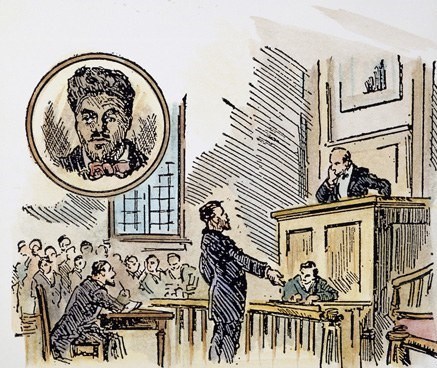
What was the Supreme Court's decision in the Dred Scott case?
That slavery diminished the national character.
That African American rights were protected by the Constitution.
That African Americans did not have the right to sue in federal court because they were not citizens
That slavery should be abolished by executive order
15th Amendment
Right to bear arms
Suffrage (right to vote) for black men
Suffrage (right to vote) for women
Search and seizure, must have search warrant
19th Amendment
Right to bear arms
Suffrage (right to vote) for black men
Suffrage (right to vote) for women
Search and seizure, must have search warrant
Abolished poll taxes
24th Amendment
26th Amendment
21st Amendment
19th Amendment
Lowered the voting age to 18
24th Amendment
26th Amendment
21st Amendment
19th Amendment
Preamble: "We the people..."
People are the source of the Gov'ts power
Keep peace inside the United States
Gov't works to keep people healthy, happy, and prosperous
Create courts to settle disputes and establish fair laws
The Judicial Branches (courts) interpret the laws and...
Maintains the U.S. army and navy
Impeaches gov't officials
Overseeing administrative agencies
Settles disputes
Hire lobbyists to influence lawmakers.
PAC's
Interest Groups
Political Parties
Third Parties
Acts as a watchdog and exposes government corruption
The Media
Individuals
Political Action Committees
Interest Groups

What international conflict does this political cartoon refer to?
The Cuban Missile Crisis
The Bay of Pigs Invasion
Vietnam War
Korean War

Which international conflict does this political cartoon refer to?
The War of 1812
The Bay of Pigs Invasion
The Spanish-American War
The Iranian Hostage Crisis
Which amendment protects the right to bear arms?
1st Amendment
2nd Amendment
4th Amendment
8th Amendment
Which branch of government is responsible for enforcing laws?
Legislative
Executive
Judicial
What principle is demonstrated when the President can veto a bill passed by Congress?
Separation of Powers
Checks and Balances
Federalism
What issue prompted the formation of the Republican Party?
manifest destiny
westward expansion
women's suffrage
slavery
Political Action Committee (PAC)
an organization of people that tries to get their members elected to office
a group whose purpose is to raise money for campaigns
an organization of people who try to register new voters
Why did the Founding Fathers create the Electoral College system?
to make sure those elected were qualified
to create a college to educate people on voting
to ensure that every vote counted equally
How does media bias impact the public?
It encourages the use of mudslinging
It leads to increased use of social media
It creates more accurate polling results
It influences individual opinions and beliefs
Public Policy
government actions designed to achieve certain goals
information about government that is made available to the public
the body of laws that have been decided by court cases
National Interest
issues with other nations that are often addressed with foreign policy
what is best for the nation and its people as a whole
information about the activities and intentions of other nations
concerns with a nation that are often addressed with domestic policy
What is an example of a humanitarian effort in another nation?
sending troops to protect an ethic minority that is being killed
refusing to trade with a nation that denies human rights to its citizens
persuading a country to sign a trade agreement
sending food and medicine to a nation that experienced an earthquake
What was the primary reason for U.S. involvement in the Korean and Vietnam Wars?
Fighting against Communism
Stop terrorism
Gain more territory in Asia
Spread Capitalism
Which conflict involved the United States removing Saddam Hussein from power and searching for weapons of mass destruction?
First Gulf War
War on Terror
Second Gulf War
Iranian Hostage Crisis
Citizens Obligations
Things citizens MUST do
Things citizens SHOULD do for the Common Good
Citizens Responsibility
Things citizens MUST do
Things citizens SHOULD do for the Common Good

Jury Duty
Obligation (MUST do)
Responsibility (SHOULD do)
Paying Taxes
Obligation (MUST do)
Responsibility (SHOULD do)
Petitioning the government (asking for change)
Obligation (MUST do)
Responsibility (SHOULD do)
Appeal
the subject matter over which a court may exercise authority; also, a court’s power to hear a case
a judgment issued by a court, usually after a hearing
To ask a higher court to review a decision made by a lower court for errors
Case Law
the body of laws based on customs and previous legal decisions, created by judges
the body of laws based on the outcome of previous court cases
the body of laws based on the U.S. Constitution and interpretations of it
the body of laws that regulates the behavior of people, defines crimes, and provides punishments for criminal acts
Criminal Law
the body of laws based on customs and previous legal decisions, created by judges
the body of laws based on the outcome of previous court cases
the body of laws based on the U.S. Constitution and interpretations of it
the body of laws that regulates the behavior of people, defines crimes, and provides punishments for criminal acts
Common Law
the body of laws based on customs and previous legal decisions, created by judges
the body of laws based on the outcome of previous court cases
the body of laws based on the U.S. Constitution and interpretations of it
the body of laws that regulates the behavior of people, defines crimes, and provides punishments for criminal acts
Constitutional Law
the body of laws based on customs and previous legal decisions, created by judges
the body of laws based on the outcome of previous court cases
the body of laws based on the U.S. Constitution and interpretations of it
the body of laws that regulates the behavior of people, defines crimes, and provides punishments for criminal acts
a universal set of moral principles believed to come from humans’ basic sense of right and wrong; can be applied to any culture or system of justice
Natural Law
Natural Rights
Civil Liberties
Equal Protection
a Fourteenth Amendment protection that prohibits states from denying due process or rights to individuals
Natural Law
Natural Rights
Civil Liberties
Equal Protection
statements, usually made under oath, suggesting that the person speaking is guilty of a crime
Self-incrimination
Slander
Libel
conduct that conveys a message without spoken words
Civics Participation
Natural Rights
Eminent Domain
Symbolic Speech
the art and practice of managing communication and relationships between nations
Globalization
Diplomacy
Foreign Affairs
Foreign Policy
Read the requirements and determine which gov't office it's describing:
- Be at least 30 years old
- US Citizen at least 9 years
- Live in the state you will represent
U.S. Senate
President
FL Senate/Fl House of Reps
U.S. House of Representatives
Read the requirements and determine which gov't office it's describing:
- Be at least 25 years old
- US Citizen at least 7 years
- Live in the state you will represent
U.S. Senate
President
FL Senate/Fl House of Reps
U.S. House of Representatives
Read the requirements and determine which gov't office it's describing:
- Be at least 35 years old
- Natural Born Citizen (Born with US Citizenship)
- Live US at least 14 years
U.S. Senate
President
FL Senate/Fl House of Reps
U.S. House of Representatives
Read the requirements and determine which gov't office it's describing:
- Be at least 21 years old
- Live in Florida for at least 2 years
- Live in the district they will represent
U.S. Senate
President
FL Senate/FL House of Reps
U.S. House of Representatives
Tyranny
Gov't with fair, just laws
Cruel and oppressive Gov't
Gov't that is run by the will of the people
Gov't that is led by elected representatives
Gov't power is centralized (held by the central gov't)
Federal
Confederal
Unitary
Identify the autocracy (one person in charge)
Direct Democracy
Representative Democracy
Dictatorship
Oligarchy
Who holds gov't power in an oligarchy?
The people
One person
A small group
How does the President influence the Supreme Court?
The President can veto Supreme Court decisions
The President can impeach Supreme Court Justices for bad behavior
The President appoints (chooses) Supreme Court Justices
International Conflict: Caused by the British kidnapping American sailors (impressment)
War of 1812
Spanish-American War
Bay of Pigs Invasion
Event that helped Americans realize the Articles of Confederation were too weak (Angry Farmers)
Shay's Rebellion
Lexington and Concord
Battle of Bunker Hill
Constitutional principle: Powers of Congress can "stretch" (like a rubberband) - AKA Necessary and Proper Clause
Enumeration Clause
Elastic Clause
10th Amendment
Congress
Legislative - Makes Laws
Executive - Enforces Laws
Judicial - Interprets Laws
America's Original Constitution - Created Confederal System with strong states, didn't give enough power to the central government
US Constitution
Iroquois Confederation
Articles of Confederation
10th Amendment
Guarantees due process
Protects against cruel/unusual punishment
Reserves powers for the state gov'ts
Protects people's rights that are not written down
International Conflict: US joined this war after Japan attacked a US naval base at Pearl Harbor, Hawaii
World War I
World War II
Korean War
Vietnam War

