
 Worksheets
Pictorial Drawings & Orthographic Projection
Total questions: 22
Worksheet time: 11mins

What are the two types of pictorial drawings mentioned in the learning material on technical drawing techniques?
Isometric and Perspective
Isometric and Oblique
Oblique and Perspective
Axonometric and Perspective

What is the term used to describe the act of obtaining the image of a 3-dimensional object onto a 2-dimensional media?
Drawing
Sketching
Projection
Rendering
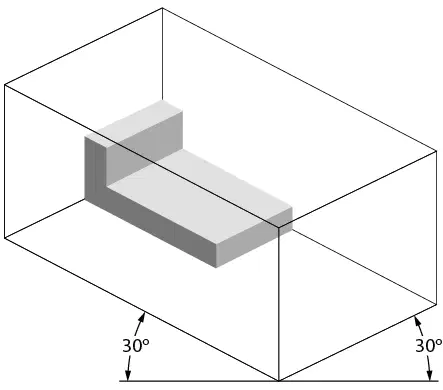
What type of drawing uses 30-degree angles to represent three-dimensional objects, providing a clear and realistic picture of the object's appearance?
Orthographic projection
Oblique drawing
Isometric drawing
Perspective drawing

Which type of drawing uses parallel projection to represent three-dimensional objects, with one face shown as a true shape and the others at 45°?
Isometric drawing
Orthographic projection
Oblique drawing
Perspective drawing

What is the characteristic feature of orthographic projection in technical drawings?
Uses 30-degree angles to represent objects
Shows all faces as true shapes
Uses multiple two-dimensional views to represent a three-dimensional object
Uses parallel projection to show one face as a true shape
What is spatial intelligence primarily concerned with?
The ability to solve mathematical problems quickly
The ability to imagine things in three dimensions
The ability to write effectively
The ability to remember historical dates
Which of the following is an example of using spatial intelligence?
Solving a complex algebraic equation
Writing a poem
Packing a suitcase
Memorizing a speech

Which career might require strong spatial intelligence?
Accountant
Chef
Historian
Language translator

How can one improve their spatial intelligence?
By practicing
By watching television
By reading books
By listening to music

For what purposes are isometric drawings commonly used?
A) Only in mechanical engineering.
B) Primarily in fashion design.
C) In engineering, architecture, and product design.
D) Exclusively in educational textbooks.

What materials are needed to practice freehand isometric drawing as shown in the image?
Colored pencils and markers
Blank paper and a pencil
Watercolors and brushes
Digital tablet and stylus

What does "NTS" stand for in the context of the image?
New Technical Standard
Not To Scale
Need To Study
None To Show
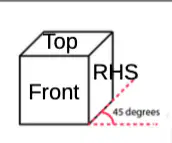
What type of projection is used when the front is horizontal and the right-hand side (RHS) is at a 45-degree angle?
Isometric
Oblique
Orthographic
Perspective
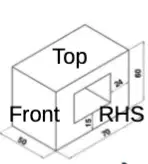
In isometric projection, at what angle are the axes typically inclined?
30 degrees each way
45 degrees each way
60 degrees each way
90 degrees each way

What is an oblique drawing in design?
A type of perspective drawing where all objects are drawn at a 30-degree angle.
A type of parallel projection used to represent 3D objects on a 2D plane, with one face of the object parallel to the picture and the RHS edge at 45°.
A method of drawing where objects are represented without any vanishing points.
A drawing technique that uses a single vanishing point directly opposite the viewer's line of sight.
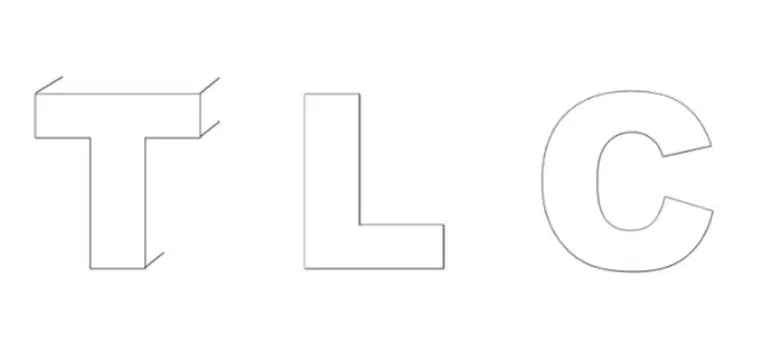
What type of sketching practice is depicted in the image provided?
Perspective sketching
Isometric sketching
Oblique sketching
Contour sketching

What does an orthographic projection represent in design?
A method to create realistic 3D animations
A type of perspective drawing
A representation of 3D objects in two dimensions
A technique for digital sculpting

What is the purpose of orthographic drawings in technical communication?
To provide a decorative representation of objects
To provide a standardised and accurate method for representing 3D objects on 2D surfaces
To create abstract art from technical components
To enhance the aesthetic appeal of technical documents

In orthographic projection, which views are typically shown?
Top, Front, and RHS
Front, Bottom, and Left Side
Top, Front, and Isometric
RHS, Isometric, and Oblique
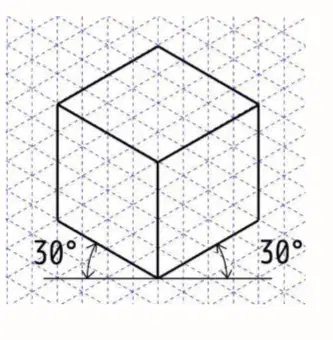
What type of drawing uses 30-degree angles to represent three-dimensional objects, providing a clear and realistic depiction of the object's appearance?
Orthographic projection
Oblique drawing
Isometric drawing
Cavalier projection
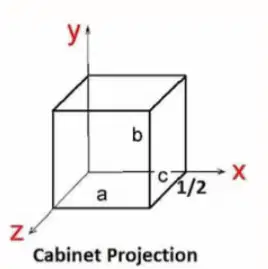
Which type of projection uses parallel projection to represent three-dimensional objects, with one face shown as a true shape and the others on a 45° angle?
Orthographic projection
Isometric
Oblique
One Point Perspective

What is the primary purpose of Ideation Sketching in design as described in the workbook?
To finalize the product design
To explore different design ideas and discuss their strengths and weaknesses
To choose the colors for the design
To market the product to clients

