
 Worksheets
JC Science. Biological World revision questions
Total questions: 192
Worksheet time: 4hrs 4mins
The job of the heart is to . . .
pump blood around the body.
send food to the small intestines.
break down food.
give energy to the body.
What carries oxygen around the body?
Plasma
Red Blood Cells
Platelets
White Blood Cells
The trachea leads directly to the...
Bronchioles
Bronchi
Oesophagus
Alveoli

When you breathe, your lungs take in ___ and exchange it for ___.
air/oxygen
oxygen/carbon dioxide
carbon dioxide/waste
waste/air
Why would a person want to limit their intake of sodium (salt)?
Sodium weakens bones and teeth
Sodium can lead to high blood pressure
Sodium is linked to cancer
Sodium causes a person to be diabetic
What gas is given off as a result of respiration?
Oxygen
Carbon dioxide
Hydrogen
Nitrogen
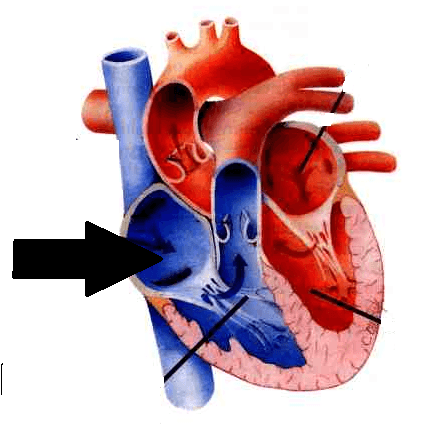
What is the arrow pointing at?
Left atrium
Right atrium
Left ventricle
Right ventricle
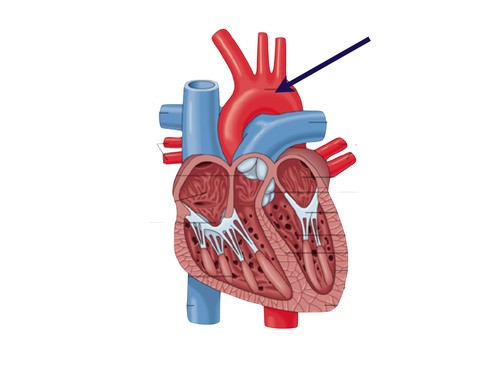
What is the arrow pointing at?
Pulmonary veins
Pulmonary artery
Aorta
Vena cava
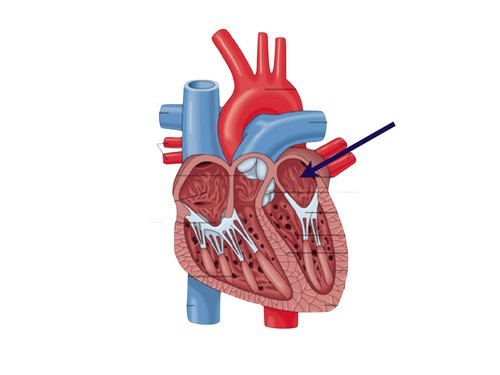
What is the arrow pointing at?
Left atrium
Right atrium
Left ventricle
Right ventricle
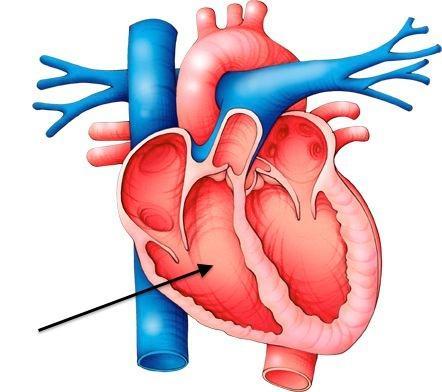
What is the arrow pointing at?
Left atrium
Right atrium
Left ventricle
Right ventricle
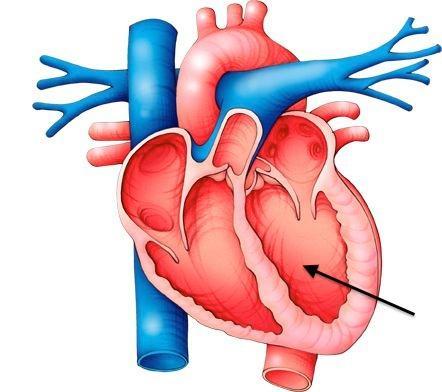
What is the arrow pointing at?
Left atrium
Right atrium
Left ventricle
Right ventricle
This chamber of the heart RECEIVES blood returning from the body:
right atrium
right ventricle
left atrium
left ventricle

A flap of tissue that prevents blood from flowing backwards is called?
Aorta
Atrium
Septum
Valve
Compared to arteries, veins........
carry oxygenated blood
have thinner walls.
have thicker walls
hold their shape better when cut.
What carries mostly oxygen-rich blood away from heart?
Arteries
Veins
Capillaries
What is the function of the heart?
Protects organs and produces red blood cells.
Generates heat.
Breaks down food into nutrients.
A pump which moves the blood.
Which is NOT a function of the circulatory system?
Delivers O2 and nutrients to cells
Removes CO2 and waste from cells
Break down carbohydrates into glucose
Transports other materials through body
Arteries, veins, and capillaries are three types of __________
heart valves
blood vessels
cells
veins
The __________________________ bring oxygenated blood from the lungs to the heart.
pulmonary veins
pulmonary artery
aorta
superior vena cava

Identify this structure:
septum
base
semilunar valve
bicuspid valve
What are the three functions of the blood?
Transportation, filtration, and protection
Transportation, temperature regulation, and protection
Protection, temperature regulation, and filtration
Iron-rich protein molecules that releases the oxygen when red blood cells enter the capillaries and come into close contact with body cells:
Platelets
Haemoglobin
White blood cells
Plasma
Small, irregular shaped pieces of cells that plug wounds and stop bleeding:
White blood cells
Red blood cells
Plasma
Platelets

What does de-oxygenated mean?
Oxygen-rich
Blood flow
Oxygen-poor
Water flow
Which describes a task performed by the circulatory system?
Creating red blood cells
Sending messages to the brain
Transporting waste materials
Producing energy from food
Your blood is made up of which of the following?
Plasma, red blood cells, blue blood cells
White and red blood cells
Plasma and platelets
Plasma, red blood cells, white blood cells, and platelets
We breathe in carbon dioxide and breathe out oxygen.
True
False

Identify number 1:
Lungs
Pharynx
Mouth
Alveoli

Identify number 6:
Lungs
Trachea
Mouth
Alveoli

Identify number 3:
Pharynx
Trachea
Bronchus
Alveoli
Which are the main organs of the respiratory system?
Heart
Stomach
Lungs
Nose
Where is the site of gas exchange in the body?
Alveoli
Nose
Lung
Bronchi
Which part of the respiratory system plays a major role in speech?
Nose
Pharynx
Larynx
Trachea
What are the two short tubes that carry air into the lungs?
Trachea
Bronchioles
Lungs
Bronchi
What part(s) of the skeleton protects the lungs?
Ribs
Sternum
Patella
Stomach
What is the material found in the ears and tip of the nose that also holds the trachea open?
Cartilage
Synovial fluid
Bone
Mucus
What reagent is used to show the presence of carbon dioxide?
Hydrochloric acid
Limewater
Litmus
Deionised water
Which body system breaks down food and sends nutrients to all of the body's organs?
Nervous
Spinal
Skeletal
Digestive
Which body system gives your body shape and protects most major organs?
Muscular
Cardiovascular
Skeletal
Nervous
Which of the following shows the levels of organization of an organism from LEAST to MOST complex?
Cells-tissues-systems-organs
Organs-cells-systems-tissues
Systems-organs-tissues-cells
Cells-tissues-organs-systems
Which of the blood vessels do you think have the greatest blood pressure?
Veins
Capillaries
Atria
Arteries
Which sequence lists the hereditary material found inside cells from the smallest unit to the largest unit?
chromosome → gene → nucleus
chromosome → nucleus → gene
gene → nucleus → chromosome
gene → chromosome → nucleus
Which fertilization and development method is most typical of humans before birth occurs?
external fertilization and external development
external fertilization and internal development
internal fertilization and external development
internal fertilization and internal development
The sequence below represents the organization
of the genetic information in the nucleus of
a cell. One term in the sequence is represented
by X
DNA--> X --> chromosome
gene
mutation
clone
protein

What type of reproduction is performed by the ameba?
regeneration
asexual
sexual
budding
Which process is responsible for the growth and repair of human tissue?
evolution
germination
cell division
natural selection

How many males in this model show the trait?
one
three
seven
four

Diagrams A through E represent five stages in a simplified model of sexual reproduction and development. At which stage is fertilization occurring?
A
B
C
E

Between which two stages does cell division first occur?
A and B
B and C
C and D
D and E

The Punnett square represents a cross between two parent pea plants. The gene for round shape (R) is dominant over the gene for wrinkled shape (r). What percentage of the offspring will have a round shape?
100%
50%
25%
0%
Which gas is used by humans in the process of cellular respiration?
nitrogen
oxygen
carbon dioxide
water
Which process occurs during the growth and development of a fertilized human egg?
cell division
natural selection
sexual reproduction
evolution

If the pattern of growth continues, how many bacteria will be in sample B when six hours have elapsed?
32
64
1024
2056
Genes are a part of a
cell membrane
chromosome
hormone
vitamin
Compared to the amount of genetic information
contained in a normal human body cell, the amount
contained in a normal human sperm cell is
the same
twice as much
one-half as much
one-fourth as much

The diagram to the left represents an event in human reproduction. The numbers in the drawing represent the number of
genes
nucleus
chromosomes
DNA
Which sequence lists the hereditary material
found inside cells from the smallest unit to the
largest unit?
chromosome → gene → nucleus
chromosome → nucleus → gene
gene → nucleus → chromosome
gene → chromosome → nucleus

The photograph to the left shows three cats with
differences in their fur length and patterns.These differences are most likely due to
dietary habits
asexual reproduction
sexual reproduction
damage from disease
Which process results in the formation of a new cell with a full set of chromosomes?
respiration
digestion
fertilization
evolution
A single human body cell typically contains thousands of
bacteria
nuclei
genes
chloroplast

The hydra shown is reproducing asexually. What percentage of the offspring’s genetic information is the same as the genetic information of the parent?
25%
50%
75%
100%


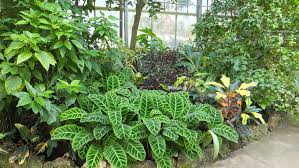


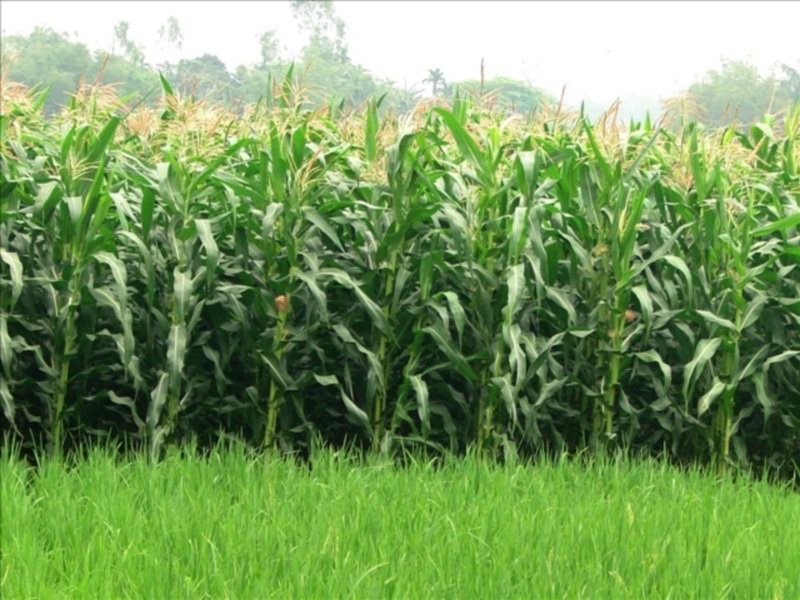
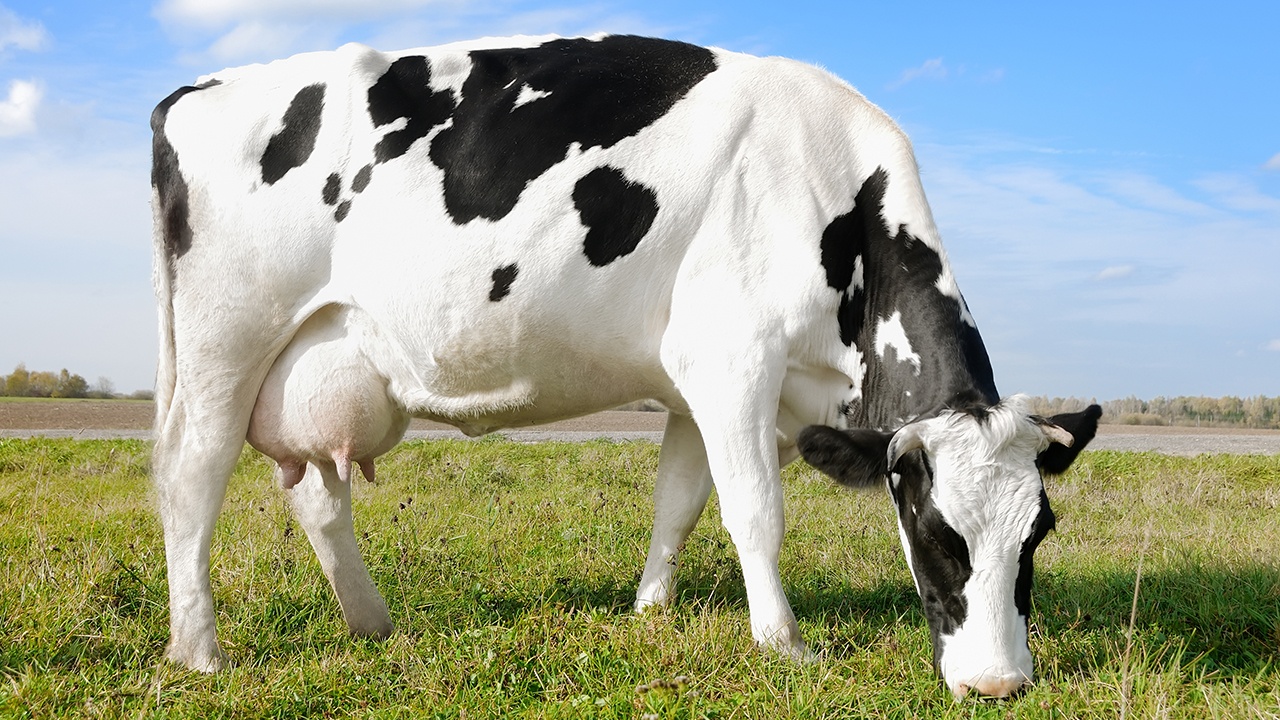

What gas goes into the plant before photosynthesis?
Carbon Dioxide
Carbon Monoxide
Oxygen
Nitrogen

What two products does a plant make during photosynthesis?

Cellular respiration is...
the process by which cells break down glucose into energy.
the process by which cells break light down into energy.
the process by which cells communicate with other cells.
In which way are photosynthesis and cellular respiration different?
Cellular respiration stores ATP, while photosynthesis releases ATP.
Cellular respiration produces oxygen, while photosynthesis uses oxygen.
Photosynthesis releases energy, while cellular respiration stores energy.
Photosynthesis uses carbon dioxide, while cellular respiration produces carbon dioxide.
Cellular respiration occurs in
chloroplasts
mitochondria
golgi aparatus
thylakoid
These organisms get their energy from photosynthesis:
autotroph
heterotroph
Which type of organism would MOST likely benefit directly from increased levels of CO2?
mushroom
tree
bird
fish
How can photosynthesis be related to cellular respiration?
What's produced by one is needed for the other
They both produce the same products
They both have the same reactants (need the same things)
These 2 processes have nothing in common
How can energy from the sun be transferred to animals?
The sun's energy is transformed into food by plants, animals eat plants as food so that they can transform that food into energy.
Plants produced energy through photosynthesis, animals that eat that energy can produce food.
Plants transformed energy of the sun into gases that animals can breath in to use as energy through respiration.
Animals are able to use energy from the sun by eating the plants that provides energy for the animals.
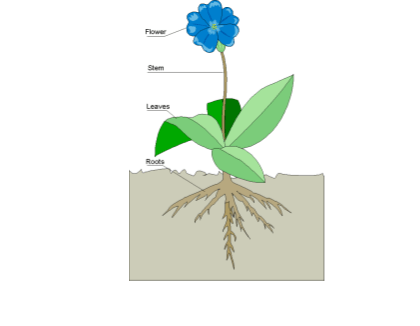
Where do plants get the energy for photosynthesis to take place?
nutrients in the soil
the sun
chlorophyll
bee pollination

Photosynthesis is used to produce food for plants in the form of glucose. In the process, oxygen is released. As shown in the diagram, plants require water and carbon dioxide (from the air). What else is required for photosynthesis and what role does it play?
Light is required to provide energy for photosynthesis.
ATP is required as an energy source for photosynthesis.
Glucose is required as an energy source for photosynthesis
Oxygen is required to split water molecules in photosynthesis.
Where do plants get the energy for photosynthesis to take place?
nutrients in the soil
the sun
chlorophyll
bee pollination
Photosynthesis is used to produce food for plants in the form of glucose. In the process, oxygen is released. As shown in the diagram, plants require water and carbon dioxide (from the air). What else is required for photosynthesis and what role does it play?
Light is required to provide energy for photosynthesis.
ATP is required as an energy source for photosynthesis.
Glucose is required as an energy source for photosynthesis
Oxygen is required to split water molecules in photosynthesis.
What is the smallest LIVING unit of LIVING THINGS?
a cell
a mitochondria
a brick
a protein
Plant and animal cells...
are different, because plant cells have two extra parts
are exactly the same
are the same, except that plant cells don't have a cell membrane
The cell membrane...
is like a wall that blocks everything from going into the cell
controls what can go into or out of a cell
is hard and rigid, and gives the cell its shape, like an exoskeleton
Which part of the cell CONTROLS everything that happens in the cell?
mitochondria
nucleus
cell membrane
vacuole
Which part of the cell STORES water and minerals?
mitochondria
nucleus
cell membrane
vacuole
Where do cells come from?
They come from eggs.
They come from minerals in water.
They come from other cells.
How do cells reproduce?
They lay eggs.
One cell divides to make 2 cells (etc.)
Two cells combine and then make 4 cells.
Which part of the cell is a watery, jelly-like substance?
cytoplasm
nucleus
vacuole
cell wall
Which parts do ONLY plant cells have? (Animal cells don't have them!)
vacuoles and mitochondria
nucleus and chloroplasts
chloroplasts and cell membrane
cell wall and chloroplasts
In PLANT cells, which part is the rigid outer layer that supports and protects the cell?
cell membrane
cell wall
chloroplast
nucleus
Chloroplasts...
are where plant cells do photosynthesis and make food
are where plant cells produce energy
are where both plant and animal cells make food (photosynthesis)
Which cell part produces energy?
mitochondria
nucleus
vacuole
cytoplasm
Chloroplasts...
are NOT in animal cells
are always in animal cells
are sometimes in animal cells, and sometimes in plant cells
Mitochondria...
make food
make energy
make waste
don't make anything
A cell wall...
is very soft and flexible
is very rigid, and supports the plant cell, giving it its shape
is the part that is inside the plant's nucleus
Where does PHOTOSYNTHESIS happen in plants?
in the nucleus
everywhere in the cell
in the cytoplasm
in the chloroplasts
True or False?: Chloroplasts contain chlorophyll, a substance that absorbs the sun's light.
True
False: chloroplasts contain only water and minerals.
False: chloroplasts contain air, like little balloons in the leaf.
Which thing is NOT made of cells?
A dog
A carrot
A piece of candy
A piece of wood from a tree
True or false: ALL living things are made of cells.
True
False: Some living things are made of cells, and others aren't.
What instrument do you need to use to see cells?
A microscope
A telescope
A periscope



A version of a gene is called a(n)
allele
characteristic
specific gene
trait

A trait that is expressed if one copy of the allele is present is a(n)
characteristic
dominant trait
gene
recessive trait

An organism’s genetic makeup; the pair of alleles for a trait is called a(n)
dominant trait
genotype
phenotype
recessive trait

An organism’s physical expression of a trait is called a(n)
dominant trait
genotype
phenotype
recessive trait

What is it called when both alleles in a genotype are the same?
Dominance
Heterozygous
Homozygous
Recessiveness

What is it called when the alleles in a genotype are different?
Dominance
Heterozygous
Homozygous
Recessiveness

Which pair of alleles is an example of homozygous recessive?
bb
BB
Bb

Which pair of alleles is an example of homozygous dominant?
tt
TT
Tt

Which pair of alleles is an example of heterozygous alleles?
ll
LL
Ll
What are physical characteristics of an organism?
Alleles
Genotypes
Genes
Traits
In a Punnett square, a lower case letter stands for a ____________ allele.
dominant
recessive
homozygous
heterozygous
Hair color, height, eye color and freckles are examples of human traits. What do we call the physical expression of the genetic material of an organism?
genetics
heredity
genotype
phenotype
Which of the following genotypes is homozygous dominant?
A
Aa
AA
aa
Bb is a ______.
genotype
phenotype


The flower is a modified
stem
leaf
root
branch
Which of the following shows the female reproductive parts of a flower?
anther, filament, ovary, ovule
stigma, filament, ovary, ovule
stigma, style, ovary, ovule
anther, filament, ovary, ovule
Which of the following about pollination is true?
Cross-pollination occurs between flowers of same plant.
Cross-pollination occurs between flowers of different plants that is of the same species.
Self-pollination occurs between flowers of different plants.
Cross-pollination occurs between flowers of different plants that is of different species.

The diagram shows a wind-pollinated flower. Which of the following characteristics must this flower have?
(Select all correct answers.)
Flower is scented.
Petals are dull in colour.
Anthers hang out of the flower.
Stigma is large and feathery.

The diagram shows an animal-pollinated flower. Which of the following characteristics must this flower have?
Stigma is sticky.
Flower has no scent.
Petals are large and colourful.
Produces sweet nectar.
The male parts of the flowers are the filament and __________.
stigma
anther
petal
ovary
The male reproductive cells are found in the pollen _______________.
tubes
grains
After fertilisation, the ovules will develop into ___________.
fruits
seeds

