
NEW
Font size
 Worksheets
Split-Brain and Lateralisation
Total questions: 26
Worksheet time: 13mins
Hey there, brain enthusiasts! Noah and Ella are curious: What's the main focus of the research into split-brain and lateralisation? Dive into this brainy adventure with them!
The effects of brain injuries on motor skills
The relationship between brain hemispheres and sensory processing
The impact of environmental factors on brain development
The division of functions between the left and right hemispheres of the brain
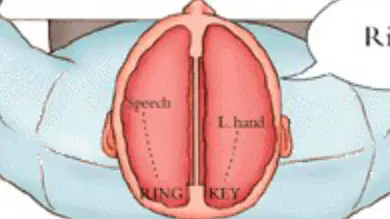
Hey there! Mia was wondering, while studying the brain's functions, which hemisphere is primarily responsible for speech?
Left hemisphere
Right hemisphere
Both hemispheres equally
Neither hemisphere

Imagine Kiara and Charlie are learning about the brain in their neuroscience class. They come across an intriguing scenario about split-brain conditions. If an object is shown only to the left hemisphere, what would a person with this condition perceive?
The object's shape
The object's color
The name of the object
Nothing, as the left hemisphere cannot perceive objects
Hey there! Amelia and Anaya were wondering, what does hemispheric lateralisation refer to in the context of brain processes?
The division of the brain into upper and lower halves
The fact that mental processes in the brain are specialised
The communication between the brain and the spinal cord
The uniform functioning of the brain's hemispheres
Hey Aarav, Kiara, and Anaya! Can you figure out which structure acts as the bridge connecting the left and right hemispheres of the brain?
Thalamus
Corpus callosum
Pons
Medulla oblongata
Hey brainiacs! Anaya, Henry, and Oliver are curious: Where does each neural functioning that occurs in the brain primarily take place?
Throughout the entire brain uniformly
In the frontal and occipital lobes
In either the left or right hemisphere
Only in the left hemisphere
Hey there! Daniel, Freya, and Anaya are discussing a fascinating topic in their neuroscience class. They're curious to know who introduced the concept of Split Brain Research back in 1967. Can you help them out?
Paul Broca
Carl Wernicke
Roger Sperry and Michael Gazzaniga
Santiago Ramón y Cajal
Imagine you're a neuroscientist like Aarav! What would be your primary focus if you were researching Split Brain?
Studying the effects of brain tumors
Understanding the function of the brainstem
Investigating the effects of severing the connection between the two hemispheres
Exploring the role of the frontal lobes with Isabelle and Henry
Imagine you're a neurosurgeon like Anaya, and you're about to perform a groundbreaking surgery associated with Split Brain Research. Which part of the brain would you sever in this procedure?
Amygdala
Hippocampus
Corpus callosum
Cerebellum
Imagine you're in a neuroscience class with Oliver and Kiara, and today's topic is a unique surgery involving the corpus callosum. How common is this surgery, according to the research?
It is a standard procedure
It is rarely done
It is the most common neurological surgery
It is only done in experimental settings
Imagine you're Evie, a budding neuroscientist. What is one strength of using neurological methods in research according to the text?
They decrease neural processing in the brain.
They help increase neural processing in the brain.
They prevent the brain from engaging in specific tasks.
They reduce the brain's ability to perform multiple tasks.
Pop quiz time! Poppy and Isabella were discussing a fascinating study by Rogers et al (2004). Can you guess what they found is associated with enhanced ability in chickens?
Decreased cognitive function
Increased physical strength
Enhanced ability to perform two tasks at the same time
Reduced neural efficiency
Hey there! Noah and Scarlett were debating in class today about brain lateralisation. They stumbled upon an interesting point: What does brain lateralisation enhance according to recent studies?
Physical endurance
Brain efficiency in demanding cognitive tasks
Emotional stability
Memory loss
Imagine you're a superhero like Ella, Alexander, or Oliver, tasked with supporting a city where citizens have degeneration in motor functions. What does this scenario suggest these citizens might need?
They require less support for neural processing.
They benefit from reduced cognitive tasks.
They require more support for neural processing.
They have enhanced neural processing.
Hey there! Oliver and Freya were curious after reading a study by Morfit and Weekes (2001). They want to know: what correlation exists between left-handed individuals and immune disorders?
Left-handers have a lower incidence of immune disorders than right-handers.
There is no significant correlation between handedness and immune disorders.
Left-handers have a higher incidence of immune disorders in their families than right-handers.
Right-handers have a higher incidence of immune disorders than left-handers.
Imagine you're a scientist like Eesha, Isabelle, or Alexander. What does the research mentioned in the text primarily help to understand?
The genetic factors influencing handedness.
The importance of lateralisation in linking handedness to immune disorders.
The role of neural correlations in improving immune system functionality.
The impact of environmental factors on neural development.
Imagine you're a neuroscientist like Oscar, and you're explaining to Elsie and Kiara the primary purpose of performing a corpus callosotomy in split brain patients. What would you say it's mainly for?
To improve memory retention
To reduce epileptic symptoms
To enhance cognitive abilities
To increase brain size
Imagine Thomas and Grace are exploring the mysteries of the human brain in a science class. They learn about Sperry's fascinating research on split-brain patients. What could the right hemisphere do when presented with objects hidden from view?
Speak the name of the object
Draw or select the object using the left hand
Recognize faces more effectively
Control language centers
Hey Aarav, Oliver, and William! Dive into the mysteries of the brain with this puzzle: What did Gazzaniga discover about the right hemisphere's talents in split-brain patients?
It excelled in language processing
It could manage both hemispheres
It was a champ at recognizing faces
It boasted superior memory skills
Imagine you're in a thrilling neuroscience game show! Daniel is our contestant. A picture is flashed to his right visual field. What happens next, according to the famous 1967 study by Sperry and Gazzaniga?
Daniel is puzzled and cannot describe what was shown.
Daniel excitedly describes what he saw, showcasing the left hemisphere's knack for language!
Daniel reports seeing absolutely nothing.
Daniel tries to describe the picture using his right hemisphere.
Imagine you're in a thrilling neuroscience game show, hosted by Henry and Ella! A picture is flashed to the left visual field. What was the patient's reaction in the famous study by Sperry and Gazzaniga?
The patient, guided by the left hemisphere, could eloquently describe the image.
The patient, puzzled, reported seeing nothing at all.
The patient demonstrated the right hemisphere's knack for language by describing what they saw.
The patient couldn't describe the image and often insisted nothing was there.
Imagine you're in a lively debate with Matilda and Benjamin. According to Turk et al (2002), what does the case study suggest about language and brain function?
Language functions are confined only to the left hemisphere.
Language can be managed by either hemisphere of the brain.
Language skills do not depend on the brain.
Both hemispheres are incapable of developing language skills.
Grace, Jacob, and Muhammad were discussing a study by Turk et al (2002). They stumbled upon a curious limitation. Can you guess what it was?
It was conducted over a short period of time.
It involved too many participants.
It lacks validity.
It was not peer-reviewed.
Hey there, Emily and Oliver! Let's dive into a brain teaser! Why are split-brain experiments no longer considered ethical or beneficial according to the text?
They are too costly to perform.
They are no longer considered ethical or beneficial to patients.
They require too many participants.
They are widely supported by the medical community.
What does Andrewes argue about the studies on split-brain research? Let's see if Anaya, Amelia, or Henry can guess!
They are conducted on a large number of participants.
They are easy to replicate.
They often involve only a few participants, making their conclusions questionable.
They provide consistent results across different studies.
Imagine Evie and Leo are discussing the latest split-brain research studies in their neuroscience class. According to their conversation, what is a major issue with the findings from these studies?
The findings are too complex for even Arjun to understand.
The findings are consistent and reliable, as always.
The findings only appear consistent when the study is difficult to replicate.
The findings are quickly disproven by other curious researchers.

