
 Worksheets
S7 CT Precast/Tilt-Up Concrete Panel Installation Quiz
Total questions: 15
Worksheet time: 8mins
What is the initial casting position of a precast/tilt-up concrete panel?
In a vertical position onsite
In a horizontal position onsite or offsite
In a slanted position during transportation
In a vertical position during stabilization
Which standard is mentioned as a compliance requirement for tilt-up concrete construction in the design of concrete tilt panels?
AS3850
AS3600
AS4100
AS2200
What is a critical factor in determining the size of the crane needed in the construction of concrete tilt panels?
The weight of the panels
The height of the building
The color of the panels
The speed of construction
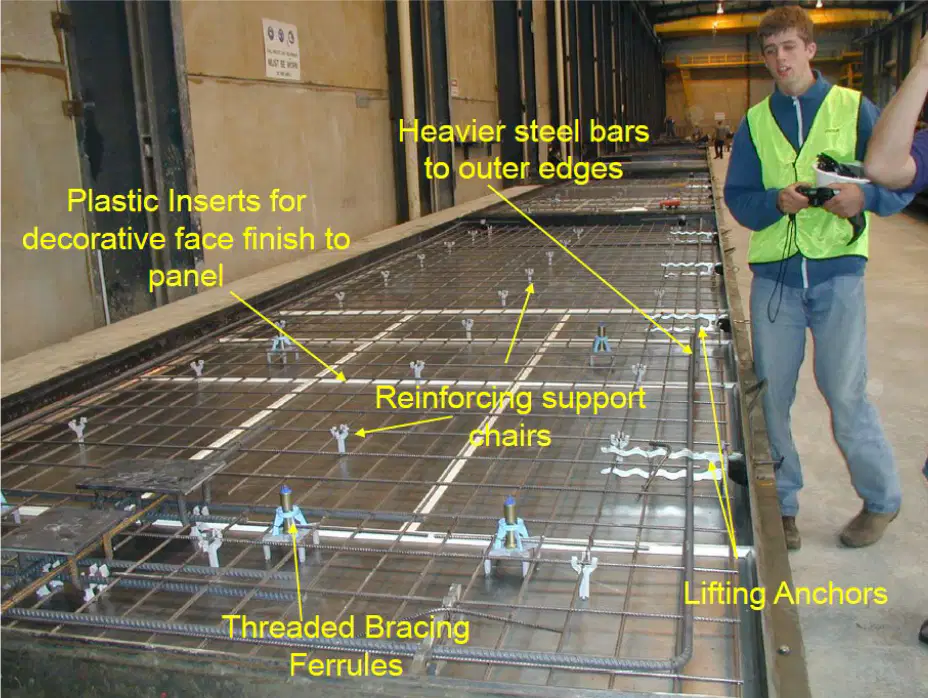
What is the purpose of the heavier steel bars in the precast table setup shown in the image?
To support the lifting anchors
To provide a decorative finish
To reinforce the outer edges of the panel
To connect the plastic inserts
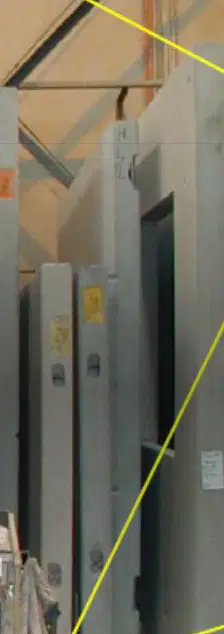
What is the purpose of the "Lifting Anchors" as shown in the image of the panels ready for delivery?
To secure the panels to the ground
To lift and transport the panels
To provide electrical grounding for the panels
To enhance the decorative appearance of the panels
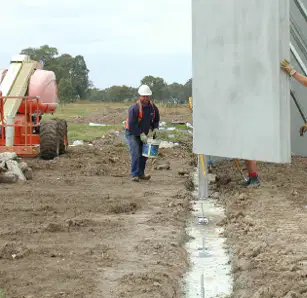
Which type of footing is mentioned in the image as being used for the panels?
Pile footing
Continuous footing
Strip footing
Mat footing
What is the purpose of using non-shrink grout in the recessed corner connection of a concrete tilt panel?
To enhance the aesthetic appeal of the panel
To allow for thermal expansion of the panels
Preventing Moisture Infiltration
To increase the electrical conductivity between panels
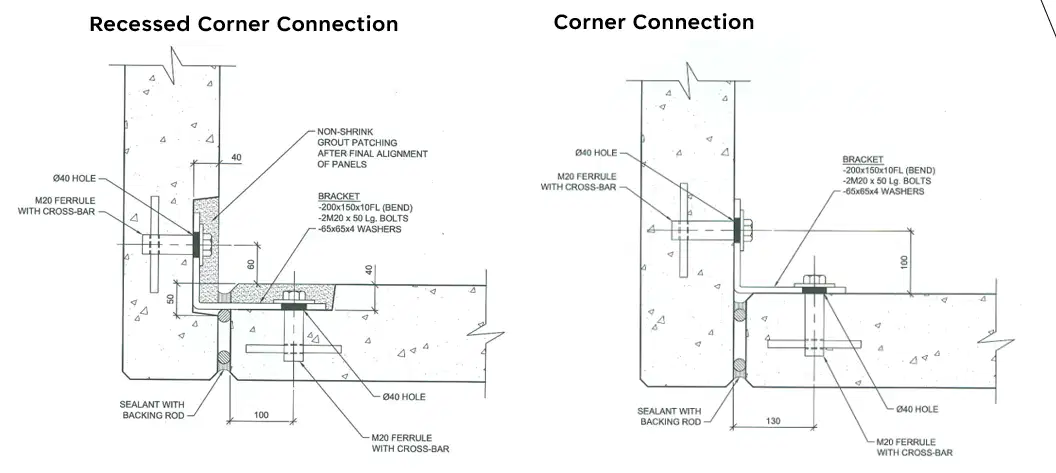
What type of bracket is used in both the recessed and standard corner connections of concrete tilt panels?
200x150x10 FL (bend) bracket
250x200x15 FL (straight) bracket
150x100x5 FL (bend) bracket
300x250x20 FL (straight) bracket
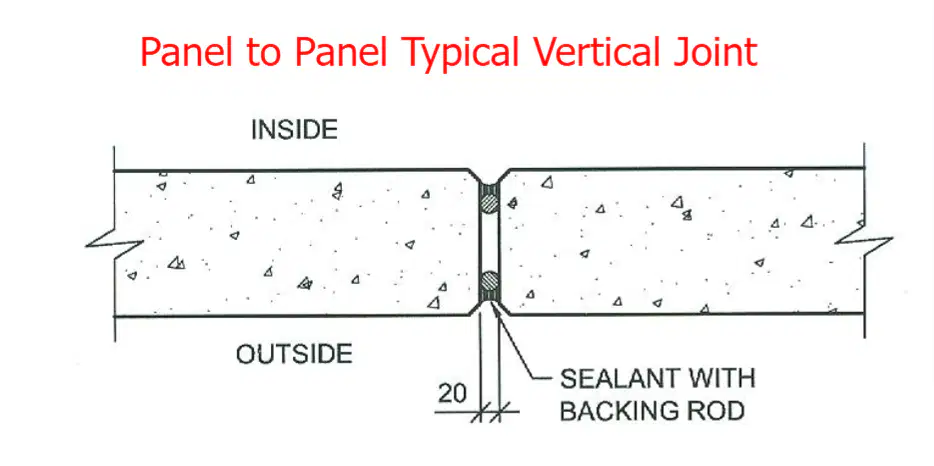
What is the purpose of the sealant with backing rod in the typical vertical joint of concrete tilt panels?
To enhance the aesthetic appeal of the joint
To provide structural support to the panels
To prevent water and air leakage through the joint
To increase the thermal insulation of the panels
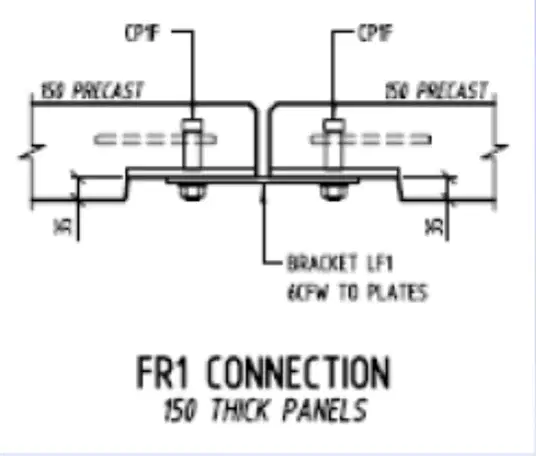
What type of connection is depicted in the FR1 connection diagram for 150 thick panels?
A bolted bracket connection
A welded seam connection
A glued overlap connection
A snap-fit connection
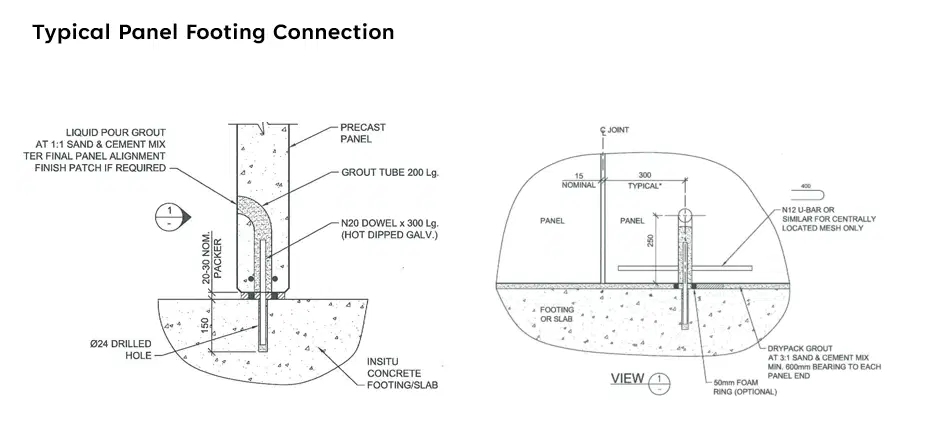
What is the purpose of the N20 dowel in the typical panel footing connection diagram for concrete tilt panels?
To provide electrical conductivity
To ensure structural continuity
To enhance thermal insulation
To act as a decorative element
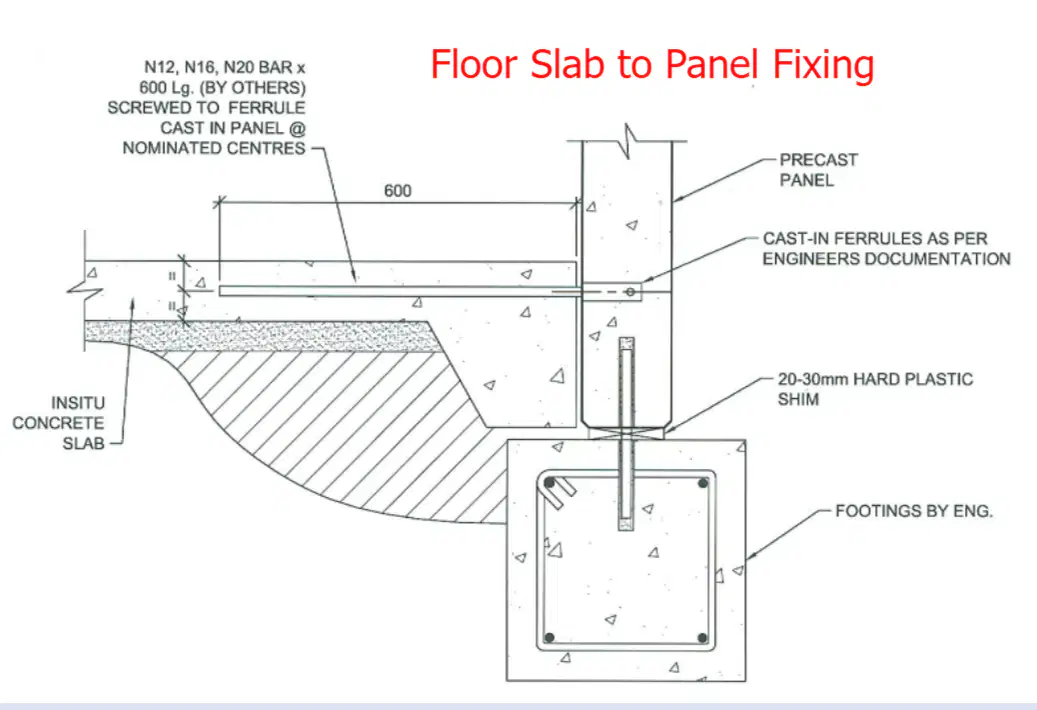
What is the purpose of the hard plastic shim in the floor slab to panel fixing diagram?
To provide electrical insulation
To reduce thermal conductivity
To adjust and align the precast panel
To increase the weight of the panel
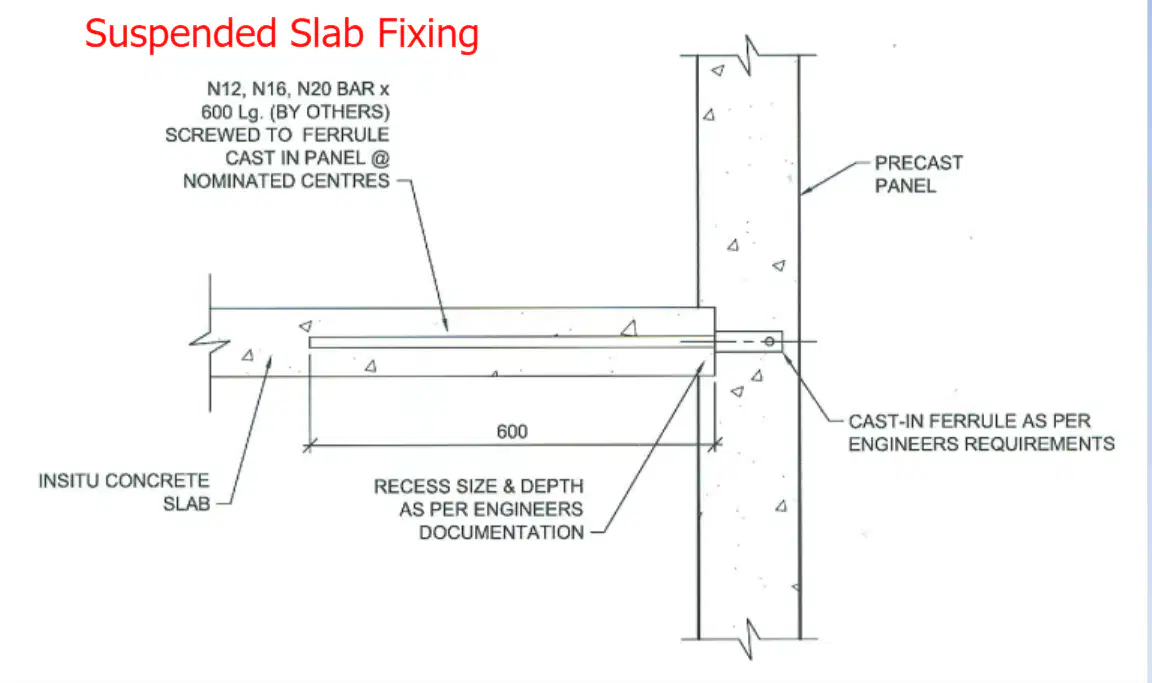
What is the purpose of the ferrule in the suspended slab fixing diagram?
To hold the precast panel in place
To provide electrical insulation
To enhance the aesthetic appeal of the slab
To support plumbing fixtures
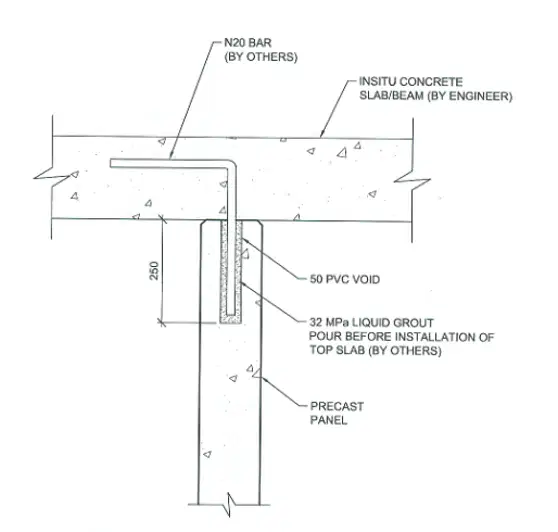
What is the purpose of the 32 MPa liquid grout in the panel to slab connection for a fixed slab?
To provide thermal insulation
To enhance aesthetic appeal
To secure the panel to the slab
To fill voids and ensure stability
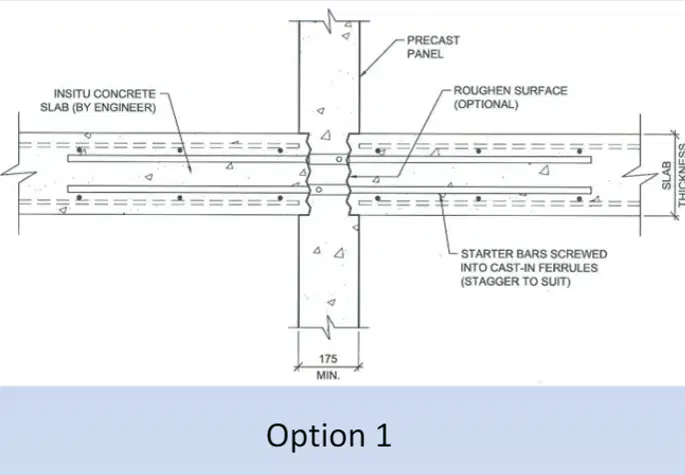
What is the primary purpose of the starter bars in the concrete tilt panel details shown in Option 1?
To provide electrical conductivity
To enhance thermal insulation
To secure the panel to the slab
To add aesthetic value to the panel

