
 Worksheets
2025 SS Final Review
Total questions: 97
Worksheet time: 2hrs 35mins
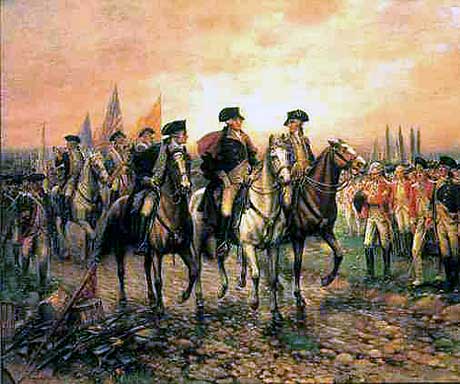

What was the United States first Constitution?
Articles of America
Articles of Confederation
Declaration of Independence
Magna Carta
What was the MAIN problem with the Articles of Confederation?
They had too many laws.
The Articles were too strong.
The Articles were too weak.
What was one EFFECT of a weak government?
They could not write a constitution.
They could not raise money.
People went to war.
We still use the Articles of Confederation today.
True
False
Who had more power with the Articles of Confederation?
National Governments
State Governments

The Articles of Confederation did not allow the federal government to tax citizens. This led to -
states taxing their citizens then giving all their funds to the federal government
the federal government seizing lands from Loyalist during the American Revolution to generate revenue
the federal government being unable to pay off its war debts
a protest by members of congress because of their lack of funding
How was the conflict between large and small states resolved?
Three branches of the national government were formed.
A federal court system was established.
The House of Representatives and Senate were created.
A cabinet was formed to advise the President.
Which is the best summary of the "Three-Fifths Compromise?"
Congress was given two houses.
A line was drawn dividing future free and slave states.
Each slave was counted as less that one free person.
A tougher runaway slave law was enacted.
How did the creation of a 2 house legislature help resolve a disagreement at the Constitutional Convention of 1787?
It established a faster process for passing national laws.
It gave small and large states each an advantage in one house of the legislature.
It gave both poor as well as wealthy citizens a role in enacting laws.
It permitted African Americans and women a voice in government.
Which is the best summary of the Great Compromise?
Congress was given two houses.
A line was drawn dividing future free and slave states.
Each slave was counted as more than one free person.
A tougher runaway slave law was enacted.
Which of these best describes the three-fifths compromise?
An agreement regarding population count and representation in Congress.
An agreement regarding the structure of Congress.
An agreement regarding the continued use of the Atlantic Slave Trade in the United States.
Which plan at the convention proposed that representation in Congress be based on each state's population?
The Virginia Plan
The New Jersey Plan
The Great Compromise
Which plan at the convention proposed that representation in Congress be equal for all states?
The Virginia Plan
The Connecticut Compromise
The New Jersey Plan
This term refers to the signing of an agreement, making it officially valid.
Honored
Verified
Ratified
During the Constitutional Convention, William Paterson, in response to the Virginia Plan, presented the delegates with the New Jersey Plan which -
proposed a bi-cameral legislative branch with representation based on the population of each state
called for the same one vote per state representation as under the Articles of Confederation
allowed the Southern states to continue the practie of slavery while the nothern states built factories
designated that each slave would count at three-fifths of a person for the purpose of determining representation
The founding fathers combined the ideas of the Virginia Plan and the New Jersey Plan to come up with -
Compromise of 1820
Three-fifths compromise
Great Compromise
Constitutional Convention
At the Constitutional Convention the delegates debated for several weeks on the organization of the legislative branch. James Madison proposed the Virginia Plan, while William Patterson countered with the New Jersey Plan. Finally the delegates agreed to a compromise put forth by Roger Sherman which -
created a two house Congress with representation based on the population in house and equality in the other house
believed in extending voting rights to all white men, thus eliminating the previous property requirements
kept the previous organization set forth in the Articles of Confederation which allowed for one vote per state
allowed California to join the new country as a free state but gave the South the Fugitive Slave Act
"Representatives and direct taxes shall be apportioned among several states which may be included withing this Union, according to their respective numbers, which shall be determined by adding to the whole number of free persons, including those bound to service by a term of "years" and excluding Indians not taxed, three fifths of all other persons."
This excerpt from the Constitution deals with the issues debated at the Constitutional Convention.
if native Americans should have the same rights as white colonists
if all others besides white men should be allowed to have voting rights
how slaves should be counted as population for representation purposes
how large and small states should have their representatives divided.
Which of the following quotes would have been said by an "Anti-Federalist"?
the system safeguards such as federalism and separation of powers protect the citizens
no Bill of Rights is needed under the new government because the people will be protected by the states
the economy of our country should be focused on industry, manufacturing, and trade
the rights of the people and the states will be trampled upon by another tyrannical government
Which of the following best explains why the Anti-Federalists were opposed to ratification of the US Constitution?
the federal government wouldn't become too powerful because it would share power with the states and individuals
the system of checks and balances would keep one branch of government from becoming too strong
the new central government would take too much power away from the states and people
under the new government slaves would only count at three-fifths of a person for representation
Excerpt 1: There is no declaration of any kind, for preserving the liberty of the press, or the trial jury in civil cases; nor against the danger of standing armies in times of peace.
Excerpt 2: The Constitution adopts...the common and statute law of Great Britain, by which mar other rights, not expressed in it, are equally secured.
Which of the following best identifies the viewpoints of the excepts above?
# 1 is a federalist and # 2 is an anti-federalist
both are anti-federalist viewpoints
# 1 is an anti-federalist and # 2 is a federalist
both are federalist viewpoints
"Among the most formidable of the obstacles which the new Constitution will have to encounter may readily be distinguished the obvious interest of a certain class of men in every State to resist all changes which my hazard a diminution of the power, emolument, and consequence of the offices they hold under the State establishments;" - Alexander Hamilton
Which of the following best explains the point of view in the quote above?
problems would erupt because under the new government states are giving up their powers
under a new government the federal government will have all the control over the legislative branch
according to the Constitution the state governments would share power with the federal government
Conflicts would arise over the organization of the judicial branch of the new government
"To prevent instability and injustice in the legislation of the States, this is needed to secure the civil and religious rights of the individuals from the danger of majority faction."
According to excerpt above, the This refers to the -
Articles of Confederation
Declaration of Independence
Bill of Rights
Mayflower Compact
"To prevent instability and injustice in the legislation of the States, we created an extended republic that would secure the civil and religious rights of the individuals from the danger of majority faction."
Many anti-federalist worries about the Constitution were solved by adding a Bill of Rights. Which of the following best corresponds with the beliefs of the excerpt above?
A Bill of rights is wholly unnecessary under the current system of government
A Bill of Rights is necessary to protect the minority from abuses by the populous
Freedom of religion is the most important right protected under the Bill of Rights
The majority group should always be allowed to have certain protections of their rights
“We have no reason to eliminate our state governments, or think they are incapable of acting wisely. Our state governments should be the guardians of our rights and interests.”


“It is unfair to presume that the representatives of the people will be tyrants in the federal government, but not the in the state government. If we are convinced that the federal government will pass laws that go against the interests of the people, then we should have no federal government at all. But if we unite, we can accomplish great things. ”


“No reasonable man would want to establish a government that is unfriendly to the liberty of the people. Do not assume, gentlemen, that the advocates of this Constitution are motivated by their ambition. It is an unjust and uncharitable view. ”


“In a country where most people live more than twelve hundred miles from the center, I don’t think one [government] body can legislate for the whole. Can such a government design a system of taxation that will be beneficial for everyone?”


“Is it not possible to find a set of representatives who are familiar with all parts of the continent? Can you find men in Georgia who know what’s happening in New Hampshire, who know what taxes will best suit its inhabitants, and how much they can afford? Can the best men make laws for the people they know nothing about?”


“All communities divide themselves into the few and the many. The first are the rich and well born; the other, the mass of people…. The people are turbulent and changing; they seldom judge or determine right. Give therefore the first class a ….permanent share in the government….they therefore will ever maintain good government.”


“It must be by this time evident to all men…that (the Articles of Confederation) is a system so radically vicious and unsound as to admit….an entire change.”


“Our country is too large to have all affairs directed by a single government.”


“I had rather be a free citizen of the small republic of Massachusetts, than an oppressed subject of the great American empire."


“When the government fears the people, there is liberty. When the people fear the government, there is tyranny.”


“The national government is limited to only those powers granted to it. All powers not delegated to it remain in the hands of the individual states.”


Wanted a stronger national government
Anti-federatlist
Federalist
Opposed the development of a strong federal government
Anti-Federalist
Federalist
Included Thomas Jefferson, James Monroe, Patrick Henry, Samuel Adams
Anti-federalist
Federalist
Included Alexander Hamilton, George Washington, John Jay, John Adams
Anti-federalist
Federalist
Proposed and supported the Constitution
Anti-federalist
Federalist


Who said this quote - “When the government fears the people, there is liberty. When the people fear the government, there is tyranny.”
Federalist
Antifederalist
Why were the Articles of Confederation replaced?
it created a judicial branch
it created a powerful army
the central government was too weak
it created an executive branch
Southern States benefited from the Three-Fifths Compromise because-
they had small populations of slaves
they had very small populations
they had very large populations
they had a warm climate
Which group feared that the president might behave like a king?
Antifederalist
Federalist
Who is one of the 2 US senators for NY?
Who is one of the 2 US senators for NY?
Kirsten Gillibrand
Who is the governor of NY?
Kathy Hochul
Who is the mayor of NYC?
Eric Adams
Who is the Staten Island Borough President?
Vito Fossella
Who is the US House Representative for Staten Island?
Who is the NYS Senator who represents our district in the Albany Congress?
Andrew J. Lanza
Nicole Malliotakis
Joe Borelli
Eric Adams
Who is the president of the United States of America?
Joe Biden
Washington
Donald Trump
JD Vance
What Amendment says that this is not okay?
Freedom of speech scenario 1: A student wants to protest against a new school policy by wearing a t-shirt with a controversial slogan. Can the school stop the student from doing so?
No, the school can stop the student if the policy is for the greater good.
No, the school can only stop the student if the slogan is offensive.
Yes, the school can stop the student from wearing the t-shirt.
No, the school cannot stop the student from wearing the t-shirt.
Freedom of speech scenario 2: A group of people wants to hold a peaceful demonstration in a public park. Can the local government require them to obtain a permit before doing so?
Only if it's a large group
No
Yes
Maybe
Right to bear arms example 1: A person wants to purchase a firearm for self-defense. Can the government impose strict regulations on the purchase of firearms?
Yes, but only for hunting purposes
Yes
Only in certain states
No
Right to bear arms example 2: A state passes a law banning the possession of certain types of firearms. Can this law be considered a violation of the Second Amendment?
Only on weekends
Yes
Maybe
No
Search and seizure situation 1: The police want to search a person's home for evidence of a crime. Can they do so without a warrant?
Yes, if they have a suspicion
Yes, if the person is not at home
Yes, if the person is a suspect
No
Search and seizure situation 2: During a routine traffic stop, the police officer wants to search the driver's car without any specific reason. Can the officer do so?
No
Yes, the officer can search the car without any reason
Yes, because it's a routine traffic stop
Only if the driver gives permission
Rights of the accused scenario 1: A person is arrested and taken into custody. Can the police interrogate the person without informing them of their right to remain silent?
No
Yes, they can interrogate without informing the right to remain silent
The person can be interrogated only if they have committed a serious crime
The person can be interrogated only if they have a lawyer present
Rights of the accused scenario 2: A defendant in a criminal trial cannot afford to hire a lawyer. Can the court provide them with a public defender?
No, the defendant must represent themselves
Yes
Yes, but only if the defendant is a minor
No, the court does not provide legal representation
Cruel and unusual punishment example 1: A person convicted of a crime is sentenced to life imprisonment without the possibility of parole for a non-violent offense. Can this be considered cruel and unusual punishment?
Yes
No
Maybe
Depends on the circumstances
Cruel and unusual punishment example 2: A state allows the use of a particular method of execution that has been deemed to cause extreme pain. Can this method be considered cruel and unusual punishment?
No
Maybe
Not sure
Yes

