
 Worksheets
Finance EXAM Review - ALL Topics
Total questions: 150
Worksheet time: 2hrs 8mins


What is 78% written as a decimal?
0.78
7.8
7.80
0.078
Write 43 as a decimal.
3.4
0.34
0.75
0.075
Express 0.86 as a percent.
8.6%
86%
8%
.86%
The sale is $800. The commission rate is 30%. Find the commission.
$30
$240
$7.20
$24
What is the salesperson's commission on a $1100.00 sale if the commission rate is 20%?
$20.00
$220
$1320
$200
Find the simple interest earned for principal of $2,000 at and 8% rate for 5 years.
$160
$800
$80,000
$16
Timmi puts $300 in a bank account earning 4% interest. How much will she earn in interest in 1 year?

If you want to build work experience directly after high school, you could...
Take an online college course
Attend a four-year college
Find an apprenticeship
Volunteer once a year

Which of the following is true about a college education?
College is the only way to get a stable, high paying job
College grads have higher lifetime earnings on average than HS grads
College grads have a higher rate of unemployment
More education is related to lower unemployment

Why would you ask for an informational interview?
To learn more about why a job rejected you.
To negotiate your salary offer
To learn more about a career or industry
To improve your chances of getting hired

What is the difference between soft skills and hard skills?
Hard skills are easily measurable; soft skills are "people skills"
Hard skills are more advanced than soft skills
In job postings, hard skills are "required" and soft skills are "preferred"
Soft skills are less important to employers because they're not technical

Soft skills are a valuable skill set to have. All of the following are soft skills EXCEPT...
Speaking multiple languages
Creativity
Responsibility
Critical thinking

What should you do when attending a career fair?
Give a 5-minute personal pitch so recruiters remember you
Bring gifts to give to recruiters
Write a follow-up email to each recruiter
Drop off your resume at each table; recruiters don't have time to talk

All of the following are effective ways to use social media to find and land a job, EXCEPT...
Network with other people in your industry
Keep your posts and information professional
Follow companies and organizations in your desired field
Criticize your current job to help network & find a new one

A resume should include all of the following, EXCEPT
Rationale for why you quit a previous job
Your previous employment experience & responsibilities
A highlight of your education experience
Your contact information

Which is true of an effective resume?
It includes many details; the longer the resume, the better
It works for every job application, so you don't need multiple resumes
It uses key words and has a simple design
It features your photograph

Which question would be appropriate to ask during a job interview?
Can you describe the requirements of this position?
Do you think you are going to hire me?
What will my salary be?
How many vacation and sick days am I allowed?

A pre-tax employer sponsored retirement program is called...
Traditional IRA
Roth IRA
Mutual Fund
401(k)

What form is NOT typically completed when you start a new job?
Form W-2
Form I-9
Benefit forms
Form W-4

Direct deposit is beneficial because...
You are less likely to bounce checks
Your net pay is higher
You can automatically split money into multiple accounts
You endorse your paycheck for security
Overdraft protection...
Allows you to withdraw more money than you have in your account
Protects your account from unauthorized transactions
Helps you save money for emergencies
Provides insurance for your deposits
Which of the following is TRUE about banks and credit unions?
Banks are for-profit institutions, while credit unions are non-profit
Banks offer higher interest rates on savings accounts than credit unions
Credit unions are insured by the FDIC, while banks are not
Banks are owned by their customers, while credit unions are owned by shareholders
Which of the following is NOT required to open a checking account?
Proof of identity
Proof of address
Social security number
Minimum age requirement
Which of the following is NOT a common way most people are using P2P, such as Venmo?
Splitting bills with friends
Paying rent or utilities
Sending money to family members
Investing in stocks
What feature is the LEAST important for a college student to look for in a checking account?
Low or no monthly fees
Convenient ATM access
High interest rates
Online and mobile banking
What is a typical overdraft fee?
$10
$25
$50
$100
How can you protect your checking account when using online and mobile banking?
Use strong and unique passwords
Avoid using public Wi-Fi networks
Regularly monitor your account activity
All of the above
You have $30 in your acct. How can a bank reorder 4 checks written today to MAXIMIZE your fees?
Process the largest check first
Process the smallest check first
Process the checks in random order
Process the checks in alphabetical order
Why is understanding a bank's fees particularly important for students or young adults?
They are more likely to have a low income
They are more likely to have a high credit score
They are more likely to have a mortgage
They are more likely to have a college degree
About how much should you save in an emergency fund?
1 month of expenses
3 months of expenses
6 months of expenses
1 year of expenses
What are some reasons for why so many Americans live paycheck-to-paycheck?
Low wages
High cost of living
Lack of financial education
All of the above
How does the 50-20-30 rule distribute your income?
50% for needs, 20% for savings, 30% for wants
50% for savings, 20% for needs, 30% for wants
50% for wants, 20% for savings, 30% for needs
50% for needs, 20% for wants, 30% for savings
How is compound interest different than simple interest?
Compound interest is calculated on the initial amount only
Compound interest is calculated more frequently
Simple interest is calculated more frequently
Simple interest is calculated on the initial amount only
How does inflation impact the money in your savings account?
It increases the value of your money
It decreases the value of your money
It has no impact on the value of your money
It depends on the interest rate
Saving accounts differ from checking accounts in that...
Saving accounts have higher interest rates
Saving accounts have more fees
Saving accounts have unlimited transactions
Saving accounts have overdraft protection
1. The beginning balance on the monthly bank statement for Joaquin's checking account was $393.05, and the ending balance was $244.67. What can be said about Joaquin's transactions for the month?
He had $148.38 more in credits than in debits.
He had $148.38 more in debits than in credits.
He had $637.72 more in credits than in debits.
He had $637.72 more in debits than in credits.
2. Rory wrote a check for $85 to pay his monthly credit card bill, but when balancing his checkbook, he accidentally recorded it as a credit rather than as a debit. How will his check register compare to his monthly bank statement when he receives it?
The balance in his check register will be $85 over the balance on his bank statement.
The balance in his check register will be $85 under the balance on his bank statement.
The balance in his check register will be $170 over the balance on his bank statement.
The balance in his check register will be $170 under the balance on his bank statement.
4. Which of these would appear in the Debits column of a bank statement for a checking account?
A transfer of funds into the account
A direct deposit
Interest earned
An online bill payment
5. Enrico wrote four checks last month, and these were the only transactions for his checking account. According to his check register, his balance is $893.48, but the bank statement he just received says his balance is $1076.32. If the four checks were for $173.75, $173.84, $182.75, and $182.84, the check for which amount has not yet cleared?
$173.75
$173.84
$182.75
$182.84
7. Sigmund wrote four checks last month, and these were the only transactions for his checking account. According to his check register, his balance is $887.79, but the bank statement he just received says his balance is $1065.27. If the four checks were for $168.48, $168.93, $177.48, and $177.93, the check for which amount has not yet cleared?
$168.48
$168.93
$177.48
$177.93
6. The beginning balance on the monthly bank statement for Ike's checking account was $194.58, and the ending balance was $371.93. What can be said about Ike's transactions for the month?
He had $177.35 more in credits than in debits.
He had $177.35 more in debits than in credits.
He had $566.51 more in credits than in debits.
He had $566.51 more in debits than in credits.
9. Mia's bank statement shows a closing balance of $75.65. There are no outstanding checks or deposits. Her checkbook shows a balance of $77.95. What might account for different balances?
Interest earned in the amount of $1.35
Monthly service fee of $2.30
Transposing of numbers
None of the above
11. Bess wrote four checks last month, and these were the only transactions for her checking account. According to her check register, her balance is $869.96, but the bank statement she just received says her balance is $1054.13. If the four checks were for $175.17, $175.35, $184.17, and $184.35, the check for which amount has not yet cleared?
$175.17
$175.35
$184.17
$184.35
12. The beginning balance on the monthly bank statement for Ignatius' checking account was $124.82, and the ending balance was $659.27. What can be said about Ignatius' transactions for the month?
He had $534.45 more in credits than in debits.
He had $534.45 more in debits than in credits.
He had $784.09 more in credits than in debits.
He had $784.09 more in debits than in credits.

$864.31
$99.31
$141.31

What is the balance of this checking account after the transactions shown?
$434.91
$88.13
$444.39
$675.83
$585.83
Edward wants to develop a positive credit history. How should he do this?
Maintain reasonable amounts of available credit
Have one type of credit account
Pay cash for the majority of purchases
Open credit accounts in his parents’ names
When Bryce attempted to borrow money at the bank, he learned that his credit score is low. Which best describes what this is likely to mean for Bryce?
The interest rates on his loan will be lower, since his credit score is low.
The purchase price of the item he needs the loan for will be higher due to his low credit score.
The monthly loan payments will be lower due to his lower credit score.
The interest rates on his loan will be higher, since his credit score is low.
Jake’s credit application has been declined because of his negative credit history. Which is most likely to be true?
Jake pays his bills consistently and on time.
Jake has applied for 4 credit cards and a car loan in the past 6 weeks.
Jake has received 3 traffic tickets in the past 2 months.
Jake holds 2 store credit cards, a bank credit card, a car loan, and a mortgage.
Which is not an example of a data furnisher?
Landlord
Credit card company
Utility company
Medical provider
Which is not included in an individual’s credit report?
Current and past addresses
Account balances
Bankruptcies and foreclosures
Medical information
When may a person view his/her credit report for free?
At any time and an unlimited number of times
Once a year, from each of the three main credit reporting agencies
A person may not review his/her credit report
When a person has sufficient financial resources
Becky no longer wants to use her Clothes-R-Us store credit card. What is the best thing she could do with the credit card?
File the credit card away for use at a later time.
Let a family member take over the credit account so her credit score will not be affected.
Keep the credit card in her wallet in case she needs proof of identification.
Close the account by phone and in writing, then destroy the card.
Jenny is 18 years old and has applied for credit for the first time. Her credit application was declined because she has no credit history. What should be recommended in order for Jenny to build a positive credit history?
Jenny should acquire several credit cards to establish that she can manage them responsibly.
Jenny should obtain a secured credit card.
Jenny should reapply for the same credit but include a letter of recommendation from someone who knows her well and can vouch for her character.
Jenny should apply for a different type of credit. Since she was applying for a bank loan, she should apply for a credit card.
David earns $5,000 per month at his accounting job. He has a student loan payment of $120, a car loan of $300. Which statement is true?
David’s total credit payments are higher than the recommended amount for someone earning his income.
David’s student loan payment must be subtracted from his car loan payment to determine whether his overall credit payments are within the safe range.
David’s student loan payment is within the safe range but his car loan is not.
David’s credit payments are within the safe range for someone with his income.
Leah is trying to explain the difference between open-end and closed-end credit to her roommate. Which should she include in her description of closed-end credit?
It is a continuous loan the borrower must repay with a revolving balance.
Equal payments are required on a regular basis until the loan is repaid.
Credit limits vary depending on the loan balance.
Interest rates vary depending on the repayment history.
The financial counselor that Ariel consulted about her use of credit recommended that she keep her use of credit within safe boundaries. Ariel’s financial counselor most likely told her to:
keep the total amount of money she has borrowed, including her mortgage and her car loan, under 20% of her net income.
keep the total amount of money she has borrowed, including her mortgage and her car loan, under 40% of her net income.
keep the total amount of money she has borrowed, not including her house, under 20% of her net income.
keep the total amount of money she has borrowed, not including her house, under 40% of her net income.
Evan is writing a scholarship essay about the importance of responsible money management. He wants to explain the meaning of borrowing. Which would explain the importance of understanding the process of borrowing money?
When you are borrowing, you are spending future income.
Borrowing is an important part of a responsible financial plan.
Borrowing strongly affects the present self but has less impact on the future self.
Borrowing builds a strong credit history because it requires individuals to file a credit report.
To answer the essay test question about the meaning of open‐end credit, Ryan should include which statement?
A down payment must be made before receiving a loan.
Individuals are allowed to borrow an unlimited amount of money as long as they pay it back.
Credit is extended in advance so the borrower does not have to apply for credit each time credit is desired.
Payments are equal and required to be paid on a regular basis.
Which word represents the total cost of the item you’re purchasing on credit minus any down payment you make upfront?
Principal
Term
Interest rate
APR
Each of the following represents an installment loan EXCEPT...
Home mortgage
Auto loan
Student loan
Credit card
Which of these actions would most likely decrease a person’s net worth for at least the next 6 months?
Use a loan to buy a brand new car
Work 10 hours of overtime each week and put all extra earnings into a savings account
Work 10 hours of overtime each week and use all extra earnings to pay down student loan debt
Open 3 new credit cards but don’t spend any money on them
Which statement is true of both debit AND credit cards?
Both can trap you in an endless cycle of debt if you're not careful
Both allow you to make purchases in a store or online
Both typically have interest rates between 10-30%
Both require you to pay a minimum monthly payment when your bill arrives
Felix opens a credit card with no annual fee, so he assumes that using the credit card regularly will be absolutely free for the next two years while he finishes grad school. Why is his assumption incorrect?
Unless he pays the whole bill every month, he will pay interest according to his APR
He will automatically pay penalty fees if he uses his credit card for more than 3 consecutive months
If his grace period is any longer than 10 days, he will have to pay fees
He will need to pay a separate student fee because he is still in grad school
Which statement best describes a Schumer box?
The final calculation of how much you owe on your credit card bill each month
A standardized way of presenting the key terms of your credit card agreement
A legal document stating that you’re behind on your credit card payments
The outstanding balance on your credit card once you’ve made your recent payment
If you buy a $1000 bicycle, which credit card payoff strategy will result in your paying the LEAST total amount?
Pay the minimum monthly payment
Pay $100 per month for 10 months
Pay $250 per month until it's paid off
Don’t make any payments until you have the full $1000 saved, regardless of how long that takes
If your credit card limit is $800 and your outstanding balance is $725, what is the largest amount you can charge on that card in the upcoming month?
$0
$75
$725
$800
Each of the following people has $5000 in debt. Which debt is most worthwhile?
Phil, who spent mostly on GoFundMe campaigns for people he saw on social media
Tyree, who took out a loan for an old used car so he can drive to and from campus
JJ, who used a credit card to pay his daily expenses while he was out of a job
It's impossible to tell, because we don’t know how much they each valued the spending, how much it impacted their lives, or how easily they can repay the debt
As you move through your payment schedule on an amortized loan, what will happen to the interest portion of each month's payment?
The interest portion will grow
The interest portion will shrink
The interest portion will stay the same
The interest portion will sometimes grow and sometimes shrink
It's time for Roxanne to start repaying her student loans, which are amortized over the next ten years. Her first month's payment due is $396. How much should she expect to owe next month?
Substantially less than $396
Slightly less than $396
Exactly $396
Slightly more than $396
You're debating whether to buy a trendy fall jacket that costs a whopping $200! You have it sitting in your online cart, and you see there's a "Buy Now, Pay Later" option available for the jacket. Which best describes an example of how that would work?
You pay the full $200 now, but they wait a month to send it to you, giving you the chance to cancel, penalty free, if you change your mind
You pay $100 right now, you receive the jacket, and you owe $100 more a year later on the anniversary of your purchase date
They ship you the jacket now, and you owe four $50 payments, once every 2 weeks, until the jacket is paid in full
You reserve the jacket now, you pay as much or as little as you want in each payment, and when you eventually get to $200, they send you the jacket
Antonio has $4000 saved to use for a down payment, and he’s about to buy a car that costs $29,000. How much would you expect his loan principal to be?
$4000
$25,000
$33,000
$29,000 x his interest rate
If you were offered two auto loan options with the same principal and interest rate, but one was a 48-month loan and one was a 72-month loan, which outcome below will reflect the impact of that difference in term?
The 48-month loan will cost less money overall
The 48-month loan will have lower monthly costs
The 48-month loan will take longer to pay off
The 48-month loan will always be a better choice
Shonda’s mom recommends that she spend a year building her credit history and boosting her credit score before she applies for a loan to buy her dream car, which costs $54,000. Why is that good advice?
A good credit score will reduce her down payment
A good credit score will reduce her principal
A good credit score will reduce her interest rate
A good credit score will allow her to pay the full $54,000 in cash
What causes the total amount of interest paid on a mortgage to be so much higher than on other types of debts?
The APR on a mortgage is typically between 20-30%, which is higher than for other types of debt
The principal on a mortgage is high and the term is long
Borrowers typically delay making mortgage payments because their home cannot be repossessed for nonpayment
Homeownership is not very common in the US, so mortgages are priced high because demand is so low
Which of the following is a good reason to choose a 30-year, fixed-rate mortgage?
You want to make high monthly payments and close your mortgage sooner
You want to minimize the amount of interest you'll pay over the life of the loan
You want low, predictable monthly payments
You want to take advantage of the ups and downs of the market and don't mind risk
Danya has found her dream home, and it's on the market for $200,000. Each of these is a way she can decrease the total amount she'll pay EXCEPT...
Increase her down payment
Qualify for a lower interest rate
Choose a shorter loan term
Choose a mortgage with a higher APR
How do the Annual Percentage Rates (APRs) on payday loans get to be so high?
The loans go to affluent banking customers, so they charge a lot for the exclusivity
The loan amounts are small, but the fees charged are relatively high and are renewed on a very short time-scale
They make most of their money through ATM withdrawal fees as well as overdraft fees on checking accounts
The amount of money people borrow using payday loans is typically quite high – $10,000 or more – so the fees are also high
Three of these statements reflect payday loans. Choose the other statement, which is aligned with a traditional bank loan instead.
Easy to obtain without a lot of paperwork
Requires a credit check and suitably high credit score
Requires payment in full in less than a month
APR can easily be over 200%
Why are payday loans so popular?
They are a fast, easy way to save money and budget effectively
They meet the need for quick cash for very large purchases such as cars and homes
They are a terrific way to build your credit history and improve your credit score
They are accessible to people who need to borrow small amounts of money and don't have any better options

What is a benefit of going to college and having a college degree?
Lower lifetime earnings
Lower interest rates on future loans
Expanded professional and social netowrk
Guaranteed starting salary of $50,000 after graduation

All of the following are costs of going to college EXCEPT...
Tuition and fees
Room and board
Textbooks and school supplies
Scholarships and grants

Which is TRUE about sticker price and net price?
Net price is the sticker price minus loans
Sticker Price is the published cost of going to a school
Net price is the sticker price minus loans
Sticker price is the net price minus scholarships & grants

When does the FAFSA filing period open every year?
January 1st
June 1st
October 1st
December 1st

Why should you file the FAFSA as early as possible?
It can help your chances of being accepted into schools
Aid is given out on a first-come, first-serve basis
You're guaranteed to get more merit-based scholarships
You'll get a lower interest rate on federal student loans

When filing the FAFSA, you are eligible for all of the following EXCEPT:
Grants and Scholarships
Private Student Loans
Work-Study
Federal Student Loans

How do scholarships and grants differ?
Scholarships are need-based; grants are merit-based
Grants are private forms of aid; scholarships are federal
Grants are need-based; scholarships are merit-based
They're not different; they are one and the same

What do you need to file your FAFSA if you're a dependent?
Just your tax forms
Your high school student ID number
Your and your parents' tax forms from 2 years priors
A pay stub if you had a job in the past year

Which is TRUE about the FAFSA?
You only need to file the FAFSA 1x in your college career
Your parents must earn below a set amount for you to apply
You need to file it at the start of every quarter/semester
There is no cost to file the FAFSA

Which is TRUE about the Student Aid Index (SAI)?
It's the cost of filing the FAFSA
It's how much you & your family are expected to pay for college
It's another term for "net price"
It's how much your parents must contribute towards college

Which of the following is the correct flow of submitting/receiving these documents?
FAFSA Submission Summary > FAFSA > Financial Aid Package
Financial Aid Package > FAFSA Submission Summary > FAFSA
FAFSA > Financial Aid Package > FAFSA Submission Summary
FAFSA > FAFSA Submission Summary > Financial Aid Package

What must you do if you accept a Federal student loan?
Agree to an official credit check by the government
Pay off all credit card debt
Pay a refundable deposit to secure your loan
Sign a Master Promissory Note

Which of the following is TRUE about how you get your financial aid?
All financial aid is paid directly to you in one payment
All financial aid is paid to you in installments
Aid is 1st applied to your account; you get the rest
The school receives all of your financial aid

Which of the following is TRUE about federal and private student loans?
Private loans may be subsidized; federal ones are not
Both types offer the same repayment plans
Private loans always offer fixed interest rates
Fed. loans don't have prepayment penalties; private ones may

How can you lower the total amount you in pay in student loans?
Choose a repayment plan with a longer term
Accept private loans first, then federal ones
Make interest payments during your grace period
Accept loans with variable interest rates, not fixed ones

If you select a repayment plan with a longer term for your loans...
You will have a larger monthly pyament
You will have a smaller monthly payment
You will pay less in interest
You will pay the same amount in interest

Which is TRUE about loan payments?
$ goes 1st towards the principal, then the accrued interest
Interest rate has little impact on total cost of the loan
Payments are not split between interest and principal
Interest can be added to the principal if it goes unpaid

What can happen if you don't make payments towards your student loans?
You may lose your car or home
Your loan balance may become due in full, but no interest
You may lose your car or home
Your credit score may suffer

When looking at a financial aid award letter, which type(s) of aid would you have to pay BACK?
Federal Pell Grant
Direct Subsidized Loan
Merit Scholarship
Federal Work-Study

In what order should you accept different types of financial aid?
Work-study, scholarships, federal loans, private loans
Private loans, scholarships, work-study, federal loans
Scholarships, work-study, federal loans, private loans
Scholarships, work-study, private loans, federal loans
Who primarily uses our tax money? (hint: choose 2 correct answers)
Your employer
Large corporations
Federal and state government
Local Businesses
Our tax money is spent on all of the following EXCEPT:
Social Security
The Military
Private School Education
National Parks

Which of the following is NOT a category in the Federal government's spending?
Mandatory spending
Discretionary spending
Interest on loans issued
Interest on national debt
Which of the following taxes is applied to wages, salaries, dividends, and interest earned?
Corporate Income Tax
Income Tax
Estate Tax
Excise Tax
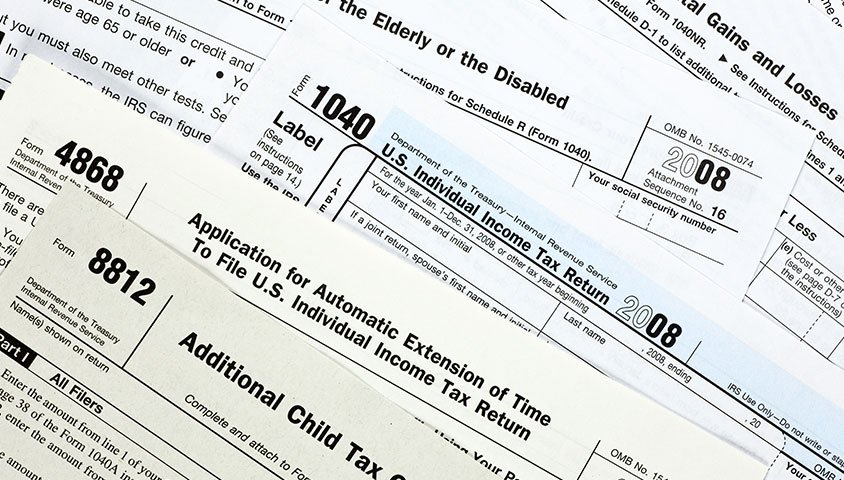
The W-4 form lets...
the government know how much you paid in taxes last year
your employer know how much to withhold from your paycheck
the 3 major credit bureaus know how many dependents you have
you know how much you paid in taxes last year
Jess is 21, in college, & has a job that provides 65% of her support. Is she a dependent?
Yes
No
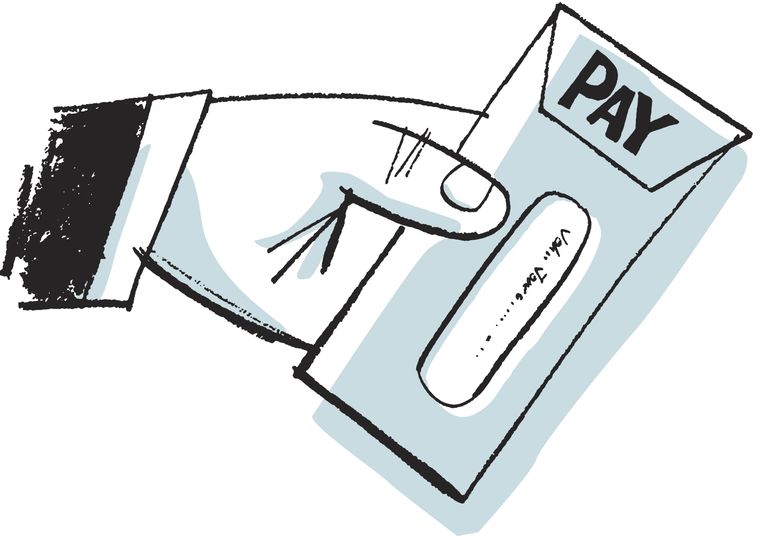
What item would you DEFINITELY see on a paystub?
Retirement
Healthcare
Gross Pay
Your occupation/role
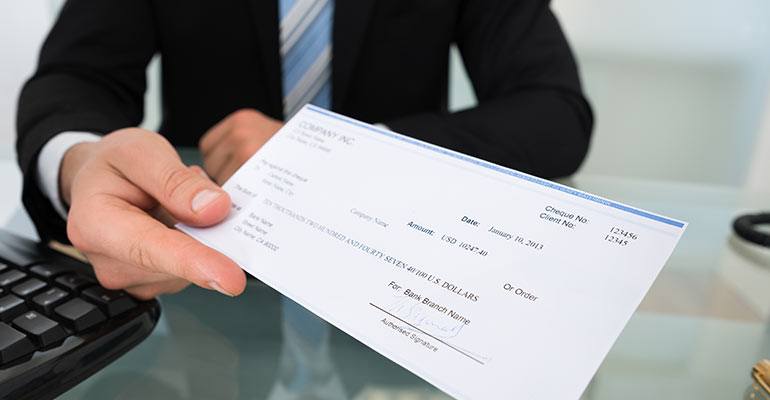
By claiming "exempt" on the W-4 form...
You are paying all income taxes upfront at the START of the year.
You are requesting an extension to file your taxes
You will NOT have income taxes withheld from your paycheck.
You are paying all income taxes at the END of the calendar year.
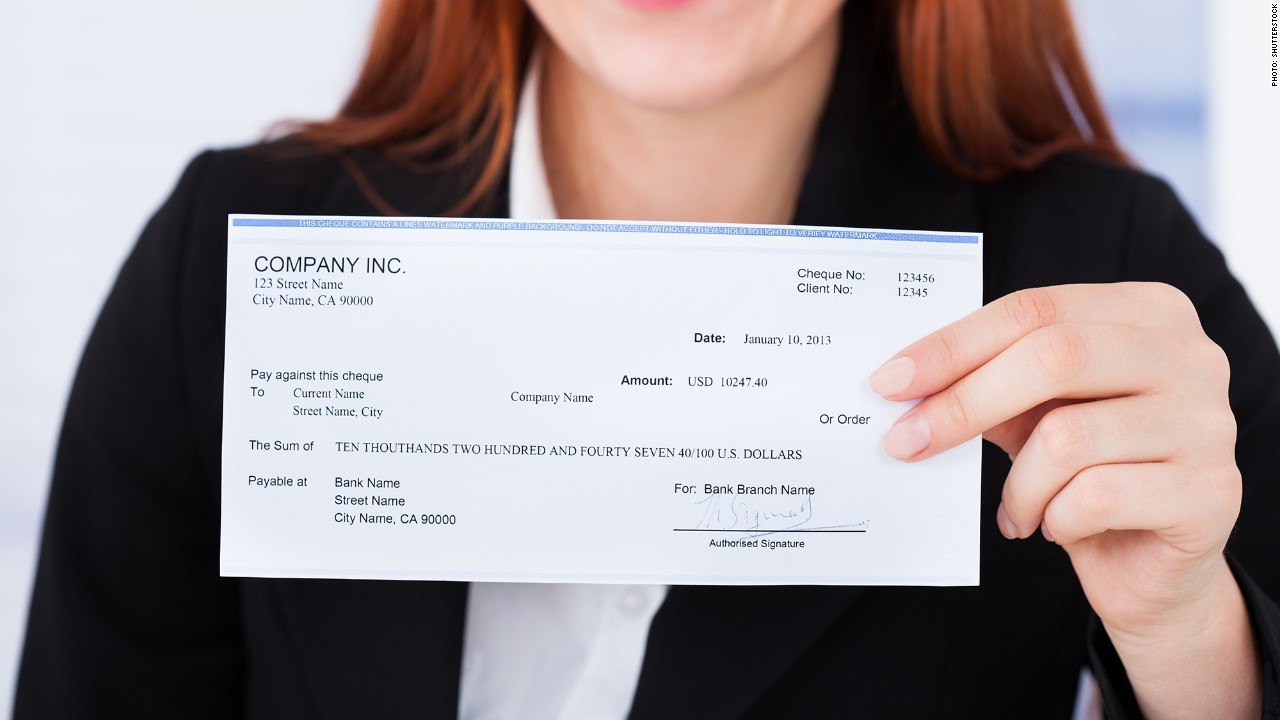
Jason filed his 2022 tax return and owes money. If he doesn't want to pay a fee, when should he pay this amount by?
April 18th
October 15th
December 31st
January 1st of the next year

True or False: All wages, tips, and bonuses are taxable unless specifically excluded.
True
False
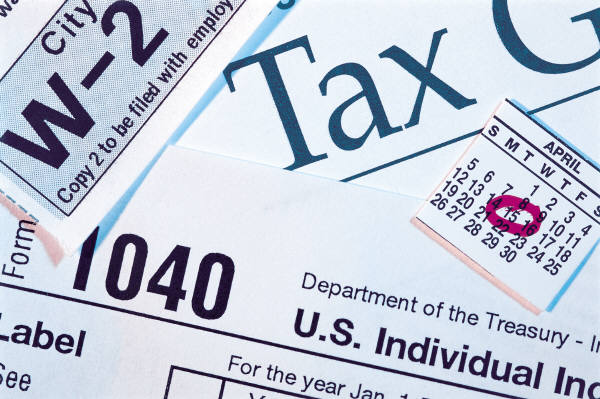
Which of the following things is TRUE about the W-2 form EXCEPT...
You get 1 W-2 form every year, even if you had multiple jobs
It contains information you'll need to fill out a 1040
It lets you know how much you earned last year
It lets you know how much was withheld from your paychecks
Jason is 15 and earned $1450 at his job last summer. Should he file a tax return?
No, because he didn't earn enough.
No, because you have to be 16 and older to file taxes.
Yes, because he may get a refund.
Yes. You must file taxes even if you didn't earn enough.
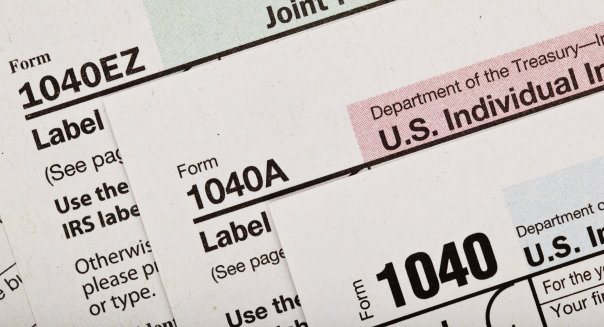
What do you need to file your 1040 form?
Your W-2
Your W-4
Your prior year's tax return
Income of $50,000 or more
Which of the following is NOT a way you can file your taxes?
Through a tax professional
Mailing in a paper tax return to the Federal government
Using tax software like TurboTax
Through your employer's HR department

True or False: A teen's earned income can be reported on a parent's tax return.
True
False

If a teen files a tax return, can the parent still claim him/her as a dependent?
Yes. All teens are dependents until they are 18 years old
No. If a teen files a tax return, he/she cannot be claimed
Yes, as long as the teen meets the dependency requirements
Yes, but the parent has to add the teen's income to theirs

Luisa earned $1,200 at her part-time job, and $500 from babysitting in cash. Which is TRUE?
She will report her total income as $1,700.
She will report her total income as $1,200.
She will report her total income as $500.
Luisa is required to file a tax return.
Earned income is any money you make from things like interest and dividends.
True
False
If you owe taxes, which of the following is FALSE?
You can make a payment using cash
You can delay your payment deadline
With an agreement, you can pay it in installments
You can make a payment with a debit, but not credit card
Which is TRUE if you do not pay your taxes?
You owe twice as much the following year
You're more likely to be approved for low interest loans
You cannot go to jail (but you will be heavily fined)
Your credit score may be impacted
The set amount of money you get paid per hour is your
Total income
Gross
Net
Wage
The FICA portion withheld from your check consists of which two categories?
Social Security
State Taxes
Medicare
The IRS
If you are 20 years old and a full time college student living at home then your parents can claim you as a dependent on their taxes.
True
False
The W4 and the I-9 are both documents you fill out before you can get paid by your new employer.
TRUE
FALSE
Your $ pay before taxes is called ----
net pay.
a deposit.
gross pay.
a check.
Match the following
W4
New employee fills out before they start
I - 9
Verifies Identification
1040
The most basic tax form
W2
Employee get from employer by Jan 31st.
1099
The form you get from having a gig job.
When Bryce attempted to borrow money at the bank, he learned that his credit score is low. Which best describes what this is likely to mean for Bryce?
The interest rates on his loan will be lower, since his credit score is low.
The purchase price of the item he needs the loan for will be higher due to his low credit score.
The monthly loan payments will be lower due to his lower credit score.
The interest rates on his loan will be higher, since his credit score is low.
Which is not included in an individual’s credit report?
Current and past addresses
Account balances
Bankruptcies and foreclosures
Medical information
Shonda’s mom recommends that she spend a year building her credit history and boosting her credit score before she applies for a loan to buy her dream car, which costs $54,000. Why is that good advice?
A good credit score will reduce her down payment
A good credit score will reduce her principal
A good credit score will reduce her interest rate
A good credit score will allow her to pay the full $54,000 in cash

