
 Worksheets
6th Social Studies Final Review
Total questions: 100
Worksheet time: 1hrs 15mins
What geographic factors are considered when determining patterns of population in places and regions?
Cultural practices
Economic activities
Physical features
Political beliefs
How do human migration patterns influence the character of places and regions?
By changing the economic stability
By altering the cultural landscape
By influencing political decisions
By modifying the climate
Which of the following is a major factor in the location of economic activities?
Historical monuments
Distribution of natural resources
Predominant languages
Recreational facilities
What is one way that people have adapted to physical environments in various places and regions?
By developing technology
By changing dietary habits
By altering transportation methods
By modifying clothing styles
Which type of economy is characterized by free market practices and minimal government intervention?
Socialist
Communist
Free enterprise
Totalitarian
Which of the following is considered a basic institution in all societies?
Religious groups
Sports teams
Government
Corporations
What is an example of cultural diffusion?
Economic recession
Trade
Technological failure
Political election
Which factor influences cultural change?
Artistic expression
Language barriers
Economic development
Historical monuments
How does communication technology impact cultures?
It isolates communities
It enhances cultural exchange
It reduces educational opportunities
It increases agricultural production
Which of the following is a religious holiday?
Independence Day
Thanksgiving
Diwali
National Day
What role do political systems play in shaping economic policies?
They determine educational content
They influence health standards
They dictate economic regulations
They control media outlets
How does climate affect agricultural practices in different regions?
By influencing crop selection
By determining technological use
By shaping trade agreements
By altering transportation methods
What impact does globalization have on local cultures?
It promotes language preservation
It increases cultural homogenization
It decreases economic activity
It enhances regional isolation
7.1 Many farms were built next to rivers to have access to water for crop irrigation. This an example of _______________.
situation factor
site factor
proximity factor
trade factor
Elevation is one of the factors that affect climate
true
false
Which of the following is a key concern of human geography?
Plate tectonics
Ocean currents
Population distribution
Weather patterns
Which of the following best describes a geographical issue?
The design of a new city park
A debate over the best type of graph to use in a report
The impact of climate change on coastal communities
Choosing which historical events to include in a textbook
Which of the following is a geographical issue related to water?
The design of water bottles
Access to clean drinking water
The popularity of water sports
The best type of water for brewing coffee
What does the term "sustainability" refer to in the context of geographical issues?
The ability to sustain an argument in a debate
The endurance of physical geography features over time
The capacity to maintain ecological and human health over the long term
The sustainability of economic growth without consideration for environmental impact
Prior to 1850 the location of all major North American cities was related, chiefly, to the presence of
navigable waterways
transcontinental highways
defensive sites
railroad junctions
water power
What does the book suggest as a primary factor influencing cultural development?
Economic conditions
Geographical location
Historical events
Technological advancements
Why have large cities developed around the Persian Gulf?
Access to Fresh Water
Because fo the Arable Farmland
Access to resources such as Oil which can be extracted and then shipped from there through the waterway
All of the answers are correct
Why is there a small population density in Tundra?
The movement of tectonic plates is studied within which branch of geography?
Human geography
Physical geography
Economic geography
Cultural geography
Which of the following is an example of a physical geography topic?
Urban development
Language distribution
Mountain formation
Trade routes
The concept of "place" in geography refers to:
The physical characteristics of a location
The human and physical characteristics of a location
The latitude and longitude of a location
The economic activities in a location
Which country has the largest population in the world?
United States
India
China
Russia
The Amazon Rainforest is primarily located in which country?
Mexico
Brazil
Colombia
Venezuela
What is the largest ocean on Earth?
Atlantic Ocean
Indian Ocean
Pacific Ocean
Arctic Ocean
The Sahara Desert is primarily located in which continent?
Asia
Africa
Australia
North America
Which animal is NOT typically found in the rainforest?
Jaguar
Panda
Sloth
Toucan
What is the primary climate of Egypt?
Tropical
Desert
Temperate
Polar
What role does migration play in urbanization?
It decreases urbanization
It has no effect on urbanization
It contributes to urbanization
It only affects rural areas
Polytheistic means...
To believe in many gods
To believe in only one god
That you do not believe in any gods

When we build highways we are _____________ the enviornment.
Adapting
Modifying
When humans change their behavior in order to adapt to the environment this is called
Adaptation
Modification
Modern day Egyptians have built the Aswan Dam to keep the Nile River from flooding. This is an example of...
modifying
adapting
Economic opportunity and religious freedom are examples of this.
Push factor
pull factor
deciding factor
benefits


What are the advantages of a Free Market Economy?
total government control
Frank has complete control over the U.S. economy
innovation, freedom of production, and competition (good for consumers)
the economy is free to regulate itself and monopolies control businesses
A higher GDP generally correlates to a(n) ___________ standard of living.
higher
lower
unrelated
GDP per capita is found by dividing a country's GDP by it's
population.
average birth rates.
number of households.
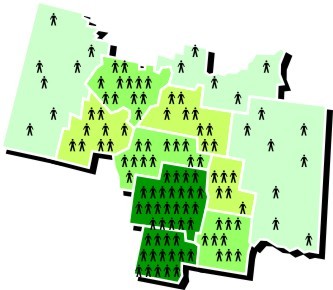


What is one example of a civic responsibility?
Obeying the laws
brushing your hair and combing your teeth
Buying Mr. Stanford a coffee
Cleaning the classroom

Cultural diffusion is
a certain belief about a group of people
how people worship a God in a culture
the spread of a cultural trait from one group to another
science
The greater the country’s level of economic development, the —
higher the quality of life
higher the agricultural labor force
lower the cost of living
lower the urban population

Countries with high levels of literacy and higher education are in which level of economic development?
More Developed
Newly Industrialized
Less Developed

Countries with low level of literacy are in which level of economic development?
More Developed
Newly Industrialized
Less Developed

What is a dictatorship
Government by officials of the church/religion.
Single ruler or a small group holds absolute authority.
A government ruled by a king or queen.
An economic system in which custom decides what people do, make, buy, and sell.
Command Economy
Traditional Economy
Representative Gov.
All of the Above
4 major kinds of resource:
Land
Labor
Capital
Entrepreneurship

Which country am I?
Spain
Italy
France
Germany
The letters BC stand for
Before Christmas
Because Christ
Before Christ
Because Cats
Bible : Christianity as _____________ : Islam
Talmud
Koran
Torah
Old Testament

The imaginary line through Greenwich, England. It is 0 degrees on the map.
Equator
Longitude
Prime Meridian
Climate map
3D representation of the Earth is called what?
map
globe
equator
coastal plains
Customs and beliefs handed down from generation to generation.
Traditions
culture
society
government
Religion is...
An institution that a society uses to enforce its laws.
A set of beliefs and practices followed by people in a particular culture.
Horizontal lines that run north and south.
Celebrations and parties that a culture has.
The various branches of creative activity such as painting, music, literature and dance is what?
food
society
art
religion
An artificial waterway constructed to allow the passage of boats or ships inland or to convey water for irrigation is called a ___________.
canal
canoe
clever
pathway

