wayground logo

Free Printable Worksheets

Font size

S
M
L
XL
Worksheets

Physics Semester Exam

Total questions: 100

Worksheet time: 1hrs 16mins

Name
Class
Date
1.

Two factors that determine work are...

a)

Force

b)

Mass

c)

Velocity

d)

Distance

2.

Units of force are...

a)

Newtons

b)

Grams

c)

Joules

d)

Meters

3.

Units of work are...

a)

Newtons

b)

Grams

c)

Joules

d)

Meters

4.

What is the formula for work?

a)

Force = work × distance

b)

Distance = force × work

c)

Work = force × distance

d)

Work = force × mass

5.

If 40N of force is applied to Rollo Koster's 10 kg cart over a distance of 50 meters, how much work is done?

a)

8000 J

b)

8000 N

c)

4000 J

d)

2000 J

6.

If Jay Loppy pushes his van 20 meters how much work is done?

a)

2,000 J

b)

40,000 J

c)

10,000 J

d)

800,000 J

7.

What can force do to an object?

a)

Accelerate an object

b)

Slow down an object

c)

Have the object remain in place

d)

Have the object change shape

e)

All of the above

8.
This type of force resist motion between two surfaces that are pressed together
a)
contact
b)
gravity
c)
friction
9.

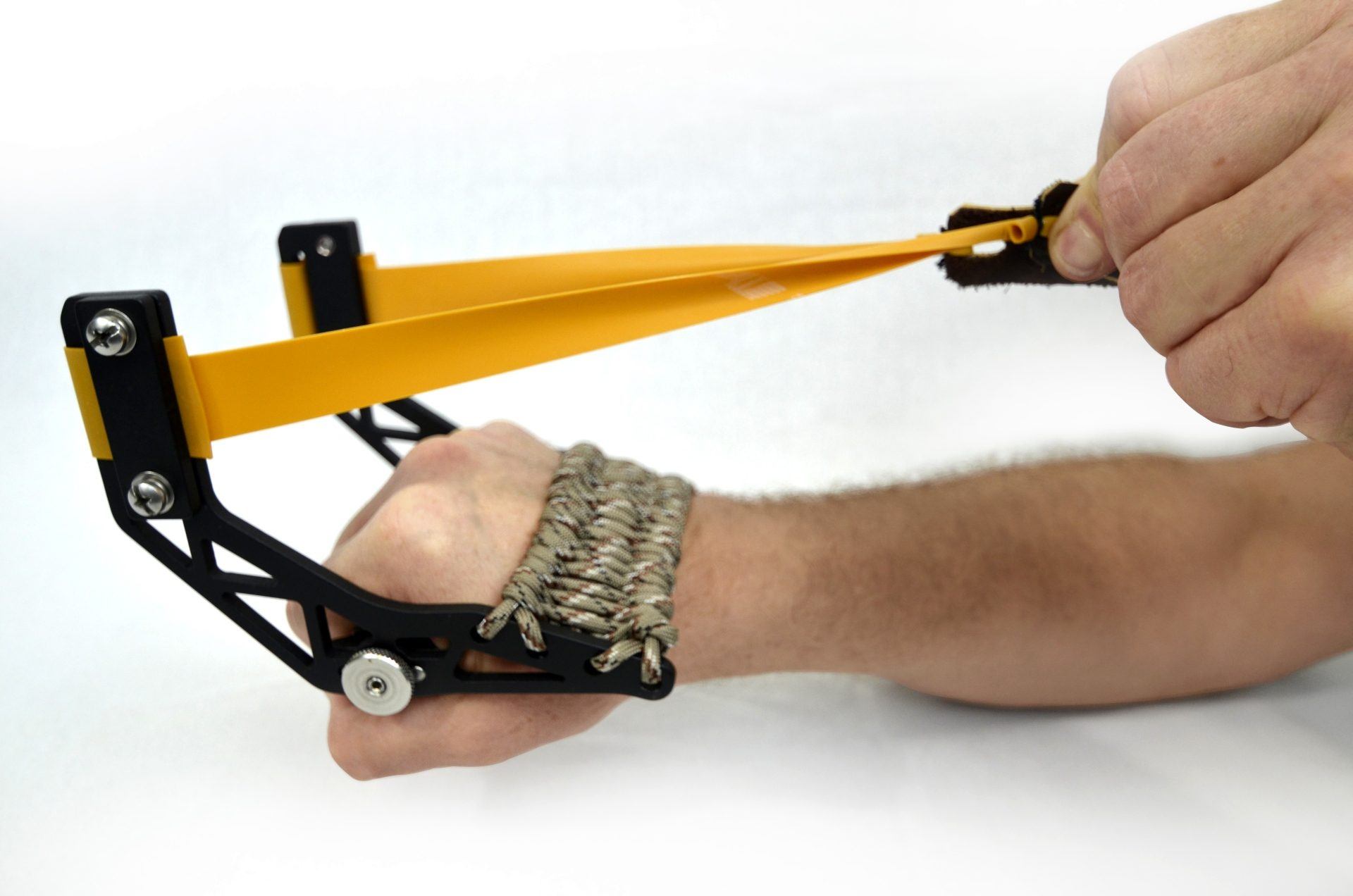
What type of force was at work in the parachute?

a)

elastic spring force

b)

frictional force (air resistance)

c)

magnetic force

d)

gravitational force

10.
a)
Balanced
b)
Unbalanced
11.
With unbalanced forces, the object will move in the direction of the _______ force.
a)
larger 
b)
smaller 
c)
equal 
12.

Which image is an example of a balanced force?

a)

Image 1

(Top Image)

b)

Image 2

(Bottom Image)

13.

How does the mass of an object affect it's motion?

a)

It has no effect

b)

The less the mass the less effect a force will have

c)

The greater the mass the greater the effect a force will have

d)

The greater the mass the less effect a force will have

14.

Energy stored by something that can stretch or compress.

a)

elastic potential energy

b)

gravitational potential energy

c)

chemical potential energy

d)

potential energy

15.

Energy stored by objects due to their position above Earth’s surface.

a)

potential energy

b)

kinetic energy

c)

gravitational potential energy

d)

mechanical energy

16.

What is the unit of measurement for potential energy?

a)

Watts

b)

Joules

c)

Newtons

d)

Meters

17.

I have the most potential energy if I am:

a)

5 feet high

b)

10 feet high

c)

15 feet high

d)

20 feet high

18.

The acceleration due to gravity (on Earth) is _____

a)

98 m/s2

b)

9.8 m/s2

c)

9.8 m/s

d)

0.98 m/s

19.
With all of his Batgear on, Batman has a mass of 90.7 kg. How much potential energy does he have if he's perched on top of a 1,575 m building? 
a)
142,852.5 J
b)
1,399,954.5 J
c)
0.058 J
d)
17.36 J
20.
Gravity on Jupiter is 24.79 m/s2. If a 5 kg box is 32 m above the surface of Jupiter, calculate the GPE of the box.
a)
160 J
b)
3,966.4 J
c)
158.66 J
d)
6.45 J
21.

Which of the following charge pairs would repel each other? (Choose all that apply)

a)

positive and negative

b)

negative and negative

c)

positive and positive

d)

negative and positive

22.

If you increase the size of the resistor and keep the voltage the same, what will happen to the current?

a)

Current will increase

b)

Current will decrease

c)

Current will stay the same

23.
The unit for current is the 
a)
Volt
b)
Ohm
c)
Electron
d)
Amp
24.
What is the unit for resistance?
a)
Volts
b)
Amperes
c)
Ohms
25.
If the battery produced 12.6 Volts and what would be the current flow be for a 6 Ohm resistor
a)
2.1 Amps
b)
2.4 Amps
c)
1.71 Amps
d)
15 Amps
26.
What voltage is needed to cause a 2A current flow through a 10Ω resistor?
a)
5V
b)
0.2V
c)
20V
d)
200V
27.

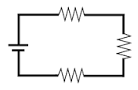
What type of circuit is this?

a)

Series

b)

Parallel

c)

Simple

28.
What type of circuit is pictured?
a)
series
b)
parallel
29.

In a series circuit, how is the brightness of a light bulb affected when another bulb is connected?

a)

It gets brighter

b)

It stays the same

c)

It gets dimmer

d)

It goes out

30.
In a _________ circuit, if one bulb goes out then the entire circuit doesn't work.
a)
Series
b)
Parallel
31.

A wave that has the vibration parallel to the direction of the wave is called:

a)

Longitudinal

b)

Transverse

32.

A wave that has the vibration perpendicular to the direction of the wave is called:

a)

Longitudinal

b)

Transverse

33.
You are doing an experiment recording the growth of plants under different amounts of sunlight. What is the dependent variable?
a)
The sunlight
b)
The growth
c)
The experiment
d)
The amounts of photons
34.
The variable that causes a change is the
a)
constant
b)
independent variable
c)
dependent variable
d)
control
35.
A variable that never changes is known as a 
a)
constant
b)
independent variable
c)
dependent variable
d)
control
36.
"Will ice melt faster in salt water?", is an example of a
a)
Hypothesis
b)
Question
c)
Dependent variable
d)
Control
37.
"Ice will melt faster in salt water.", would make a good
a)
Hypothesis
b)
Question
c)
Analysis
d)
Conclusion
38.
What is the dependent variable for the hypothesis: If ice melts in salt & fresh water, then it will melt faster in salt water.
a)
The melt time
b)
The amount of salt
c)
The fresh water
d)
The size of the beaker
39.
A student wants to test the effects of type of exercise on heart rate.  What is the dependent variable?
a)
heart rate
b)
type of exercise
c)
amount of exercise
d)
time of day exercise occurs
40.

How many independent variables does an experiment have?

a)

0

b)

1

c)

between 1 and 5

d)

as many as needed

41.
An experiment is performed on plants to see how different liquids affect plant growth. Each plant in the experiment is given a different liquid; water, apple juice, or milk. Each plant has the same amount of soil, sunlight, and listens to the same music. In this investigation, what is the dependent variable?
a)
Type of plant
b)
Water, apple juice, milk
c)
Plant growth
42.
If plants are exposed to sunlight, then they will grow taller.
What part of the scientific method is this an example of?
a)
Procedure
b)
Hypothesis
c)
Question
d)
Results
43.

A hypothesis should always follow this format...

a)

If...then...

b)

Because...then...

c)

If...because...

d)

If...because...why

44.

The thing or condition that is being measured in an experiment (the data) is called:

a)

independent variable

b)

dependent variable

c)

control

d)

problem

45.

Scientific inquiry usually begins by:

a)

forming a hypothesis

b)

running an experiment

c)

constructing a theory

d)

making an observation

46.

Example: I went to the library to find information about what makes plants grow faster.

a)

hypothesis

b)

research

c)

collect and analyze data

d)

experiment

47.
This variable in an experiment is the one being deliberately changed by the scientist. 
a)
dependent variable
b)
independent variable
c)
data
d)
control group
48.
An experiment is performed on plants to see how different liquids affect plant growth. Each plant in the experiment is given a different liquid; water, apple juice, or milk. Each plant has the same amount of soil, sunlight, and listens to the same music. In this investigation, the independent variable is ...
a)
The type of plant
b)
The amount of sunlight
c)
The type of music
d)
The type of liquid
49.
The summary at the end of an experiment that explains the results. 
a)
conclusion
b)
procedures
c)
materials
d)
responding variable
50.
Testing a hypothesis often involves a(n):
a)
answer
b)
experiment
c)
problem
d)
safety check
51.
On what axis should the independent variable always be?
a)
X
b)
Y
52.
An experiment is performed on plants to see how different liquids affect plant growth. Each plant in the experiment is given a different liquid; water, apple juice, or milk. Each plant has the same amount of soil, sunlight, and listens to the same music. In this investigation, the independent variable is ...
a)
The type of plant
b)
The amount of sunlight
c)
The type of music
d)
The type of liquid
53.
Which is NOT a step in the scientific method?
a)
Make observation
b)
Form a theory
c)
Collect data
d)
Form a hypothesis
54.
How much work is done in holding a 15 N sack of potatoes while waiting in line at the grocery store for 3 minutes?
a)
15 J
b)
45 J
c)
0 J
d)
5 J
55.
What is the difference between calculating power and work?
a)
Power takes into account the time it takes to complete a task
b)
Work takes into account the time it takes to complete a task
c)
Power is force/area
d)
Work is force/area
56.

The roller coaster car has a mass of 500 kg. It is pulled from position 1 to 2 (30 m) by a motor. At the top of the ride the vertical distance top to bottom is 20 m. The motor pulls the car with a 4000 N force. Calculate the work done getting the car to the top of the ride.

a)

100 000J

b)

120 000J

c)

800 000J

d)

90 000J

57.
What type of energy is in this picture?
a)
Kinetic
b)
Potential
c)
Chemical
d)
Sound
58.
What kind of energy does this device use?
a)
Chemical
b)
Electrical
c)
Thermal
d)
Chemical
59.
A battery converts what type of energy to another?
a)
sound to kinetic
b)
light to heat
c)
mechanical to electrical
d)
chemical to electrical
60.
Energy that is stored in bonds between atoms is:
a)
Mechanical energy
b)
Chemical energy
c)
Kinetic energy
d)
Nuclear energy
61.

What type of energy transformation takes place when you plug in a lamp and turn it on?

a)

electrical to radiant

b)

electrical to mechanical

c)

chemical to radiant

d)

mechanical to thermal

62.

A weight-lifter raises a 2000N weight through a vertical height of 2.0m in 0.80s. What useful power does he develop in doing this?

a)

800 W

b)

700W

c)

4000W

d)

5000W

63.

What should you do if a piece of equipment breaks?

a)

Keep it to yourself

b)

Tell your lab partner

c)

Notify your instructor

d)

Clean it up by yourself

64.

What should you do if you are injured during a lab?

a)

See the school nurse after class

b)

See a doctor after school

c)

Attempt first aid on your own

d)

Notify your instructor immediately

65.

What should be done with long hair before starting a lab?

a)

Do nothing, let it hang freely

b)

Hold it back with your hand

c)

Tie it back out of the way

d)

Use a hat to hold it back

66.

What type of footwear would be best worn in a laboratory?

a)

High Heels

b)

Sandals

c)

Sneakers

d)

Flip-Flops

67.

When is horseplay, or goofing around, acceptable in a laboratory?

a)

Always

b)

Sometimes

c)

Never

d)

Depends

68.

What are the consequences of ignoring lab safety?

a)

You get hurt

b)

You fail the lab

c)

You lose lab privileges

d)

You bring about the zombie apocalypse

69.

When an object gains electrons it becomes __________

a)

Neutral

b)

Positively charged

c)

Negatively charged

70.

An atom of oxygen has 8 protons and 10 electrons, this means the atom is ____________

a)

positively charged because it has excess electrons

b)

negatively charged because it has excess electrons

c)

positively charged because it has a deficiency of electrons

d)

negatively charged because it has a deficiency of electrons

71.

After a balloon is rubbed against wool, the two objects will ________ each other because they have ___________ charges

a)

attract; like

b)

attract, opposite

c)

repel; like

d)

repel; opposite

72.

Which image shows a neutral conductive pith ball after a positively charged balloon is brought near the left side, but doesn't touch?

a)

A

b)

B

c)

C

d)

D

73.

Which electrostatics phenomena is shown in this picture?

a)

Contact

b)

Friction

c)

Grounding

d)

Electron Shifting

74.

A balloon is rubbed against a student's hair and then touched to a wall. The balloon sticks to the wall due to

a)

The balloon is charged neutral, so is the wall, so it attracts to the wall

b)

The balloon is charged opposite the wall, so it attracts to the wall

c)

The balloon has a charge, so it attracts the neutral wall

d)

The wall grounds the balloon, so it sticks

75.
When a plastic rod is rubbed with wool, the wool acquires a positive charge because
a)
protons are transferred from the wool to the rod
b)
protons are transferred from the rod to the wool
c)
electrons are transferred from the rod to the wool
d)
electrons are transferred from the wool to the rod
76.

Name the piece of equipment.

a)

voltmeter

b)

balance

c)

collision apparatus

d)

magnet

77.

Too easy to name...

a)

stopwatch

b)

trajectory apparatus

c)

balance

d)

magnet

78.

You got this one, right?

a)

batteries

b)

magnets

c)

stopwatch

d)

lab masses

79.

The symbol represents a ________________ and the long side represents the ________________ side.

a)

cell, positive

b)

cell, negative

c)

battery, positive

d)

battery, negative

80.

A potential difference of 24 V is applied to a 150 resistor. How much current flows through the resistor?

a)

0.15 A

b)

3600 A

c)

6.25 A

d)

0.16 A

81.

What is a circuit?

a)

A rate of charges flow through a cross-sectional area of a wire

b)

A closed path that a current can flow along

82.
Circuits often include a _____________ to control the flow of current.
a)
switch
b)
conductor
c)
voltage
d)
current
83.

Which is the right form of Ohm's Law?

a)

V=I/R

b)

V=R/I

c)

I=V/R

d)

I=R/V

84.
The number of wavelengths that pass a point each per second is:
a)
frequency
b)
period
c)
longitudinal 
d)
transverse wave 
85.
The type of waves that require medium to pass:
a)
Mechanical Waves
b)
Electromagnetic Waves
86.
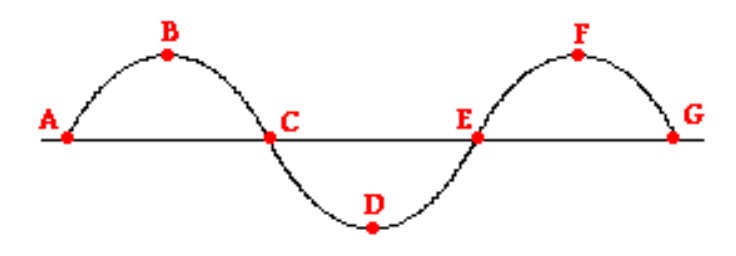
Which vocabulary term is used to identify the distance between points C & G?
a)
Amplitude
b)
Crest
c)
Frequency
d)
Wavelength
87.
When the frequency of a wave increases, what happens to the wavelength?
a)
The wavelength is not directly affected by the frequency of a wave.
b)
The wavelength increases.
c)
The wavelength decreases.
d)
More specific information is needed to form a conclusion about the wavelength.
88.
A mechanical wave cannot travel through...
a)
a vacuum(empty space).
b)
water.
c)
air. 
d)
glass.
89.
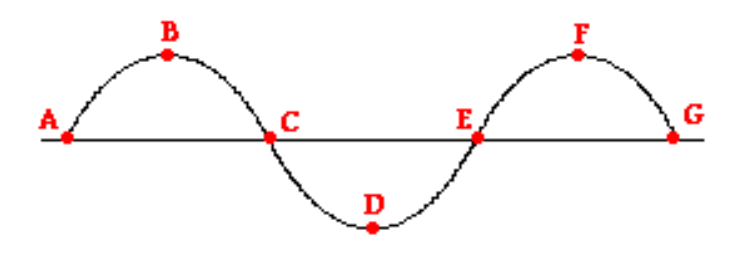
Which letter(s) represent the trough of the wave?
a)
A
b)
B & D
c)
D
d)
C & G
90.
Which letter(s) represent the crest of the wave?
a)
A
b)
B & D
c)
B & F
d)
F
91.
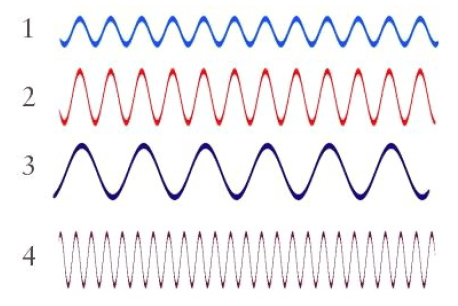
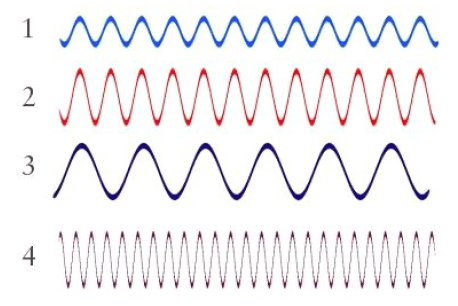
Which wave in the diagram has the greatest frequency?
a)
1
b)
2
c)
3
d)
4
92.
Which wave in the diagram has the greatest wavelength?
a)
1
b)
2
c)
3
d)
4
93.
Electromagnetic waves include the following except
a)
radio waves
b)
X-rays
c)
doing the wave at a football game
d)
microwaves
94.
regular disturbances that carry energy through matter or space
a)
crest
b)
energy
c)
wave
d)
trough
95.
Spencer walked 420 m in 17.5 seconds
a)
Speed
b)
Velocity
c)
Acceleration
96.
An airplane travels 1260 km from San Francisco northeast to Chicago in 3.5 hours.
a)
Speed
b)
Velocity
c)
Acceleration
97.
Mrs. Starnes slowed down as she was approaching the Chick-fil-A drive thru.
a)
Speed
b)
Velocity
c)
Acceleration
98.

In which graph is the runner running the fastest?

a)

graph A

b)

graph B

c)

graph C

d)

graph D

99.

In which graph is the runner not moving?

a)

graph A

b)

graph B

c)

graph C

d)

graph D

100.

Which sentence best describes the runner whose distance-time graph is shown?

a)

The runner ran forward for 2 seconds, and then ran backward for 2 more seconds.

b)

The runner ran forward for 2 seconds, and then stood still for 2 more seconds.

c)

The runner ran forward for 2 seconds, and then ran forward more slowly for 2 more seconds.

d)

The runner ran forward for 2 seconds, and then turned right and continued forward at the same speed for 2 more seconds.