
 Worksheets
Q2 Benchmark Review
Total questions: 103
Worksheet time: 1hrs 16mins
Defintion of Energy Transfer
Energy Moving Between 3 objects
Energy Moving Between Two Objects Or systems
Energy Moving Between One object or systems
Energy Moving between systems
What is the Law of Conservation Of Energy
Energy that cannot be created or destroyed
Energy that can be created or destroyed
Energy that can be destroyed
Energy that can be created
What is Gravitatinol Potential Energy
Energy with an object due to its position below the ground
Energy with an object due to it's position above the ground
(Gpe)=WxH
Gpe
WxL
Defintion of Model
Things used to not provide information
Things used by scients to represnt ideas and provide information
Things used by scientists to test things
Defintion of energy
To be able to do something
The ability to change speed
The abilty to change dircetion
The ability to do work
Kinetic Energy
Energy in Motion
Energy stored in motion
Energy of height

Conduction
The transfer of energy by electromagnetic waves.
A circular motion of air that causes wind and changes in weather
A type of heat transfer that occurs through the movement of fluids.
The transfer of energy from one particle of matter to another within an object or between two objects that are in direct contact.

Convection
The transfer of energy by electromagnetic waves.
A circular motion of air that causes wind and changes in weather
A type of heat transfer that occurs through the movement of fluids.
The transfer of energy from one particle of matter to another within an object or between two objects that are in direct contact.

Radiation
A circular motion of air that causes wind and changes in weather
The transfer of energy by electromagnetic waves.
A type of heat transfer that occurs through the movement of fluids.
The transfer of energy from one particle of matter to another within an object or between two objects that are in direct contact.

Specific Heat
Materials that do not conduct heat well.
A material that conducts heat well,
The amount of energy required to raise the temperature of 1 kilogram of a material by 1 kelvin.
The expansion of matter when it is heated.


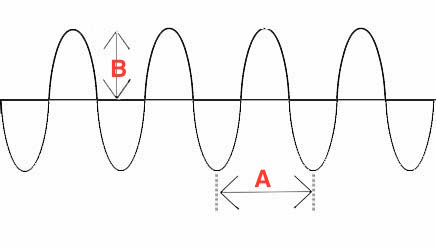
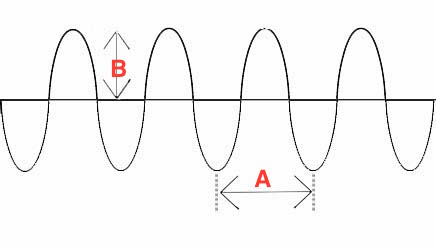


True or False: Sound waves are produced when something vibrates.
True
False
Sound waves are _______ waves.
Transverse
Seismic
Longitudinal
Slow
Sound waves travel the fastest through _______.
Gases
Solids
Liquids
Plasma
True or False: Sound waves can travel through space.
True
False
True or False: The speed of sound depends on the loudness of the sound.
True
False
As the temperature of a medium increases, the sound waves will travel ____________.
Faster
Slower
As the same speed
Part of the ear that gathers sound waves is the ______.
Ear drum
Cochlea
Outer Ear
The amount of energy a wave carries is the _________.
Amplitude
Height
Loudness
Volume
Human perception of sound volume
Amplitude
Loudness
Intensity
Decibel
Pitch is _____.
How often a sound wave occurs
How high or low a sound seems to be
The energy behind a wave
True or False: The higher the pitch, the lower the frequency.
True
False

What happens to frequency when wavelength decreases?
stays the same
decreases
increases
There is no relationship between wavelength & frequency.
Which type of electromagnetic wave travels fastest through a vacuum?
radio
gamma rays
visible light
They all travel at the same speed.

The diagram shows a person observing a thunderstorm located several kilometers away. The person hears the thunder several seconds after seeing the lightning. Which statement accurately explains the difference in observations of sound and light by the observer?
Human eyes see light faster than their ears can hear sound.
The medium the waves are traveling through is different for each type of wave.
Light waves travel faster than sound waves.
Sound waves travel faster than light waves.

In which phase of matter do atoms vibrate in place without moving?
Liquid
Solid
Gas
None of these
Which phase of matter has no definite shape or volume?
Solid
Liquid
Gas
All of the above
Which phase of matter has a definite volume and takes the shape of its container?
Liquid
Solid
Gas
None of these

A small chunk of matter is made only from Gold atoms. This is an example of a:
Mixture
Compound
Element
Solution

Apple juice is what kind of mixture?
Homogeneous
Heterogeneous

Boba tea is what kind of mixture?
Homogeneous
Heterogeneous
True or False: An element can be split by chemical means
True
False

Pure water is an example of what?
Element
Solution
Compound
Mixture
If a liquid's temperature rises enough, it will become a:
Solid
Gas
When the temperature of liquid drops, it will eventually become a:
Solid
Gas
Plasma
A Mixture is defined as
A combination of two or more substances that are not chemically combined
A combination of compounds that are chemically bonded
2 or more elements chemically bonded


Pascal's law says...
Pressure is inversely proportional to Force
Pressure applied in an open container is transmitted equally to the walls of the container
Pressure and Area have no relationship
P =AF

What best summarizes the Archimedes Principle
Pressure in a closed system impacts the walls of the system equally.
Velocity and area are inversely proportional
Mass cannot be created or destroyed
The buoyant force of a body in a fluid is equal to the weight of the fluid that the body displaces.

Bernoulli's principle says
The pressure on the top of an airplane wing is greater than that below it
The pressure in a fluid decreases as the fluid’s velocity increases
Fluid flow velocity does not change when going from a large pipe to a smaller pipe
Area and velocity are proportional
All matter is made of what?
energy
atoms
electrons
The positive particles of an atom are ___________.
electrons
protons
neutrons
The center of an atom where its neutrons and protons are is called the _____________.
nucleus
electron cloud
center
An atom with atomic number 6 would have how many protons?
6
12
3
Particles in an atom that are neutral and have no charge are
protons
electrons
neutrons
What is the atomic number for an element with three protons?
6
1
3
A particle that moves around the nucleus is called an _________.
Proton
Neutron
Electron
Quark
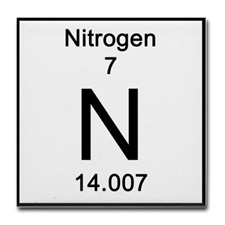
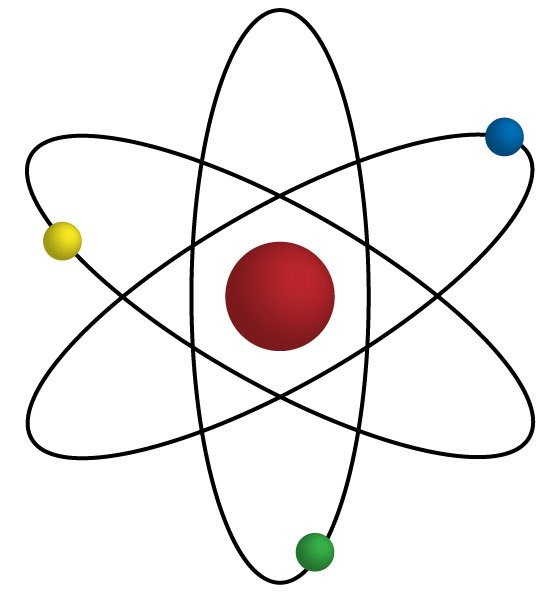

What is the atomic mass of this atom?
59
31
28
30

What is the atomic mass?
24.31
22
13
12

