wayground logo

Free Printable Worksheets

Font size

S
M
L
XL
Worksheets

IPC Midterm

Total questions: 98

Worksheet time: 19hrs 1mins

Name
Class
Date
1.

Chloring combines with element Mg to form a compound with the formula MgCl2. Which group in the Periodic Table contains element Mg?

a)

Group 16

b)

Group 2

c)

Group 13

d)

Group 17

2.
a)

a

b)

b

c)

c

d)

d

3.
Pizza
a)
Heterogeneous
b)
Homogeneous
4.
Sugar water
a)
Heterogeneous
b)
Homogeneous
5.
Salad is an example of a
a)
homogeneous mixture
b)
heterogeneous mixture
6.
Which of the following tells you that a chemical change may have occurred?
a)
Change Shape
b)
Melting
c)
Vaporizing
d)
Change in color
7.
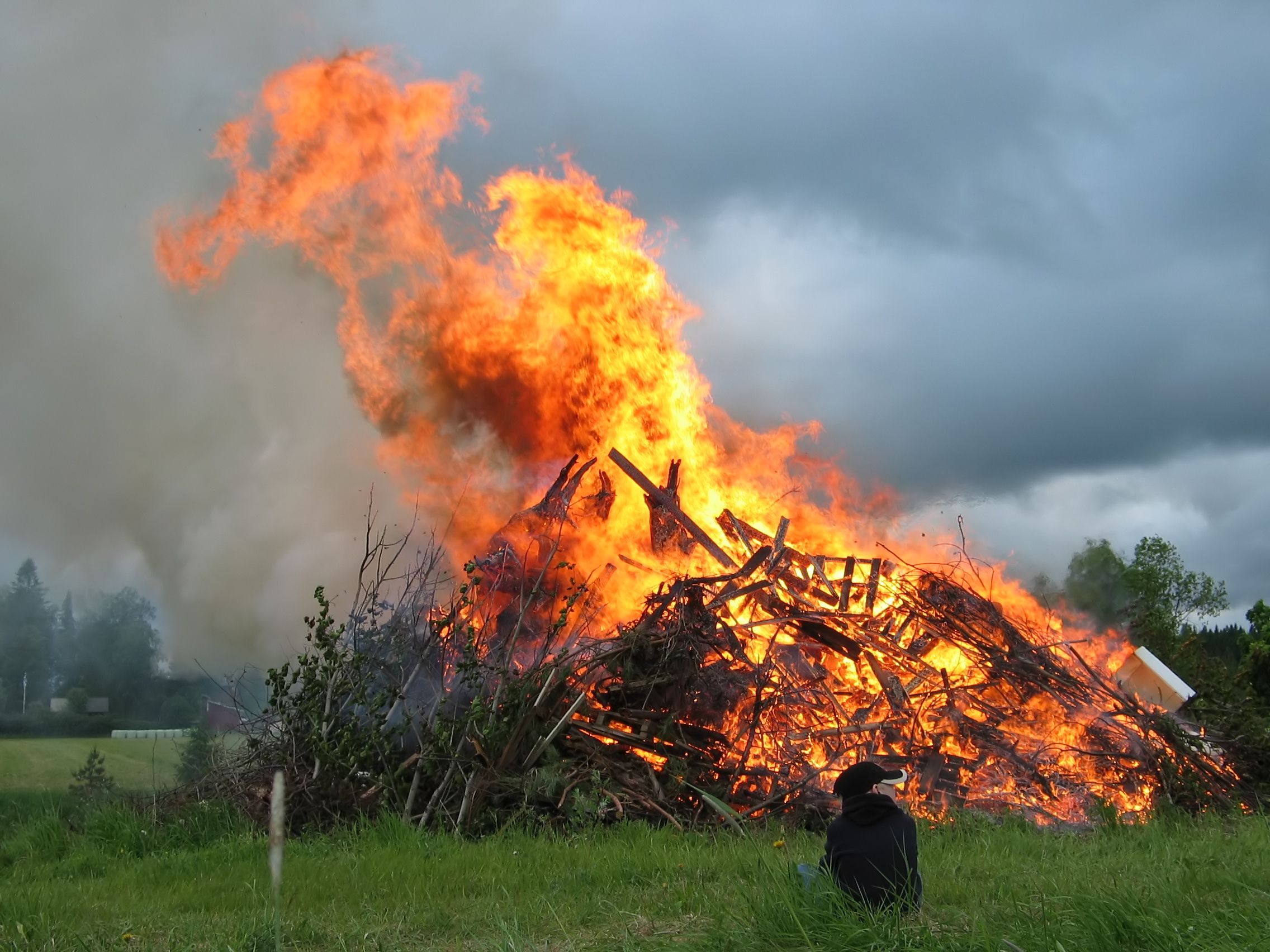
Is wood burning a physical or chemical change?
a)
Physical 
b)
Chemical
8.
The Law of Conservation of Mass tells us matter can't  ______________.
a)
change color
b)
change state of matter
c)
be created or destroyed
d)
change temperature
9.
An object with which of the following densities will float on water?
a)
0.7 g/cm3
b)
1.2 g/cm3
c)
3.5 g/cm3
d)
11.4 g/cm3
10.
Why do ice cubes float in a  glass of water?
a)
the ice cubes are more dense than the water
b)
the water is more dense than the ice cubes
c)
the water is more dense than the glass
d)
the ice is more dense than the glass
11.
What is viscosity?
a)
A liquid's resistance to flow.
b)
a liquids flow.
c)
a liquid
d)
gas to solid.
12.

Xenon...

a)

is flammable

b)

is corrosive

c)

is unreactive (inert)

d)

will bond with Fluorine

13.
What are valence electrons?
a)
outer shell electrons
b)
core electrons
c)
inner shell electrons
d)
protons
14.
Why are noble gases generally unreactive?
a)
They have empty shells
b)
They are explosive
c)
They have a full valence shell
d)
They combine with water
15.
Nonmetals
a)
are on the top left of the periodic table
b)
are on the lower left of the periodic table
c)
are on the top right of the periodic table
d)
are at the bottom of the periodic table
16.
What is the formula to solve for the neutron?
a)
Mass + Atomic Number= Neutrons
b)
Mass x Atomic Number = Neutrons
c)
Mass - Atomic Number = Neutrons
d)
Mass + Number of Protons = Neutron
17.
How many neutrons does oxygen have?
a)
16
b)
15.99
c)
8
d)
Doesn't contain any neutrons
18.
Which is NOT a step in the scientific method?
a)
Make observation
b)
Form a theory
c)
Collect data
d)
Form a hypothesis
19.
What is a hypothesis?
a)
A hypothesis is the right answer to an experiment.
b)
A hypothesis is the wrong answer to an experiment.
c)
A hypothesis is an educated guess.
d)
I don't know.
20.
An experiment is performed on plants to see how different liquids affect plant growth. Each plant in the experiment is given a different liquid; water, apple juice, or milk. Each plant has the same amount of soil, sunlight, and listens to the same music. In this investigation, the independent variable is ...
a)
The type of plant
b)
The amount of sunlight
c)
The type of music
d)
The type of liquid
21.
What is gold?
a)
element
b)
compound
c)
mixture
22.
What is sugar?
a)
element
b)
compound
c)
mixture
23.
When two or more elements chemically combine
a)
element
b)
compound
c)
mixture
d)
solution
24.
A horizontal row of elements in the periodic table.
a)
column
b)
group
c)
period
25.
A vertical column in the periodic table.  Elements share similar properties.
a)
row
b)
group
c)
period
26.
Elements in a ..................have similar chemical properties.  
a)
period
b)
group
c)
row
27.
What is the name of this element?
a)
Helium
b)
Hydrogen
c)
Argon
d)
Silver
28.
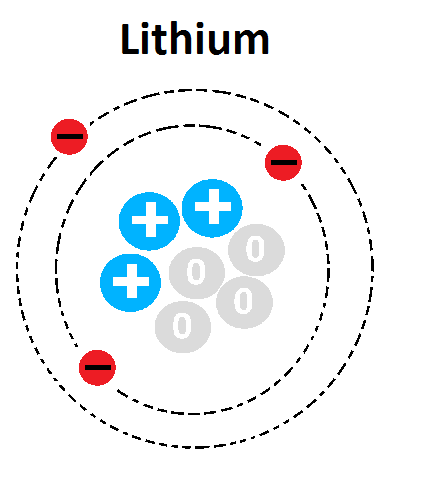
What is the mass number of this atom?
a)
1
b)
3
c)
4
d)
7
29.
What is the atomic number of this atom?
a)
2
b)
4
c)
6
d)
none of the above
30.
What group does this element belong to?
a)
Group 1: Alkali metals
b)
Group 18: Noble Gases
c)
Group 2: Alkaline-Earth Metals
d)
Group 17: Halogens
31.

The innermost energy level has a maximum of how many electrons?

a)

1

b)

2

c)

6

d)

8

32.

What is the goal of the Lewis Dot Structure?

a)

To determine the electron position.

b)

To show the element's valence electrons & bonding capabilities.

c)

To find the atomic mass of an element.

d)

To search for the number of electrons in an individual atom.

33.

According to the octet rule most elements need _______ valence electrons.

a)

2

b)

8

c)

6

d)

18

34.

This is a correct dot diagram for carbon (C)

a)

true

b)

false

35.
What is the charge on a chloride ion?
a)
-1
b)
1
c)
+2
d)
+1
36.
A(n) _________ is an ion with a positive (+) charge.
a)
anion
b)
cation
c)
ion
d)
solute
37.
When an atom loses an electron, it becomes a:
a)
positive ion
b)
negative ion
c)
neutral ion
d)
neutral atom
38.
Magnesium bromide is an ionic compound with the chemical formula MgBr₂.  What does the "2" tell you?
a)
There are 2 bromide ions for every magnesium ion
b)
Bromide has a 2- charge
c)
Bromide has a 2+ charge
d)
There are 2 magnesium ions to every bromide ion
39.
What will be the compound name of the following chemical formula?
NaCl
a)
Potassium Chloride
b)
Sodium Chloride
c)
Calcium Chloride
d)
Sodium Chlorine
40.
Ionic bonds form between metals and ____.
a)
metalloids
b)
metals
c)
nonmetals
41.
What is the formula of Sodium oxide?
a)
Na2O
b)
NaO2
c)
Na2O2
d)
Na2O
42.
The reason we use the scientific method is to 
a)
Prove science is better than guessing
b)
Take Data
c)
Remove human bias
d)
Its the law
43.
Any process in which particles of a liquid enter the gaseous phase. 
a)
Melting
b)
Freezing
c)
Vaporization
d)
Boiling
44.
A convenient way to express very large or small numbers. 
a)
Repeatability
b)
Significant digit (SD)
c)
Scientific notation
d)
Weight
45.
Balance this equation:
MgCl2 --> Mg4+ Cl2
a)
It's already balanced.
b)
4MgCl2 --> Mg4+ 4Cl2
c)
4MgCl2 --> Mg4+ 5Cl2
46.
The substances listed on the left side of a chemical equation are the
a)
Products
b)
Coefficients
c)
Precipitates
d)
Reactants
47.
In chemical reactions, what does the principle of conservation of mass mean?
a)
Matter is not created or destroyed.
b)
The total mass of the reactants is greater than the total mass of the products.
c)
The total mass of the reactants is less than the total mass of the products.
d)
Matter is not changed.
48.
How many Hydrogen (H) atoms are in NH3O5
a)
3
b)
4
c)
5
d)
1
49.
Name the part in red:

H2 + O2 -> H2O
a)
Coefficient
b)
Product
c)
Yield
d)
Subscript
50.
Name the part in red:

_2_H+ _1_O2 -> _2_H2O
a)
Coefficient
b)
Product
c)
Yield
d)
Subscript
51.
Name the part in red:

H+ O2 -> H2O
a)
Coefficient
b)
Product
c)
Reactant
d)
Subscript
52.
Name the part in red:

H+ O-> H2O
a)
Coefficient
b)
Product
c)
Reactant
d)
Subscript
53.
What are the coefficient used to balance the equation below?
__Ag2O →__ Ag +___O2
a)
2,4,1
b)
1,1,1
c)
2,1,2
d)
2,2,2
54.
 Balance this equation:

__ Al + __ HCl → __ H
2 + __ AlCl3
a)
2, 6, 3, 2
b)
it is already balanced
c)
4, 12, 3, 4
d)
2, 1, 4, 5
55.

The slower the particles in a substance move,

a)

the colder it is.

b)

the warmer it is.

c)

the more energy it has.

d)

the higher its temperature

56.
The molecules in the picture are tightly held together with little movement. They have shape and energy.  Therefore, the picture represents _________.
a)
solid
b)
liquid
c)
gas
d)
plasma
57.

In order to change from a gas to a liquid, heat must be....

a)

added

b)

removed

c)

increased

d)

kept the same

58.

What charge does an electron have?

a)

negative (-)

b)

positive (+)

c)

neutral or no charge (0)

d)

proton (+)

59.
Which state of matter has particles arranged like this?
a)
solid
b)
liquid
c)
gas
60.

Which is a nonmetal that is liquid at room temperature?

a)

Br

b)

Hg

c)

O

d)

Fe

61.

The particles that do not make up the nucleus of an atom are called

a)

protons

b)

neutrons

c)

electrons

d)

valence electrons

62.

Carbon has how many electrons?

a)

6

b)

7

c)

12

d)

13

63.
What group does this element belong to?
a)
Group 1: Alkali metals
b)
Group 18: Noble Gases
c)
Group 2: Alkaline-Earth Metals
d)
Group 17: Halogens
64.
How many valence electrons?
a)
2
b)
3
c)
5
d)
10
65.

the formula for this compound would be

a)

4HC

b)

C4H

c)

CH4

d)

CHHHH

66.

How many Oxygen (O) atoms are in 2C2HO8Cl2

a)

10

b)

16

c)

8

d)

5

67.

Which problem is balanced?

a)

PbO2 + 2H2

b)

SO2 + H20 --> H2SO4

c)

2Na + 2H2O --> 2NaOH + H2

d)

N2 + O2 --> NO

68.

Covalent bonds are between...

a)

Metal and Non-metal

b)

Non-metal and Non-metal

c)

Metal and Metal

69.

In chemical reactions, what does the principle of conservation of mass mean?

a)

The total mass of reactants is equal to the total mass of the products.

b)

The total mass of the reactants is greater than the total mass of the products.

c)

The total mass of the reactants is less than the total mass of the products.

d)

Matter is always destroyed in a reaction.

70.
How many electrons should Beryllium have around its Lewis dot model?
a)
1
b)
2
c)
3
d)
4
71.
This could be the dot diagram of
a)
Mg, group 2.
b)
Cl, group 17.
c)
C, group 14.
d)
O, group 16.
72.
Particles (molecules) in a ______________________ have more energy than the other states of matter.
a)
gas
b)
solid
c)
liquid
73.
What term describes a solid changing to a gas?
a)
Deposition
b)
Sublimation
c)
Evaporation
d)
Freezing
74.
A physical change is...
a)
a change that doesn't change the identity
b)
a change that makes something new.
c)
a chemical reaction
75.
A chemical change
a)
doesn't really change much.
b)
creates a new substance
c)
is a change in the state of matter
76.
What is happening at "D" on the graph?
a)
Water is boiling
b)
water is evaporating
c)
water is melting
d)
the sublimation of water
77.
What phase of matter is illustrated in "C"
a)
solid
b)
liquid
c)
gas
d)
melting
78.
Balance this equation
_Al +_HCl --> _H+_AlCl3
a)
2, 6, 3, 2
b)
it is already balanced
c)
4, 12, 3, 4
d)
2, 1, 4, 5
79.
At the end of chemical reactions, what is the total mass of the reactants compared to the total mass of the products?
a)
the product is doubled
b)
the product is half the mass of the reactants
c)
the mass is the same
d)
the mass changes depending on the reaction
80.
The substance that gets dissolved is called
a)
Material
b)
solvent
c)
solution
d)
solute
81.
What are valence electrons?
a)
electrons on the first orbital always
b)
nucleus
c)
the outermost shell
d)
the number of electrons on the outermost orbital
82.
Which formula correctly expresses the property density?
a)
D = m/v
b)
D = m*v
c)
D=v/m
d)
None of the above
83.
Water is an example of ___________, while hydrogen is an example of __________.
a)
an element; an ion
b)
a compound; an element
c)
an ion; an element
d)
None of the above
84.
What is a solution?
a)
a homogeneous mixture of two or more substances
b)
Two or more elements or compounds NOT chemically combined
c)
A substance in which two or more different elements are chemically bonded together
d)
a pure substance made of one type of atom
85.
In a solution, the substance that is being dissolved is the ____.
a)
gas
b)
liquid
c)
solute
d)
solvent
86.
A molecule that is positively charged on one end and negatively charged on the other end is ____.
a)
a hydrocarbon
b)
nonpolar
c)
polar
d)
radioactive
87.
The formula HCl stands for ____.
a)
the hydronium ion
b)
hydrochloric acid
c)
hydrogen peroxide
d)
sodium hydroxide
88.
A certain molecular solid dissolves readily in water. What type of substance must the solid be?
a)
pure covalent
b)
polar covalent
c)
either type of covalent compound
89.
The elements in Groups 3 through 12 of the periodic table are the ____.
a)
actinides
b)
alkaline earth metals
c)
transition elements
d)
halogens
90.
What type of bond is formed by a reaction between one magnesium atom and two chlorine atoms?
a)
covalent
b)
ionic
c)
metallic
d)
polar covalent
91.
Based on their location on the periodic table, which of the following pairs of atoms would most likely form ionic bonds?
a)
B and N
b)
Li and O
c)
P and Br
d)
Sn and As
92.
An atom that has lost or gained electrons and has a charge is called an
a)
covalent
b)
Ion
c)
polyatomic
d)
magnetic
93.
The ___________ tells you how many electrons an atom must gain, lose or share to become stable.
a)
atomic number
b)
ionic number
c)
oxidation number (charge)
d)
atomic mass
94.
The elements that make up a compound and the exact number of atoms of each element in a unit of the compound can be shown in a ____.
a)
chemical formula
b)
chemical symbol
c)
subscript
d)
superscript
95.
In a chemical formula, the number of each type of atom in the compound is shown by numbers called ____.
a)
superscripts
b)
chemical symbols
c)
oxidation numbers
d)
subscripts
96.
What is the small whole number that appears in front of a formula in a chemical equation?
a)
a subscript
b)
a superscript
c)
a ratio
d)
a coefficient
97.
Which of the following equations shows conservation of mass?
a)
2K2CrO4 + Pb(NO3)2 --- 2KNO3 + PbCrO4
b)
2K2CrO4 + Pb(NO3)2 --- KNO3 + PbCrO4
c)
K2CrO4 + Pb(NO3)2 --- 2KNO3 + PbCrO4
d)
K2CrO4 + Pb(NO3)2 --- KNO3 + PbCrO4
98.
To balance a chemical equation, it may be necessary to adjust the
a)
coefficients
b)
subscripts
c)
formulas of the products
d)
number of number of products