
 Worksheets
LIFT: Physical Science Semester Test
Total questions: 100
Worksheet time: 3hrs 51mins
Name
Class
Date
1.

Safety goggles are worn in the laboratory...
a)
to avoid eye strain.
b)
to improve your vision.
c)
only if you don't have corrective glasses.
d)
any time chemicals are used or glassware is heated.
2.
You want to heat 50 mL of water to the boiling point. Which would be the best setup?
a)
A 25 mL test tube held above a bunsen burner.
b)
A 100 mL graduated cylinder placed on a hot plate.
c)
A sealed 100 mL flask placed on a hot plate.
d)
A 100 mL beaker placed on a hot plate.
3.

This is a lava lamp. When the light bulb heats the wax, the wax rises. When the wax cools, it falls. This cycle of rising/falling is an example of:
a)
Conduction.
b)
Convection.
c)
Radiation.
4.

The heat from a hot burner to a pot is transferred by ______.
a)
convection
b)
conduction
c)
radiation
5.
What is the definition of CONDUCTION?
a)
When heat is transferred from objects like rays of light or electromagnetically.
b)
a hot liquid or air that expands, becomes less dense, and rises or becomes more dense, and sinks.
c)
When heat transfers from objects that are touching.
d)
When heat transfers through the heater or AC in your house.
6.
Materials that conduct heat slowly are called
a)
Insulators
b)
Instigators
c)
Alligators
d)
Conductors
7.
Which method of energy transfer does not involve movement of matter?
a)
convection
b)
conduction
c)
radiation
d)
None of the above
8.
A material with a _____ temperature has particles that have a great average kinetic energy.
a)
high
b)
low
9.

A group of friends gather around a fire to stay warm.
a)
conduction
b)
convection
c)
radiation
10.

A solid rectangular prism has a length of 8 cm, a width of 6 cm and a height of 4 cm. What is the volume of this regular solid?
a)
192 cm3
b)
18 cm3
c)
80 cm3
d)
36 cm3
11.

Calculate the volume of the rock
a)
10.0 cm3
b)
16.0 cm3
c)
30.0 cm3
d)
40.0 cm3
12.

You need to figure out the volume of a rock. You fill a graduated cylinder to 10 mL and record the measurement. Then you place the rock into the cylinder and it raises it to 24 mL. What is the volume of the rock?
a)
10 mL
b)
14 mL
c)
24 mL
d)
34 mL
13.

What kind of energy is represented in this picture?
a)
Thermal
b)
Potential
c)
Nuclear
d)
Mechanical
14.
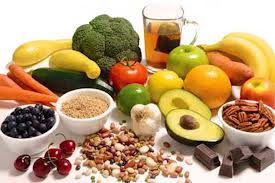
What kind of energy is represented in the picture?
a)
Thermal
b)
Chemical
c)
Sound
d)
Nuclear
15.

A battery converts what type of energy to another?
a)
nuclear to mechanical
b)
light to thermal
c)
mechanical to electrical
d)
chemical to electrical
16.
Wind turbines and windmills convert what energy to another?
a)
Mechanical to electric
b)
Gravitational potential to electric
c)
Mechanical to potential
d)
Thermal to chemical
17.
On a roller coaster, where is maximum potential energy?
a)
At the bottom of a big hill
b)
When going around a corner
c)
When going upside down
d)
At the top of a big hill
18.
What changes chemical energy into heat, light and sound energy?
a)
blender
b)
firecracker
c)
light bulb
d)
microwave
19.

Balloons can be twisted into shapes because
a)
the force exerted changes the number of particles
b)
the volume of a gas is constant
c)
particles of gas can be compressed
20.

The phase change from water vapor to liquid water is known as...
a)
vaporization
b)
precipitation
c)
condensation
d)
sublimation
21.
What happens to particles when they are heated?
a)
They speed up and spread out
b)
They slow down and compress
c)
They stop moving
d)
They move closer together and speed up
22.
What is deposition?
a)
Phase change from gas to solid
b)
phase change from gas to plasma
c)
Phase change from solid to gas
d)
Phase change from plasma to gas
23.

Change of state from a solid directly to a gas is called
a)
deposition
b)
melting
c)
evaporation
d)
sublimation
24.

Which line segment demonstrates vaporization occurring?
a)
B-C
b)
C-D
c)
D-E
d)
E-F
25.

At what point does the substance turn from a liquid to a gas?
a)
B
b)
C
c)
D
d)
E
26.
Particles of a liquid
a)
are tightly packed together and stay in a fixed position.
b)
have no viscosity.
c)
decrease in volume with increasing temperature.
d)
are free to move around one another but still touch.
27.
All changes in the state of matter of a substance requires...
a)
vibration
b)
water
c)
light
d)
energy
28.
Thermal energy ALWAYS moves from _____ to _____.
a)
solid to liquid
b)
cold to hot
c)
hot to cold
d)
solid to gas
29.
If an object has particles that are moving very quickly, the object 's temperature is probably _____.
a)
cold
b)
slow
c)
big
d)
hot
30.

At what point does the substance begin turning from a solid to a liquid?
a)
B
b)
C
c)
D
d)
E
31.

A roller coaster accelerates from an initial velocity of 6.0 m/s to a final velocity of 70 m/s over 4 seconds. What's the acceleration?
a)
24 m/s2
b)
-16 m/s2
c)
16 m/s2
d)
256 m/s2
32.

What was the speed of the red runner at 3 seconds?
a)
3 yd/s
b)
10 yd/s
c)
30 yd/s
d)
90 yd/s
33.

The graph shows Ashley riding her bike to Maria's house.
What was occurring from point B to point C?
What was occurring from point B to point C?
a)
She was increasing her speed.
b)
She stopped for 4 minutes
c)
She was decreasing her speed
34.

The graph represents
a)
no motion
b)
constant velocity
c)
positive acceleration
d)
negative acceleration
35.

"For every action, there is an equal and opposite reaction."
a)
Newton's 1st Law
b)
Newton's 2nd Law
c)
Newton's 3rd Law
d)
Newton's 4th Law
36.

Force = Mass x Acceleration
a)
Newton's 1st Law
b)
Newton's 2nd Law
c)
Newton's 3rd Law
d)
Newton's 4th Law
37.

"An object in motion (or at rest) will to stay in motion (or at rest) until an outside force acts upon it."
a)
Newton's 1st Law
b)
Newton's 2nd Law
c)
Newton's 3rd Law
d)
Newton's 4th Law
38.

The tendency of an object to resist changes in its motion is...
a)
inertia
b)
force
c)
acceleration
d)
velocity
39.

Any push or pull on an object.
a)
force
b)
velocity
c)
inertia
d)
momentum
40.

When all the forces on an object are equal and opposite, & the net force is zero, that's...
a)
balanced forces
b)
unbalanced forces
c)
terminal velocity
d)
reaction forces
41.

A cannonball with a mass of 0.5 kg is flying at an acceleration of 10 m/sec2. What is it's force?
a)
50 Newtons
b)
5 Newtons
c)
20 Newtons
d)
0.05 Newtons
42.

In the picture, the blocks are flying out of the truck based on which of Newton's laws?
a)
Newton's 1st Law
b)
Newton's 2nd Law
c)
Newton's 3rd Law
d)
Newton's 6th Law
43.

In the picture, the vehicle will move because of...
a)
Newton's 1st Law
b)
Newton's 2nd Law
c)
Newton's 3rd Law
d)
Newton's 9th Law
44.
If a bicyclist travels 30 km in 2 hours, her average speed is
a)
30 km/h
b)
60 km/h
c)
15 km/h
d)
0.07 km/h
45.
A cyclist travels 20 km in 30 minutes to get to the the park. It then takes her one hour to bike 45 km on her way home because she takes a new route. What is her average speed?
a)
0.72 km/hr
b)
43.3 km/hr
c)
1.38 km/hr
d)
97.5 km/hr
46.

Calculate the density of the cube.
a)
0.25 g/cm3
b)
4 g/cm3
c)
0.05 g/cm3
d)
20 g/cm3
47.
Is 55,000 mg greater than, less than, or equal to 5 kg?
a)
greater than
b)
equal to
c)
less than
48.
How many milliliters are in 680 dkL
a)
.000000680
b)
.000680
c)
680,000,000,000
d)
6,800,000
49.
A pile of snow has a mass of 143
kg. If 65 kg of snow melt, what is
the mass in grams of the pile now?
kg. If 65 kg of snow melt, what is
the mass in grams of the pile now?
a)
78
b)
0.078
c)
78,000
d)
208
50.
A bowl of punch has 25 liters of
lemon lime soda and 15 liters of
lemonade. How many centiliters of
liquid make up the punch?
lemon lime soda and 15 liters of
lemonade. How many centiliters of
liquid make up the punch?
a)
4000
b)
0.4
c)
1000
d)
40
51.
Express the following in standard notation:
8.025 x 10⁻⁸
8.025 x 10⁻⁸
a)
0.00000008025
b)
0.000000008025
c)
802,500,000
d)
80,250,000,000
52.
How would you write 0.0005 in scientific notation?
a)
50 x 104
b)
5 x 10⁻⁴
c)
5 x 10⁴
d)
.5 x 103
53.
Ms. Kube set up an experiment to see how the mass of a ball affects the distance it rolls off a ramp. What is the dependent variable?
a)
Distance traveled by the ball
b)
Height of the ramp
c)
Mass of the ball
d)
Where the experiment took place.
54.
An experiment is performed on plants to see how different liquids affect plant growth. Each plant in the experiment is given a different liquid: water, apple juice, or milk. Each plant has the same amount of soil, sunlight, and location. In this investigation, what are the constants?
a)
Type of plant, amount of soil, and sunlight
b)
Water, apple juice, milk
c)
Plant growth
d)
water only
55.
An experiment is performed on plants to see if plants can grow taller with different liquids. Each plant in the experiment is given a different liquid: water, apple juice, or milk. Each plant has the same amount of soil, sunlight, and location. In this investigation, the control group would be...
a)
water
b)
apple juice
c)
milk
d)
there isn't one
56.
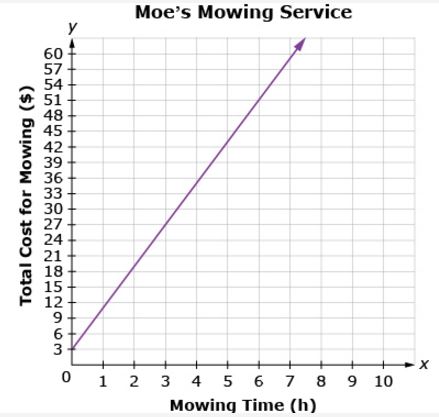
Choose the accurate independent (I) and dependent (D) variables.
a)
I - total cost
D - mowing time
D - mowing time
b)
I - mowing time
D - total cost
D - total cost
c)
I - lawnmowers purchased
D - number of lawns
D - number of lawns
d)
I - number of lawns
D - lawnmowers purchased
D - lawnmowers purchased
57.

What is the net force?
a)
17 N Right
b)
3 N Right
c)
3 N Left
d)
17 N Left
58.
Find the net force: 15 N to the right, and another 15 newtons to the right.
a)
0 N Right
b)
0 N Left
c)
30 N Left
d)
30 N Right
59.

Describe the correlation in the graph shown.
a)
Strong Negative
b)
Strong Positive
c)
Weak Negative
d)
Weak Positive
60.

If 90 students were to take the quiz, how many would you predict would make a B?
a)
10
b)
28
c)
30
d)
32
61.

Which scatter plot shows a linear relationship between x and y?
a)
Graph A
b)
Graph B
c)
Graph C
d)
Graph D
62.
A student wants to test the effects of type of exercise on heart rate. On what axis will the heart rate go on?
a)
x
b)
y
c)
not enough information is given
63.
How much work is done in holding a 15 N sack of potatoes while waiting in line at the grocery store for 3 minutes?
a)
15 J
b)
45 J
c)
0 J
d)
5 J
64.
How much power is used by the tractor that drags a plow with a force of 500 N a distance of 10 meters in 20 seconds?
a)
250 Watts
b)
250 Joules
c)
100,000 Watts
d)
100,000 Joules
65.
If a group of workers can apply a force of 1,000 Newtons to move a crate 20 meters, what amount of work will they have accomplished?
a)
20,000 J
b)
200 J
c)
2,000 J
d)
20 J
66.
What kind of properties can only be observed when a substance changes into a different substance?
a)
physical properties
b)
chemical properties
c)
liquid properties
d)
real properties
67.
Which of the following is a sign that a chemical reaction has occurred?
a)
change in shape
b)
melting
c)
formation of a gas
d)
dissolving
68.
What characteristic defines all chemical changes?
a)
There is a change of state.
b)
Electricity is produced.
c)
A new material is formed.
d)
Bubbles are produced.
69.

Is being able to melt physical or chemical
a)
physical
b)
chemical
70.
Is making salt water to gargle with a physical or chemical change?
a)
physical
b)
chemical
71.
Which of the following is NOT an example of a physical change?
a)
crumpled paper
b)
pencil sharpening
c)
shrunken clothing
d)
sour milk
72.

Photosynthesis is an example of a
a)
physical change
b)
chemical change
73.
Combustibility is an example of a __________ property.
a)
Chemical
b)
Physical
74.
Density is an example of a ___________ property.
a)
Chemical
b)
Physical
75.

A copper penny turning greenish after a few years.
a)
Chemical Change
b)
Physical Change
76.

Using dye to change the colour of a shirt green.
a)
Chemical Change
b)
Physical Change
77.
What is the ability of a substance to be pulled into a thin strand?
a)
Malleability
b)
Ductility
c)
Conductivity
d)
Solubility
78.
What is the ability of a substance to be rolled or pounded into a thin sheet?
a)
Malleability
b)
Ductility
c)
Conductivity
d)
Solubility
79.
What is the ability of a substance to dissolve into another substance?
a)
Malleability
b)
Ductility
c)
Solubility
d)
Conductivity
80.
A combination that can be separated by physical processes is a .....
a)
Atom
b)
Compound
c)
Element
d)
Mixture
81.
What is a homogeneous mixture?
a)
a mixture that is the same throughout.
b)
a mixture that is made up of one type of atom.
c)
a mixture that is made up of one type of compound
d)
a mixture that cannot be separated through physical changes
82.
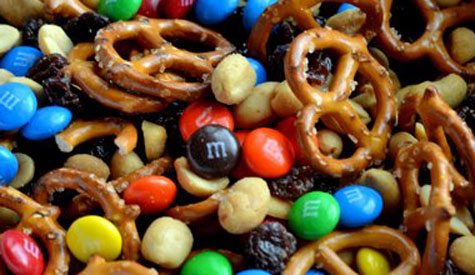
What type of mixture is this?
a)
homogenous mixture
b)
chemical
c)
heterogeneous mixture
d)
solid mix
83.

Kool-Aid
a)
Element
b)
Compound
c)
Homogeneous Mixture
d)
Heterogeneous Mixture
84.

Carbon
a)
Element
b)
Compound
c)
Homogeneous Mixture
d)
Heterogeneous Mixture
85.

NaCl
a)
Element
b)
Compound
c)
Homogeneous Mixture
d)
Heterogeneous Mixture
86.
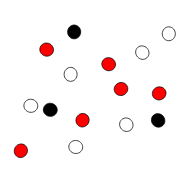
This picture represents:
a)
Element
b)
Compound
c)
Mixture of Elements
d)
Mixture of Compounds
87.

This picture represents:
a)
Element
b)
Compound
c)
Mixture of Elements
d)
Mixture of Compounds
88.
Which of the following is not a clue that a chemical change is taking place?
a)
rapid release of energy (heat, light, or sound)
b)
phase change
c)
formation of bubbles
d)
formation of a precipitate from solution
89.
Are made from a combination of 2 or more elements...
a)
Molecules
b)
Pure Substances
c)
Compounds
d)
Elements
90.
Describe a solute.
a)
part of solution present in largest amount
b)
gets dissolved
c)
water
d)
surrounds and breaks apart
91.

How does a solution become supersaturated?
a)
dissolve lots of solute in it.
b)
dissolve a little solute in it.
c)
dissolve more solute than you should be able to.
d)
dissolve a super amount of solvent in it.
92.
Solution where more solute can still be dissolved at the given temperature.
a)
Saturated
b)
Unsaturated
c)
Supersaturated
d)
Homogeneous solution
93.
Describe a solvent.
a)
part of solution present in largest amount
b)
substance that is dissolved
c)
water
d)
substance that does the dissolving
94.
When no more sugar will dissolve in a glass of water, the solution is
a)
unsaturated
b)
saturated
c)
supersaturated
d)
suspended
95.
You and your friend have a contest to see who can make iced tea the fastest. Which of the following would NOT help you win?
a)
Cooling the water
b)
Using smaller crystals
c)
Heating the water
d)
Stirring quickly
96.

What will allow more solute to be dissolved in a solvent.
a)
adding more solute
b)
stiring
c)
cooling solution
d)
heat
97.

How many grams of K2Cr2O7, are soluble in 100 g of water at 95 ºC?
a)
83 grams
b)
75 grams
c)
70 grams
d)
cannot be determined
98.
Which is true about the molecules at absolute zero?
a)
They are moving really fast
b)
They are moving really slowly
c)
There is no motion at 0 K
d)
All of the above are true
99.
At the end of chemical reactions, what is the total mass of the reactants compared to the total mass of the products?
a)
the product is doubled
b)
the product is half the mass of the reactants
c)
the mass is the same
d)
the mass changes depending on the reaction
100.
Suppose a reaction were to happen in an open container in a lab. During the reaction, the scientist observes the chemicals bubble and produce a gas. During the analysis, the scientist notices that the reactants weighed 20g when he started, and the product weighed 18g. Explain what happened.
a)
His chemical reaction defied the law of conservation of mass
b)
The product destroyed mass during the reaction
c)
The reactants created matter during the reaction
d)
The gas that was produced was not able to be weighed since the container was open.
100 %

