
 Worksheets
Physical Sci. Sem1 Final Exam 2026
Total questions: 104
Worksheet time: 2hrs 11mins

What does the term displacement mean?
The direction of motion
The distance traveled divided by time
The change of position of an object


What is the speed of a car that travels a distance of 80 m in 8 seconds.
5 m/s
0.1 m/s
10 m/s
640 m/s


Which of the following dot diagrams shows an object that is accelerating
A
B
Neither object is accelerating
You can not tell from the dot diagram
What is the unit for velocity?
feet (ft)
meters (m)
meters per second (m/s) with direction
meters per second per second (m/s/s or m/s2)
What is the unit for acceleration?
feet (ft)
meters (m)
meters per second (m/s)
meters per second per second (m/s/s or m/s2)
What two things do you need to find speed (select both)
distance
time
velocity
direction
Calculate the velocity of a cyclist traveling 100km south over a period of 5 hours
20km/h south
10km/h south
10mi/h
20km/h

How far does a car driving 50 m/s for 10 seconds travel
500m
50m/s
5km
5m

How long does it take to travel 60km when going at a speed of 5km/h
12s
12h
.08h
300km/h

During which segment is the object increasing speed?
X
Y
Z
During which segment is the object decreasing speed?
X
Y
Z
During which segment is the object travelling at constant speed?
X
Y
Z

During which segment is the object moving at the fastest speed?
A
B
C
D

Compared to L, during segment N the object is moving -
At a faster speed
At a slower speed

A vector is a quantity with... (choose 2)
magnitude
mass
direction
speed

If this was a distance v. time graph, what is the best description for the motion pictured?
An object is not moving
An object is moving back home at a constant rate
An object is moving forward at a constant speed
An object is speeding up (accelerating)

What is the total distance traveled at the end of 16 seconds?
0 meters
16 m
8 m
24 m
What is the total displacement at the end of 16 seconds?
0 meters
16 m
8 m
24 m

What is the best description for the motion on this velocity time graph?
An object is not moving
Object is moving forward with uniform acceleration
An object is moving with a constant velocity
Object is moving with increasing acceleration


When an unbalanced force acts on an object, the force ______________________.
changes the motion of the object
is cancelled by another force
does not change the motion of an object
is equal to the weight of the object
1st
Law of Motion
2nd
Law of Motion
3rd
Law of Motion
The gravitational acceleration of any object near Earth's surface is ____.
unknown
4.5 m/s2
Newton's first law
9.8 m/s2

The ability to do work
A. chemical energy
B. Friction
C. electrical energy
D. Energy

Electrical Energy
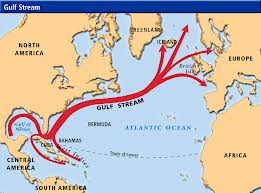
The Gulf Stream is a current that brings warm ocean water from the south to the north. What type of heat transfer is this?

Walking on the warm sand with your bare feet.
conduction
convection
radiation


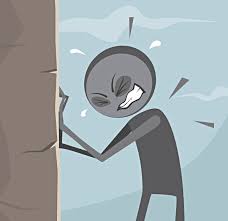
Is this an example of work?
Yes
No
You have to push with 15 N of force to move it 10 meters. How much work do you do?
15 Joules
150 Joules
1.5 Joules
.67 Joules
500 J of work is done by a person who uses a force of 50N to move a box, how far does it go?
10 m
0.1 m
25,000 m
10 J
Pushing a box across the floor is an example of
Work
Not Work
_____________ is the rate of doing work.
Conservation of energy
Joules
Energy
Power
You do 40 Joules of work in 8 seconds. How much power did you exert?
0.2 watts
320 watts
5 watts
Power is measured in ___________.
meters
joules
newtons
watts

A blender performs 2000 J of work in 10 seconds. What is its power?
2000 W
200 W
10 W
100 W
Joules
Work
Joules per Second; Watts
Power
Newtons
Force
Seconds
time
Meters
distance

Which type of heat transfer is shown?
convection
conduction
radiation
stir frying

Sitting next to the campfire, what type of heat transfer are you feeling?
convection
conduction
radiation
bonfire

If a door was left open between the bedroom (74 degrees) and the living room (68 degrees), what would likely happen to the temperatures after several hours?
nothing, they would not change
both rooms would become hotter
both room would become colder
the bedroom temp. would lower and the living room temp. would rise

Thermal energy is the __________ _________ energy of moving particles
total potential
average potential
average kinetic
total kinetic
Temperature is the __________ _________ energy of moving particles
average potential
average kinetic
total potential
total kinetic
sand
Which of the following best explains why the sand at the beach is hotter than the water?
Sand has a higher specific heat than water.
Sand has a lower specific heat than water.
There is more water than sand at the beach.
There is more sand than water at the beach.
Electric current is defined as
detect electric current
negative terminal to positive terminal
positive terminal to negative terminal
the flow rate of electric charges through a conductor
Electrons flows from
detect electric current
negative terminal to positive terminal
positive terminal to negative terminal
the flow rate of electric charges through a conductor

Electricity that can flow through only one path is in a
parallel circuit
series circuit
open circuit

On a hot sunny day you should wear ______ to stay cool.
black
blue
white
no shirt

Your home is wired which way?
series circuit
parallel circuit
It's magic
convection
boiling water
radiation
sunbathing
conduction
burning your finger on a pan
convection
warmer air towards the ceiling

List the order of these liquids, from bottom to top, when added together
water, honey, oil
water, honey, oil
oil, water, honey
honey, water, oil
Are you accelerating when on a merry-go-round moving at a constant speed?
yes
no
Draw a force diagram for a car accelerating too the left

Draw a motion map for a car at a constant velocity to the right
The mass of 100 paper clips is measured at 52.3 grams. The mass of a single paper clip from this group would be closest to
523 g
5.23 g
0.523 g
0.0523 g

2400
24
2.4
0.24

30
300
3,000
3,000,000


Compound machines consist of two or more simple machines combined together to make work easier and increase the mechanical advantage. What three simple machines are used in a can opener?
Wedge , wheel/ axle, and inclined plane.
Wedge, lever, and wheel/ axle.
Inclined plane, screw, and wheel/ axle.
Pulley, wheel/axle, and wedge.

Identify the simple machine in the picture.
Inclined plane
Wedge
Pulley
Screw

Identify the simple machine in the picture.
Screw
Wheel and axle
Wedge
Pulley

Identify the simple machine in the picture.
Inclined plane
Wedge
Lever
Screw

A teeter-totter would be an example of which type of simple machine?
Inclined plane
Wedge
Pulley
Lever
An object has a volume of 110 mL and a mass of 150 g. Will it float or sink in water?
float
sink
sink a little
half float
Liquid X has a mass of 5.0 g and a volume of 2.5 mL
Liquid Y has a mass of 5.0 g and a volume 10.0 mL
Liquid Z has a mass of 2.5 g and a volume of 2.0 mL
If X, Y, and Z, were put in a graduated cylinder,. how would they arrange themselves?
X on the bottom
Z in the middle
Y on top
Y on the bottom
Z in the middle
X on top
Z on the bottom
X in the middle
Y on top
X on the bottom
Y in the middle
Z on top

The motor is used to lift metal boxes. How can the motor be changed to be able to lift a heavier box?
change the polarity of the magnet
add more loops of wire between the magnets
rotate the coil in a counter-clockwise direction
decrease the size of the magnets
Electric motors are devices that convert __________energy into __________ energy.
electricial; mechanical
chemical; potential
mechanical; electrical
mechanical; kinetic
In a simple electric generator, a conducting loop of wire is placed in a magnetic field. The loop of wire is then rotated. Why is it necessary for the wire to be rotated?
Its motion through the air transforms heat into magnetism.
Its motion removes the magnetic field by using up the magnetic energy.
Its motion when it moves upward changes gravity into magnetism.
Its motion through the magnetic field creates a current in the wire.
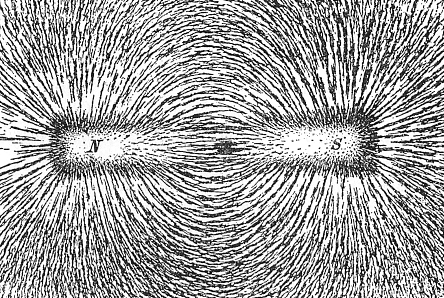
A transformer actually transforms
voltage
magnetic field lines
generators into motors


