
 Worksheets
Savvas Physical Science Topic 4 Thermal Energy
Total questions: 101
Worksheet time: 2hrs 6mins

Thermal Energy
The total kinetic and potential energy of all the particles in an object.
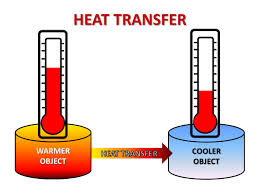
Energy that is transferred from a warmer object to a cooler object.
A measure of the average kinetic energy of the particles in a substance.
The heating of a substance that causes its particles to move more quickly.

Temperature
The total kinetic and potential energy of all the particles in an object.
Energy that is transferred from a warmer object to a cooler object.
A measure of the average kinetic energy of the particles in a substance.
The heating of a substance that causes its particles to move more quickly.

Heat
The total kinetic and potential energy of all the particles in an object.
Energy that is transferred from a warmer object to a cooler object.
A measure of the average kinetic energy of the particles in a substance.
The heating of a substance that causes its particles to move more quickly.

Conduction
The transfer of energy by electromagnetic waves.
A circular motion of air that causes wind and changes in weather
A type of heat transfer that occurs through the movement of fluids.
The transfer of energy from one particle of matter to another within an object or between two objects that are in direct contact.

Convection
The transfer of energy by electromagnetic waves.
A circular motion of air that causes wind and changes in weather
A type of heat transfer that occurs through the movement of fluids.
The transfer of energy from one particle of matter to another within an object or between two objects that are in direct contact.

Convection Current
A circular motion of air that causes wind and changes in weather
The transfer of energy by electromagnetic waves.
A type of heat transfer that occurs through the movement of fluids.
The transfer of energy from one particle of matter to another within an object or between two objects that are in direct contact.

Radiation
A circular motion of air that causes wind and changes in weather
The transfer of energy by electromagnetic waves.
A type of heat transfer that occurs through the movement of fluids.
The transfer of energy from one particle of matter to another within an object or between two objects that are in direct contact.

Conductor
Materials that do not conduct heat well.
A material that conducts heat well,
The amount of energy required to raise the temperature of 1 kilogram of a material by 1 kelvin.
The expansion of matter when it is heated.

Specific Heat
Materials that do not conduct heat well.
A material that conducts heat well,
The amount of energy required to raise the temperature of 1 kilogram of a material by 1 kelvin.
The expansion of matter when it is heated.

Insulators
Materials that do not conduct heat well.
A material that conducts heat well,
The amount of energy required to raise the temperature of 1 kilogram of a material by 1 kelvin.
The expansion of matter when it is heated.

Thermal Expansion
Materials that do not conduct heat well.
A material that conducts heat well,
The amount of energy required to raise the temperature of 1 kilogram of a material by 1 kelvin.
The expansion of matter when it is heated.
What is the intended purpose of a camp fire?
chemical and sound energy
heat and light energy
electrical and mechanical energy
sound and magnetic energy
Odessa rubs her hands together quickly; she notices they get warm. What type of energy is this?
electrical energy
light energy
sound energy
heat energy

What is the BEST reason cooking pots are made out of the materials aluminum, copper, and sometimes glass?
They are able to stop the flow of heat.
They are good conductors of heat.
They keep the same amount of heat.
They are good insulators of heat.


What is the intended purpose of a heat lamp at a fast food restaurant?
To help staff see where the food is
To let customers choose their food
To use electricity
To keep food warm


Energy is defined as
power
food
ability to produce heat
ability to do work or cause change
Thermal energy is associated with
kinetic and potential energy of particles
position or shape
chemical reactions
chemical bonds

The diagram above represents a thermometer. Which of the following best explains how the thermometer works?
Liquid changes to a gas when heated.
Gas changes to a liquid when heated.
Liquids expand when heated and contract when cooled.
Liquids contract when heated and expand when cooled.
The three scales used to measure temperature are
metric, American and wrong
Celsius, Fahrenheit, and Calvin
Celsius, Fahrenheit, and Kelvin
This phase of matter has the most thermal energy
gas
liquid
solid
Heat always moves
in convection currents
by radiation
from hot to cold
from cold to hot

Base your answer to the question on the diagram above, which shows insulated styrofoam cups of water connected by an aluminum bar. The thermometers show the temperatures of the cups A and B at the beginning of a heat flow experiment. Over the next 15 minutes, which changes would most likely occur?
The temperature in cup A will decrease and the temperature in cup B will increase.
The temperature in cup A will decrease and the temperature in cup B will decrease.
The temperature in cup A will increase and the temperature in cup B will increase
The temperature in cup A. will increase and the temperature in cup B will decrease.

The reason the temperature in the cups in the experiment above changes is because aluminum is
thermally expanding
a conductor
an insulator
a nonmetal

The diagram above shows a Bunsen burner heating a beaker of water on a beaker stand. The arrows represent the transfer of heat energy in the water. Which process is primarily responsible for the transfer of heat in the beaker as indicated by the arrows in the diagram?
conduction
radiation
convection
condensation
Water’s specific heat is 4,180 and iron’s is 450. Which will heat up faster?
water
iron
oil
air
The measure of the average kinetic energy of particles in an object is its
temperature
heat
thermal energy
hotness
A material that allows heat to pass through it well, unlike wool, is called a
insulator
conductor
metal
thermal expander
The energy needed to heat up 1kg of a substance by 1K, is its
temperature
heat
specific heat
thermal heat
Temperature scale starting with absolute zero at 0 is the
coldness scale
Farenheit scale
Celcius scale
Kelvin scale
When heat is passed on by direct contact of particles, this occurs
conduction
condensation
convection
radiation
Transfer of energy by electromagnetic waves is called
conduction
convection
radiation
infrared proton rays (sounds cool, but I made it up so don't pick this one)
The metric scale of temperature measurement that the world uses is
Farenheit scale
Celcius scale
Kelvin scale
A material that doesn’t allow heat to pass through it easily is a/an
conductor
insulator
metal
rock
Movement that transfers heat in a fluid is called
conduction
convection
radiation
specific heat
The movement of thermal energy from hot to cold is called
temperature
heat
specific heat
thermal energy


What type of heat transfer takes place in liquids and gasses?
Conduction
Convection
Radiation
Thermal Equilibrium

The specific heat is the amount of energy needed to raise the temperature of one gram of a substance by one degree Celsius.
True
False
What is defined as a measure of the average kinetic energy of the particles in a sample of matter?
Temperature
Heat
Specific Heat
Mechanical Energy
_____________ is the form of energy that is transferred between systems or objects with different temperatures.
Temerature
Heat
Specific Heat
Mechanical Energy
Which of the following is not a method for heat transfer?
Radiation
Insulation
Conduction
Convection
How does heat energy reach the Earth from the Sun
Convection
Radiation
Conduction
Insulation

A lava lamp is an example of which type of heat transfer?
Conduction
Convection
Radiation
What is the definition of CONVECTION
When heat transfers through waves.
When heat transfers from objects that are touching.
Heat transfer when a liquid or gas heats up, expands, becomes less dense and rises; or cools, becomes more dense, and sinks.
Heat traveling from the sun
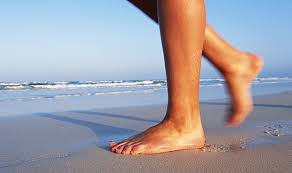

_________________ is the transfer of energy through or by electromagnetic waves.
Conduction
Convection
Radiation

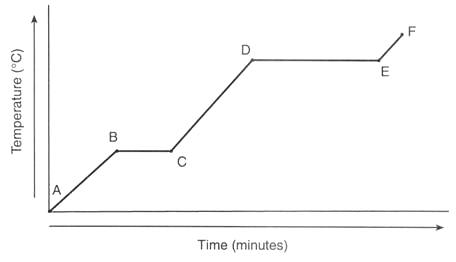
What is occurring between points B and C on the heating curve above?
Melting
Freezing
Boiling
Condensing
Why doesn't the temperature increase between points B and C, and points D and E on the heating curve above?
Heat isn't being added.
Heat is being removed.
The added energy is being used to cause a phase change.
Time has stopped.


The melting point of the sample is
-60 ºC
-100 ºC
60 ºC
100 ºC

Given the heating curve of a solid being heated at a constant rate, what is the boiling point of this substance?
20°C
50°C
110°C
170°C

Given the heating curve of a solid being heated at a constant rate, how much total time was required to boil this substance after it reached its melting point?
3 minutes
4 minutes
10 minutes
14 minutes

NaCl(s) was heated up starting at an initial temperature of 0°C. The heating curve is shown in the picture. What is the melting point of this substance?
0°C
801°C
1000°C
1465°C

Given the heating curve of water, what is happening to potential and kinetic energy during segment CD?
the potential energy and kinetic energy both increase
the potential energy increases while the kinetic energy decreases
the potential energy is constant while the kinetic energy increases
the potential energy increases while the kinetic energy is constant

Given the heating curve for water, during which line segment could I find water in both the solid and liquid phase at the same time?
AB
BC
CD
DE
EF
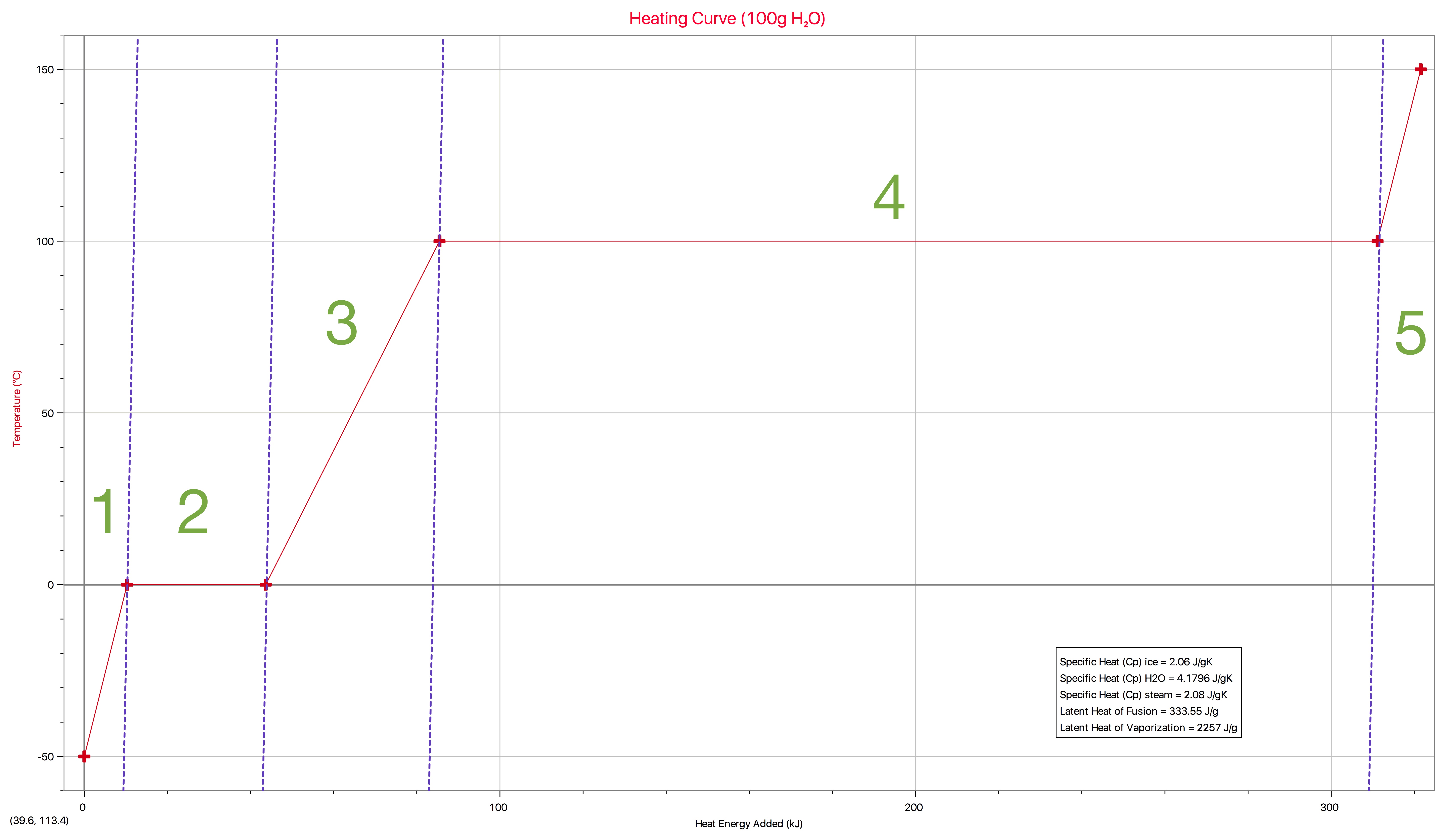

This curve indicates what about the heat energy?
Heat energy is being added or absorbed
Heat energy is being released
In which region(s) of the graph would the substance be a liquid and a gas at the same time?
Region 1
Region 2
Region 3
Region 4
Region 5

In which region(s) of the graph would the substance be melting?
No melting occurs on this graph
Region C-E
Region E-G
Region G-I
Region I-K
What is the freezing point of the substance?
0oC
60oC
120oC
180oC
From point A to point F, the sample is going through an __________ process by __________.
exothermic, releasing heat to the surroundings
exothermic, absorbing heat from the surroundings
endothermic, releasing heat to the surroundings
endothermic, absorbing heat from the surroundings

