
 Worksheets
Assessment: Nuclear Energy
Total questions: 98
Worksheet time: 1hrs 2mins
What are the two major processes involved with nuclear energy?
Fission and Fusion
Alpha and Beta particles
Gamma and Fission
Radioactivity and Alpha Decay


What type of radioactive decay is in this picture?
Alpha
Beta
Gamma
Fusion

Find the missing element by balancing the equation in the image:


Solve for the missing element is this decay process:


What are gamma rays and x-rays?
electromagnetic radiation
Electrons
Protons
Neutrons
What could be the end result of a chain reaction? Check all that apply.
energy is released to generate heat in a power plant
a nuclear explosion in an atomic bomb
new elements are formed
more neutrons are formed
What happens to the nuclei of isotopes during a FISSION reaction?
They break down or split apart
They fuse and/or combine together
They add more neutrons to its mass
They collapse into a black hole
What happens to the nuclei of isotopes during a FUSION reaction?
They break down or break apart
They combine together
They add more neutrons to their mass
They collapse into a black hole

What is an advantage of nuclear energy?
radioactive waste
no air pollution (carbon emissions, oxides - acid rain)
we will never run out
it is the safest way to make energy

All of the following are problems of nuclear energy except ---
storage of radioactive fuel
greenhouse gas pollution (ie. carbon dioxide)
security concerns
natural disasters (tsunamis, earthquakes, etc.)
What do these isotopes of carbon all have in common?
126C, 136C, 146C
they all have the same number of neutrons & ssame mass number
they all have the same atomic number and same number of neutrons
they all have the same atomic number and same number of electrons
they all have the same number of protons, same atomic number, and same mass number


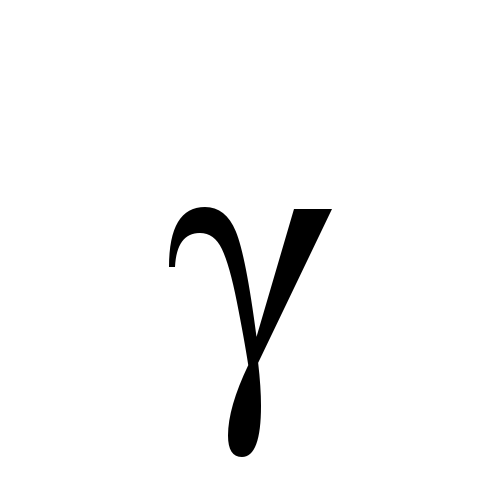

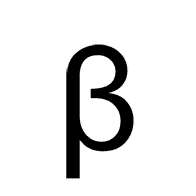
The % of the parent isotope remaining after 1 Half Life.
50%
25%
12.5%
6.25%
The % of the parent isotope remaining after 2 Half Lives.
50%
25%
12.5%
6.25%
The amount of time it takes for 1/2 the amount of any radioactive parent sample to decay into its daughter element is known as what?
half life
chain reaction
half reaction
U-235
An example of an uncontrolled fission reaction is _______________
Nuclear power plants
Radioactive decay
Atomic Bomb
On the surface of the sun
Powerful electromagnetic radiation that can cause biological damage by damaging DNA.
beta particle
alpha particle
gamma ray
carbon dating
Using the decay of an isotope to find the age of a once-living object [fossil].
carbon dating
alpha particle
gamma ray
half-life
Who was the first woman to win a Nobel Prize for her work with radioactivity?
Lise Meitner
Marie Curie
Jane Goodall
Judy Blume
One type of radioactive device that indicates the intensity of radiation with a clicking sound that increases in frequency as more radiation is present is a(n) ____.
bubble chamber
cloud chamber
electroscope
Geiger counter
Nuclear energy uses _____ to turn turbines to power a generator.
wind
liquid water
steam
solar
The majority of an atom's energy is stored in the ___ of an atom.
proton
neutron
electron cloud
nucleus
The amount of time it take for 1/2 U-235 to decay is 4.5 billion years. This is known as its ______
half life
chain reaction
half reaction
U-235

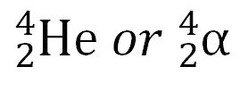
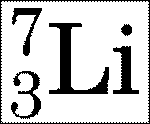
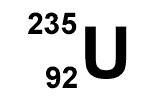
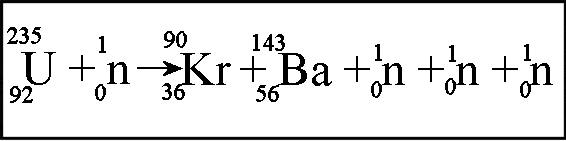

City in the Ukraine that was evacuated in the year 1986 because of an explosion in one of the nuclear reactors.
Baltimore
Fukushima
Chernobyl
Waianae
What are two common types of thermal reactors in the U.S.?
boiling water reactor, pressurized steam reactor
boiling water reactor, pressurized water reactor
boiling water reactor, reactor vessel reactor
pressurized water reactor, reactor steam reactor
Nuclear power plants currently generate around what percent of electricity in the US
1%
9%
20%
29%
When moving neutrons hit the nuclei of certain unstable atoms like Uranium causing them to split and release more neutrons that can repeat the process, a _______________________ occurs.
nuclear chain reaction
alpha radiation
nuclear half-life
control rod
What is the function of a turbine in a nuclear power plant?
When it spins, it makes sparks, inducting electricity.
It transfers the energy from the flow of steam to the generator as it spins.
It speeds up the steam or water to keep it at a steady pace.
It controls the steam or water so it can be pumped around in a cycle.
What does a generator do in a nuclear power plant?
It spins when the steam passes through it.
It moves the water from a higher elevation to a lower elevation.
It generates electricity as magnets rotate around wire.
It brings in the water from the lake or river.
The moderator in a nuclear reactor ____________.
slows neutrons down.
speeds neutrons up.
captures neutrons.
enriches the uranium.
Enriching uranium in the fuel cycle is done in order to . . .
have enough Uranium-235 concentrated in the fuel rods for a sustained chain reaction.
have an uncontrolled chain reaction resulting in an explosion.
produce slow neutrons.
produce fast neutrons.
Controlled chain reactions in a nuclear reactor are achieved using . . .
a heavy water moderator.
Barium and Cadmium control rods.
Uranium fuel pellets.
heat exchanger.
What happens to the half-life time of a radioactive substance as it decays?
Increases
Decreases
Remains constant
None of these
What is the name of the structure in a nuclear power plant that cools steam back into liquid water?
Pumping station
Condenser
Pressurizer
Turbine

Sequence the above statements that outline how a power plant works from beginning to end.
A. The turbine sets the generator in motion
B. Water is heated producing steam
C. Fission of nuclear fuel releases energy in the form of heat
D. Steam is directed against turbine blades causing them to turn
E. Electricity is generated
E, C, B, D, A
C, B, D, A, E
C, B, D, E, A
B, D, E, A, C
Which of the following is the primary environmental problem associated with the use of nuclear power to generate electricity?
Radon leaking into buildings
Production of acid rain
Depletion of the ozone layer
Disposal of radioactive waste
One concern in the U.S. regarding increased use of nuclear energy throughout the world, including in a broad range of developing countries is:
lower prices for U.S. exports of electricity
decreased reliance on fossil fuels
increased greenhouse emissions
proliferation of nuclear material that may end up in nuclear weapons
What role does water serve within the core of a commercial nuclear reactor?
water reacts chemically with high-energy particles, reducing the radiation
water “moderates” or slows down neutrons emitted by radioactive decay creating "thermal neutrons" that can be absorbed by nuclei in the fuel causing fission
water increases the nuclear radiation
water speeds up the nuclear reactions, making chain reactions possible

What does this sequence illustrate?
a radioactive decay chain
the half-life of uranium
passive stability
the nuclear fuel cycle

What is 3 called?
Reactor fan
Fuel rods
Generator
Turbine

What is 9 called?
Reactor
Control rods
Containment building
Cooling tower

A radioactive isotope has a half life of 20 years. At year 0, there are 100 radioactive atoms. What fraction are left after 100 years of decay? Sketch out a table if you need to.
1/2
1/8
1/16
1/32
A radioactive isotope has a half life of 30 years. At year 0, there are 400 radioactive atoms. How many are left after 120 years of decay? Sketch out a table if you need to.
50 atoms
30 atoms
25 atoms
12.5 atoms
A radioactive isotope has a half life of 30 years. At year 0, there are 400 radioactive atoms. What fraction are left after 120 years of decay? Sketch out a table if you need to.
1/2
1/8
1/16
1/32
A radioactive isotope has a half life of 20 years. At year 0, there are 100 radioactive atoms. How many daughter atoms exist after 40 years of decay? Sketch out a table if you need to.
100
75
50
25
The radioactive isotope Cesium-137 has a half life of 30 years. At year 0, there are 400 radioactive atoms. It undergoes 3 half-lives. How long has the parent material been decaying to reach that point? Sketch out a table if you need to.
0
30
90
120
The radioactive parent material Cesium-137 decays into its daughter element Barium-137 giving off ionizing radiation. Which of the following is the correct decay process?


What is 1 called?
Radiation shield
Fuel rods
Generator
Turbine
What is 2 called?
Radiation shield
Fuel rods
Steam generator
Turbine
What is 4 called?
Radiation shield
Steam Generator
Generator
Turbine
What is 5 called?
Cooling Tower
Steam Generator
Coolant
Turbine
What is 7 called?
Cooling Tower
Reactor
Fuel
Condensor
What is 11 called?
Cooling Tower
Coolant
Nuclear fuel
Condensor
What is 10 called?
Turbine
Control Rods
Nuclear fuel
Condensor
What soaks up or absorbs free or extra neutrons within a nuclear reactor?
Control Rods
Moderator
Containment building
Reactor Vessel
What step in the fuel cycle involves crushing uranium ore and concentrating it into yellowcake, while the leftover non-useful material is removed?
Mining
Milling
Conversion
Enriching
What step in the fuel cycle involves temporarily storing fuel rods underwater or in an above-ground storage unit to allow the short half-life wastes to decay?
Mining
reactor
Conversion
interim storage
What step in the fuel cycle involves dissolving used fuel rods in acid, collecting the still useful fuel and sending it back to make new pellets, then disposing of the high-level wastes in long-term storage?
spent fuel reprocessing
reactor
Conversion
interim storage
The type of radiation that can cause mutations in human cells or DNA is called?
non-ionizing
ionizing
visible light
radiowaves

