wayground logo

Free Printable Worksheets

Font size

S
M
L
XL
Worksheets

25-26 Physical Science Spring Final Review

Total questions: 245

Worksheet time: 5hrs 36mins

Name
Class
Date
1.
A testable answer to a scientific question
a)
Question
b)
Observation
c)
Hypothesis
d)
Experiment
2.
This is the group that we will compare our experimental group to. This group stays "normal."
a)
Control Group
b)
Experimental Group
c)
 Normal Group
d)
Weird Group
3.
A series of steps used by scientists to solve a problem or answer a question. 
a)
scientific method
b)
recipe
c)
data collection
d)
metric system
4.
This variable in an experiment is the one being changed by the scientist. 
a)
dependent variable
b)
independent variable
c)
data
d)
control group
5.
Testing a hypothesis often involves a(n):
a)
answer
b)
experiment
c)
problem
d)
safety check
6.
If you increase the amount of spinach you eat, then you will increase the iron in your blood. 
What's the dependent variable?
a)
increase the amount of iron in your blood
b)
spinach you eat
7.
If I ride my bike to school instead of walking, then I will get to school faster. What is the dependent variable?
a)
True
b)
How fast you get to school
c)
Riding a bike or walking
d)
False
8.
If I read this question carefully, then I will answer it correctly. What is the independent variable?
a)
I hope so
b)
Yes
c)
Reading or not reading carefully
d)
Likelihood of a correct answer
9.
An experiment is conducted to test how different cleats change an athletes running speed.  Six different types of cleats are tested and the 100m run time is recorded.  What is the independent variable?
a)
The type of cleat
b)
The run time
c)
The 100 meters
d)
The athlete
10.
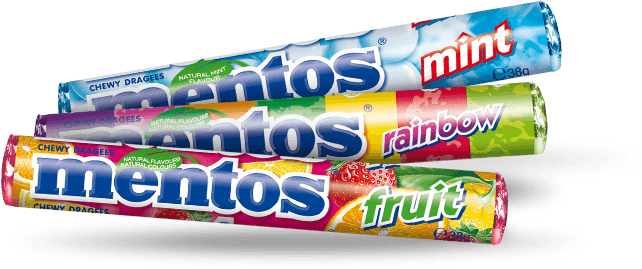
A test is set up to test which brand of soda creates the biggest foam explosion when adding a Mentos candy.  Three different sodas were tested. They measured the height of the foam eruption.   What is the dependent variable?
a)
Brand of soda
b)
Number of mentos candies used
c)
Height of foam eruption
d)
Temperature of soda
11.
The graph below shows atmospheric carbon dioxide levels since the year 1880.Which of the following conclusions can be drawn from this graph
a)
 Atmospheric carbon dioxide levels are responsible for global temperature change.
b)
 Atmospheric carbon dioxide levels have been rising at about the same rate for the past century.
c)
Atmospheric carbon dioxide levels have remained the same over the past century.
d)
 Atmospheric carbon dioxide levels have been rising at an increasingly higher rate as the past century has progressed.
12.
Carmen conducted an experiment to determine if listening to different types of music would affect a person’s pulse. Her hypothesis was that pulse rate would change with different types of music. Each person listened to seven different selections of music for 30 seconds each. Each person’s pulse was taken before the music and then after each 30-second interval of music. The pulses were taken again after the music selections were completed. Based on her experiment, Carmen concluded that a person’s pulse rate changed when the person listened to different types of music.  Which component is missing from Carmen’s experiment?
a)
a question
b)
a hypothesis
c)
a control group
d)
a description of the experiment
13.

a force that is directed toward the center of a curved or circular path

a)

centripetal force

b)

inertia

c)

gravity

d)

net force

14.

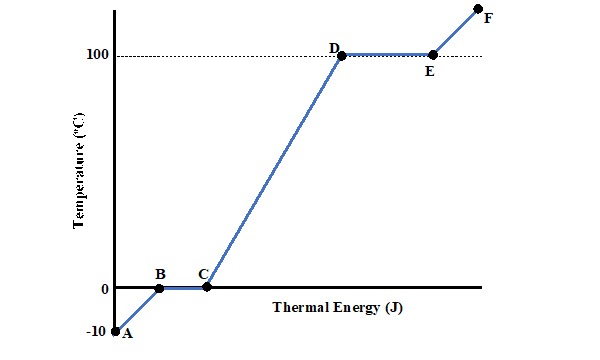
a push or a pull exerted on an object

a)

force

b)

field

c)

weight

d)

friction

15.

attractive force between two objects that depends on the masses of the objects and the distance between them

a)

gravity

b)

net force

c)

weight

d)

air resistance

16.

tendency of an object to resist any change in its motion

a)

inertia

b)

gravity

c)

free fall

d)

terminal velocity

17.

states that an object moving at a constant velocity keeps moving at that velocity unless an unbalanced force acts on it

a)

Newton's 1st Law

b)

Newton's 2nd Law

c)

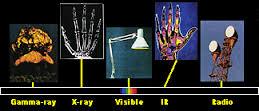
Newton's 3rd Law

d)

Law of Conservation of Momentum

18.
What is the net force?
a)
5.5 N left
b)
5.5 N right
c)
2.5 N left
d)
2.5 N right
19.

If an object was accelerating at 10 m/s2, and a force of 35 newtons was required to accelerate it, what was the object's mass?

a)

3.5 kilogram

b)

350 kilograms

c)

0.35 kilograms

d)

35 kilograms

20.
What is the net force?
a)
20 N 
b)
0 N 
c)
400 N 
d)
40 N 
21.

How does inertia change as mass increases?

a)

Inertia would increase

b)

Inertia would Decrease

c)

Mass has no effect on inertia

d)

It would depend on the acceleration

22.
If I double the distance between two objects, what happens to their gravitational Force?
a)
4x bigger
b)
4x smaller
c)
2x bigger
d)
2x smaller
23.
If I double the mass of one object, but don't change anything else... WHat happens to the gravitational force between two objects?
a)
Doubles
b)
Quadruples
c)
Cut in Half
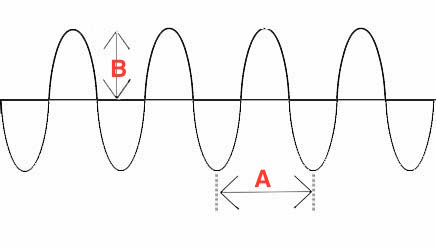
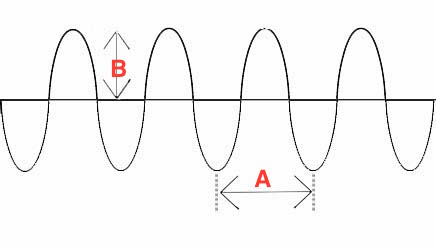
d)
4x Smaller
24.
What happens to Gravitational force if I double both of the masses but don't change their distance?
a)
doubles
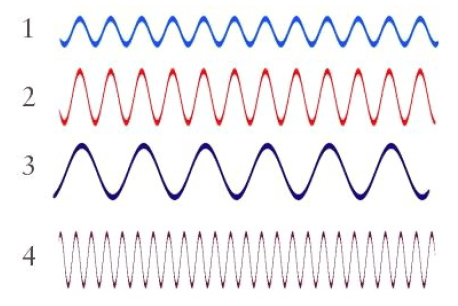
b)
half as big
c)
4x bigger
d)
4x smaller
25.

This car is turning, but there’s a puddle of water in the road. Which diagram best shows how the puddle will affect the path of the car after it hits the puddle?

a)
b)
c)
d)
26.
A horse gallops around a circular arena.  The centripetal force on the horse is ___.
a)
directed outward
b)
tension
c)
directed toward the center of the arena
d)
9.8 N
27.
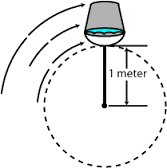
You swing a bucket of water attached to a string in a circle above your head. What keeps the water in the bucket?
a)
Friction
b)
Centripetal Force
c)
Gravity
d)
Inertia
28.
As this ride starts to spin in a circular motion the swings move outward.  What is the cause of this outward motion
a)
Gravity
b)
Centripetal Force
c)
Speed
d)
Inertia
29.

What is the centripetal force acting on a satellite orbiting the Earth?

a)

Tension

b)

Inertia

c)

Gravity

d)

Acceleration

30.

Why do astronauts appear to be weightless in space?

a)

They are weightless, no gravity in space

b)

They are in a state of constant free-fall

c)

They aren't totally weightless, just in micro-gravity

d)

Space is made up by NASA, so astronauts are just in a gravity blocking bunker

31.
An archer shoots an arrow. The action force is the bowstring against the arrow, the reaction force is...
a)
Air resistance against the bow
b)
the arrow's push against the bowstring
c)
the grip of the archer's hand on the bow
32.
A player hits a ball with a bat. The action force is the impact of the bat against the ball. The reaction force is...
a)
The grip of the player's hands on the ball
b)
the air resistance of the ball
c)
the force of the ball against the bat
33.
A rocket pushes exhaust 10, 000 N. Without any other forces acting on the rocket, how much force does the rocket go forward?
a)
15,000 N
b)
1,000 N
c)
10, 000 N
34.

What is the unit of Force?

a)

m/s

b)

kg x m/s

c)

kg x m/s2

d)

kg

35.

When a force is exerted on an object, an equal and opposite force is exerted by the object. These forces are referred to as ______________?

a)

Centripetal Forces

b)

Frictional Forces

c)

Gravitational Forces

d)

Action-Reaction Forces

36.

If the rocket has a mass of 5 kg, the gasses have a mass of 0.5 kg and there is 1,500 N of force being exerted, what is the acceleration of the rocket?

a)

750 m/s2

b)

300 m/s2

c)

3,000 m/s2

d)

7,500 m/s2

37.

If the rocket has a mass of 5 kg, the gasses have a mass of 0.5 kg and there is 1,500 N of force being exerted, why does the rocket accelerate less?

a)

The fins slow it down

b)

The gasses have significantly less mass

c)

Because its the action force not the reaction force

d)

The gasses are assisted by gravity

38.

The rate of change of an object’s velocity is

a)

Speed

b)

Acceleration

c)

Constant speed

d)

Displacement

39.

A freight train has more ___ than a car, so it has greater inertia.

a)

Velocity

b)

Mass

c)

Speed

d)

Acceleration

40.

This is a graph of a student riding to school. What can you tell about the motion of the bike rider from point B to C?

a)

The rider is accelerating.

b)

The rider is returning at a constant speed.

c)

The rider is stationary.

d)

The rider has negative acceleration.

41.

What can be said of the rider from point C to D?

a)

The rider is accelerating.

b)

The rider is moving back toward the start.

c)

The rider is moving forward at a constant speed.

d)

The rider is moving forward at a faster speed than from A to B.

42.

What is the average speed of the rider?

a)

0.18 km/min

b)

5 km/min

c)

45 km/min

d)

50 km/min^2

43.

Which pair of graphs show acceleration ?

a)

B and C

b)

B and D

c)

C and D

d)

D and E

e)

B and F

44.

Which graph shows constant (non 0) speed?

a)

A

b)

B

c)

D

d)

E

45.

Which graph shows a stationary object?

a)

A

b)

B

c)

C

d)

D

46.

Which graph shows an object experiencing unbalanced forces?

a)

A

b)

B

c)

C

d)

D

e)

None of the graphs

47.

Which graph shows constant speed ?

a)

A

b)

B

c)

C

d)

D

e)

E

48.

Which graph shows a stationary object?

a)

A

b)

B

c)

D

d)

E

e)

None of these

49.
What is the speed of an object that travels 60 meters in 4 seconds?
a)
240 m/s
b)
15 m/s
c)
0.067 m/s
d)
15 mph
50.
What is the speed of an object that travels 20 meters in 4 seconds?
a)
80 m/s
b)
0.2 m/s
c)
5 m/s
d)
24 m/s
51.

Jose wandered 4 km at 2 km/hr. How long did Jose wander?

a)

2 hours

b)

8 hours

c)

0.5 hours

d)

2 km

52.

A vehicle travels 2345 m in 315 s toward the evening sun. What is its speed?

a)

7.44 m/s

b)

0.13 m/s

c)

738,675 m/s

d)

7.44m

53.
Which of the following is a unit for acceleration?
a)
km/s
b)
m/s2
c)
mi/hr
d)
ft
54.
Acceleration can be classified as _______________
a)
Speeding up
b)
Slowing Down
c)
Changing directions
d)
All of the above
55.

What does it mean if a galaxy gives off light which has been shifted toward the red end of the electromagnetic spectrum?

a)

The galaxy is much older than Earth.

b)

The galaxy is moving away from Earth.

c)

The galaxy is very hot and has not cooled down yet.

d)

The remnants of an explosion are between the galaxy and Earth.

56.
Planets orbit the Sun in a shape called a(n)
a)
circle
b)
ellipse
c)
focus
d)
perihelion
57.
Kepler's 2nd Law deals with 
a)
the shape of the planets' orbits
b)
the speed/area the planet travels 
c)
the length of time it takes the planet to orbit the sun
58.
A planet moves __________ when it is farthest from the sun.
a)
faster
b)
slower
59.
The farther away a planet is from the sun, the _______ it takes it to orbit the sun once. 
a)
longer
b)
shorter
60.

What is the net force?

a)

3 N Right

b)

3 N Left

c)

17 N Right

d)

17 N Left

61.
An object with a mass of 6.0 kg accelerates 4.0 m/s2 when an unknown force is applied to it. What is the amount of the force?
a)
240 N
b)
24 N
c)
2.4 N
d)
0.24 N
62.
Energy of motion is which type of energy?
a)

Potential

b)

Kinetic

c)

Sound

d)

Gravitational

63.

Gravitational potential energy depends on what?

a)

Mass and Velocity

b)

Mass and Weight

c)

Weight and Height

d)

Height and Distance

64.

Your body obtains energy from the food that you eat. What is the form of that energy?

a)

Kinetic

b)

Elastic

c)

Gravitational

d)

Chemical

65.

When an Archer bends back a bow, what type of energy is increased in the bow?

a)

Gravitational

b)

Elastic

c)

Kinetic

d)

Thermal

66.

Which of these describes the law of conservation of energy?

a)

No machine is 100% efficient

b)

Energy can neither be created, nor destroyed

c)

The energy resources of the Earth are limited

d)

The energy of a system is always decreasing

67.

As a roller coaster moves down a hill, gravitational potential energy is turned into Kinetic Energy, Thermal Energy, and Sound Energy. What is true about the total energy in the stystem?

a)

Energy is gained (created) as the coaster moves down the hill.

b)

Energy is lost (destroyed) as the roller coaster moves

c)

The total energy remains the same as the coaster moves

d)

The total amount of energy changes in some way while the roller coaster is moving

68.
Which type of energy transformation occurs when a flashlight shines?
a)
Chemical to thermal to electrical
b)
Chemical to electrical to radiant
c)
Thermal to chemical to radiant
d)
Chemical to electrical to sound
69.
A hairdryer converts -- 
a)
electrical energy into chemical
b)
electrical energy into thermal
c)
chemical energy into mechanical
d)
thermal energy into mechanical
70.
At which point will the skater have the least potential energy?
a)
Point A
b)
Point B
c)
Point C
d)
Point A and C
71.
At which point is kinetic energy greatest? 
a)
W
b)
X
c)
Y
d)
Z
72.
A what point does the water have the most gravitational potential?
a)
A
b)
B
c)
C
d)
There is no gravitational potential
73.

At point X. the kinetic energy is 50 J and the potential energy is 30 J. What is the total energy in the system once the car reaches the bottom of the ramp?

a)

A. 20 J, because the energy in the system cannot change form but can be created and destroyed

b)

B. 80 J, because the energy in the system can change form but cannot be created or destroyed

c)

C. 30 J, because the potential energy is the only energy at the bottom of the ramp

d)

D. 50 J, because the kinetic energy is the only energy at the bottom of the ramp

74.
both work and energy are measured in 
a)
joules
b)
newtons
c)
meters
d)
seconds
75.
if you lift a 2 kg box of toys to the top shelf of a closet that is 3 m high... how much PE will the box have
a)
58.8 J
b)
58.8 N
c)
6 J
d)
6 N
76.

A 4 kg object is released from a height of 10 m. Just before it hits the ground, its kinetic energy, in joules is?

a)
a. 400
b)
b. 3920
c)
c. 2800
d)
d. 4000
77.

A baseball player catches a moving ball. What happens to some of the ball's energy when it hits the player's mit?

a)

It changes to light.

b)

It changes to sound.

c)

It changes to electricity.

d)

It is destroyed.

78.

Abigail picks up a book she left by a sunny window. She notices the book is warm to the touch. What can Abigail conclude from her observation?

a)

Heat travels faster than light.

b)

Light can transfer energy to objects and heat them.

c)

Light travels faster than sound waves.

d)

Heat air produces light.

79.

A 200 kg boulder sits on top of a 203 m cliff. What is its P E when it reaches 100 m from the ground?

a)

A. 196,000 J

b)

B. 397,880 J

c)

C. 20,909 J

d)

D. 40,600 J

80.

A student decides to take up diving as a hobby. He stands on a high-dive that is 4 m tall. If the student has a mass of 50 kg, what is his P E?

a)

A. 200 J

b)

B. 1,960 J

c)

C. 12.5 J

d)

D. 800 J

81.
Calculate the KE of a moving 4 kilogram object traveling at a velocity of 3 m/s.
a)
18 J
b)
36 J
c)
12 J
d)
6 J
82.

Things like friction and air resistance take away energy from a moving object, where does the energy they take away go?

a)

gravitational potential energy

b)

it dissapears and is no longer energy

c)

it is dissipated to things like heat and sound

83.
When plants convert the sun's energy into food, which type of energy is it?
a)
kinetic
b)
chemical
c)
thermal
d)
radiant
84.
Two factors that determine work are
a)
size of the force, and distance
b)
size of the force, and type of force
c)
mass, and distance
85.
work transfers
a)
sweat
b)
energy
c)
velocity
d)
effort
86.
45J of work were done on the object that moved 5M. How much force was applied to the object?
a)
8N
b)
225N
c)
9N
d)
0N
87.
Which of the following is work according to the scientific definition?
a)
pushing a box across the floor
b)
standing still while holding something heavy
c)
walking with a backpack on
d)
all of these are considered "work"
88.
The unit of power is the...
a)
work
b)
watt
89.
When a pendulum swings, at which point is potential energy at its greatest
a)
1
b)
2
c)
3
d)
4
90.
When a pendulum swings, at which point is kinetic energy highest?
a)
1
b)
2
c)
3
d)
4
91.
An Xbox consumes 15.7 watts while in standby mode. If you leave it in standby mode for 86,400 seconds (one day), how much work was done?
a)
1,356,490 J
b)
1,356,480 J
c)
1,356,470 J
d)
1,356,460 J
92.
W = 500 Joules 
t = 25 seconds
P = ???
a)
0.05 W
b)
20 W
c)
12500 W
d)
2000 W
93.
How much time is needed to produce 720 Joules of work if 90 watts of power is used? 
a)
0.125 s
b)
8 s
c)
64800 s
d)
80 s
94.
A person weighing 600 N gets on an elevator. The elevator lifts the person 6 m in 10 seconds.  How much power was used?
a)
360 W 
b)
60 W
c)
3600 W
d)
600 W
95.

If I carry a 50 kg sack of grain from the barn to the feeding trough (roughly 100 meters away), how much work did I do? Not counting lifting the sack up to my shoulder.

a)

5,000 J

b)

2 J

c)

150 J

d)

0 J

96.

states that if no external force acts on a group of objects, their total momentum does not change

a)

law of conservation of momentum

b)

Newton's 1st Law

c)

Newton's 2nd Law

d)

Newton's 3rd Law

97.

tendency of an object to resist any change in its motion

a)

inertia

b)

gravity

c)

free fall

d)

terminal velocity

98.

Which of the following is the formula for momentum?

a)

p = mv

b)

M = mv

c)

F = ma

d)

g = mc2

99.

Which of the following is the unit for momentum?

a)

kg·m/s

b)

kg·m

c)

kg·m/s2

d)

Momentum has no unit.

100.

Calculate the momentum of a 55-kg running back moving forward at 10 m/s.

a)

550 kg·m/s

b)

-550 kg·m/s

c)

5.5 kg·m/s

d)

-5.5 kg·m/s

101.

What must be the mass of a bowling ball rolled at 13 m/s if it has 42 kg⋅m/s of momentum?

a)

3.2 kg

b)

0.31 kg

c)

546 kg

d)

334 kg

102.

What must be the mass of a bowling ball rolled at 13 m/s if it has 42 kg⋅m/s of momentum?

a)

3.2 kg

b)

0.31 kg

c)

546 kg

d)

334 kg

103.

A 50 kg ball rolls down the street at 5 m/s. Calculate the momentum of the ball.

a)

55 kg⋅m/s

b)

100 kg⋅m/s

c)

250 kg⋅m/s

d)

500 kg⋅m/s

104.
Jorge noticed a collision outside the coffee shop where two cars collided and stuck together.  What type of collision did he observe?
a)
Elastic
b)
Inelastic
c)
Completely inelastic
d)
none
105.
While playing pool, the white cue ball strikes the 8 ball. Before the collision, the cue ball's velocity was 10 m/s and the 8 ball was at rest. If both ball's have a mass of 0.15 kg and the cue ball's velocity after the collision is 2 m/s, what is the 8 ball's velocity?
a)

2 m/s

b)

8 m/s

c)

-2 m/s

d)

1.5 m/s

106.
A 2.5 kg ball moving at 4.2 m/s collides with a 2.5 kg stationary ball. If the first ball is at rest after the collision, what is the velocity of the second ball? 
a)

2.1 m/s

b)

2.5 m/s

c)

4.2 m/s

d)

8.4 m/s

107.
What is the unit used to measure work?
a)
Joule
b)
Watt
c)
Newton
d)
Pascal
108.
 Work done = Force x _________
a)
a. distance
b)
b. acceleration
c)
c. velocity
d)
d. speed
109.
In which of the following situations do your arms do work on books?
a)
holding a heavy stack of books while standing
b)
carrying a heavy stack of books
c)
dropping a stack of books onto a table
d)
picking up a pile of books from the floor
110.
When work is done, there is always a(n) _______.
a)
constant rate
b)
single movement involved
c)
transfer of energy
d)
increase in the mechanical advantage
111.
The faster an object moves, the ________ kinetic energy it has. 
a)
more
b)
less
c)
none of the above
d)
all of the above 
112.
Can energy be destroyed?
a)
no
b)
yes
113.
As mass increases, KE ...
a)
increases
b)
decreases
c)
stays the same
114.

What happens when two objects collide?

a)

Energy is changed into force.

b)

Energy is transferred from one object to another.

c)

Energy is created and the objects move faster.

115.

Which of the following collisions would cause a still object to move at the speed of the object that hit it?

a)

a collision of a moving object with a still object of the same mass

b)

a collision of a moving object with a bigger massed still object

c)

a collision of a moving object with a lighter massed still object

116.

A collision where two objects bounce and move separately while kinetic energy is conserved is

a)

perfectly inelastic

b)

elastic

c)

inelastic

d)

nonexistent

117.

A collision where two objects bounce and move separately while kinetic energy is NOT conserved is

a)

perfectly inelastic

b)

elastic

c)

inelastic

d)

nonexistent

118.
The momentum of an object depends upon the object's ___________&_____________.  
a)
size and shape
b)
mass and speed
c)
mass and veloctiy
d)
mass and energy
119.
Which has more momentum: a car stopped at a red light or a bike moving at 15 mph?
a)
car
b)
bike
c)
they are equal
d)
cannot determine using the info provided
120.
In any collision (crash) the ______ is ALWAYS constant
a)
Total Momentum
b)
total speed
c)
total Velocity
d)
Energy
121.
When two objects collide, the Pbefore is ____________ the Pafter.
a)
more than 
b)
less than 
c)
equal to
d)
unrelated to
122.
This picture is an example of ____________
a)
Elastic Collision
b)
Inelastic collision
123.
This picture is an example of ____________
a)
Elastic Collision
b)
Inelastic collision
124.
As you are walking along the sidewalk you step on a piece of gum that sticks to your shoe.  This is an example of an _____ collision.
a)
Elastic
b)
Inelastic
125.

Particles are tightly packed together, usually into geometric shapes.

a)

Bose-Einstein Condensate

b)

Solid

c)

Liquid

d)

Gas

e)

Plasma

126.

The sub-atomic particle that is so small that the mass is nearly zero is called what?

a)

Proton

b)

Neutron

c)

Electron

d)

Quark

127.

The tiny particle that makes up Protons and Neutrons that comes in 6 “flavors” is called what?

a)

Muon

b)

Gluon

c)

Photon

d)

Quark

128.

The positively charged particle that makes up the identity of an element is called what?

a)

Proton

b)

Neutron

c)

Electron

d)

Positron

129.
What is the nucleus
a)
The center (middle) of the atom
b)
The outside electron cloud
c)
The area inside the electron charge
d)
The positive or negative charge of the atom 
130.

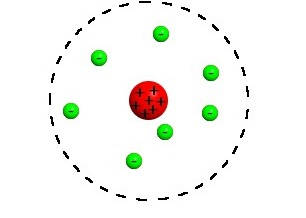
This model was the first to show a nucleus, consisting of a large positive mass. Electrons surround the nucleus but are not shown in distinct energy levels.

a)

The Rutherford Model of the atom

b)

The Thompson, or "Plum Pudding Model" of the atom

c)

The Electron Cloud model of the atom

d)

Democritus's model of the atom.

131.

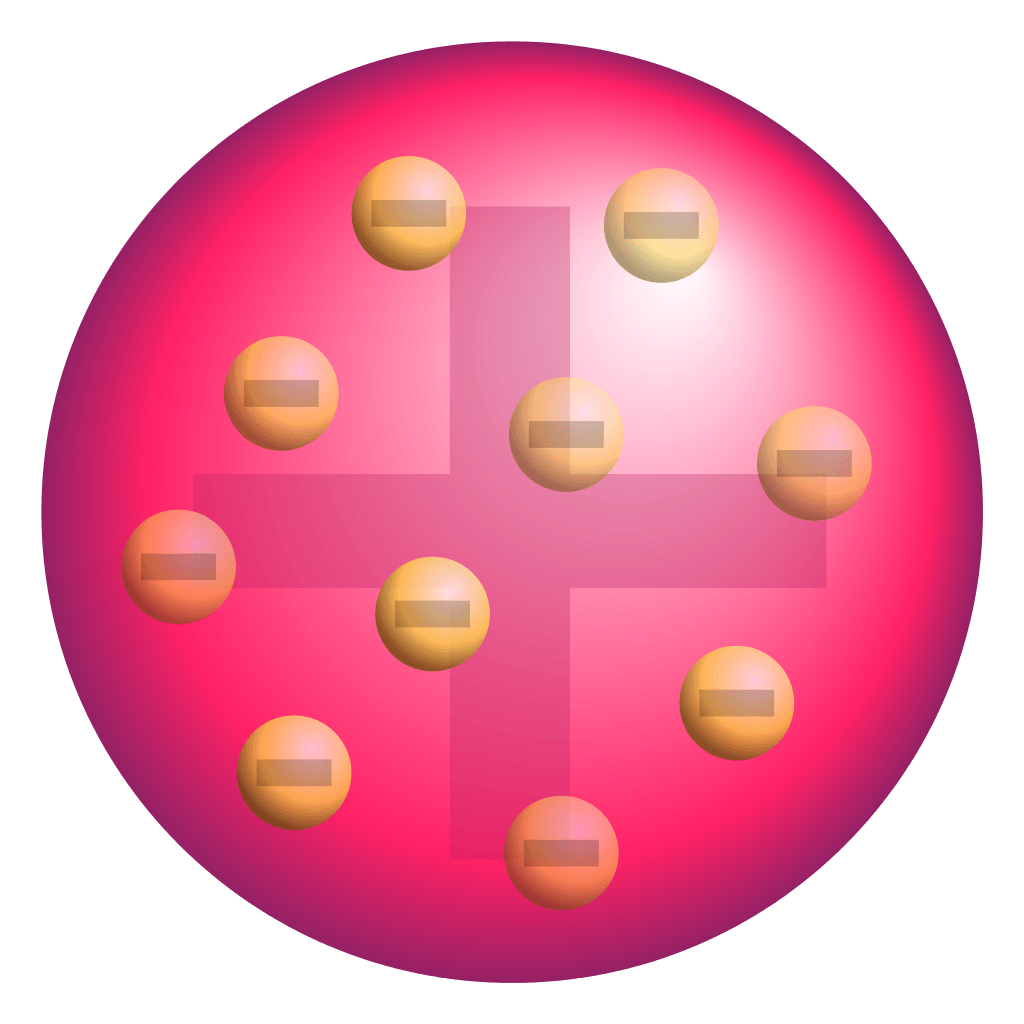
This model was developed after J.J. Thompson discovered electrons, a particle smaller than an atom. It shows electrons floating freely in a positive region.

a)

The Thompson, or "Plum Pudding Model" of the atom

b)

The Rutherford Model of the atom

c)

Democritus's model of the atom

d)

The Electron Cloud model of the atom

132.
Ernest Rutherford discovered that atoms were mostly _________________. 
a)
negatively charged
b)
positively charged
c)
electrons
d)
empty space. 
133.
This model added on to previous models by showing electrons existed at certain "energy levels". However it does not accurately show what those levels look like.
a)

The Bohr Model of the atom

b)

The Rutherford Model of the atom

c)

The Thomson, or "Plumb Pudding Model" of the atom

d)

The Electron Cloud Model of the atom made by Heisenberg

134.

The temperature at which a phase change occurs turning a liquid into a solid.

a)

Melting Point

b)

Boiling Point

c)

Heat of Fusion

d)

Heat of Vaporization

135.

The amount of energy given off when a gas turns into a liquid (also the amount of energy absorbed when a gas turns back into a liquid).

a)

Melting Point

b)

Boiling Point

c)

Heat of Fusion

d)

Heat of Vaporization

136.

The amount of energy needed to convert a solid into a liquid.

a)

Melting Point

b)

Boiling Point

c)

Heat of Fusion

d)

Heat of Vaporization

137.

The temperature at which a phase change occurs turning a liquid into a solid.

a)

Melting Point

b)

Boiling Point

c)

Heat of Fusion

d)

Heat of Vaporization

138.

Which state of matter listed here has particles spread the furthest apart?

a)

Solid

b)

Liquid

c)

Gas

d)

Missouri

139.

Which of the states of matter listed here have particles with the greatest kinetic energy?

a)

Solid

b)

LIquid

c)

Gas

d)

Euphoria

140.

What is the main difference between plasma and gasses?

a)

Plasma is spelled with a "P" while the "P" in gasses are silent.

b)

Plasma is good at conducting electricity while gasses tend not to

c)

Plasma is hot while gasses aren't ever hot

d)

There is no difference, they are both names for the same thing

141.

What is the main difference between liquids and gasses?

a)

Liquids are fluids, gasses are not

b)

All liquids are clear, but not all gasses are

c)

All gasses are liquids, but not all liquids are gasses

d)

Liquids change shape, but keep volume. Gasses change both shape and volume.

142.
Between which points is the temperature of the substance increasing?
a)
A-B only. 
b)
A-B, C-D, E-F
c)
B-C only. 
d)
B-C, D-E
143.

Between which points is the Substance changing state?
a)
A-B only. 
b)
A-B, C-D, E-F
c)
B-C only. 
d)
B-C, D-E
144.

Between which two points is Heat of Vaporization?

a)

A <----> B

b)

B <----> C

c)

C <----> D

d)

D <----> E

e)

E <----> F

145.
A substance's heating curve is shown in the graph.  What is its boiling point?
a)
100 C
b)
60 C
c)
80 C
d)
20 C
146.
When the temperature of matter decreases the particles ...
a)
speed up and move farther apart
b)
speed up and move closer together
c)
slow down and move farther apart
d)
slow down and move closer together
147.
Railroad tracks have gaps between rails so they don't buckle in hot weather because
a)
thermal conductivity
b)
specific heat
c)
thermal expansion
d)
thermal insulation
148.
Which substance is the gas?
a)
A
b)
B
c)
C
149.
Subatomic particle with a charge of 0
a)
neutron
b)
proton
c)
electron
d)
quark
150.

Subatomic particles with a negative charge

a)

Electrons

b)

Neutrons

c)

Protons

d)

Quarks

151.
Subatomic particles with a positive charge
a)
neutrons
b)
atomic mass
c)
protons
d)
isotopes
152.

These are found in the nucleus and have a neutral charge.

a)

proton

b)

electron

c)

neutron

153.
These will determine what element an atom is. 
a)
number of neutrons
b)
number of electrons
c)
number of atoms 
d)
number of protons 
154.

The number 16 for the atomic element sulfur is the

a)

ionic number

b)

isotope

c)

atomic mass

d)

atomic number

155.

How many protons does sulfur have?

a)

32

b)

16

c)

48

d)

12

156.

How many electrons does sulfur have

a)

16

b)

32

c)

48

d)

12

157.

How many neutrons does sulfur have

a)

16

b)

32

c)

48

d)

12

158.

A letter or pair of letters used as a shorthand method of writing the name of an element is called the __________.

a)

Describer

b)

Chemical Symbol

c)

Chemical Letters

d)

Atomic Number

159.
What is atomic number?
a)
Number of protons in an atoms 
b)
Number of neutrons in an atom
c)
Mass of an atom
d)
Charge on an atom
160.
The total number of protons and neutrons in an atom is called the...
a)
Atomic number
b)
Proton number
c)
Mass number
d)
Weight number
161.

What is the unit used to measure the mass of sub-atomic particles?

a)

Grams

b)

Smol Grams

c)

Quarks

d)

Atomic Mass Units (AMUs)

162.

What is the most common element in the universe?

a)

Carbon

b)

Oxygen

c)

Hydrogen

d)

Fire

163.

What is the charge of a proton?

a)

+1

b)

-1

c)

+/- 1

d)

0

164.

What is the charge of an neutron?

a)

+1

b)

-1

c)

+/- 1

d)

0

165.

How many electrons can the first energy level hold?

a)

2

b)

4

c)

6

d)

Trick question, electrons are in clouds not levels.

166.

What would be the correct way to name this nitrogen isotope?

a)

Nitrogen - 3

b)

Nitrogen - 7

c)

Nitrogen - 18

d)

Nitrogen - 15

167.

How many electrons would this sample of nitrogen have?

a)

10

b)

7

c)

15

d)

4

168.

How many neutrons would this sample of nitrogen have?

a)

8

b)

15

c)

3

d)

0

169.

How many protons would this sample of nitrogen have?

a)

8

b)

15

c)

3

d)

7

170.

How many protons does this sample of Calcium have?

a)

20

b)

42

c)

22

d)

18

171.

How many electrons does this sample of Calcium have?

a)

20

b)

42

c)

22

d)

18

172.

If an atom has 15 protons, 16 neutrons, and 15 electrons, what is this elements mass?

a)

31

b)

30

c)

0

d)

15

173.

If an atom has 15 protons, 16 neutrons, and 15 electrons, what element is it?

a)

Phosphorous

b)

Sulfur

c)

Copper

d)

Zinc

174.

If an atom has 15 protons, 16 neutrons, and 15 electrons, what is it's charge?

a)

+1

b)

-1

c)

0

d)

+15

175.

If an element has 19 protons, 22 neutrons, and 18 electrons, what is the charge of the sample?

a)

+1

b)

+2

c)

-1

d)

0

176.

If an element has 19 protons, 22 neutrons, and 18 electrons, what is the charge of the sample?

a)

+1

b)

+2

c)

-1

d)

0

177.

If an element has 19 protons, 22 neutrons, and 18 electrons, what element is it?

a)

Potasium

b)

Calcium

c)

Argon

d)

Titanium

178.
Which has the LONGEST wavelength and, therefore, the lowest frequency/energy
a)
Gamma Rays
b)
Radio Waves
c)
Visible Light
d)
Infrared rays
179.
Which section of the spectrum is the ONLY one we can see?
a)
X-rays
b)
Visible Light
c)
Gamma Rays
d)
Ultraviolet Rays
180.

Put the visible light colors in order from longest wavelength to shortest wavelength

a)

Violet, Indigo, Blue, Green, Yellow, Orange, Red

b)

Red, Yellow, Green, Orange, Violet, Blue, Indigo

c)

Red, Orange, Yellow, Green, Blue, Indigo, Violet

d)

They are all EM Waves and all have the same wavelength
181.
How are electromagnetic waves different from other waves? 
a)
They have very short wavelengths 
b)
They transmit energy instead of matter 
c)
They can travel through a vacuum 
d)
They can change direction by reflection 
182.
Which waves are the type that can give us suntans and sunburns?
a)
Infrared radiation
b)
Ultraviolet radiation
c)
Radio waves
d)
X-rays
183.
Which waves are used to show heat loss with heat sensitive cameras?
a)
Infrared radiation
b)
ultraviolet radiation
c)
microwaves
d)
gamma rays
184.

Cancer (usually a type that can't be treated any other way) can be treated with X-Rays and ________waves.

a)

Microwave

b)

Radio

c)

Infrared

d)

Gamma

185.
_______ carry the greatest amount of energy. 
a)
x-rays
b)
gamma rays
c)
infrared rays
d)
visible light
186.

Select the correct order of waves on the Electromagnetic Spectrum (going from longest wavelength to smallest).

a)

Radio, Micro, Infra, Visible, Ultra, X-ray, Gamma

b)

Gamma, X-ray, Ultra, Vis, Infra, Micro, Radio

c)

Vis, Micro, Infra, Ultra, X-ray, Gamma, Radio

d)

Micro, Radio, Vis, Infra, Ultra, X-ray, Gamma

187.

7 is

a)

Radio

b)

UV

c)

Infrared

d)

Gamma

188.
What kind of magnet can be turned on and off?
a)
refridgerator magnet
b)
electromagnet
c)
magnetite
d)
iron
189.

Magnetism can be generated by moving

a)

magnets

b)

charged particles

c)

neutrons.

d)

elements.

190.
What do the lines around this magnet represent?
a)
North Pole
b)
South Pole
c)
Magnetic Declination
d)
Magnetic Field
191.

As the distance between two magnets increases (they get farther apart), the force between them:

a)

Increases

b)

Decreases

c)

Stays the Same

d)

Magnets have to be touching in order to exert any force on each other

192.
If you cut a magnet in half, what happens to the poles?
a)
One half gets the North Pole, the other half gets the South Pole
b)
Both halves get only a North Pole
c)
Both halves get only a South Pole
d)
Both halves get a North pole and a South Pole
193.
In un-magnetized materials the domains are __________ aligned.
a)
super
b)
slightly
c)
randomly
d)
always
194.
In un-magnetized materials the domains are __________ aligned.
a)
super
b)
slightly
c)
randomly
d)
always
195.
Electric motors are devices that convert _____ energy into  _____ energy.
a)
electrical; mechanical
b)
mechanical; electrical
c)
chemical; potential
d)
mechanical; kinetic
196.

What is the strongest part of a magnet?

a)

the bars.

b)

the force field.

c)

the poles.

d)

the middle.

197.

How can a wire become magnetic?

a)

point it north

b)

add a resistor

c)

heat it up

d)

run a current through it

198.

What device takes in mechanical energy and produces electricity?

a)

motor

b)

generator

c)

electromagnet

d)

battery

199.
If you place the North pole of a magnet next to the South pole of another magnet, they will:
a)
Attract
b)
Repel
c)
Do nothing
d)
Shatter
200.
A refrigerator magnet is an example of a:
a)
magnetic material
b)
permanent magnet
c)
horseshoe magnet
d)
temporary magnet
201.
Cell phones and televisions use this type of EM wave.  It has the longest wavelength with the lowest frequency.
a)
radio wave
b)
tv wave
c)
Gamma wave
d)
ultra violet
202.
If the wavelength of an electromagnetic wave is longer, what is true about the energy? 
a)
Energy is higher.
b)
Energy is lower. 
c)
Energy is not dependent on wavelength. 
d)
energy is cancelled out
203.
Which part of the electromagnetic spectrum has high enough energy to cause damage to eyes and skin, and sometimes even cancer? 
a)
infrared light
b)
visible light
c)
ultraviolet light
d)
microwaves
204.
Which of the following electromagnetic waves is given off as heat? 
a)
ultraviolet light
b)
x-rays
c)
gamma rays
d)
infrared rays
205.
These are the waves that are used to penetrate solids and are used to create medical images.
a)
visible light
b)
gamma rays
c)
x rays
d)
microwaves
206.
What particles make up light?
a)
Photons
b)
Neutrons
c)
Protons
207.
Light behaves like both a particle and a ______.
a)
Mass
b)
Wave
c)
Current
208.
What color has the shortest wavelength, or the highest frequency?
a)
yellow
b)
blue
c)
red
d)
violet
209.
What is this a picture of?
a)
reflection
b)
refraction
210.

Which two things will emit the full spectrum of visible light?

a)

Fire and LEDs

b)

Low Pressure Plasma and Tungsten Filaments

c)

High Pressure Gasses and Low Pressure Solids

d)

High Pressure Gasses and High Temperature Solids

211.

How do fiber optics allow for the transmission of light?

a)

Fiber Optic Memory

b)

Quantum Entanglement

c)

Total Internal Reflection

d)

They don't, they only use UV

212.

How do prisms make rainbows?

a)

Different colors refract at different angles

b)

Different colors travel at different speeds trough water

c)

They don't, only water droplets can make rainbows

d)

Through the power of skittles

213.

What was Young's Two Slit experiment?

a)

A test for sound waves

b)

An experiment that showed that light behaves like a particle

c)

An experiment that showed that light behaves like a wave (interference)

d)

An experiment done to finally measure how fast light travels

214.

What evidence do we have the light behaves like a particle.

a)

It refracts

b)

It reflects

c)

It just is, ok?

d)

It delivers energy when it runs into something

215.

What evidence do we have that light behaves like a wave?

a)

It has constructive and destructive interference

b)

It bounces off things when it hits them

c)

It delivers energy when it hits something

d)

We have no evidence that it is a wave, scientists were just trying to look cool for their friends.

216.

Which of the following is NOT evidence that light is a wave?

a)

It Refracts

b)

It Diffracts

c)

It has constructive and destructive interference

d)

It bounces off things (reflects)

217.

When the wavelength increases the frequency will

a)

increase

b)

decrease

c)

remain same

d)

none of these

218.
Which color has the least amount of energy?
a)
red
b)
orange
c)
green
d)
blue
219.
This type of Electromagnetic wave shows a break in bones.
a)
gamma ray
b)
x-ray
c)
brokenometer
d)
radio wave
220.

What happens when an object with random magnetic domains is placed into a strong magnetic field?

a)

It is attracted to the magnetic field

b)

It aligns with the field and shoots off like superman

c)

It aligns with the field and usually becomes a temporary magnet itself

d)

Its domains start moving faster and it gets warmer

221.

This is when the magnetic domains within a piece of metal (like a nail) are oriented by an electrical current, making a very strong temporary magnet. (Vocab)

a)

Magnetic Pole

b)

Dipole

c)

Electromagnet

d)

Electric Motor

e)

Magnetic Domain

222.

This is how we perceive the amplitude (intensity) of EM waves (light). (Vocab)

a)

Brightness

b)

Color

c)

Smell

d)

Pitch

e)

Volume

223.

This is how we perceive the frequency (wavelength) of EM waves (light). (Vocab)

a)

Brightness

b)

Color

c)

Smell

d)

Pitch

e)

Volume

224.

Because electromagnetic waves travel as both a particle and a wave, this is the "particle" component of an electromagnetic wave. (Vocab)

a)

Proton

b)

Muon

c)

Photon

d)

Higgs Boson

e)

Transceiver

225.

What type of energy is carried by a electromagnetic wave?

a)

Chemical

b)

Potential

c)

Kinetic

d)

Radiant

226.
What types of charges attract?
a)
Positive and Positive
b)
Positive and Neutral
c)
Negative and Neutral
d)
Positive and Negative
227.
What charge does a proton have?
a)
negative (-)
b)
positive (+)
c)
neutral or no charge (0)
228.
If the two charges represented in the figure were brought near each other, they would
a)
attract each other.
b)
repel each other.
c)
cause static discharge.
d)
have no affect on each other
229.

What is a safety device that consists of a small wire that melts when too much current passes over it?

a)

Resistance

b)

Dry Cell

c)

Fuse

d)

Circuit Breaker

230.

A safety device that consists of a small piece of metal that changes shape (bends) when too much current passes over it.

a)

Resistor

b)

Battery

c)

Fuse

d)

Circuit Breaker

231.

Electric Charge that has accumulated on an object is called what?

a)

Current Electricty

b)

Past Electricity

c)

Alternating Current (AC)

d)

Static Electricity

232.

What is the device that consists of a conductive probe attached to two metal leaves that separate when a charge is present?

a)

A leafoiscope

b)

Voltmeter

c)

Electric Tester

d)

Electroscope

233.

An object becomes positively charged when it ___________. (Charges)

a)

Loses Electrons

b)

Gains Electrons

c)

Loses Protons

d)

Gains Neutrons

234.

A device that can detect if a charge is present, but cannot determine whether it is positive or negative. (Charges)

a)

Van DeGraph Generator

b)

Electrolysis Gel

c)

Electroscope

d)

Geiger counter

235.

What is essential in order for lightning to form?

a)

Electrified Birds

b)

Ionized Gasses in the atmosphere

c)

Charged Salt Water in clouds

d)

Thunder

e)

Strong upward movement in clouds called "updrafts"

236.

The process of giving an object a partial charge by bringing it near another charged object.

a)

Static Electricity

b)

Law of Conservation of Charge

c)

Conductor

d)

Charging by Contact

e)

Charging by Induction

237.

Material through which electrons can move through easily.

a)

Static Electricity

b)

Law of Conservation of Charge

c)

Conductor

d)

Insulator

238.

Charge can be transferred from one object to another but cannot be created or destroyed.

a)

Static Electricity

b)

Law of Conservation of Charge

c)

Charging by Contact

d)

Charging by Induction

239.

What property of this wave is represented by the letter "A"

a)

amplitude

b)

crest

c)

trough

d)

wavelength

240.
What property of the wave is represented by the letter "B"?
a)
amplitude
b)
crest
c)
trough
d)
wavelength
241.
The lowest point on a wave is the:
a)
Amplitude
b)
Crest
c)
Trough
d)
Wavelength
242.
The number of wavelengths that pass a point each per second is:
a)
frequency
b)
period
c)
longitudinal 
d)
transverse wave 
243.
When the frequency of a wave increases, what happens to the wavelength?
a)
The wavelength is not directly affected by the frequency of a wave.
b)
The wavelength increases.
c)
The wavelength decreases.
d)
More specific information is needed to form a conclusion about the wavelength.
244.
A mechanical wave cannot travel through...
a)
a vacuum(empty space).
b)
water.
c)
air. 
d)
glass.
245.
Which wave in the diagram has the greatest frequency?
a)
1
b)
2
c)
3
d)
4