
 Worksheets
BIOCLINIC IMMUNITY
Total questions: 15
Worksheet time: 11mins
Immunity is the ability of the body to recognize and protect itself against foreign substance such as
(can choose more than 1 answer)
virus
bacteria
soluble toxin protein
Antigen is
antibody generators
produce by B cells
absent of epitopes
where all parts of it can provoke immune response
Function of Interlukin-1 (IL-1) which secreted by the APC is to
promotes phagocytosis
form class II MHC-antigen complex
activates T helper to secrete Interleukin-2 (IL-2)
stimulate the the activation of T helper cell to proliferate & differentiate
Lymphocytes that activate B cells and T cells are called
suppressor T cells
helper T cells
cytotoxic T cells
plasma cells
Humoral immune response involved all these except
plasma cell
cytotoxic T cell
antibodies
helper T cell
What makes T lymphocytes specific towards antigen?
They have antibodies on their plasma membranes that are specific towards antigen
They have receptors on their plasma membranes that are specific towards antigen
They interact with B lymphocytes that are specific towards antigen
They are linked to antibody molecules
How does cytotoxic effector T cells killed infected cells?
It releases enzymes into the infected cells
It agglutinates the infected cells
It releases perforins to perforate holes on the infected cells
It releases antibodies to attack infected cells
If the same pathogen attacks a person for the second time, which of the following cells are used for a rapid immune response?
B cells
T cells
Memory cells
Macrophage
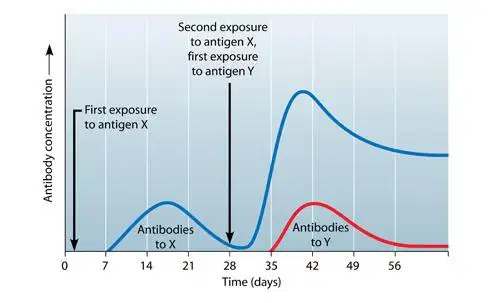
There is a lag phase occurs in between the first exposure to antigen X and the day where the concentration of antibody X starts to increase. Why this happened?
The exposure of the antigen X is not strong
No antibody is produced
It is the time needed for B cells to proliferate and differentiate into plasma cells & memory B cells
Production of IgA from plasma cells
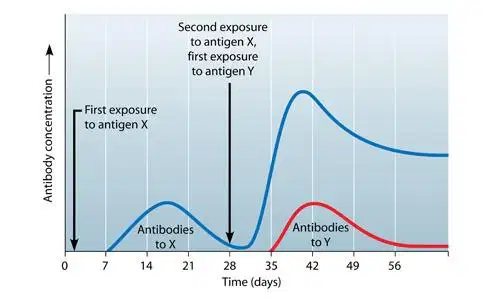
Below are the characteristics of secondary immune response towards the antigen X except
has a very short lag period after the second exposure
production of the antibody is slower and lower
the antibody level remain high for longer period
the antibody secreted is mainly IgG
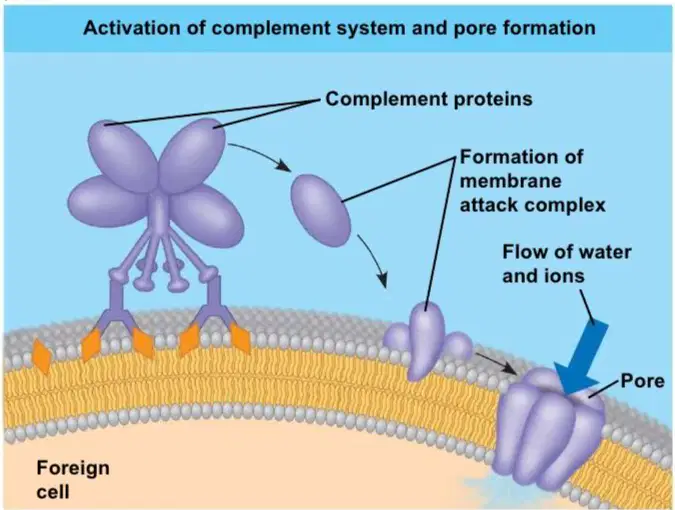
Formation of the antigen-antibody complex will stimulate the complement protein to
promote phagocytosis of the foreign cell
block the receptors of the foreign cell
attack the virus
to form membrane attack complex
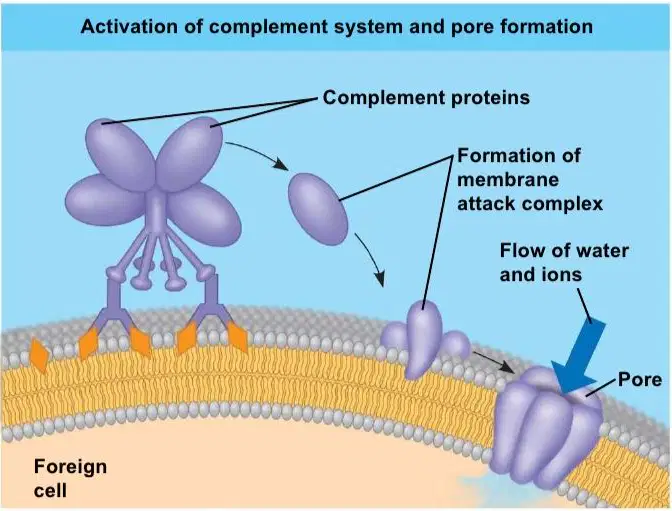
What happen after triggering the membrane attack complex (MAC)?
Foreign cell become swollen & burst
Formation of pore where water & ions will rush in and lyse the foreign cell
Promoting the phagocytosis process by macrophage
Linking the foreign cell into aggregates
HIV primarily attacks
cytotoxic T-lymphocytes
cytotoxic B-lymphocytes
helper T-lymphocytes
plasma cells
The following are how HIV infection suppressed the immune system except
Provirus becomes dormant in the host cell
HIV has high mutation rates
Lead to loss of helper T cell
Concentration of antibodies increases
Which of the following enables HIV to act dormant in the human body?
The virus rest in the cytoplasm of the helper T cell
The viral DNA integrate into the DNA of the host cell
The viral RNA takes some time to replicate
The viral reverse transcriptase is engulfed by helper T cell

