
 Worksheets
Natural Selection
Total questions: 29
Worksheet time: 27mins
According to natural selection, organisms more suited to their environment are better able to
Sleep
Survive
Perish
Migrate
The process of passing down favorable traits to one's offspring is called
Artificial Selection
Mutations
Evolution
Inheritance
Natural selection happens when an individual's genes ______________ from the genes of other members of its species.
Become different
Stay the same
Become separated
Mutations can be inherited or be
Chosen by the individual organism
Caused by environmental factors
Refused at any time
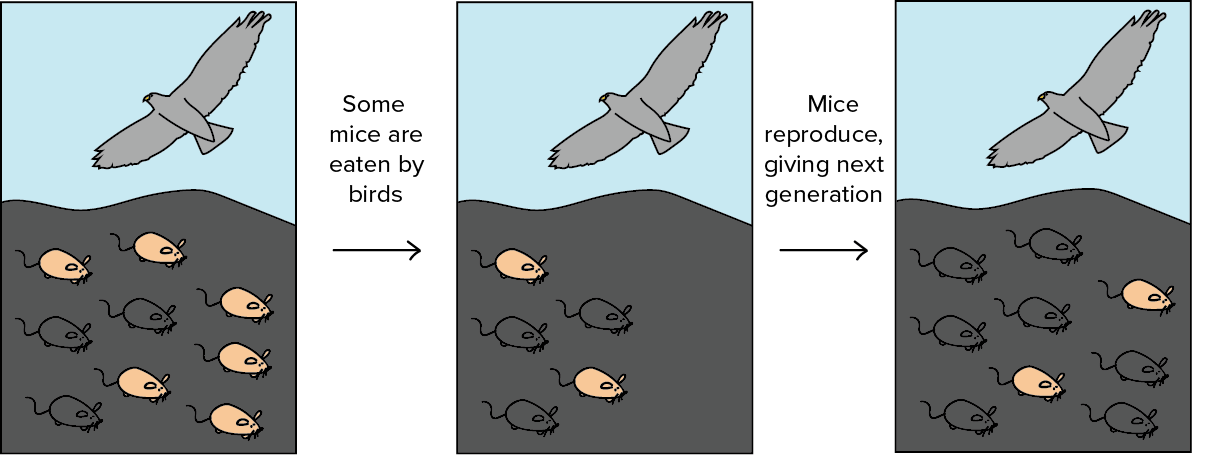
The light mice can reproduce more successfully than the dark mice
The hawks eat more dark mice than light mice because the dark mice taste better
The hawks eat more light mice than dark mice because they can see the light mice more easily
The hawks eat more dark mice than light mice because they can see the dark mice more easily
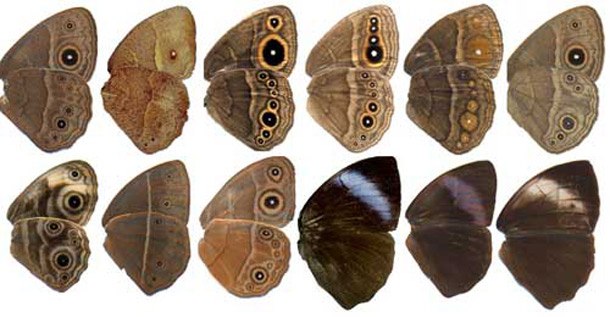
Natural Selection
Variation
Homeostasis
Extinction

This makes an organism more suited to its environment
species
lifespan
adaptation
mutation
Evolution
Natural Selection
Extinction
Artifical Selection

How does waterproof feathers help penguins survive in the Antarctic. (Choose all that apply)
Helps keep them warm and dry
Helps them blend in
Helps them swim in cold waters
Helps them see further in cold weather

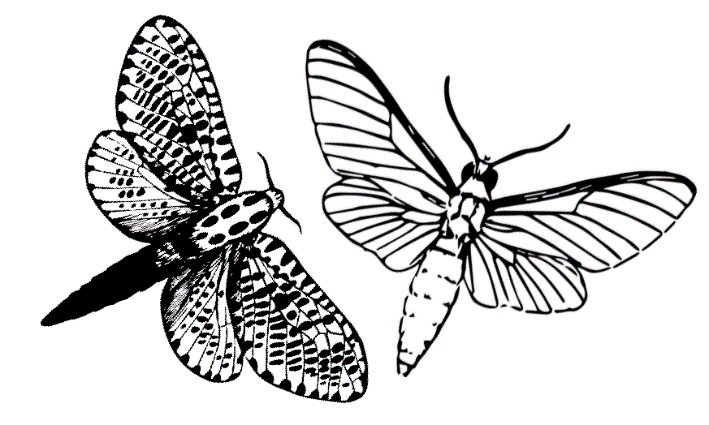
According to natural selection, light colored tree trunks would favor
light colored moths
dark colored moths
red colored moths
red and light colored moths
A fox with thicker fur than average would have a survival advantage over other foxes if:
There is more competition for food in the fox population.
The air temperature significantly decreases in winter.
A drought occurs, limiting the amount of water available.
A new disease appears that infects the foxes.
What is the advantage of having different shaped beaks?
To look different from other species.
To protect itself against predators.
To protect itself against prey
To be able to eat the food readily available in the environment.
Variations are caused by . . .
Kaleidoscopes
Variety Shows
Mutations
A change in phenotypic expression
A population of rabbits grows rapidly from one year to the next. Then one year, a disease strikes approximately one fourth of the adult rabbits. The disease remains with the population in the years that follow.
As explained by Darwin’s theory, which of these conditions allows the rabbit population to evolve by natural selection?
The disease affects adult and juvenile rabbits equally.
The disease reduces the ability of the rabbits to reproduce.
Some rabbits are resistant to the disease, and they pass the resistance to their offspring.
No rabbits are resistant to the disease, and all die when the disease strikes them.
Which of the following is a situation that could cause evolutionary change that is NOT due to natural selection?
A volcano erupts and kills many individuals in a population.
A mutation produces sea stars that are less visible to predators.
An insecticide is sprayed in a community to combat mosquitoes.
Cattle are treated with antibiotics to prevent the spread of infections.
Before the invention of the light bulb, Americans burned oil in lamps for light. Whale oil was popular bio-fuel for these
lamps. Ship crews would hunt whales for their oil. They searched for the largest whales they could find so that they could obtain as much whale oil as possible. How mighty decades of whale hunting possibly affect the natural selection of the species?
The whales lost their legs.
The whales became slower.
The whales became smaller.
The whales changed their calls.

What is the most likely explanation of the data shown below?
There has been a drought in the area that is affecting all life forms.
The population of natural predators of the moths has gotten smaller.
The moths are living in an environment with light trees.
The moths are living in an environment with dark trees.
Suppose a certain species of insect lives in the lush green canopy of the rain forest. Some of the insects are bright green in color, and some are bright yellow. Assume there is a natural predator of the insect in the area. What do you expect to happen to the populations of the green and the yellow insects over time?
The green insect population will increase and the yellow insect population will decrease.
The green insect population will decrease and the yellow insect population will increase.
Both insect populations will remain constant over time.
Both insect populations will increase over time.

What is the best claim for this image?
The grey wolves are best adapted to the Arctic
The brown rabbits are best adapted to the Arctic.
The white rabbits are best adapted to the Arctic.
Which of the following is NOT an adaptation?

Quills

Speed

Camouflage

Fish
What does 'fitness' mean in natural selection?
How fast an animal can run
How much you work out
How well adapted the animal is to their environment
How strong an animal is
TRUE or FALSE: Natural selection will still occur if individuals are exactly the same.
TRUE
FALSE

