
Font size
 Worksheets
2nd semester exam to help you study 2024
Total questions: 45
Worksheet time: 36mins

Label the air masses below with the correct symbol cP , mP, cT , or mT

Thermal energy always move from_____
areas of high energy to low energy
areas of low energy to high energy
It flows equally from high and low energy areas
all of these are correct
The more mass something has, _____.
the greater the force of gravity pulling down on it
the less density it has
the higher its temperature
all of these
Match the following
going from a solid to a gas
going from a gas to a solid
going from a liquid to a solid
The air just above the ground absorbs energy from the thermal energy in the hot ground and becomes (more dense or less dense) than the surrounding air and (rises or falls).
more dense and falls
less dense and rises
more dense and rises
less dense and falls
As a warm air mass cools off, what is happening to the energy it had? Where does the energy it had go?
The energy falls back to earth in a cycle.
The energy disappears.
The energy goes back to the sun.
The energy is shared with or transferred to other cooler particles.
Hail is more likely to occur on sunny days because _____
there is more moisture in the air from evaporation of water on the ground
all of these answers are correct
there is more sun to warm the ground
there are opportunities for wind gusts

Match the following
Energy traveling in waves, like the sun's ray's warming the ground
Radiation
Which is true?
all air hold the same amount of moisture
warm air holds the most moisture
hot air holds the most moisture.
cold air holds the most moisture.
The air just above the ground absorbs energy from the thermal energy in the hot ground and becomes (more dense or less dense) than the surrounding air and (rises or falls).
more dense and falls
less dense and rises
more dense and rises
less dense and falls
As a warm air mass cools off, what is happening to the energy it had? Where does the energy it had go?
The energy falls back to earth in a cycle.
The energy disappears.
The energy goes back to the sun.
The energy is shared with or transferred to other cooler particles.
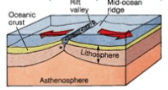
divergent
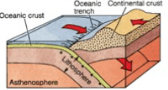
convergent
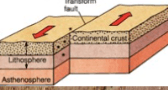
transform

Match the following
A
sediment
B
igneous rock
C
magma
D
metamorphic rock
E
sedimentary rock
Seafloor spreading and continental drift are believed to be caused by _____.
convection currents in the mantle
tides
strong winds and ocean currents
cooling of the ocean crust as it cools
Mt Everest did not always exist. What caused Mt Everest and the Himalayan Mountains to grow?
convergent boundary
divergent boundary
transform boundary
all of these

We will never run out of magma or lava because ____
the rock cycle continually melts rock at subducting zones and forms rock at ridges
the magma comes from the core to fill the gaps
we get more from other planets
all of these
Plates move because _____.
convection currents in the mantle
radiation directly from the sun
conduction from mountains warming as the sit on the crust that absorbed energy from the sun
all of these


How does blood help us heal?
Take away waste, debris
Provides oxygen to help heal
Provides nutrients, vitamins and electrolytes to speed up healing
Clots up the wound and protects from surroundings
all of these
Why does plasma and blood separate when sitting?
Because plasma is more dense then blood
Because plasma is bigger
Because plasma is less dense then blood
Because plasma weighs more
Why is there blood all over the human body?
To provide oxygen, nutrients, and water to muscles
We need blood in every part of our body
Without blood our bodies will not work
All answers are correct
Cells make new cells by _____.
growing and splitting into two new cells
stretching to get bigger
pushing old cells together
mating
Which one of these examples is NOT an example of CAUSATION?
Kryptonite causes Superman to lose all his powers.
Temperatures of less than 32˚F cause water to freeze.
Umbrellas cause rainstorms.
Stepping on the gas pedal causes a car to move faster.
Identify the relationship: when ice cream sales increase, incidents of sunburn increase.
Correlation with causation
Correlation without causation
no association
When an injury happens, nerves in that area, _____.
remove waste from the area
send more blood to the area
send pain signals to the brain
all of these are correct
Blood carries all of these except _____.
oxygen and water
nutrients from food particles
electrolytes and vitamins
large proteins like a piece of steak
Which describes bone cells?
form ring-like patterns close together to provide
structure and strength for the body.
squish together to create protective layers that
keep things in or out of the body.
long and stringy so that they can stretch
and contract, allowing parts of the body to move.
Which describes skin cells?
form ring-like patterns close together to provide
structure and strength for the body.
squish together to create protective layers that
keep things in or out of the body.
long and stringy so that they can stretch
and contract, allowing parts of the body to move.
Which describes muscle cells?
form ring-like patterns close together to provide
structure and strength for the body.
squish together to create protective layers that
keep things in or out of the body.
long and stringy so that they can stretch
and contract, allowing parts of the body to move.
How do breaks in our skin heal?
red blood cells flood area and dry out
white blood cells flood area and dry out
sticky "tentacles" of platelets help to plug holes in damaged blood vessels
oxygen from lungs helps clot blood
Which is true?
The round shape of blood cells helps them to travel easily through blood vessels that are tubular (like a straw).
The square shape of blood cells helps them to travel easily through blood vessels that are tubular (like a straw).
Blood is composed (made) of all of these EXCEPT _____ .
red and white blood cells
platelets
plasma
blue blood cells

