
 Worksheets
Classification Review!
Total questions: 26
Worksheet time: 17mins
Hey there, budding mycologists! What type of cell is characteristic of the Fungi kingdom?
Prokaryote
Eukaryote
Both A and B
None of the above
Scientists are exploring a mysterious forest filled with various organisms. They discovered a kingdom of multicellular organisms that obtain energy through absorption. Which kingdom are they exploring?
Plantae
Animalia
Fungi
Bacteria
Do members of the Plantae kingdom have cell walls?
Yes
No
Only some
Not specified
What makes the organisms in the Archaea-Bacteria kingdoms stand out?
They can thrive in almost any environment imaginable!
It's a kingdom with a huge variety!
They have chloroplasts and cell walls made of cellulose.
Every single one of them can move!
Can you spot which of these is a member of the Animalia kingdom?
Oak Tree
Snake
Chemo-trophic Bacteria
None of the above
Hey there! Liam, Aiden, and Abigail are exploring the animal kingdom for a school project. They stumbled upon a question and need your help. Which of the following organisms is a vertebrate?
E. coli
Paramecium
Mushroom
Whale
Hey there, ocean explorers! William, David, and Mason are curious: Which trait is common to both fish and whales?
Eukaryote
Multicellular
Paired appendages
Fur, mammary glands
Imagine you're on a wildlife adventure with Abigail and Elijah! Which creature are you most likely to see with fur and mammary glands?
Snake
Whale
Fish
Mushroom
Hey Arjun, Liam, and Hannah! Can you spot which of the following is NOT a characteristic of a snake?
Made of cells
Multicellular
Eukaryote
Fur, mammary glands
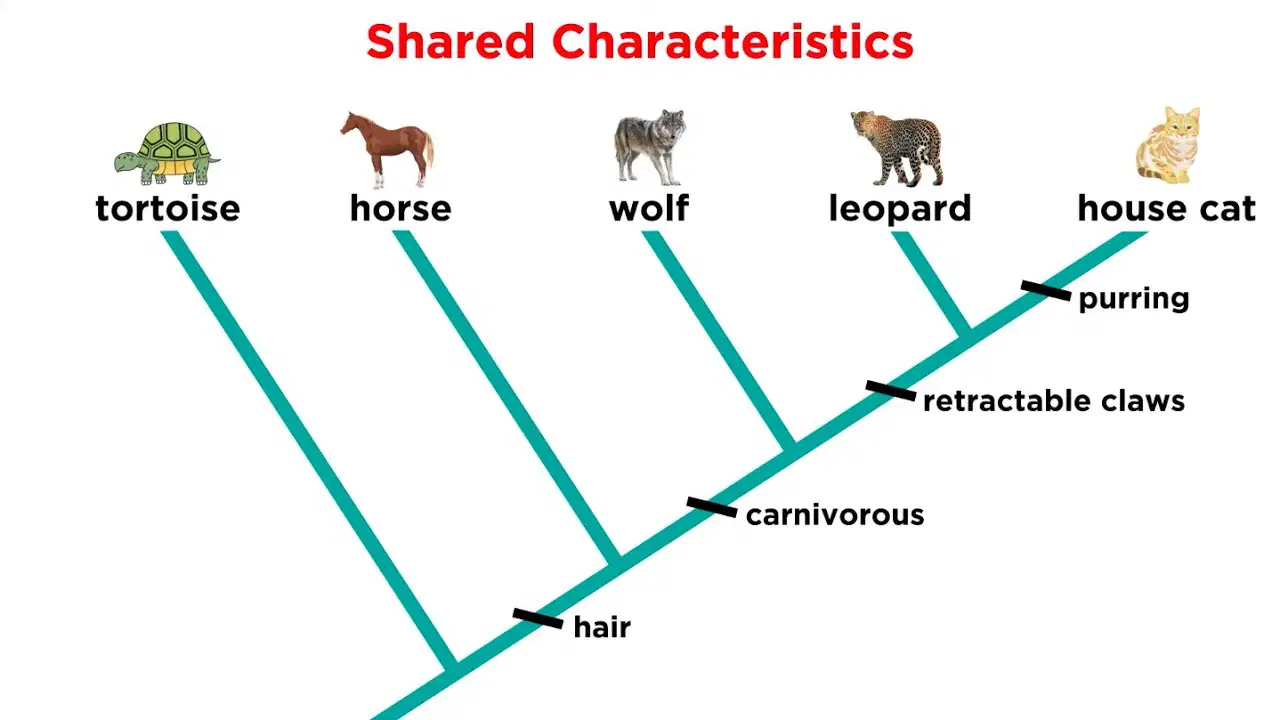
Hey there! Sophia, Aria, and Evelyn are curious about the clade diagram shown in the image. Can you guess what its purpose is?
To show the evolutionary relationships between different organisms.
To display the food chain of an ecosystem.
To illustrate the life cycle of a plant.
To map the geographical distribution of species.
Hey there, budding botanists! James, Anika, and Daniel are curious: Which of the following is a characteristic unique to the kingdom Plantae and not shared with the kingdom Protista?
Ability to perform photosynthesis
Presence of eukaryotic cells
Ability to reproduce
Cell walls made of cellulose
Hey Ava, James, and Abigail! Can you spot the characteristic that both the kingdoms Plantae and Protista share?
Multicellular organization
Presence of chloroplasts
Eukaryotic cell structure
Autotrophic nutrition
Hey there, science enthusiasts! Grace, Aiden, and Isla are curious about the microscopic world. They're wondering, what is a feature that distinguishes the kingdom Protista from the kingdom Plantae?
Presence of cell walls
Ability to move
Photosynthetic ability
Eukaryotic cells
A newly described organism is multicellular, does not carry out photosynthesis, and absorbs nutrients from the environment. It is composed of eukaryotic cells with cell walls. In which kingdom would the organism be classified?
Plantae
Eubacteria
Animalia
Fungi
Imagine you're a biologist like Elijah, exploring the microscopic world! You discover two fascinating organisms. Organism A is eukaryotic, unicellular, and lacks a cell wall, while Organism B is eukaryotic, multicellular, has a cell wall, and boasts chloroplasts. Kai, another budding biologist, wonders in which kingdoms these organisms should be classified. Can you help them out?
organism A in Protista and organism B in Fungi
organism A in Protista and organism B in Plantae
organism A in Animalia and organism B in Fungi
organism A in Animalia and organism B in Plantae
Imagine you're a tiny explorer like Evelyn, and you've just discovered a unique unicellular organism!
This organism is prokaryotic and thrives in extreme ecosystems.
Sophia thinks it's something out of this world! Grace is curious too: What kingdom do you think it belongs to?
Protist
Plant
Animal
Archaebacteria
Imagine you're a detective, Benjamin, and you're on a mission to identify a mysterious being! Here are your clues:
I have cell walls
I am an autotroph
I am multicellular
What am I?
Plant
Animal
Eubacteria
Protist
Maya is curious about the natural world and wonders which kingdom molds, yeast, and mushrooms belong to. Can you help her figure it out?
Eubacteria
Archaebacteria
Protista
Fungi
Hey there, Kai and Lily! Ever wondered what's the secret sauce behind organizing all living things into groups? Let's dive into it!
Their size and shape
Their evolutionary relationships
Their color and habitat
Their ability to move
Evelyn, Ava, and Sophia are exploring the natural world! They're curious to know: Which kingdom is mostly motile?
PLANT
ANIMAL
FUNGI
ALL OF THESE
Hey Harper, Mason, and Mia! Can you figure out which kingdom these characteristics belong to?
Heterotrophic
Mobile
Eukaryotic
Multicellular
Plant
Animal
Fungi
Bacteria
Isla is curious about biology! She wonders, what makes up the scientific name of an organism?
class and family name
genus and species name
domain and kingdom name
kingdom and phylum name
Hey Jackson, Avery, and Maya! Can you figure out which two kingdoms are home to multicellular heterotrophs?
fungus and plant
plant and animal
fungus and animals
Emma, Arjun, and Avery are exploring the characteristics of different kingdoms in biology class. They come across an interesting organism and note the following:
I have no cell walls
I am eukaryotic
I reproduce sexually
I am multicellular
Based on these clues, which kingdom do I belong to?
Plant
Animal
Protist
Fungi
Zoe is curious! She wants to know which kingdom's members never have a cell wall. Can you help her?
Animalia
Plantae
Archaebacteria
Protista
Lily is curious about a unique organism:
I am unicellular
I am prokaryotic
I thrive in extreme ecosystems
Which kingdom do I belong to?
The Candy Kingdom
Kingdom Plantae
Kingdom Animalia
Kingdom Archaebacteria

