
 Worksheets
IPC Final Review: All Topics
Total questions: 178
Worksheet time: 6hrs 59mins

What is a circuit with several paths for electricity to flow?
conductor
series circuit
parallel circuit
open circuit

What is a circuit that only has ONE path for electricity to flow?
series circuit
closed circuit
parallel circuit
light bulb

Electrons have a ____________ charge.
negative
neutral
positive
The SI units for potential difference (voltage) is...
volts
amperes
watts
ohms
The SI units for resistance is...
volts
amperes
watts
ohms
What is resistance?
Flow of electrical charge
Pressure from power to push electrons
Limits the flow of electrons
What is voltage?
Flow of electrical charge
Pressure from power to push electrons
Limits the flow of electrons
Since there are multiple pathways the current can take from the positive side of the battery to the negative side, in a (a) circuit, the (b) is divided up among the pathways, but the potential is the same for each pathway. In (c) circuits with only one pathway for the current, the (d) is divided up among the different elements.
A(n) (a) is used to provide voltage for a circuit. A(n) (b) is used to either complete or disconnect a branch in a circuit. A(n) (c) is used to control the flow of current in a circuit. A(n) (d) is used to prevent the current from going over some maximum value.

What is a Series Circuit?
A circuit with more than one path way for current to flow
A circuit with one path way with one switch.
An electric circuit with a single path for current to flow.
Two circuits with one path way for current to flow
What is an open circuit?
A parallel circuit
A pathway that prevents electric current from flowing freely or stops the flow - light is off!
A series circuit
A pathway that allows electric current from flowing freely or stops the flow - light is off!
What is an example of an Insulator?
Copper wire
Glass
Rubber, styrofoam, cotton
Water
What is an example of a Conductor?
Rubber, styrofoam, cotton
Wood
Plastic
Paperclip, penny, pencil lead
What is a Switch in a circuit?
One of the parts of a circuit that carries electrons from place to place
One of the parts of a circuit that carries electrons from place to place
The device that provides electrical energy
The device that opens and closes a circuit
What is a wire in a circuit?
One of the parts of a circuit that carries electrons from place to place
The device that provides electrical energy
The energy available to move charges through a circuit
One of the parts of a circuit, when it is in a closed circuit it is lit

What is Parallel Circuit?
A wire that has a battery and a switch.
A circuit that contains more than one path for current flow.
A circuit that contians one path for current flow
A circuit with a switch

The strongest parts of the magnet are ...
fronts
backs
poles
middle

The area around a magnet is called the .....
attraction zone
work area
magnetic field
hot zone

To make this electromagnet stronger you could:
use less wire
have fewer wire coils around the nail
have more wire coils around the nail
use a plastic core
Current is needed to create any magnet.
Current creates a magnetic field.
Electricity is stronger than a magnetic field.
Electricity prevents magnetic fields from occurring.

When running a current through a wire, what do the blue lines represent?
The wire spinning
A magnetic field that was created
Electrons leaving
Electricity
A _____________ transforms mechanical energy into electrical energy.
generator
electromagnet
circuit
magnetic field
Electrons have a ____________ charge.
negative
neutral
positive

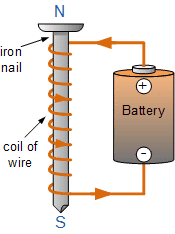
Electromagnet
Generator
Electron Magnet
Magneto's Helmet

An electromagnet can only work if it has _____________
magnetic poles
a switch
electric current
a bar magnet
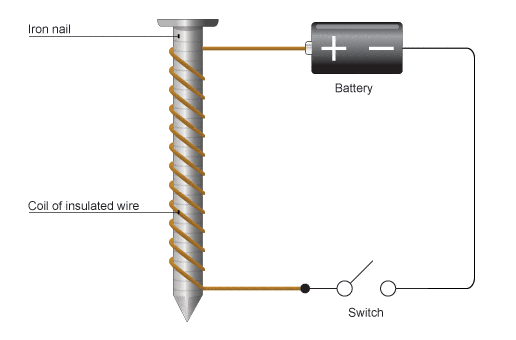
Electric charges must ___ in order to create an observable magnetic field.
exist
be moving
be stationary
disappear
Which of the following will increase the strength of an electromagnet?
Use a Bigger Battery (More Current)
Wrap More Coils
Insert an Iron Core
Use a Bigger Magnet
Which of these had scientific evidence to back their models of the atom?
Democritus
John Dalton
J.J. Thomson
Ernest Rutherford


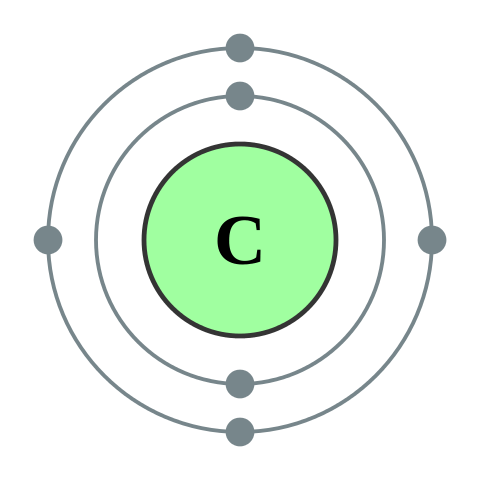
How many valence electrons does carbon have?
4
5
6
7
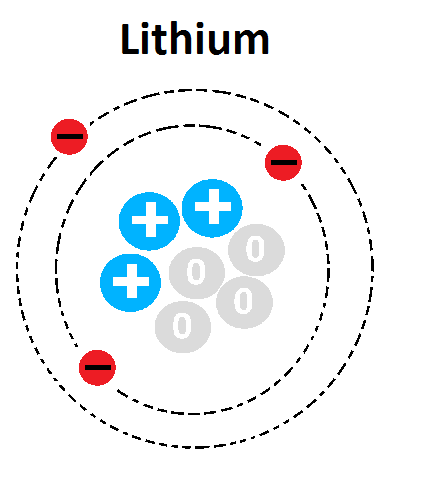

What is the atomic number of this element?
17
18
35
35.453


What is the mass of this atom?
9
10
19
28

What is the mass number of this atom of Chlorine?
17
18
35
35.453

Which atomic model is pictured here?
Atomos
Plum Pudding Model
Nuclear Model
Bohr Model
What charge do electrons have?
+1
0
-1
What is the overall charge of an ATOM?
+1
0
-1
What particles are atoms made of? (Check ALL that apply:)
Protons
Neutrons
Electrons
Nucleus
Which particle is outside the nucleus?
Protons
Neutrons
Electrons
Nucleus
Protons are:
Positive
Neutral
Negative
Neutrons are:
Positive
Neutral
Negative
The smallest piece of an element:
quark
electron
shell
atom
What is the sum of an atom's protons and neutrons called?
atom
atomic theory
atomic mass
atomic number

Rutherford's "gold-foil" experiment using alpha particle scattering concluded that
the center of the atom is empty
atomic mass is spread over the whole atom
the center of the atom has a negative charge
most of the atom is empty

Which part of the atomic theory did Niels Bohr prove?
there are electrons
there is a nucleus
electrons are in energy levels
gold foil experiment
What determines the identity of the atom?
protons
neutrons
electrons
isotopes


How many neutrons are in Magnesium?
36
12
24
6

How many electrons are in Aluminium?
40
27
13
14

How many neutrons are in Phosphorus?
16
15
31
46
Which statement best describes the arrangement of elements in the periodic table?
Elements are arranged in decreasing atomic mass from left to right.
Elements are arranged in decreasing atomic number from left to right.
Elements are arranged in increasing atomic number from left to right
Elements are arranged in increasing number of neutrons from left to right.
All of the elements in a period (row) have the same number of _____.
energy levels
valence electrons
protons
electrons
All of the elements in a group have the same number of _____.
energy levels
valence electrons
protons
electrons
How many electrons can the first energy level hold?
1
2
8
Unlimited


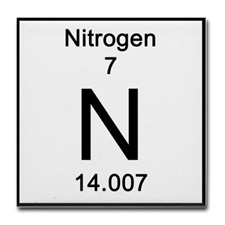
Which element is this?
Nickel
Neon
Sodium
Nitrogen

Name this element.
Argon
Chlorine
Aluminum
Boron

Name this element.
Neon
Magnesium
Sodium
Manganese
What is the mass of this atom?
9
10
19
28
Atoms that gain an electron have an electric charge of ---
-1.
-2.
+1.
+2.
If an atom has 7 protons and 7 electrons, its electric charge is ---
-7
-14
0
+7

This is a correct dot diagram for oxygen (O)?
true
false

What element does this Lewis Dot Digram represent?
Li
Al
C
Be
Which Lewis Dot Diagram would represent Chlorine?


This is a correct dot diagram for neon (Ne)
true
false
Bonds between atoms in a molecule (covalent compound) form as a result of the sharing of?
formulas
electrons
atoms
chemicals
When does an atom become an ion?
When it gains or loses electrons and takes on a charge.
When it is stable because it has a full set of valence electrons.
When it forms a compound with another atom.
In the compound CuO , what element is the positive ion?
copper
oxygen
this isn't an ionic compound
If an atom (a) electrons, it will become negative.
If an atom (b) electrons, it will become positive.
In the compound CO2 , what is the positive ion?
Carbon
Oxygen
This isn't an ionic compound
How many oxygen are in one unit of the compound MgO?
(a)
How many oxygen are in one unit of the compound Fe2O3 ?
(a)
Which elements below want to gain extra electrons to become stable? [Choose all that apply.]
Sodium
Iron
Oxygen
Fluorine
Helium
Which elements below want to lose its electrons to become stable? [Choose all that apply.]
Sodium
Iron
Oxygen
Fluorine
Helium
What combination of elements will form an ionic compound?
Metal and metal.
Metal and nonmetal.
Nonmetal and nonmetal.
What combination of elements will form a covalent compound?
Metal and metal.
Metal and nonmetal.
Nonmetal and nonmetal.

What ionic charge would an atom with this electron dot diagram form?
+2
2
-2

What ionic charge would an element with this electron dot diagram take on?
(a)
What is the correct formula for the compound formed by combining Mg+2 and Cl-1?
(remember: The + and - must balance out because a compound has a charge of ZERO)
Mg2Cl
MgCl2
Ionic bonds form between ---
nonmetals.
metals and nonmetals.
What are valence electrons?
sum of the protons and neutrons
protons minus electrons
electrons in the inner shells
electrons in the outer shell
Atoms that gain an electron have an electric charge of ---
-1.
-2.
+1.
+2.
If an atom has 7 protons and 7 electrons, its electric charge is ---
-7
-14
0
+7

Atoms lose, gain, or ______electrons to get a stable outer energy level.
share
split
create
destroy

A _______ is the force that holds atoms together in a compound.
Chemical Formula
Chemical Reaction
Chemical Bond
Synthesis Reaction

Which of the following is NOT a covalent compound?
K2S
H2O
I2
CO2

Which of the following is NOT an ionic compound?
NH3
KCl
K3N
NaCl
An electron has a ___ charge.
no charge
positive
negative
it depends
A proton has a ___ charge.
positive
negative
no charge
it depends
According to the Octet Rule, atoms of elements react with each other in order to attain ____ electrons in their outermost energy level or shell.
2
4
8
10
The two sides of a chemical equation are called?
Reactants (left) and Products (right)
Ingredients (left) and Product (right)
Cations and Anions
Reactants (left) and Results (right)
A subscript is the small number below the element symbol that tells the number of _______ of that element.
atoms
valence electrons
protons
elements
An exothermic reaction...
requires energy
releases energy
is unrelated to energy
An endothermic reaction...
requires energy
releases energy
is unrelated to energy

How many valence electrons does carbon have?
2
3
4
5

How many valence electrons does sulfur (S) have?
3
4
5
6

How many valence electrons does neon (Ne) have?
6
7
8
9

This could be the dot diagram of
Mg
Cl
C
O
A negatively charged object and a positively charged object will...
attract.
repel.
not experience an electric force.
implode.
Metal atoms are most likely to form...
positively charged cations.
negatively charged anions.
neutral molecules.
bations.
Non-Metal atoms are most likely to form...
positively charged cations.
negatively charged anions.
neutral molecules.
bations.
Atoms from group 2 (Alkaline earth metals) on the Periodic Table are likely to form ions of what charge?
+1
+2
0
−1
−2
Atoms from group 16 on the Periodic Table are likely to form ions of what charge?
+1
+2
0
−1
−2
What is the formula of an ionic compound formed from Lithium and Oxygen?
Li2O
LiO2
2LiO
Li2O
What is the name of an ionic compound formed from Calcium and Oxygen?
Calcium Oxide
Calcium Monoxide
Monocalcium Monoxide.
Calcium Dioxide
A Bromine ion gains 1 electron, which of the following is the correct symbol for a Bromine ion?
Br-1
Br+1
Br+7
Br-7

The vertical (up and down) columns in the Periodic Table are called
groups or families
towers
periods
atomic numbers

What are the horizontal rows (left and right) in the periodic table called?
Families
Groups
Periods
Orbitals

All the elements that are blue and to the left of the staircase are called...
metals
nonmetals
metalloids
noble gases
All the elements that are yellow and to the right of the staircase are called...
metals
nonmetals
metalloids
noble gases

All the elements that are in red and that make up the staircase are called...
metals
nonmetals
metalloids
noble gases

Which of the following elements is in group or family 2?
K
Cs
O
Ca
Which of the following elements is in period 2?
K
H
O
Ca

The elements in the vertical column #18 are called
Halogens
Noble Gases
Alkali Metals
Alkaline Earth Metals

Which of the following elements would have similar chemical properties to that of Chlorine (Cl)?
Bromine (Br)
Neon (Ne)
Carbon (C)
Oxygen (O)

Halogens are in group...
16
17
18
15

How many valence electrons do all of the Group 1 Alkali Metals have?
1
2
5
7
8

How many valence electrons do all of the Group 2 Alkaline Earth Metals have?
1
2
5
7
8
shiny, silvery solids
good conductors of heat and electricity
malleable and ductile
located ot the left of the metalloids
gases, or dull brittle solids
poor conductors
right of the metalloids
solids
semi-conductors
physcial properties like metals
chemical properties like nonmetals

What group is Iron located in (alkali, halogen etc.)
Transition Metals
Semi-Metals
Noble Gasses
Alkaline Earth Metals

Name group 2 on the periodic table.
alkaline earth metals
alkali metals
noble gases
transition metals

Name group 1 on the periodic table.
alkaline earth metals
noble gases
alkali metals
halogens
Physical properties....
change the matter when studied
can be observed and measured without changing the matter being studied
include the ability to burn and rust
are useless unless studied in a lab
______________________ can only be recognized when substances react or do not react chemically with one another.
Physical properties
Chemical properties
Flammable properties
Colorful properties
All of the following are examples of physical properties EXCEPT
Density
Heat conductivity
pH (acidic or basic)
Boiling point
Choose the one that is a chemical property
Magnetism
Size
Color
Reactivity with water
Which of the following is a reactant in the following equation?
O2 + C6H12O6 > CO2 + H2O
CO2
H2O
O2
How do we know a chemical reaction has taken place?
Substances change in appearance
Substances change in size
Substances change in states, like from a liquid into a solid.
New substances are formed
Which of the following is a product in the following equation?
O2 + C6H12O6 > CO2 + H2O
CO2
C6H12O6
O2
PCl5+_ H2O→_ HCl+H3PO4
The two sides of a chemical equation are called?
Reactants (left) and Products (right)
Ingredients (left) and Product (right)
Cations and Anions
Reactants (left) and Results (right)
K+ and S2- create...
K2S
KS2
K2S2
KS
Mg2+ and O2- create...
Mg2O3
MgO2
MgO
Mg2O

If a reaction is exothermic, which of the following is true?
heat is taken in/absorbed
heat is given off/released
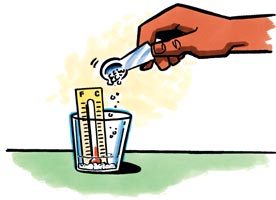
Which of the following is true of an endothermic reaction?
heat is taken in/absorbed
heat is given off/released

Which type of reaction is photosynthesis?
6 CO2 + 6 H2O + sunlight --> C6H12O6 + 6 O2
Endothermic
Exothermic
Neither
If a chemical reaction is EXOTHERMIC, the temperature of the surroundings would do which of the following?
Stay the same
Increase
Decrease

