wayground logo

Free Printable Worksheets

Font size

S
M
L
XL
Worksheets

Cold War in Asia Review

Total questions: 35

Worksheet time: 18mins
Name
Class
Date
1.
The Domino theory refers to the belief that ________.
a)
A. a communist victory in South Vietnam would cause noncommunist governments across Southeast Asia to fall to communism
b)
B. a communist victory in South Vietnam would cause North Vietnam to declare war on the United States
c)
C. a South Vietnamese victory would cause communist governments in Asia to declare war on the United States
d)
D. a communist victory in South Vietnam would cause the people of Vietnam to rebel against the communist government
2.
The Great Leap Forward was a program designed to ________.
a)
A. spread Chinese communism throughout Asia
b)
B. increase farm and industrial output in China
c)
C. purge China of bourgeois tendencies
d)
D. protect North Korea from South Korea
3.
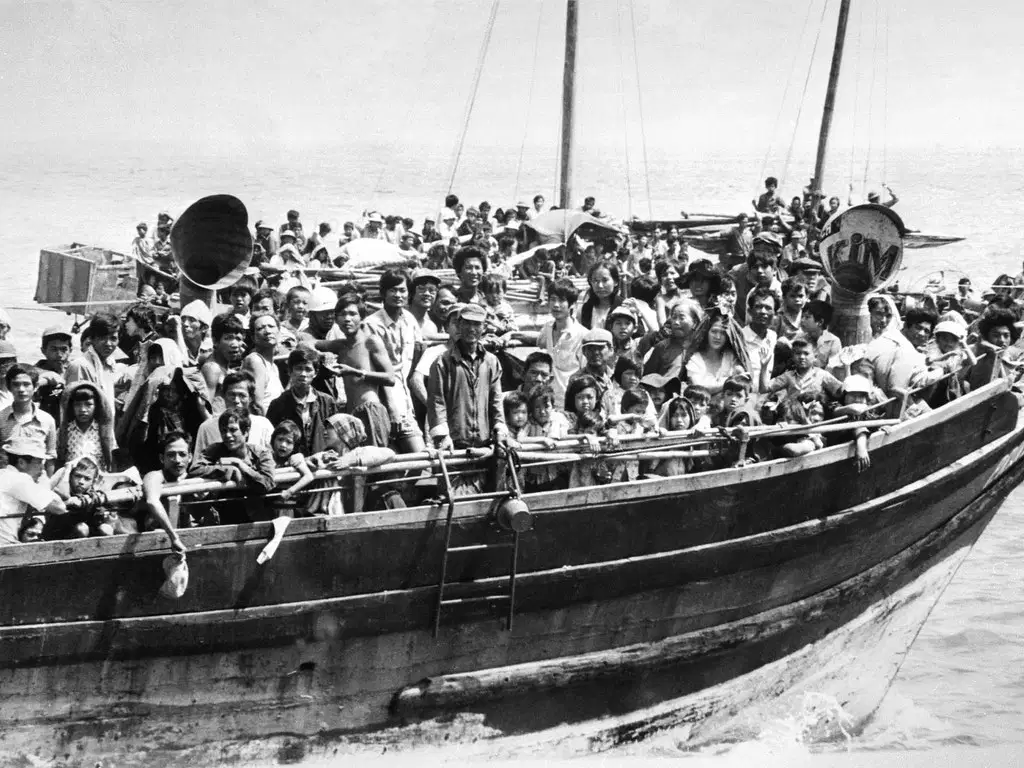
The "boat people" in the photograph were refugees from ______.
a)
A. Cambodia
b)
B. South Korea
c)
C. South Vietnam
d)
D. China
4.
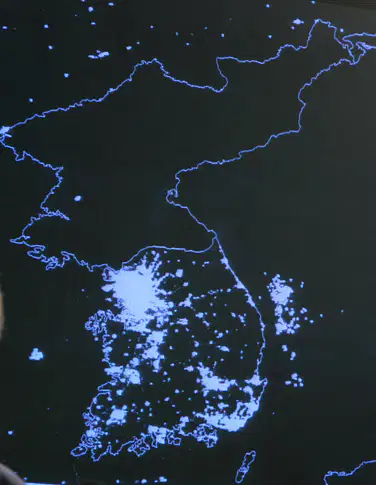
What is represented in the accompanying image?
a)
A. the difference in prosperity between North Vietnam and South Vietnam
b)
B. the difference in prosperity between North Korea and South Korea
c)
C. a satellite view of the Tet Offensive during the Vietnam War
d)
D. a satellite view of China's bombing of South Korea during the Korean War
5.
Why did the Vietnamese fight the French in Indochina?
a)
A. Ho Chi Minh's forces were backed by China.
b)
B. Ngo Dinh Diem had American support.
c)
C. The Viet Minh wanted independence.
d)
D. The Viet Minh wanted to be ruled by the Soviet Union.
6.
What prompted the passing of the Gulf of Tonkin Resolution referred to in the text? President Lyndon Johnson used the attacks to win Congressional approval for the Gulf of Tonkin Resolution. It authorized the President to take all necessary measures to prevent further aggression.
a)
A. attacks on an American warship, the Maddox
b)
B. attacks on American troops during the Tet Offensive
c)
C. attacks on the Vietnamese refugees known as the "boat people"
d)
D. attacks on American gunboats in the Mekong Delta
7.
Complete the sentence with the best answer. The failure of a program known as the ________ led to the crisis described in the accompanying text. "The term 'famine‘, or even 'Great Famine‘, is often used to describe these four to five years of the Maoist era, but the term fails to capture the many ways in which people died under radical collectivization."
a)
A. Cultural Revolution
b)
B. Great Leap Forward
c)
C. Dynastic Cycle
d)
D. Caste System
8.
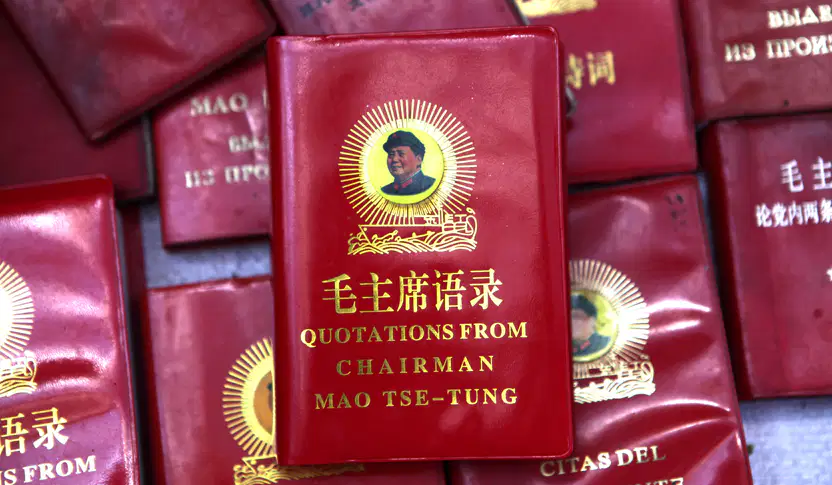
Mao's "little red book" was widely used during the Cultural Revolution, a program designed to ________.
a)
A. increase industrial productivity
b)
B. purge China of "bourgeois" tendencies
c)
C. educate China's peasants
d)
D. challenge Soviet style communism
9.
Ho Chi Minh was a significant figure in the history of Southeast Asia because
a)
A. supported by the United States, he led the non-communist South Vietnamese government.
b)
B. he led local guerrillas against the Japanese who overran Indochina during World War I.
c)
C. he led his people against French control and later against the U.S.-backed South Vietnamese government.
d)
D. supported by the French, he led the North Vietnamese in their fight against South Vietnam.
10.
What were the main reasons for the failure of Mao's Great Leap Forward?
a)
A. Counterrevolutionaries seized control of China's farmland.
b)
B. Too many Chinese belonged to the middle class, or bourgeoisie.
c)
C. The Cultural Revolution proved to be a more effective way to move China forward.
d)
D. Industries turned out useless goods and communes removed incentives.
11.
What was the significance of the formation in 1955 of the Southeast-Asia Treaty Organization (SEATO)?
a)
A. Its formation was part of the Soviet Union's strategy to contain Western power by forming alliances.
b)
B. Its formation was part of the both the American and Soviet pursuit of detente.
c)
C. Its formation was part of the United States strategy to contain Soviet power by forming alliances.
d)
D. Its formation was part of the United States plan to stop the spread of nuclear weapons.
12.
What events did John F. Kennedy not foresee when he made this statement in 1963? "I don't think that unless a greater effort is made by the Government to win popular support that the war can be won out there. . . .We can help them, we can give them equipment, we can send our men out there as advisors, but they have to win it, the people of Vietnam, against the Communists."
a)
A. that the United States would never be able to aid the non-communist government of South Vietnam.
b)
B. that the United States would become involved in a full-scale war in Vietnam
c)
C. that the United States government would side with the communist guerrillas of North Vietnam
d)
D. that the United States would play no role in the Vietnam War
13.
Which country is being referred to and compared to Germany in this statement? As in Germany, the capitalist portion of the country had an economic boom and rising standards of living, while the communist zone went through economic stagnation and decline.
a)
A. Korea
b)
B. Thailand
c)
C. Philippines
d)
D. Cambodia
14.
Which pair of letters accurately matches a leader with a role played by that leader in the chart?
a)
A. b-f
b)
B. a-e
c)
C. c-g
d)
D. d-h
15.
What is the main reason Mao Zedong was able to make China communist?
a)
A. The landlords supported him because he demanded obedience.
b)
B. The business owners supported him because he wanted to industrialize China.
c)
C. The peasants supported him because he promised them land.
d)
D. The warlords supported him because he promised them tax revenues.
16.
Why did Mao's reforms fail?
a)
A. The Soviets withdrew their support.
b)
B. Officials in the Communist Party tinkered with his reforms.
c)
C. The Korean War consumed too many resources.
d)
D. His bad policies along with poor weather led to famine, and many people died.
17.
The United Nations intervened in North Korea because the
a)
A. Soviets backed the South Korean government.
b)
B. South Koreans invaded North Korea.
c)
C. North Koreans invaded South Korea.
d)
D. Chinese invaded the Korean Peninsula.
18.
Why did Korea remain divided after the Korean War?
a)
A. North and South Korea negotiated a ceasefire but not a peace treaty.
b)
B. South Korea remained communist.
c)
C. China and the United States insisted on it.
d)
D. The Soviet Union's influence decreased.
19.
Which of the following accurately describes the sequence of events that led to U.S. involvement in Vietnam?
a)
A. The United States supported Vietnamese goals for independence with troops, but then backed off and supplied only advisors; after a U.S. destroyer was attacked, it sent troops.
b)
B. The United States first sent only aid and military advisors to assist the South Vietnamese in their struggle; however, after a U.S. warship was torpedoed, the U.S. sent troops.
c)
C. The United States backed the government of Ho Chi Minh, then supplied military advisors and weapons; after a U.S. destroyer was attacked, it sent troops.
d)
D. The United States sent special troops to train guerrilla solders, who fought with the Viet Cong in the jungles; after a U.S. destroyer was attacked, much larger numbers of troops were sent.
20.
U.S. leaders withdrew troops from Vietnam because
a)
A. they believed the South Vietnamese could win it on their own.
b)
B. the Viet Cong built supply trails in Cambodia.
c)
C. the Soviet Union began bombing the south.
d)
D. they realized that they could not win the war.
21.
The term "boat people" refers to
a)
A. Cambodians who sailed to Thailand after the Khmer Rouge victory.
b)
B. Vietnamese guerrillas who fought the Viet Cong on boats.
c)
C. South Vietnamese who fled the communist victors.
d)
D. Vietnamese villagers who fought Americans on the rivers.
22.
Which is the BEST characterization of the conflict in Cambodia?
a)
A. an independence struggle against imperialist forces
b)
B. an ideological conflict that became a genocide
c)
C. a violent anti-communist revolt
d)
D. a pro-communist rebellion that ended in a stalemate
23.
Since the end of the Cold War,
a)
A. China has become more strictly communist.
b)
B. Cuba has remained committed to communist ideals.
c)
C. North Korea has begun to introduce reforms.
d)
D. Vietnam has remained committed to communist ideals.
24.
Explain how Mae Zedong turned China into a communist state and describe China's role in the Cold War
4 lines
25.
Explain how the United States became involved in the Vietnam war and its overall impact of the war in Vietnam and Cambodia
4 lines
26.

What role did the Geneva Accords play in the partition of Vietnam?

a)

A. They officially recognized Vietnam as a single, unified nation.

b)

B. They led to the establishment of two separate Vietnamese states along the 17th parallel.

c)

C. They resulted in the unification of North and South Vietnam under communist rule.

d)

D. They dissolved any agreements previously made during the French Indochina War.

27.

Which event marked the end of French colonial influence in Southeast Asia?

a)

A. The formation of the Southeast-Asia Treaty Organization (SEATO)

b)

B. The signing of the Paris Peace Accords

c)

C. The Battle of Dien Bien Phu

d)

D. The establishment of the Communist Party in Vietnam

28.

How did the Sino-Soviet split affect the dynamics of the Cold War in Asia?

a)

A. It led to decreased tensions between the United States and Soviet Union.

b)

B. It intensified the rivalry between China and the Soviet Union, influencing their relations with smaller Asian nations.

c)

C. It resulted in a unified communist front against Western influences in Asia.

d)

D. It had no significant impact on the Cold War dynamics in Asia.

29.

What was the primary goal of the Cultural Revolution initiated by Mao Zedong?

a)

A. To modernize China's economy and industry

b)

B. To enforce communist ideology by removing capitalist elements

c)

C. To improve diplomatic relations with Western countries

d)

D. To decentralize the governmental power

30.

Which event directly triggered the United States' full-scale military involvement in Vietnam?

a)

A. The fall of Saigon

b)

B. The Gulf of Tonkin Incident

c)

C. The Tet Offensive

d)

D. The signing of the Geneva Accords

31.

During the Korean War, what was the significant outcome of the Battle of Inchon?

a)

A. It led to a stalemate that resulted in the armistice

b)

B. It resulted in the capture of Seoul by North Korean forces

c)

C. It marked the successful landing of UN forces, leading to a turning point in the war

d)

D. It initiated the withdrawal of Chinese troops from the peninsula

32.

This country's fall to communism in 1949 was a major power shift in Asia

a)

Russia

b)

Thailand

c)

China

d)

Cambodia

33.
From 1950-1953 the US fought a "police action" in Asia to prevent Communism from spreading to...
a)
South Korea
b)
North Korea
c)
Japan 
d)
China
34.
Which Southeast Asian nation fought in wars against Japan, France, and the US during the 20th century?
a)
Thailand
b)
The Philippines
c)
Vietnam
d)
Korea
35.
During the 1960s and 1970s the US fought an unsuccessful war in Asia to prevent communism from spreading to...
a)
South Korea
b)
South Vietnam
c)
China
d)
Japan