
 Worksheets
Natural selection and Variations Review 2026
Total questions: 42
Worksheet time: 28mins
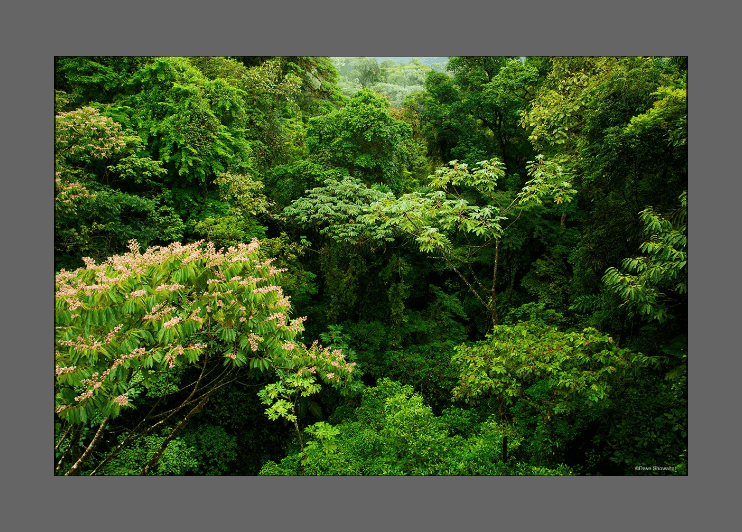
A yellow morph and green morph of an insect lives in the rainforest canopy. You would expect:
the green population to increase and the yellow to decrease
both populations should stay the same
both populations will increase
the green population to decrease and the yellow to increaseThis is a wrong answer
What word describes a trait that helps an organism survive in its environment?
natural selection
mutation
camouflage
adaptation
Natural Selection is driven by a change in the environment and survival of the
Earth
Fastest
Fittest
Biggest
Why are advantageous traits more likely to be passed onto offspring?
Because they are more likely to survive and reproduce.
Because the organism knew it needed that trait, survives, and passes it on.
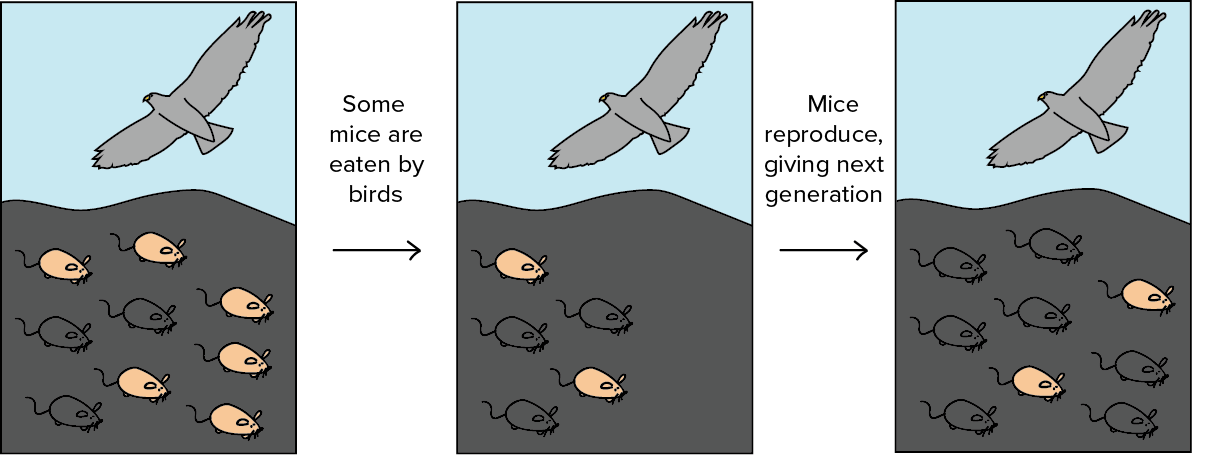

"Organisms that are better adapted to the environment survive to pass traits to their offspring" is the definition of
Natural Selection
Selective Breeding
Artificial Selection
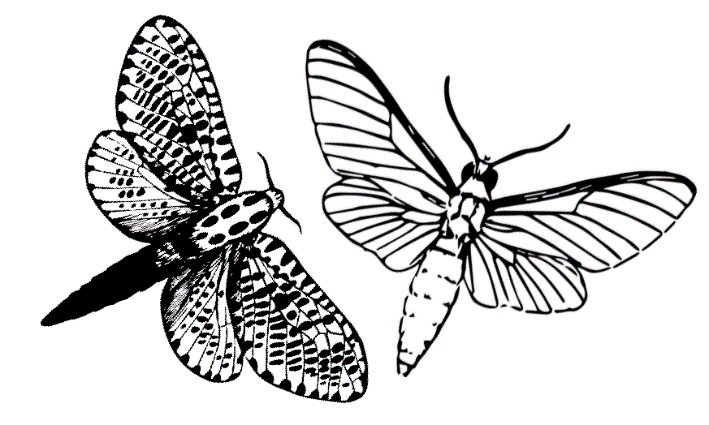
According to natural selection, light colored tree trunks would favor
light colored moths
dark colored moths
red colored moths
red and light colored moths

This scientist developed the theory of survival of the fittest as he studied the finches.
What are the most studied animals in the Galapagos?
A(n) _____ is any variation that makes an organism better suited to its environment.
(a)
A slight difference in an inherited trait between individual members of the same species. (Example: Some rabbits have white fur and some have black fur.)
variations
adapatations
The passing of genetic traits (DNA) from parent to offspring is __________.
Survival of the fittest
Heredity
Evolution
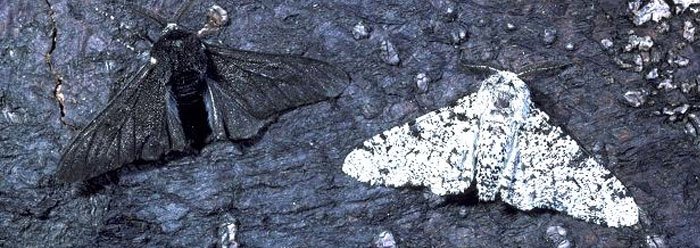
The trees these moths used to live on were white, but have been covered in soot from coal factories. Which moth will be more successful in this environment?
Dark moth
Light moth
Both will be equally successful
Neither will be successful

Which trait(s) would be considered an adaptation for a moth? (Check all that apply.)
Flies very slow.
Wings camouflaged within its environment
The catepillar stage camouflages within its environment.
Flies very fast.
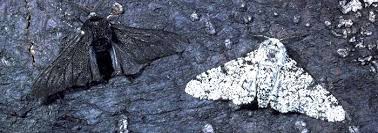
Predict which moth would increase in population over time.
light colored
dark colored

What is the best claim for this image?
The grey wolves are best adapted to the Arctic
The brown rabbits are best adapted to the Arctic.
The white rabbits are best adapted to the Arctic.

The peppered moth's color camouflaged it on the light colored tree bark. It's color was an example of a/n
Variation
Adaptation
Which of the following is NOT an adaptation?

Quills

Speed

Camouflage

Fish
What does 'fitness' mean in natural selection?
How fast an animal can run
How much you work out
How well adapted the animal is to their environment
How strong an animal is

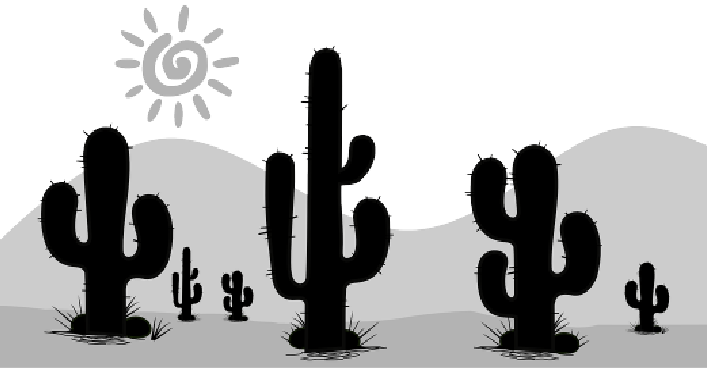
Which animal is the most FIT to live in the desert?
Penguin
Bear
Tiger
Lizard

Which animal is most FIT to live in the Antarctic?
Penguin
Bear
Tiger
Lizard
What is survival of the fittest?
Do you even lift brah?
Only the strong survive
Hunger Games
The best adapted animal will live and reproduce
TRUE OR FALSE: All mutations are bad
TRUE
FALSE
TRUE or FALSE: Mutations lead to variation.
TRUE
FALSE

Why is competition important for natural selection?
It shows which variations are more successful, allowing the organisms with those variations to survive.
It causes organisms, regardless of which traits they have, to die out, reducing the population size.
It causes organisms to get stronger due to having to outcompete other species.
Competition is not important for natural selection.

Due to pollution, a pond becomes darker over time. Which trait variation became more common?
light fish
dark fish

What type of environment do you think this data was collected from?
forest with primarily white-bark trees
forest with primarily dark-bark trees

What is most likely to happen to moth populations in the picture shown?
Light moths--hunted easily, dark moths--population increase
Dark moths--hunted easily, dark moths--population increase
Light moths--hunted easily, light moths--population increase
Lights moths will change their color to match dark moths.
In a cold environment what would be some adaptive traits? Sellect all that apply.
thick blubber
thick fur
thin fur
strong muscles
Which of the following is an example of an adaptation that improves a predator's success in its environment?
A bird's brightly colored feathers that attract mates.
The sharp claws of a lion.
The thick fur of a polar bear.
The long neck of a giraffe.
A population of beetles shows a wide range of colors from light green to dark green. Birds prey on these beetles. Over time, the population shifts to mostly dark green beetles. Which mechanism of natural selection best explains why?
Because the light green beetles were easily seen by predators
Because the dark green beetles were easily seen by predators
Because the beetles got smarter
Because the birds were not that smart
What kind of roots would benefit a plant in a flood prone environment?
A plant with shallow roots
A plant with longer roots
The length of the roots would not make a difference
A plant does not need specialized adaptations in this environment

Which of the following physical adaptations primarily allows the Fennec Fox (Vulgaris zerda) to dissipate excess body heat in the harsh Sahara Desert environment?
A thick, fatty hump on the shoulders
Large, oversized ears with a high density of blood vessels
Darkly pigmented fur to absorb solar radiation
A long, muscular tail used for swimming

If a plant species has a variation for very deep taproots a dominant, thick, central root that grows vertically downward, acting as an anchor and storing nutrients for plants, how does this compare to a shallow-rooted plant during a drought?
The taproot is a disadvantage because it cannot reach surface dew.
Both variations are both at a disadvantage.
The taproot is a disadvantage because it uses too much energy to grow.
The shallow roots are a disadvantage because the top layers of soil dry out first.

