
 Worksheets
LAST EOC practice test
Total questions: 50
Worksheet time: 25mins
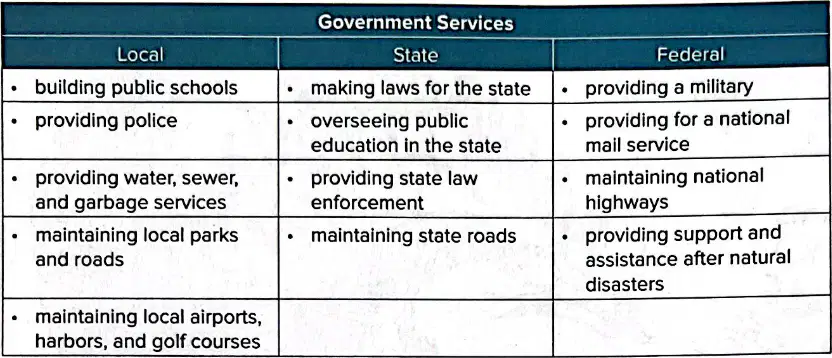
Examine the table on government services and answer: What conclusion can you draw from the information in the table?
The federal government is more important and powerful than state and local governments.
State government services focus primarily on national safety, national defense, and the general welfare.
Local governments provide more direct services to the people than state and federal governments.
Law enforcement and education are the primary services provided by the federal government.
One way the power of Congress is limited is through the use of:
casework
filibusters
a president's veto
implied powers
What is one principle that was established by the Magna Carta?
the rule of law
limited government
representative government
precedent
How is a state’s number of electors determined?
It is based on a percentage of the state's population
It is equal to the number of its state representatives
It is equal to the number of its members of Congress
Each state has ten electors, and each territory has two.
Read the Tenth Amendment to the U.S. Constitution and answer the following question:
"The powers not delegated to the United States by the Constitution, nor prohibited by it to the states, are reserved to the states respectively, or to the people."
Which type of power is established in this excerpt from the Tenth Amendment?
reserved powers
representative powers
concurrent powers
delegated powers
In an appellate court case, judges determine:
whether or not the defendant is guilty.
whether or not the case was tried fairly.
the sentencing for the defendant.
the damages due to the plaintiff.
What power do governors have that presidents do not?
issuing executive orders
appointing judges
activating troops
using a line-item veto
Read the excerpt from Article VI of the U.S. Constitution and answer the following question:
"This Constitution, and the Laws of the United States which shall be made in Pursuance thereof; and all Treaties made, or which shall be made, under the Authority of the United States, shall be the supreme Law of the Land; and the Judges in every State shall be bound thereby, any Thing in the Constitution or Laws of any State to the Contrary notwithstanding." —Article VI, U.S. Constitution.
Which weakness in the Articles of Confederation is addressed in this part of the Constitution?
There was no executive branch to enforce national laws.
The states had more power than the national government.
Laws required the approval of nine states.
There was no national court system.
Which of these is a duty of citizens of the United States but is NOT a duty of noncitizens?
paying taxes
obeying the law
going to school
serving on a jury
Which of the following amendments help protect the rights of someone suspected or accused of committing a crime?
First Amendment
Second Amendment
Fifth Amendment
Ninth Amendment
What powers does the president have in the role of chief executive?
the power to negotiate treaties with other countries
the power to issue executive orders
the power to declare war
the power to raise and spend money
Which constitutional amendment stated the right to vote could not be denied to citizens based on their race?
the Tenth Amendment
the Thirteenth Amendment
the Fifteenth Amendment
the Nineteenth Amendment
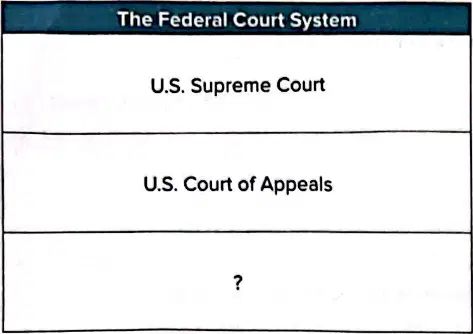
Examine the diagram of The Federal Court System and answer the following question: Which court completes the diagram?
Florida Supreme Court
Court of Appeals for Veterans Claims
U.S. District Court
U.S. Customs Court
In Congress, the role of a conference committee is to:
debate and amend a bill proposed in the House or Senate.
hold hearings on a bill proposed in the House or Senate.
work out differences between House and Senate versions of a bill.
develop public policy based on a bill passed by Congress.
The purpose of the civil service system is to:
help documented immigrants become naturalized citizens.
encourage people to volunteer within their communities.
help local governments provide services to their communities.
ensure that federal employees are qualified for their jobs.
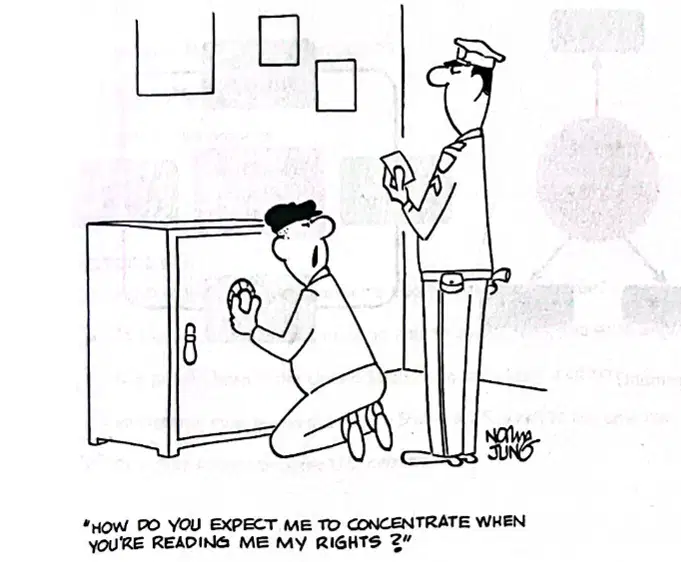
Examine the political cartoon and answer the following question: Which Supreme Court case does the cartoon reference?
Tinker v. Des Moines
Miranda v. Arizona
In re Gault
Gideon v. Wainwright
A civil case always involves:
violation of a federal law
an appeal from a lower court
a trial before a jury
a dispute between two parties

Examine the diagram and answer the following question. Which system has the strongest central government?
federal system
unitary system
confederal system
constitutional system
Which of the following people or groups serve in the president's cabinet?
the heads of the executive departments
the Senate majority leader
the Speaker of the House
the heads of government corporations
Which of the following are part of the non-legislative powers of Congress?
cloture
establishing laws for naturalization
oversight
pork-barrel projects
Which of the following statements about citizenship are true?
To become a citizen, you must be able to speak, read, and write English
Any person born in the United States is automatically a citizen
Immigrants must live in the United States for 10 years to become naturalized citizens
Refugees cannot become U.S. citizens
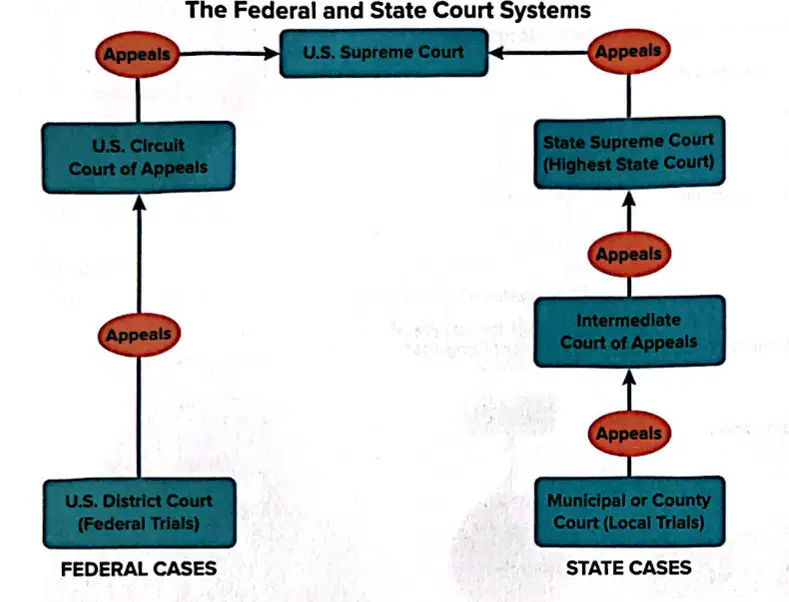
Examine the diagram below and answer the following question: Which federal courts can hear appeals from state court decisions?
U.S. district courts
county courts
state supreme courts
the U.S. Supreme Court
Which of the following are limitations placed on the powers of state governments?
the elastic clause
redlining
redistricting after each census
making treaties with other countries
Which group(s) gained voting rights by a constitutional amendment and not by a law passed by Congress?
18-year-olds
Native Americans
21-year-olds
Asian Americans
Read the excerpt from the English Bill of Rights and answer the following question:
"…[Suspending the laws or the execution of laws by regal [royal] authority without consent of Parliament is illegal…]" -English Bill of Rights.
Which of the following concepts does the excerpt support?
English citizens had a social contract with their monarch
English citizens had rights that no monarch could violate
English citizens should not be prohibited from the free exercise of religion
English citizens had the right to choose their form of government
Which of the following complaints against the British government was included in the Declaration of Independence?
executing colonists without benefit of a jury trial
requiring colonists to house British soldiers in their homes
ordering colonists to move off of lands claimed by Native Americans
forcing colonists to serve in Parliament
Read the Preamble to the U.S. Constitution and answer the following question: Which of the following excerpts from the Constitution supports the intention of the phrase 'to form a more perfect Union' in the Preamble?
From Article I: 'The House of Representatives shall choose their Speaker and other Officers; and shall have the sole Power of Impeachment.'
From Article IV: 'New States may be admitted by the Congress into this Union.'
From Article VI: 'All Debts contracted and Engagements entered into, before the Adoption of this Constitution, shall be as valid against the United States under this Constitution, as under the Confederation.'
From Article VII: 'The Ratification of the Conventions of nine States, shall be sufficient for the Establishment of this Constitution between the States so ratifying the Same.'
What is meant by the term rule of law?
Government is based on the consent of the governed.
Elected leaders must follow the law; no one is above the law.
Government is limited in power by a constitution or written agreement.
People are born with certain basic rights; government may not take them away.
Which of the following cases are heard in state courts?
most contract disputes, inheritance matters, and most issues involving regulation of trades and professions
bankruptcy matters, disputes between states, and disputes involving citizens of other countries
class action lawsuits, issues involving the U.S. Constitution, and inheritance matters
disputes between states, most contract disputes, and class action lawsuits
Which branch of government is responsible for enforcing the law?
bureaucratic branch
judicial branch
legislative branch
executive branch
Which is a power of the legislative branch?
grant pardons
enforce the laws
veto bills
create an army and navy
Which of the following is a foreign policy issue?
requiring citizens to vote in federal elections
strengthening laws that prevent companies from polluting
providing cost of living increases in veterans' disability payments
imposing an economic embargo on another nation
There have been many auto accidents at a busy intersection near your home. Whom should you contact to address the issue?
the mayor or a city council member
your state senator or state representative
a member of the local school board
the U.S. Department of Transportation
Which important principle was reinforced by the Supreme Court ruling in United States v. Nixon (1974)?
checks and balances
rule of law
separation of powers
double jeopardy
What is the name of the ruling from which this passage was taken?
"To separate [children in grade and high schools] from others of similar age and qualifications solely because of their race generates a feeling of inferiority as to their status in the community that may affect their hearts and minds in a way unlikely ever to be undone... We conclude that, in the field of public education, the doctrine of 'separate but equal' has no place. Separate educational facilities are inherently unequal."
Brown v. Board of Education
Plessy v. Ferguson
Miranda v. Arizona
Marbury v. Madison
How did the passage of the Twenty-fourth Amendment affect the political process in the United States?
It resulted in more people being allowed to vote.
It resulted in more women being allowed to vote.
It permitted people of all economic backgrounds to contribute to political campaigns.
It encouraged more college-age Americans to become involved in politics.
How did the Nineteenth Amendment impact the rights of Americans?
It protected the right of women to vote in all national and state elections.
It allowed voters to elect their senators directly.
It eliminated the requirement of poll taxes for national elections.
It set the minimum age for voting at 21.
What type of law deals with the limits of the government's power?
criminal
civil
constitutional
military
Which of the following individuals has incorrectly claimed a first amendment constitutional right?
Emily and her friends ask city council for a permit to hold a quiet demonstration about the closing of a neighborhood school, saying that she has a First Amendment right to do so.
Sean affixes a bumper sticker to his car that reads 'I hate the government.' He says that his First Amendment rights allow him to do this.
Sarah fills her front lawn with campaign signs for the candidate she supports. When her neighbors object, she cites her First Amendment rights.
As a joke, Kevin enters a crowded theater and shouts that the building is on fire. He claims that his action is permissible under the First Amendment.
During the debate over approving the U.S. Constitution, how did Anti-Federalists' and Federalists' viewpoints differ?
Anti-Federalists feared that state governments would have too much power under the Constitution.
Federalists objected to two legislative bodies and preferred a unicameral legislature.
Federalists believed that the central government created by the Constitution was too strong.
Anti-Federalist worried that the Constitution failed to adequately protect citizens' individual freedoms.
The United States is a:
republic
direct democracy
federalist state
confederacy
The elastic clause allows Congress to:
adjust the term limits of its members
regulate trade between states
impeach officials for wrongdoing
stretch its powers to meet new needs
Someone who comes to the United States from another country to attend college is typically a/an:
nonresident alien
undocumented immigrant
unnaturalized citizen
refugee
Why do presidents often issue many executive orders as soon as they take office?
to pressure Congress into supporting their agendas
to create new executive departments for their goals
to overturn policies of the previous administration
to reflect the power of the office of the president
Based on the excerpt from Cory Booker's book 'United: Thoughts on Finding Common Ground and Advancing the Common Good,'
"Out of one, many...our nation speaks of individual rights and freedoms, personal responsibility, and self reliance, and yet we have consistently demonstrated in the spirit of sacrifice, the idea that we are better together- that while our differences matter, our nation matters more"
which statement would Senator Booker not support?
Most Americans are too focused on themselves rather than others
When people work together, they can make positive changes
It is important for people to act out of civic friendship and help others
Civil discourse is necessary to keep American democracy strong
The president and state governors share many roles. What role do they not share?
Chief Executive
Commander in Chief
Chief Diplomat
Legislative leader
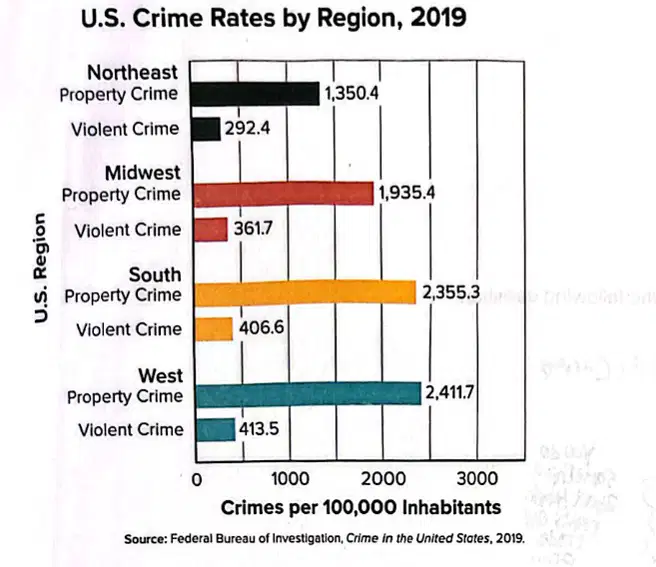
Examine the graph titled "U.S. Crime Rates by Region, 2019" and answer the following question: Which region has the highest rates of both property crime and violent crime?
Northeast
Midwest
South
West
Which tools of foreign policy would be most effective in addressing environmental issues?
treaties and executive agreements
submitting a case to the United Nations International Court of Justice
military force
intelligence and espionage
Today the United Nations has many units designed to address different issues. What was its main goal when it was first created in 1945?
to protect human rights
to keep peace and prevent war
to improve health and prevent disease
to expand global interdependence
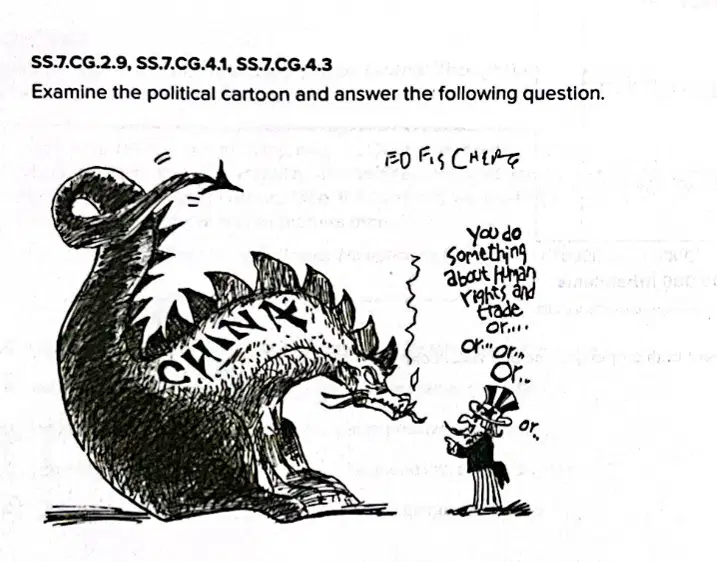
Examine the political cartoon and answer the following question. What does the cartoon suggest about the United States and China?
The United States is eager to sign a treaty with China.
The United States is worried China might attack.
The United States has little influence over China.
The United States does not like China's trade policies or human rights abuses.

