
 Worksheets
revision
Total questions: 172
Worksheet time: 3hrs 37mins
What is homeostasis?
Keeping something at an ideal position/setting
A species of hominids
The category in which we put biomolecules
A mixture that is fully blended (with all biomolecules equal)
What are the FOUR most common elements in living things?
Carbon
Silicon
Nitrogen
Hydrogen
Oxygen
What is the function of carbohydrates?
Perform cell's functions/tasks
Fast energy
Energy storage
Alter other biomolecules
Store information for cells
Carbohydrates are primarily made out of...
Carbon
Hydrogen
Oxygen
Nitrogen
Phosphorus
What is the function of proteins?
Perform cell's functions/tasks
Fast energy
Energy storage
Alter other biomolecules
Store information for cells
Proteins are primarily made out of... (and sometimes Sulfur)
Carbon
Hydrogen
Oxygen
Nitrogen
Phosphorus
What is the function of nucleic acids?
Perform cell's functions/tasks
Fast energy
Energy storage
Alter other biomolecules
Store information for cells
Nucleic acids are primarily made out of...
Carbon
Hydrogen
Oxygen
Nitrogen
Phosphorus
What is the function of lipids?
Perform cell's functions/tasks
Fast energy
Energy storage
Alter other biomolecules
Store information for cells
Lipids are primarily made out of...
Carbon
Hydrogen
Oxygen
Nitrogen
Phosphorus
Your friend is really irritable while sitting in class. He feels lightheaded and dizzy. He is also feeling a bit of confusion and brain fog.
What inferences are most realistic to make about the biomolecules in your friend's body?
He is running low on fast sources of energy
Proteins are being broken down or reshaped
The coding information in the cell is incorrect or incomplete
There is not enough insulation or energy storage
Your friend is really irritable while sitting in class. He feels lightheaded and dizzy. He is also feeling a bit of confusion and brain fog.
What biomolecule does your friend need?
Carbohydrates
Lipids
Proteins
Nucleic Acids
Dystrophin is a molecule that holds muscle fibers together. In people with muscular dystrophy, a genetic disease that causes people to lose the ability to walk at a young age, dystrophin molecules never develop.
What can you infer about the biomolecules of affected individuals? (select all correct answers)
There is a lack of sources of fast energy
A biomolecule is missing
The coding information in the cell is incomplete or incorrect
If removes insulation and long term energy storage
Dystrophin is a molecule that holds muscle fibers together. In people with muscular dystrophy, a genetic disease that causes people to lose the ability to walk at a young age, dystrophin molecules never develop.
What biomolecule is this person missing?
Carbohydrates
Lipids
Proteins
Nucleic Acids
Bowhead whales can have a specialized layer of blubber up to 30 cm’s thick. This acts as a special insulation that traps the heat their muscles create from movement.
What biomolecule is the blubber primarily made of?
Carbohydrates
Lipids
Proteins
Nucleic Acids
Helicase is an example of a biomolecule that can destroy bonds between DNA strands during DNA replication.
What biomolecule is helicase?
Carbohydrate
Lipid
Protein
Nucleic Acid
A scientist discovers new life on a distant planet. While watching the alien species live on the planet, scientists begin to notice that in order to hunt this species will attack another smaller species and inject them with some sort of liquid. After a short time, the smaller organism develops a sort of necrosis which is when a small portion of the organism's flesh begins to break down. Soon after necrosis begins the smaller organism dies.
What can you infer about the function of the poison?
It decreases fast sources of energy
Proteins are being broken down or reshaped
The coding information in the cell is altered
If removes insulation and long term energy storage
A scientist discovers new life on a distant planet. While watching the alien species live on the planet, scientists begin to notice that in order to hunt this species will attack another smaller species and inject them with some sort of liquid. After a short time, the smaller organism develops a sort of necrosis which is when a small portion of the organism's flesh begins to break down. Soon after necrosis begins the smaller organism dies.
What biomolecule are the aliens injecting?
Carbohydrates
Lipids
Proteins
Nucleic Acids
There is a person with Albinism. This individual does not produce melanin. Melanin allows for people to be protected from the sun. Since Albinos do not produce this protein they are prone to getting sunburns.
What inferences are most realistic to make about the biomolecules in this individual's body?
He is running low on fast sources of energy
Proteins are being broken down or reshaped
The coding information in the cell is incorrect or incomplete
There is not enough insulation or energy storage
There is a person with Albinism. This individual does not produce melanin. Melanin allows for people to be protected from the sun. Since Albinos do not produce this protein they are prone to getting sunburns.
What biomolecule results in the individual having albinism?
Carbohydrates
Lipids
Proteins
Nucleic Acids


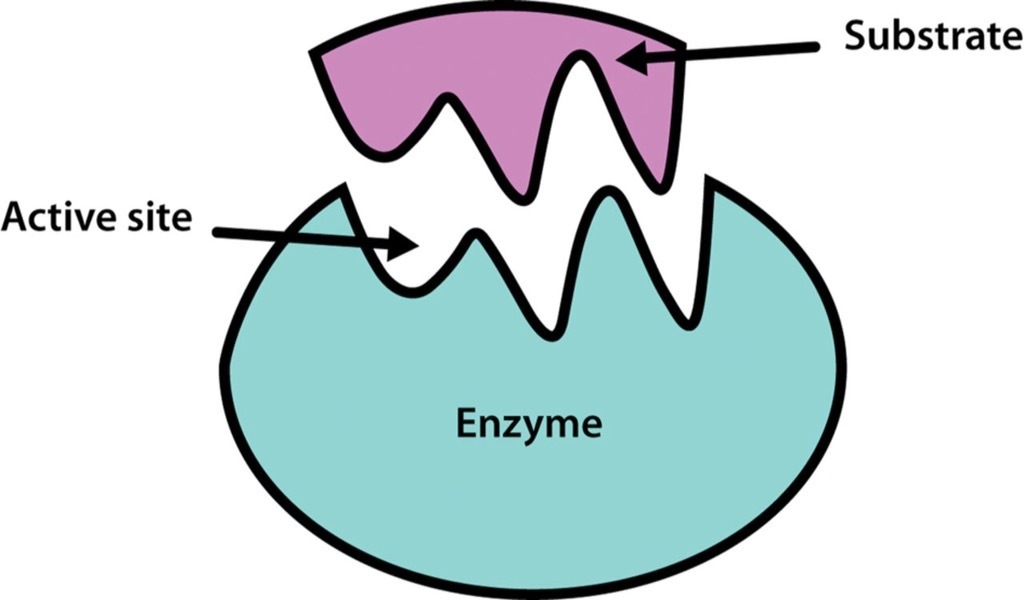

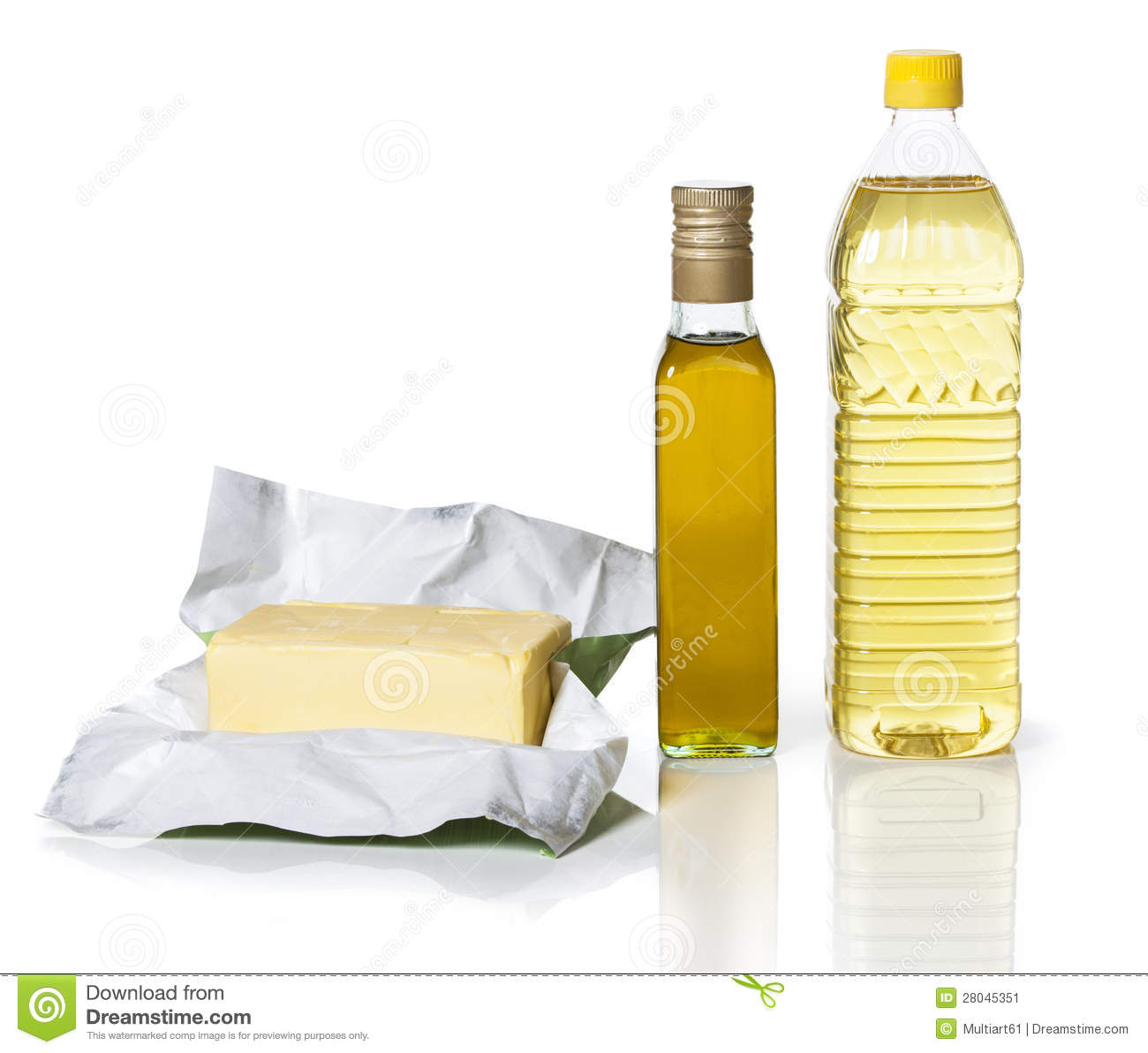

What is the monomer for carbohydrates?
Amino acid
Nucleotide
Fatty acid
Monosaccharide
Which monomer makes up lipids?
Amino acid
Nucleotide
Fatty acid
Monosaccharide
As food travels through the digestive system, it is exposed to a variety of pH levels. The stomach has a pH of 2 due to the presence of hydrochloride acid (HCl), and the small intestine has a pH ranging from 7 to 9. HCl converts pepsinogen into pepsin, an enzyme that digests proteins in the stomach. Which of the following most likely happens to pepsin as it enters the small intestine?
It becomes inactive.
It begins to replicate.
It's shape changes to engulf large proteins.
It's activity increases to digest more proteins.
In living cells, enzymes act as catalysts, which may reduce the amount of activation energy required for a chemical reaction to occur. In the graphs below, pathway x is a solid line representing the uncatalyzed reaction. The dotted line shows the catalyzed reaction. Which graph best illustrates the changes in a reaction when the catalyst reduces the amount of energy required?


What will most likely happen if an appropriate enzyme is added to a chemical reaction?
The reaction rate will increase.
The equilibrium of the reaction will be maintained.
The reaction rate will decrease.
The reaction will stop.
The human body maintains a temperature of around 98.6 degrees at all times. Enzymes are involved in almost every chemical reaction in the body. Which of the following describes the connection between these two statements?
Enzymes function best at a specific temperature.
The body needs to be warm to prevent hypothermia.
The body is kept relatively warm to prevent too much enzyme action.
There is no connection between the two statements.
In a chemical reaction, the chemicals on the left side of a reaction arrow (________ --> _________) are called A:___ and the the chemicals on the right side are called B: ____
A: Products; B: Ingredients
A: Ingredients; B: Products
A: Reactants; B: Ingredients
A: Reactants; B: Products
Which are examples of Nucleic Acids?
glucose, pasta, bread
fats, oils, waxes
meats, enzyme, lactase, eggs
DNA, RNA
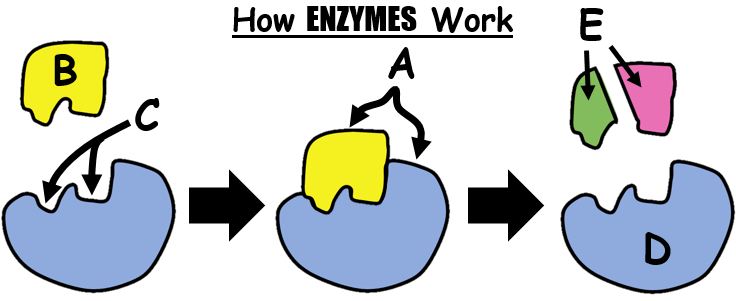
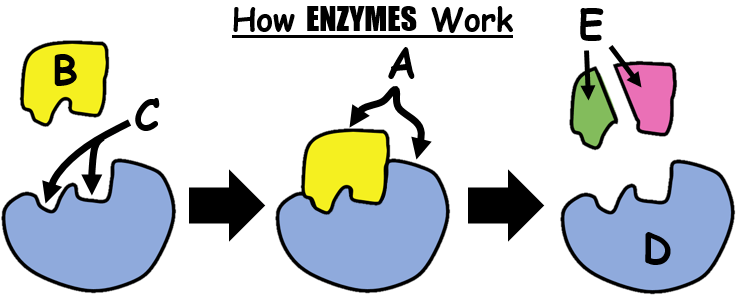


Which 2 factors can affect the rate of enzyme activity?
Light intensity
Temperature
pH
Oxygen concentration

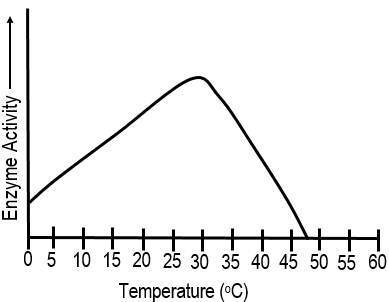
Based on the graph, what temperature does this enzyme work best?
15 C
40 C
30 C
50 C
What happens when enzymes are heated to a high temperature?
The enzymes die
The shape of the enzyme changes as it denatures
The enzymes become more active
The enzymes remain the same
Which of the following denatures an enzyme?
High Temperatures
Incorrect pH
Both


which is NOT an example of an organelle?
mitochondrion
nucleus
heart
cell membrane

Who looked at living organisms in dental scrapings and pond water, and became known as "the father of microbiology?"
Rudolf Virchow
Anton van Leeuwenhoek
Matthias Schleiden
Theodor Schwann

Who came up with the name "cells" while looking at a slice of cork under a microscope?
Matthias Schleiden
Anton van Leeuwenhoek
Robert Hooke
Rudolf Virchow

In 1838, who was the German botanist that found that all plants were made of cells?
Matthias Schleiden
Theodor Schwann
Rudolf Virchow
Robert Hooke

In 1839, who was the German physician that added to the cell theory by finding all animals were made of cells?
Anton van Leeuwenhoek
Robert Hooke
Matthias Schleiden
Theodor Schwann

Which German scientist published findings that all cells come from existing cells?
Theodor Schwann
Rudolf Virchow
Matthias Schleiden
Robert Hooke

What is NOT a part of cell theory:
all cells come from existing cells
all cells have a nucleus
all living things are made of cells
cells are basic unit of structure and function in living things

Prokaryotes are
bacteria
fungi
plants
animals

Prokaryotic cells do NOT have membrane bound organelles or ______________________________.
cytoplasm
a nucleus
ribosomes
DNA

Eukaryotes include fungi, plants, animals, and....
bacteria
protists
archaebacteria
eubacteria

In eukaryotic cells DNA is primarily contained within the:
cytoplasm
ribosomes
vacuoles
nucleus

Of the two types of cells, which one is smaller and more simplistic?
prokaryotic cells
eukaryotic cells

All cells have a cell membrane, cytoplasm, DNA, and...
cell wall
nucleus
ribosomes
chloroplast

The interior contents of the cell (except for the nucleus):
nucleolus
cytoplasm
cell wall
cell membrane

Structures that have different jobs within the cell:
antibodies
lipids
organelles
blood cells

Structure in the cell made of protein and RNA, used for protein synthesis...(found in all cells)
nucleus
cell membrane
cytoplasm
ribosomes

What kind of microscope (seen here) is common in classrooms, uses light to shine through a sample, with a maximum magnification of about 1000 to 1500x?
Dissecting microscope
Compound light microscope
Scanning Electron Microscope (SEM)
Transmission Electron Microscope (TEM)

The outermost layer of a plant cell and animal cell is...
Plant cell - cell membrane, animal cell - cell wall
Plant cell - cell wall; animal cell - cell membrane
Plant and animal cell - cell wall
Plant and animal cell - cell membrane

The majority of the plasma membrane is composed of ______.
phospholipids
proteins
carbohydrates
cholesterol


ATG TGA CAG


How many nucleotides make up a codon?
1
3
5
15
How many codons: AAU GCG AUG
9
1
3
15
How many nucleotides? AAU GCG AUG
9
3
1
15
What is the order for Protein Synthesis?
Transcription -> Translation -> Protein
Translation - > Transcription -> Protein
Protein -> Transcription -> Translation
Translation -> Protein -> Transcription


ATG TGA CAG

Identify.
DNA
mRNA
rRNA
tRNA

Identify.
DNA
mRNA
rRNA
tRNA

Identify.
DNA
mRNA
tRNA
rRNA
Where does transcription occur?
Cytoplasm
Mitochondria
Nucleus
ER


Carries the amino acid used to make a protein
mRNA
rRNA
tRNA
Factory for making a protein
mRNA
rRNA
tRNA

What type of RNA is shown in this image?
rRNA
mRNA
tRNA

What type of RNA is shown in this image?
rRNA
mRNA
tRNA

This image shows a picture of a ribosome - what type of RNA is this?
rRNA
mRNA
tRNA

Three consecutive nucleotides on a mRNA molecule
Translation
Transcription
anticodon
codon

Three consecutive nucleotides on a tRNA molecule
Translation
Transcription
anticodon
codon
ATG TGA CAG
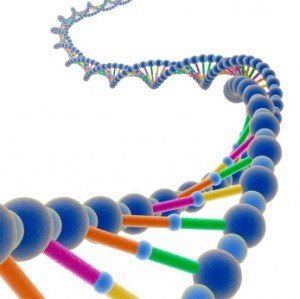

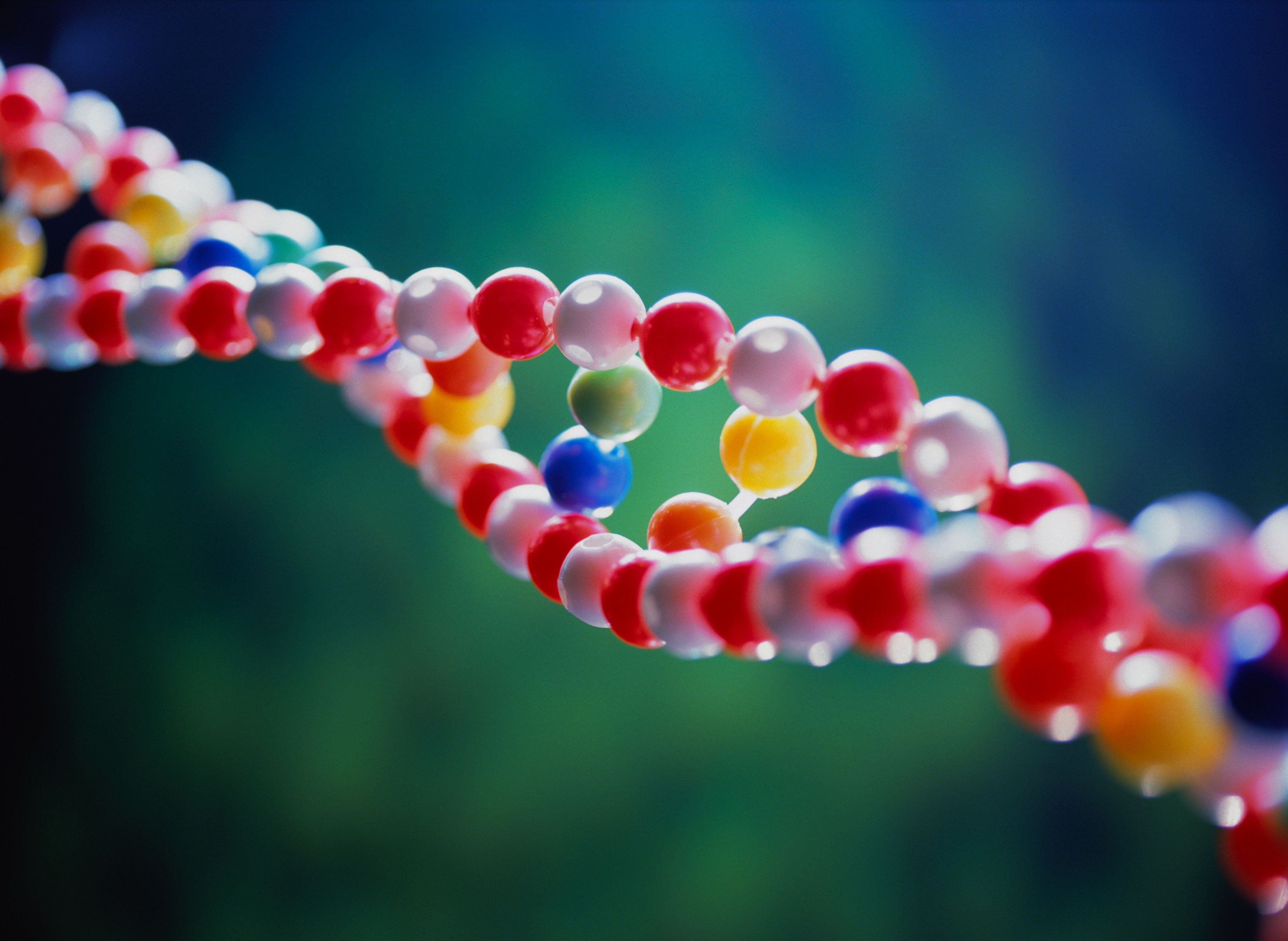
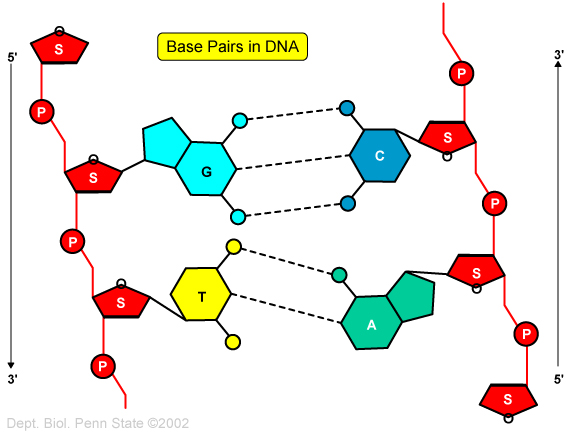
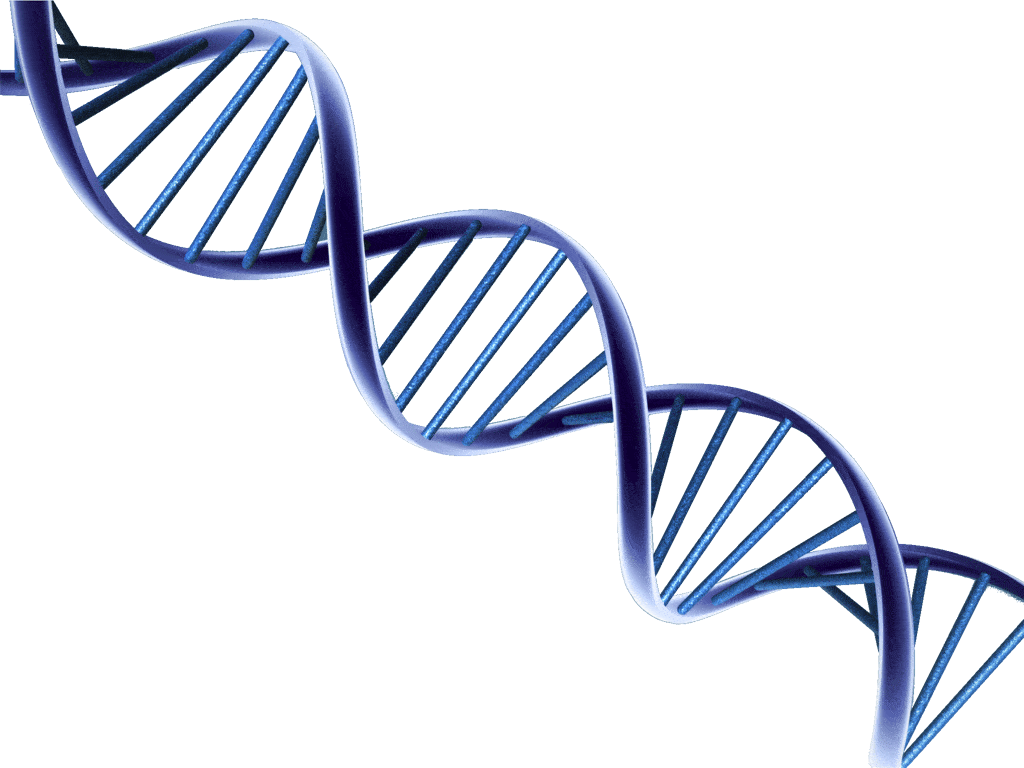
What is the name of the place where the double helix is unwound?
Replication Fork
The Y zone
Open Sesame
Replication Spoon
The two strands of DNA are
Parallel
Antiparallel
Perpendicular
At Right Angles

