
 Worksheets
6th Grade Science Review
Total questions: 175
Worksheet time: 3hrs 35mins
1. Rock sediments that travel down a mountain, sand being blown across the beach, and mud sliding down a hill are all examples of
pressing and cementing
erosion
part of the rock cycle
fossil formation
The remains of living things that died long ago are often found in what type of rock?
igneous rocks
sedimentary rock
metamorphic rock
all rocks

Once magma reaches the earth's surface, it is called __________.
a vent
minerals
igneous rocks
lava
Rocks that are buried deep in the earth can be changed into an entirely new rock when it goes through what?
weathering and erosion
pressing and cementing
heat and pressure
cooling and hardening
Which rock is formed by layers of material that settled on the bottom of an ocean?
sedimentary
igneous
metamorphic
obsidian
Minerals and rocks are not exactly the same. How are minerals and rocks related to each other?
Minerals are groups of related rocks.
Minerals have crystals, but rocks do not.
Rocks are made up of one or more minerals.
Rocks contain different chemical compounds than minerals.
Sheila is classifying the rocks in her collection. She knows that limestone often contains fossils. In which category of rock should she classify these rocks?
igneous
granite
metamorphic
sedimentary
Both igneous rock and sedimentary rock can turn into metamorphic rock. What two conditions are necessary for this to happen?
heat and erosion
heat and pressure
weathering and erosion
weathering and pressure

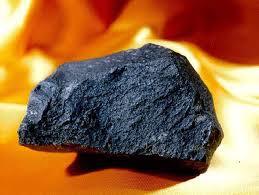
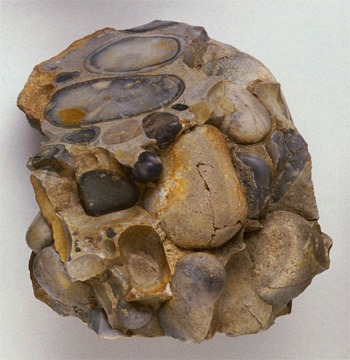


What type of rock is formed from slow cooling magma UNDER the earth's surface?
Extrusive Igneous
Intrusive Igneous
Metamorphic
Sediment

The seated sculpture of President Lincoln inside the Lincoln Memorial was carved out of white Georgia marble (formed from Earth's pressure and heat). What type of is marble?
Igneous
Metamorphic
Sedimentary
None of the above
Which characteristic is common to EXTRUSIVE igneous rocks?
Crystals
Fossils
Glassy surface
Ribbonlike layers
Identify the series of geologic processes that can transform magma into granite (igneous rock), granite into sand (sediment), and sand into sandstone (sedimentary rock).
Cooling; weathering and erosion; compacting and cementing
Melting; heat and pressure; cooling
Weathering and erosion; compacting and cementing;
Weathering and erosion; compacting and cementing; heat and pressure

This rock is often found near water.
Sedimentary
Igneous
Metamorphic


When camping in west Texas, we wake one morning to discover that our car and tent are covered with a thin layer of sand. This is an example of:
weathering
erosion
deposition

When we walk along the seashore, we look for shark teeth in the sand. Sometimes we also find unbroken sand dollars, too. This is an example of
weathering
erosion
deposition

Soil is made of ---
weathered rocks and minerals.
dead plants and animals.
air and water.
all of the above

Wind is a non-renewable energy source.
True
False
Choose the example(s) of a non-renewable resource.
Oil
Coal
Natural gas
All of the Above
Can a renewable resource become a non-renewable resource?
Yes
No
A non renewable resource formed from the remains of prehistoric plants and animals
Alternative energy
'Water cycle
Landforms
Fossil fuels
What are nonrenewable resources?
Natural resources that cannot be easily replaced once they are used up
Resources that are not affected by human activity
Man-made resources that are not easily replaced
Resources that can be easily replaced once they are used up
Give an example of a nonrenewable resource.
Solar energy
Fossil fuels
Hydroelectric power
Wind power
What are renewable resources?
Resources that are harmful to the environment
Resources that can only be used once and then disappear
Resources that are not found in nature
Natural resources that can be replenished or regenerated within a human lifetime
Give an example of a renewable resource.
Coal
Natural gas
Solar energy
Oil


What mineral property is shown in the picture?
hardness
cleavage
fracture
streak


The ability to do work (move) is called...
Matter
Energy
Weight
Force
True or false: Energy cannot change from one type to another.
True
False
Which of the following is an example of thermal energy?
A light bulb
The movement of a car
The digestion of food
Heat from a fire
Faster moving atoms and molecules are associated with...
Low thermal energy (cooler)
High thermal energy (hotter)
The State in which matter has defined shape and volume
Solid
Liquid
gas
Plasma

KINETIC ENERGY IS THE ENERGY OF MOVEMENT
TRUE
FALSE
When liquid turns into solid the particles of the matter
Moves slower, closer,and begins to pack tightly
moves faster and escapes into the air
neither moves slower or faster
moves rapidly
WHEN HEAT ENERGY IS ADDED TO MATTER THE KINETIC ENERGY
INCREASES
DECREASES
STAYS THE SAME
NEITHER

As heat energy is added to liquid, the water molecules (particles) have enough energy to
break up, spread apart, and turn into gas
bond and turn into solid
bond and break up
neither

When heat energy increases, the solid matter begins to turn back into liquid matter. Particles starts to
move faster and break apart
moves slower and bond
escape into the atmosphere
neither slower of faster
What is the boiling point ?
0°C
100°C
10°C
50°C
I drive for 3 hours at 60 miles per hour. How far do I get?
What is the unknown in this problem?
distance
speed
time
I drive for 3 hours at 60 miles per hour. How far do I get?
What equation should I use to solve this problem?
distance = speed/time
speed = distance/time
distance = speed * time
I drive for 3 hours at 60 miles per hour. How far do I get?
What are the units of the answer?
miles/hour
miles
hours
How long will it take me to drive 240 miles at 60 miles per hour?
what are the units of the answer to this question?
miles/hour
miles
hours
How long will it take me to drive 240 miles at 60 miles per hour?
What equation will best help me answer this question?
distance = speed * time
time = distance * speed
time = distance / speed

Match the description to the graph:
"The car is stopped."


Match the description to the graph:
"The speed of the car is decreasing."
What is the speed of an object that travels 100 meters in 4 seconds?
240 m/s
15 m/s
25 m/s
15 mph
You walk 75 meters to math class in 25 seconds. Your average speed is
2 m/s
3 m/s
200 m/s
5 m/s
A train travels 20 km in .5 hrs. How fast is the train going?
25 miles/hr
5 miles/hr
10 km/hr
40 km/hr
A car travels 25 miles/hr for 5 hours, calculate the distance it will travel
125 miles
10 miles
5 miles
30 km
A boat travels at 30 km/hr for 10 hrs, what distance will it travel?
40 miles
3 km
30 km
300 km

the temperature scale on which water freezes at 0 and boils at 100
Kelvin scale
conduction
Fahrenheit scale
Celsius scale
All living things have only one cell.
True
False
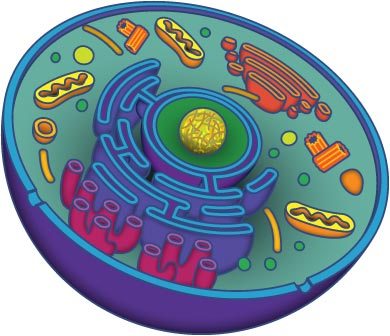
All cells -----
come from other dead cells
come from other living cells
crystallize out of the air

There are three parts to the cell theory. Which is NOT one of those parts?
All organisms are composed of one or more cells.
The cell is the basic unit of structure and organization in organisms.
Cells spontaneously arise from carbon and nutrients carried in the bloodstream.
All cells come from pre-existing cells.
Prokaryotes are _______________ and include ______________.
single cells, DNA but not a nucleus.
multiple cells, a nucleus with DNA
Eukaryotic cells have...
DNA but no nucleus.
a nucleus with DNA and organelles.
Eukaryotic cells can include ______________. *Select all that apply.
protists
plants
animals
fungi
One main difference between prokaryotic and eukaryotic cells is that...
only prokaryotic cells have cell walls
only eukaryotic cells have a nucleus
only prokaryotic cells have ribosomes
only eukaryotic cells have DNA
Which part of the cell allows material to pass in and out of the cell?
nucleus
cell membrane
cytoplasm
Chloroplast

Animals cells and plant cells are exactly the same.
True
False
Only ____________ cells have a cell wall instead of a cell membrane.
plant
animal
white blood
living
There are two classifications of cells-Prokaryotic and Eukaryotic.
True
False
What is the major difference between a Eukaryotic and Prokaryotic cell?
Eukaryotes have a nucleus.
Prokaryotes have a nucleus
Eukaryotes have a membrane.
Prokaryotes have sugars.
Which is more complex?
Prokaryotic Cell
Eukaryotic Cell
Prokaryotic cells are less complex and have only a few organelles.
True
False

Which of the cells are PROKARYOTIC (CHECK ALL THAT APPLY)?
1
2
3
4
The jelly-like fluid inside of the cell. It holds the organelles in place.
cytoplasm
chloroplasts
cell membrane
cytokinesis
Responsible for packaging, modifying, and moving substances from the cell.
mitochondria
Golgi apparatus
smooth ER
rough ER
Jelly bean shaped structures that break down food molecules and release energy.
chloroplasts
lysosomes
cytoplasm
mitochondria
The control center of the cell. It houses DNA.
nucleus
nucleolus
mitochondria
cell membrane
These are liquid filled spaces found in animal cells.
lysosomes
vacuoles
ribosomes
chloroplasts
These are round organelles that digest waste, old cell parts and food.
ribosomes
lysosomes
chloroplasts
vacuoles
This is a rigid structure that provides support to plant cells.
cell membrane
cell wall
cell gateway
central vacuole
These organelles contain green chlorophyll. They make food for plants.
lysosmes
chloroplasts
ribosomes
vacuoles
This stores water in plant cells.
chloroplasts
cell wall
lysosomes
central vacuole
These are protein builders. They are located on the rough ER.
vacuoles
lysosomes
mitochondria
ribosomes
What makes the rough ER rough?
lysosomes
vacuoles
chloroplasts
ribosomes
How many chloroplasts are found in an animal cell?
0
1 or 2
4 or 5
many
Which of these is not found in the animal cell and is found in the plant cell? Pick more than one
cell membrane
cell wall
chloroplast
cytoplasm
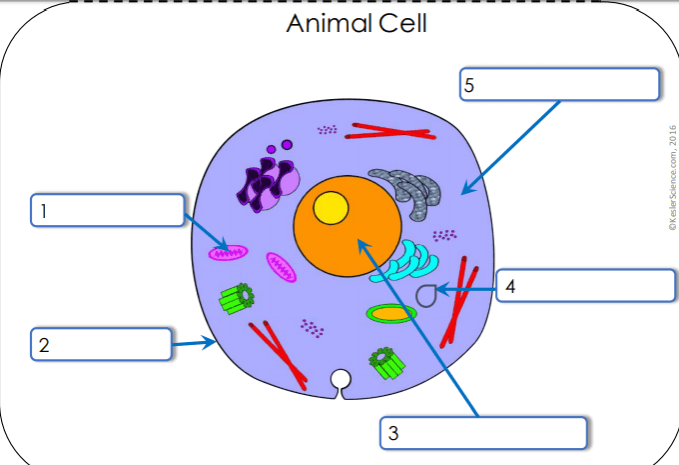
What is #2 in the diagram?
vacuoles
cell membrane
chloroplast
nucleus
What is #1 in the diagram?
nucleus
cell wall
cytoplasm
mitochondrion
What is #3 in the diagram?
vacuoles
cell membrane
chloroplast
nucleus
What is #4 in the diagram?
vacuoles
cell membrane
chloroplast
nucleus
What is #5 in the diagram?
nucleus
cell wall
cytoplasm
mitochondrion
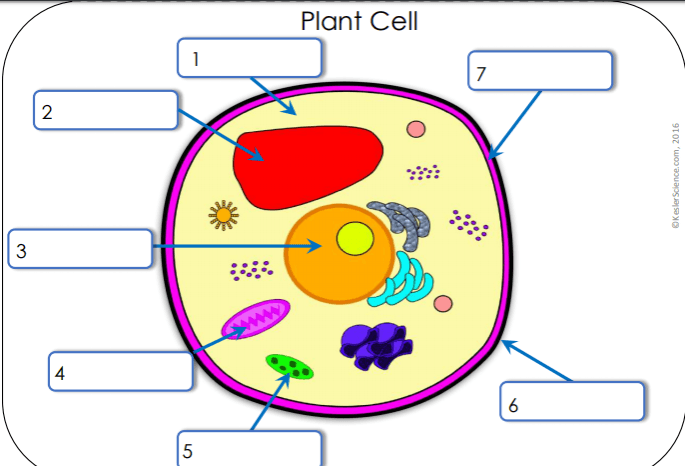
What is #1 in the diagram?
nucleus
cell wall
cytoplasm
mitochondrion
What is #2 in the diagram?
vacuoles
cell membrane
chloroplast
nucleus
In which cell type are chloroplasts found?
Animal Cell
Plant Cell
Both
Organisms made of one cell are known as
multicellular
unicellular
epithelial
epidermal
Which is an example of a multi-cellular organism?
frog
chlorella
fungi
bacteria
Which is an example of a single celled organism?
amoeba
chlorella
fungi
all of the above
What is the simplest and smallest part of matter?
Cells
Protein
Atoms
Molecules
A(n) ________ is formed when 2 or more elements combine chemically.
element
atom
lipid
compound
______ contains genetic information.
atoms
DNA
Lipi
_______ store energy and form cell membranes.
Carbohydrates
Proteins
Nucleic Acid
Lipids
What is the function of proteins?
provides quick energy
stores energy
helps with growth and repair of tissues
stores genetic information
What is the function of nucleic acid?
provides quick energy
stores energy
helps with growth and repair of tissues
stores genetic information
Which are examples of a carbohydrate?
glucose, pasta, bread
fats, oils, waxes
meats, enzyme, lactase, eggs
DNA, RNA
Which are examples of lipids?
glucose, pasta, bread
fats, oils, waxes
meats, enzyme, lactase, eggs
DNA, RNA
What is the most complex level of organization?
organs
organisms
animal cells
organ systems
What is an example of an organ?
plants
Nerve tissues
Liver
Digestive system
small bodies with a specific function within a cell

