Worksheets
Unit 3 - Combining Atoms Review
Total questions: 40
Worksheet time: 1hrs 20mins
Matter is anything that.....
Has mass and takes up space
Has mass and is visible
Takes up space and has energy
Has energy and is visible
What particle view below is a mixture?


What is the best classification for this substance?
An element
A compound
A mixture
Which is true about gases?
Gas particles have the lowest kinetic energy
Gas particles have a fixed volume
Gases take the shape of their container.
Gases have a high density.

What state of matter does this picture represent?
Solid
Liquid
Gas
Plasma
Which two elements would NOT form an ionic bond?
calcium and lithium
calcium and oxygen
lithium and oxygen
calcium and carbon
A sodium ion has a charge of
-1
-2
+1
+2
What is the correct molecular formula of Calcium Chloride?
CaCl
Ca2Cl
CaCl2
Ca3Cl2
An example of a covalent compound is
sodium floride
calcium chloride
carbon dioxide
all of the above
In all covalent bonds, valence electrons are
lost
gained
shared equally
shared
A compound that contains one nitrogen atom and two oxygen atoms is named
oxygen nitride
dioxygen nitride
nitrogen dioxide
nitrogen monoxide
Chemical bonds always involve
ions
protons
metals
electrons
Chemical bonds form when atoms
gain protons
combine nuclei
give up neutrons
share or transfer electrons
What is the correct name for the compound whose formula is Fe2O3?
Iron (II) oxide
Iron trioxide
Iron (III) oxide
Iron oxide
A Boron ion has a charge of +3, and a sulfur ion has a charge of –2. Which would be the product of a reaction between these two elements?
B2S3
B3S2
B2S
2BS3
Which of the following is an ionic compound?
disulfur trioxide
sulfate
carbon monoxide
sodium chloride
Covalent compounds are made up of__________
metal and metal
metal and nonmetal
nonmetal and nonmetal
metal and polyatomic
What is the formula for trinitrogen octahydride?
N3H8
NH4
N8H3
N3H6
What is the best definition of valence electrons?
The outermost electron NOT involved in chemical reactions
The innermost electrons involved in chemical reactions
The outermost electrons involved in chemical reactions.
The innermost electrons NOT involved in chemical reactions
Get your periodic table out! How many valence electrons does Carbon (C) have?
3
6
4
14
Get your periodic table out! How many valence electrons does Nitrogen (N) have?
5
3
15
7
Get your periodic table out! How many valence electrons does Sodium (Na) have?
11
1
2
6
How many valence electrons do atoms want to be stable?
2
8
10
18
What advantage does an element have when it has a full valence level of 8 electrons?
Greater mass
having more electrons is like having more money
to over power teh effect of the protons
stability
How many electrons does Al (Aluminum) want to gain or lose to complete the octet rule?
It wants to gain 3 electrons
It wants to lose 3 electrons
It wants to lose 5 electron
It want so gain 6 electrons
How many electrons does Cl (Chlorine) want to gain or lose to complete the octet rule?
It wants to gain 1 electrons
It wants to lose 7 electrons
It wants to lose 9 electron
It want so gain 10 electrons
How many electrons does Se (Selenium) want to gain or lose to complete the octet rule?
It wants to gain 2 electrons
It wants to lose 6 electrons
It wants to lose 15 electron
It wants to gain 6 electrons
What ion would F form?
F-1, Because it will gain one electron making it have 1 more electron than proton.
F+7, because it will lose 7 electrons making it have 7 more protons than electrons.
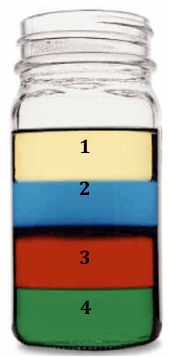
Why do objects sink or float in H2O?
Because their densities are higher or lower than compared to water
Because their densities are using gravity to pull down
Because their densities are heavier or lighter
Because their mass and volumes are equal


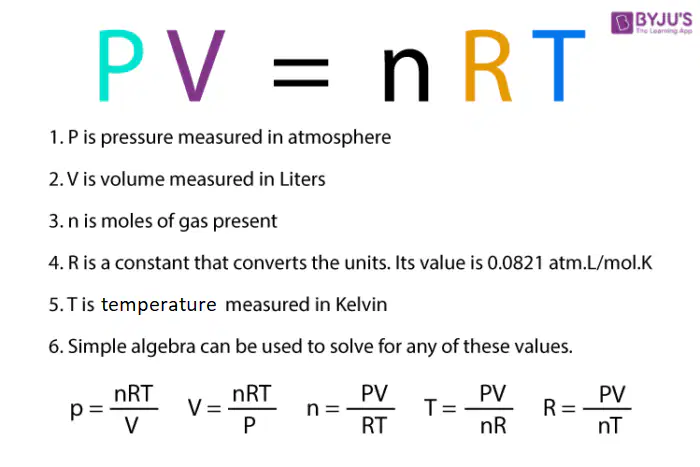
What is the pressure exerted by 5.00 moles of nitrogen gas contained in a 30.0 Liter container at 298 K?