
Font size
 Worksheets
Comprehensive 6th grade science
Total questions: 500
Worksheet time: 6hrs 27mins
Large area of flat grasslands
Plain
River
Ocean
Valley
Large area of a sea or ocean partially enclosed by land.
River
Mountain
Volcano
Gulf
Vast body of salt water.
Ocean
Lake
Valley
Mountain
Land rising high above the land around it.
Valley
Mountain
Lake
Valley
Land surrounded completely by water.
Gulf
Island
Volcano
Plain
A piece of land surrounded by water on all but one side.
valley
Ocean
Peninsula
lake
Earth with opening that spills lava, rock, and gases.
Volcano
Mountain
Lake
valley
Large inland body of water
Volcano
Plain
Ocean
Lake
Lowland between hills or mountains
Ocean
Valley
River
Gulf
Which one of the following does NOT describe weather?
the force of the wind through the trees
if it is raining or not
the amount of water pollution in a lake
the number of clouds there are in the sky
Which of the following best describes the difference between weather and climate?
Weather happens in your state, and climate happens in your country.
Weather includes the wind and rainfall, whereas climate only describes the temperature.
Weather can be predicted but climate cannot.
Weather describes conditions such as wind and rain at a particular time, whereas climate describes typical seasonal conditions.
What is the main cause of deepwater ocean currents?
freshwater rivers and streams flowing into the ocean.
wind, caused by variations in air pressure, blowing on water.
differences in water density because of variations in water temperature and salt concentration.
the Coriolis effect: Earth's rotation causing the water in the oceans to move.
What substances make up most of the atmosphere?
nothing except sometimes clouds
gases such as nitrogen, oxygen, argon, and water vapor
tiny particles of pollution from cars and other machines
greenhouse gases such as carbon dioxide and methane
Which one of the following statements about Earth's atmosphere is TRUE?
The temperature in the atmosphere increases as it gets closer to the Sun.
The air pressure increases as you go up in the atmosphere.
The atmosphere has different temperatures and pressures at different altitudes.
The atmosphere has the same temperature and pressure at all altitudes.
Which one of the following factors does NOT influence climate?
ocean currents
the Sun's energy
global wind patterns
soil composition
Most of the water on Earth is found in which of the following locations?
oceans
the atmosphere
groundwater
lakes and rivers
Which of the following is a major factor in Earth's current global warming?
stronger hurricanes
burning of fossil fuels
increase in volcanic activity
increase in Sun's brightness
If you start at the equator and head north, on average the climates will get
drier
cooler
wetter
warmer
Approximately what percentage of Earth's surface is covered with water?
30%
50%
70%
90%
What type of instrument is used to measure wind speed?
wind vane
speedometer
the Beaufort scale
anemometer
Your friend argues that underwater volcanic activity is the main cause of increased ocean temperatures over the past 100 years. Which of the following is the best way to evaluate your friend's argument?
Plan and conduct an investigation to test your friend's claim.
Ask your friend questions to identify which supporting evidence they have.
Build a model to generate data on your friend's claim.
Agree with your friend because underwater volcanic activity would generate thermal energy, which would cause the temperature of the oceans to rise.
Which of the following scientists studies the distribution and movement of Earth's water?
climatologist
hydrologist
meteorologist
atmospheric scientist
How do ocean currents affect climates around the world? (Select all that apply)
Ocean water moves in currents that transfers energy, which can affect climates.
Oceans regulate the temperatures of coastal regions, keeping the regions mild.
Ocean water heats and cools much more quickly than land temperatures do.
The oceans store large amounts of thermal energy and move that energy around Earth in large ocean currents.

Which location has the driest climate?
Location A
Location B
Location C
Location D

Use the table to answer which location has the wettest climate?
Location A
Location B
Location C
Location D

Use the table to answer the question. Each location has an average annual temperature above 18ºC (64ºF). Which location is most likely to have a tropical climate?
Location A
Location B
Location C
Location D
Which one of the following are not used to measure or describe the weather?
Temperature
Wind Direction and Speed
Mountain
Precipitation

Water in its gas form is called ____________________,
water vapor
precipitation
ice
air
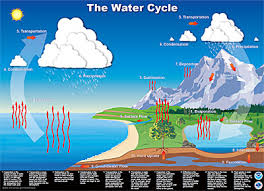
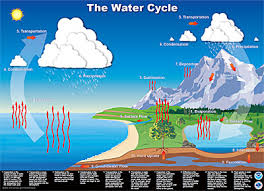


Gravity causes ___________________ to occur.
condensation
precipitation
evaporation
none of the above
This provides the power to keep the water cycle running.
The Sun
The Earth
The wind
living things
Which example is a form of precipitation?
Dew
Fog
Frost
Hail
Rain and snow are two different forms of precipitation that fall on Earth's surface. Which factor is responsible for there being different forms of precipitation?
Evaporation
Run-off
Temperature
Transpiration
Groundwater moves from a lower elevation to a higher elevation.
true
false
Aquifers are __________.
not a part of the water cycle
underground water
caused by evaporation
none of the above
What causes condensation?
is not part of the water cycle
water vapor does not change and becomes a liquid
water vapor heats up and becomes a liquid
water vapor cools and becomes a liquid

What is wind?
The movement of water due to pressure differences
The movement of air due to pressure differences.
The movement of air due to pollution differences
The movement of water deep in the ocean

Air moves from areas of _____ pressure to areas of ____ pressure.
high, low
low, high

Cold air is _______ dense than warm air.
more
less
the same as

Warm air is _____ dense than cold air.
more
less
the same as

Warm air _______ and cold air _______.
sinks, rises
rises, sinks

Winds move in a curved pattern called
Tradewinds
The doldrums
The Coriolis Effect
Easterlies

Winds that blow steadily from specific directions over long distances are called
Sea breezes
Land breezes
Jet streams
Global Winds
Three types of global winds are:
Tradewinds
Sea Breezes
Polar Easterlies
Prevailing Westerlies
Land breezes

Winds that blow over short distances are called
Local winds
Global winds
Doldrums
Coriolis Effect

A narrow belt of high speed winds that blow from west to east, between 7 km and 16 km above Earth’s surface is called
a jet stream
the doldrums
the Coriolis effect
global winds

Which absorbs heat the fastest?
Land
Water

Continental air masses are located above
land
water

Maritime air masses are located above
land
water

Polar air masses are
hot
cold
medium temperature
Tropical air masses are
hot
cold
medium tempertaure

Weather events (clouds, rain, storms) occur along the edges of air masses at boundaries called
Coriolis effect
fronts
sea breezes
jet streams

Surface ocean currents are caused by
water temperature
water density
salinty
Global winds

Deep ocean currents are driven by
global winds
salinity
water temperature
the Coriolis effect
An _________ is a large body of air that travels in one direction due to pressure.
Front
Air mass
Ocean current
Global winds don’t blow in straight north/south lines, due to....
Atmosphere
Clouds
Coriolis Force
None of the above
What is the main cause of the Coriolis Effect?
Temperature
Trade Winds
Earth’s Rotation
The Sun and Ocean
What does the Coriolis Effect impact?
Wind Speed
Wind Direction
Small Scale Objects
Bodies of Water
What does the Coriolis Effect help to directly develop in circular motion?
Tornadoes
Thunderstorms
Hurricanes
Floods
A polar air mass will have what kind of air in it?
Warm
Cold
Humid
Dry
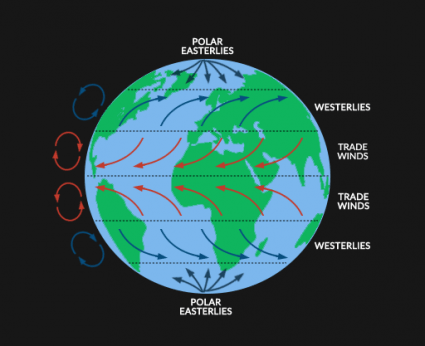
what is the coriolis effect?
change in location of warm and cold surface water every 2-7 years
tendency of objects moving large distances on Earth’s surface to bend to the right in the northern hemisphere & to the left in the southern hemisphere
winds in northern Indian ocean that blow from the southwest in the summer & from the northeast in winter
two layers of horizontal winds moving in opposite directions

Using one or more senses to gather information is called ...
hypothesis
observation
conclusion
problem

An educated prediction that can be tested is a/an
theory
hypothesis
problem
conclusion

Which of the following is an example of data?
measurements
conclusion
theories
materials

Observations that deal with a number or amount are called
manipulated observations
quantitative observations
qualitative observations
operational observations

The rock has bands of black, white and grey is an example of this type of observation.
manipulated observations
quantitative observation
qualitative observation
operational observation

The statement that correctly lists the steps of the scientific method in order is ______
ask a question- research-conclusion-form hypothesis
form hypothesis- ask a question- gather and analyze data- share
design experiment- research-ask a question
form hypothesis- design experiment- gather and analyze data- conclusion

The steps commonly used by scientists in gathering information to test hypotheses and solve problems are called _____.
descriptive research
pure science
applied science
scientific method

In a scientific experiment, the one variable that is changed by the scientist to test a hypothesis is called the _________________________ variable.
dependent
independent
controlled
problem

The _________________________ is the base metric unit of liquid volume.
liter
meter
gram
pound

For ease of understanding, scientists report measurements using the ______________ system.
dependent
science
English
SI or metric

A _________________________ is a visual display of information or data.
line
gram
graph
circle
A ________________ graph is used to show trends in data over time.
line
circle
bar
graph

____________ is the prefix meaning 1000.
milli-
kilo-
mega-
centi-

A process that uses observation and experimentation to gain knowledge about events in nature is _________________________.
gram
scientific method
experiment
science

Which prefix means hundredth?
milli-
deci-
centi-
hecto-

What type of data does the picture represent?
qualitative
quantitative
counting
scientific

What is the name of this piece of equipment?
beaker
graduated cylinder
test tube
flask

What is this piece of equiment used for?
measuring mass
measuring volume
holding liquids
mixing liquids
Mass is measured in
liters
grams
centimeters
pounds
It is safe to taste any substance to correctly identify it.
true
false

According to the circle graph, what is the favorite pizza topping?
cheese
supreme
sausage
pepperoni

According to the graph, what is the nicest fruit?
blueberry
apple
orange
banana

What was the highest temperature reached?
40F
30F
50F
60F
What variable goes on the x-axis?
independent
dependent
variable
control
You do not have to wear safety glasses when working with chemicals.
true
false
Which of these best describes an experiment?
mathematical analysis of data
observation of animals in their natural world
collection of data from an uncontrolled environment for comparative purposes
procedure with controlled conditions and test and outcome variables
Which piece of equipment are used to measure length?
balance
ruler
graduated cylinder
thermometer
Which property of vinegar can you observe through sense alone?
has a sour, acidic taste
has a pH greater than that of pure water
has a density greater than that of pure water
conducts an electrical current when dissolved in water
Identifying the Test (Independent) Variable and Outcome (Dependent) Variable in an experiment will help you interpret results. What is the difference between the Test (Independent) and the Outcome (Dependent) Variable in an experiment?
Test Variable changes due to the outcome variable, the Outcome Variable is what is measured in an experiment.
Test Variable changes due to the outcome variable, the Outcome Variable is what stays the same in an experiment.
The Test Variable is what we change in an experiment, and the Outcome Variable is what changes as a result of that change.
The Test Variable is what is measured in an experiment, and the Outcome Variable is what changes as a result of that change.
dependent
control
constant
independent
What are the steps of the Scientific Method?
Make observation & Ask question, Make Hypothesis, Analyze Results or data, Test Hypothesis, Draw Conclusion
Make observation & Ask question, Make Hypothesis, Test Hypothesis, Analyze Data, Draw Conclusion and Communicate Results
Make observation & Ask question, Communicate Results, Make Hypothesis, Analyze Results or data, Test Hypothesis, Draw Conclusion
Communicate Results, Make observation & Ask question, Make Hypothesis, Analyze Results or data, Test Hypothesis, Draw Conclusion
A force that one object can apply to another object without touching is?
Gravity
Noncontact Force
Friction
Contact Force
Does attraction increase or decrease if the mass increases?
Decreases if one or both masses increase
Increases if only one mass increases
Decreases if only one mass increases
Increase if one or both masses increase
Does attraction between objects increase or decrease with increasing distance?
Increase
Decrease
Is gravity a contact or noncontact force?
(a)
Astronauts on the Moon can jump higher than if they were on Earth. This is because
the astronauts are less massive on the Moon.
there is no friction on the Moon.
Newton's laws of motion do not apply to the Moon.
the Moon is less massive than the Earth

According to the law of universal gravitation, any two objects are attracted to each other. The strength of the gravitational force depends on the masses of the objects and their distance from each other. Many stars have planets around them. If there were no gravity attracting a planet to its star, the planet's motion would carry it away from the star. However, when this motion is balanced by the gravitational attraction to the star, the planet orbits the star. Two solar systems each have a planet the same distance from the star. The planets have the same mass, but Planet A orbits a more massive star than Planet B. Which of the following statements is true about the planets?
Planet A orbits its star faster than Planet B.
Planet A has a longer year than Planet B.
Planet B is more attracted to its star than Planet A.
Planet B will keep orbiting its star longer than Planet A
Which of the following exists around every object that has mass?
magnetic poles
electric charges
a magnetic field
a gravitational field
Which of the following is true of Earth's gravity?
It pulls objects toward the Earth's surface without touching them.
It only has an effect on objects farther than ten meters from the Earth's surface.
It pushes objects away from the Earth's surface without touching them.
It only has an effect on the Moon and the Sun.

The data above were collected by scientists testing the force of gravity between two objects. What does the data in the table support?
The force of gravity only depends on the object with less mass.
The force of gravity only depends on the distance between the objects interacting.
The force of gravity depends on the masses of the objects interacting.
The force of gravity only depends on the object with more mass.
Which of the following statements explains why the Earth has a gravitational field?
It is revolving around the Sun.
It is rotating on its axis.
It has mass.
It has an electric charge.
In which situation is the gravitational force between two objects hard to detect?
if the mass of each object is very small
if the mass of both objects is very great
if the mass of one of the objects is very great
if the objects are very close together
Why does the Sun gravitationally dominate all other objects in the Solar System?
The Sun is by far the brightest object in the Solar System.
The Sun is by far the most massive object in the Solar System.
The Sun moves at a greater speed than any of the other objects in the Solar System.
The Sun is the closest object to planet Earth.

When a scale is used to weigh an object on Earth, it measures the gravitational force that pulls on the object. The unit for the force of gravity pulling on an object is the newton (N). A student uses a scale to measure the force of gravity on 5 different objects, each with a mass of 20, 40, 60, 80, and 100 grams. She plotted her data on the graph shown above. What does the data show?
The greater the mass of an object, the greater the gravitational pull exerted on it by Earth.
An object gains mass when the gravitational force on Earth remains the same.
The smaller the mass of an object, the greater the gravitational pull exerted on it by Earth.
An object loses mass when the gravitational force on Earth remains the same.

Scientists are observing and recording data for two different planets, planet X and planet Y. Each planet orbits a different star. The planets have the same mass. The scientists record the following data. Which of the following statements is most likely true?
The star close to planet Y has less mass.
The star close to planet Y is hotter.
The star close to planet Y is cooler.
The star close to planet Y has more mass.
Emma hits a baseball into the air. While the ball is flying through the air, which of the following objects is pulling on it with a gravitational force?
the Sun
the bat
the Earth
all of these
Which of the following statements is true?
Only objects that are very close together exert gravitational forces on each other.
Objects can only exert gravitational forces if they are at least as dense as water.
Any object with mass exerts a gravitational force on all other objects.
Only objects that are as large as planets exert gravitational forces on other objects.
__________ is the attractive pull between any two objects
Atmospheric pressure
Gravity
Inertia
Friction
Gravity keeps
the planet Mars in orbit around the Sun.
moons in orbit around the planet Saturn.
the Moon in orbit around Earth.
all of these
Which statement best describes two objects experiencing a gravitational interaction?
The objects can only attract each other and the force depends on their masses.
The objects can attract and repel each other and the force does not depend on their masses.
The objects can attract and repel each other and the force depends on their masses.
The objects can only repel each other and the force does not depend on their masses.
Which of the following exerts gravity?
only planets, moons, and stars
any object with mass
only objects on Earth
only the Earth
Which of the following best describes a gravitational force?
It can attract or repel two objects.
It only repels two objects.
It does not require objects to have mass.
It only attracts two objects.

A scientist observes and records data for the force of gravity between the Sun and a few different-sized planets. The different-sized planets are placed at the same distance from the Sun. Based on the above scenario, which graph best represents the gravity between the different-sized planets and the Sun?
Z
Y
X
W

Scientists and engineers are testing three different satellites orbiting Earth. The scientists are able to use sensors to determine the gravitational force experienced by each satellite. Some of the data from each of the orbiting satellites is shown in the table above. Which statement best summarizes the information given?
The gravitational force on the satellite depends only on the distance from Earth at which it is traveling.
The satellite with the least amount of mass is able to exert greater gravitational force on Earth than the others.
The gravitational force exerted by Earth changes the mass of each of the satellites.
The gravitational force exerted by Earth on the satellite depends on the satellite's mass.
All objects anywhere on or near the Earth are
pulled toward Earth by the force of gravity.
held in place by several forces pushing and pulling on them.
pushed away from Earth by the force of repulsion.
spun in a counterclockwise direction by magnetic forces.
When placed at equal distances apart, the greatest gravitational attraction will be between two
skateboards
bowling balls
school buses
Which is needed to determine the amount of gravitational force between two objects?
distance and mass
weight and time
area and weight
The gravitational force exerted by an object depends on its
volume
mass
weight
A student drops a bowling ball and an apple from a third-story window. Both objects hit the ground at the same time. From the experiment, the student should conclude that
the apple weighs more than the bowling ball
more air friction is acting on the apple than on the bowling ball
gravity pulls on both objects, causing them to fall at the same time.
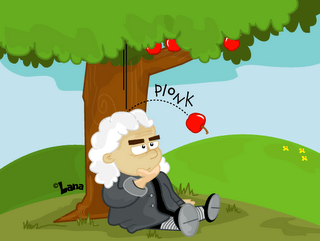

What is the relationship between mass and gravitational pull?
Higer mass creates higher gravitational pull
Lower mass creates higher gravitational pull
Lower gravitational pull creates more mass
Which of the following data would support the claim that the gravitational force between objects depends on mass?
A rocket can escape Earth’s gravity by traveling at high speed.
Gravitational force is stronger on more massive planets.
The further a planet is away from the sun, the smaller the gravitational force.
An object’s weight can change depending where it is on Earth.
Which of the following does not affect the gravitational force between the earth and the sun?
The net electrical charge of the earth
The distance between the earth and the sun
The mass of the sun
The mass of the earth
An astronaut way out in space is considered to be “weightless". This is because–
his mass is so small relative to the earth that gravity doesn’t affect him.
gravitational force decreases greatly over long distances.
gravitational force pushes objects away from each other at long distances.
objects far away from the earth have less mass.
Which statement is true?
All objects with mass exert a gravitational force.
Only celestial objects exert a gravitational force.
Gravity can both push and pull objects.
Only Earth exerts a gravitational force.
The push or pull between two objects
attract
mass
force
gravitational force
The matter in an object, which affects gravitational forces
attract
mass
gravitational force
force
Objects being pulled together
gravitational force
attract
mass
force
The force between two masses
gravitational force
force
mass
attract
A change in an object's position, direction or location
Position
Force
Motion
Inertia
A measurement of distance over time
speed
acceleration
force
distance
The measurement of speed and direction of an object
speed
velocity
acceleration
average speed
a change in an objects speed or direction
speed
velocity
acceleration
motion
What is the speed formula?
d = s*t
s= time/distance
d= speed/time
s = distance/time
What is force?
a push or a pull
motion
acceleration
interaction
An object at rest stay at rest and an object in motion stays in motion until acted upon by an unbalanced force.
Newton's 3rd Law
Force
Newton's 2nd Law
Newton's 1st Law
The acceleration of an object as produced by net force. F = m*a
Newton's 1st Law
Motion
Newton's 2nd Law
Newton's 3rd Law
For every action there is an equal and opposite reaction.
Newton's 2nd Law
Newton's 1st Law
Newton's 3rd Law
None of the above
What units is Force measured in?
Grams
Miles
Hours
Newtons
Equal forces that do not cause a change in an objects motion
Unbalance force
Push or a pull
Balanced force
Average speed
Are unequal forces that cause a change in the motion of an object
Balanced forces
Unbalanced forces
Inertia
Gravity
The overall force exerted on an object; measured in Newtons.
Balanced forces
Unbalanced forces
Net forces
Newtons
The overall speed of an object during the entire course of a trip
Velocity
Average speed
Acceleration
Gravity
The force that attracts objects to the center of the Earth
Friction
Air resistance
Motion
Gravity
What is the definition of motion?
The amount of gravity depends on two things.
A change in the position of an object over time.
The force of attraction between all objects.
The attractive or repulsive force between any two charged objects.
How do you know something is in motion or has moved?
By the weight of the object.
By the force of push or pull.
By the roughness of the surface.
By using a reference point.
What causes an object to move?
The force of attraction between all objects.
The amount of gravity depends on two things.
A push or a pull.
The attractive or repulsive force between any two charged objects.
What is a force?
A push or a pull.
The attractive or repulsive force between any two charged objects.
The amount of gravity depends on two things.
The force of attraction between all objects.
Can more than one force act on an object at the same time?
Yes, because the roughness of the surface affects the amount of force.
Yes, because the total combination of the forces acting on an object is called net force.
Yes, because the force of push or pull affects the amount of force.
Yes, because the weight of the object affects the amount of force.
What is a balanced force?
A force in which the net force equals zero.
A force that opposes the motion of an object.
A force in which the net force is greater than zero.
A force that causes a change in speed or direction.
What is an unbalanced force?
A force in which the net force equals zero.
A force that opposes the motion of an object.
A force that causes a change in speed or direction.
A force in which the net force is greater than zero.
What is the 1st Law of Motion according to Newton?
The force of attraction between all objects.
The law of inertia.
The force of push or pull.
The force of friction.
What is inertia?
The force that opposes the motion of an object.
The force of push or pull.
The tendency of objects to resist a change in motion.
The force of attraction between all objects.
What is friction?
The tendency of objects to resist a change in motion.
A force that opposes the motion of an object.
The force of push or pull.
The force of attraction between all objects.
What is Newton's First Law of Motion?
Every action has an equal and opposit reaction
Objects in motion stay in motion/Objects at rest stay at rest until an outside force acts on it
A force is required to accelerate an object with a known mass
What is Newton's Second Law of Motion?
Every action has an equal and opposite reaction
Objects in motion stay in motion/objects at rest stay at rest until an outside force acts on it
A force is required to accelerate an object with a known mass
What is Newton's Third Law of Motion?
Every action has an equal and opposite reaction
Objects in motion stay in motion/objects at rest stay at rest until an outside force acts on it
A force is required to accelerate an object with a known mass
A frog pushes his legs down on a lily pad, but yet the direction he travels is upwards. Which law explains this?
Newton's First Law
Newton's Second Law
Newton's Third Law
The Swimmer moves her hand down and to the left and her body moves forward and to the right
Newton's first law
Newton's Second Law
Newton's Third Law
A person in a car slides to the right when going through a very sharp left turn on the highway
Newton's First Law
Newton's Second Law
Newton's Third Law
A car is placed in neutral and on flat ground not moving. The car weighs 800 pounds. If a force of 40 N is applied to the front of the car and a force of 30 N is applied to the back of the car, what will happen?
The car will not move
The car will move forward
The car will move backwards
The car will flip over
The speed and direction of an object is it's ___________.
Momentum
Velocity
acceleration
Inertia
Anything that turns or changes it's direction (including things in orbit) is ___________.
Going a constant speed
moving
accelerating
decelerating
If the forces acting on an object are unbalanced, then the object must be ____________.
balanced
at rest
accelerating
momentum
Which of Newton's laws explains why an object in space will stay in motion once it starts moving?
Newton's first law
Newton's second law
Newton's third law
A person’s body is thrown outward as a car rounds a curve on a highway.
Newton's 1st Law
Newton's 2nd Law
Newton's 3rd Law
None of them
Force is measured in _______________
Newtons
Kg
m/s2
A sports car speeds up much faster than a dump truck when a traffic light turns from red to green. Which law is this?
Law 1
Law 2
Law 3
A rocket pushes burning gases DOWN which causes the rocket to launch UP. Which law is this?
Law 1
Law 2
Law 3
Newton's Second Law States: That Acceleration is equal to the net force on an object divided by the object's _________
mass
time
speed
force
Newton's Third Law States: For every action, there is an opposite and equal reaction.
False
True
The list describes six different situations.
1. A pendulum moving back and forth
2. A toy car rolling down a ramp
3. An airplane traveling at a constant velocity of 500 km/h north
4. A raindrop falling on a leaf
5. A marble sitting on a table
6. A hockey puck sliding across the ice at constant velocity
Which objects in the list are experiencing balanced forces?
The pendulum, the toy car, and the hockey puck
The airplane, the marble, and the hockey puck
The toy car, the raindrop, and the marble
The pendulum, the toy car, and the raindrop
Which of the following could occur when the net force acting on a car is zero?
The car changes speed from 0 m/s to 20 m/s
The car slows down while turning a corner
The car travels at a constant speed of 20 m/s
The car changes speed from 20 m/s to 0 m/s

Are the forces acting on the object balanced or unbalanced? The man does a flip on the fly board.
(a)

How will this object move?
It will not move
It will move in both directions
It will move to the right
It will move to the left

How will this object move?
It will not move
It will move in both directions
It will move to the right
It will move to the left
Shadell pushes a box 35 N to the right. Nazai pushes the box 25 N in the same direction. What is the net force?
(a)

What is net force?
(a)

Balanced or Unbalanced
(a)

What is the net force?
(a)
Which of the answer choices is not a characteristic of a balanced force?
no change in motion
moving at a constant speed
causes a change in motion
net force of zero

If an object is not moving the forces acting upon it are (a)

A (a) is a push or a pull on an object.
Balanced forces causes
speed of an object
change in motion
no change in motion
no friction on object
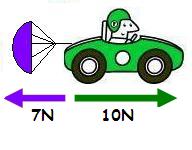


Calculate the net force shown in the diagram?
(a)
What causes the feeling of your stomach churning when you lift up from your seat on a roller coaster?
Magnetism
Friction
Gravity
Inertia
What is the force that pulls us down toward the center of the earth?
Magnetism
Friction
Buoyancy
Gravity
What is the property by which an object at rest tends to stay at rest until a force acts upon it?
Velocity
Inertia
Acceleration
Momentum
At what G force may a person suffer a nose bleed?
2 Gs
5 Gs
4 Gs
3 Gs
What do amusement park ride engineers make sure of when designing rides?
Maximum duration
Maximum speed
Maximum height
Maximum G force
What do astronauts experience when they finally exit Earth's atmosphere?
Quadruple gravity
Triple gravity
Double gravity
Zero gravity
What force are astronauts put through during training for space?
Buoyancy force
G force
Magnetic force
Friction force
What is the force of gravity on an object on Earth?
4 G
3 G
2 G
1 G
What is the force that causes the man's face to be lifted up and back in the wind tunnel experiment?
Magnetism
Buoyancy
Friction
G force
What is the force that causes the man's skin to be pulled up against his bones in the wind tunnel experiment?
Inertia
G force
Acceleration
Momentum
The Law of Conservation of Energy states:
Energy can created or destroyed but not transformed
Energy cannot be created or destroyed, it can only transformed from one form to another form
Energy can't be created, destroyed or transformed
All the above

Energy can not be created nor destroyed.
Newton's Laws of Motion
Big Bang Theory
The Law of Conservation of Momentum
The Law of Conservation of Energy
The Law of Conservation of Energy is also known as:
First Law of Thermodynamics
Second Law of Thermodynamics
Third Law of Thermodynamics
None of the above
Which type of energy has to do with objects in motion?
Potential
Kinetic

Which of these has the most potential energy.
A
B
C
D
If a football player wants to become better at tackling by increasing his or her kinetic energy, how can the player do this?
Increase his/her height
Increase his/her speed
Increase his/her mass
Decrease his/her speed
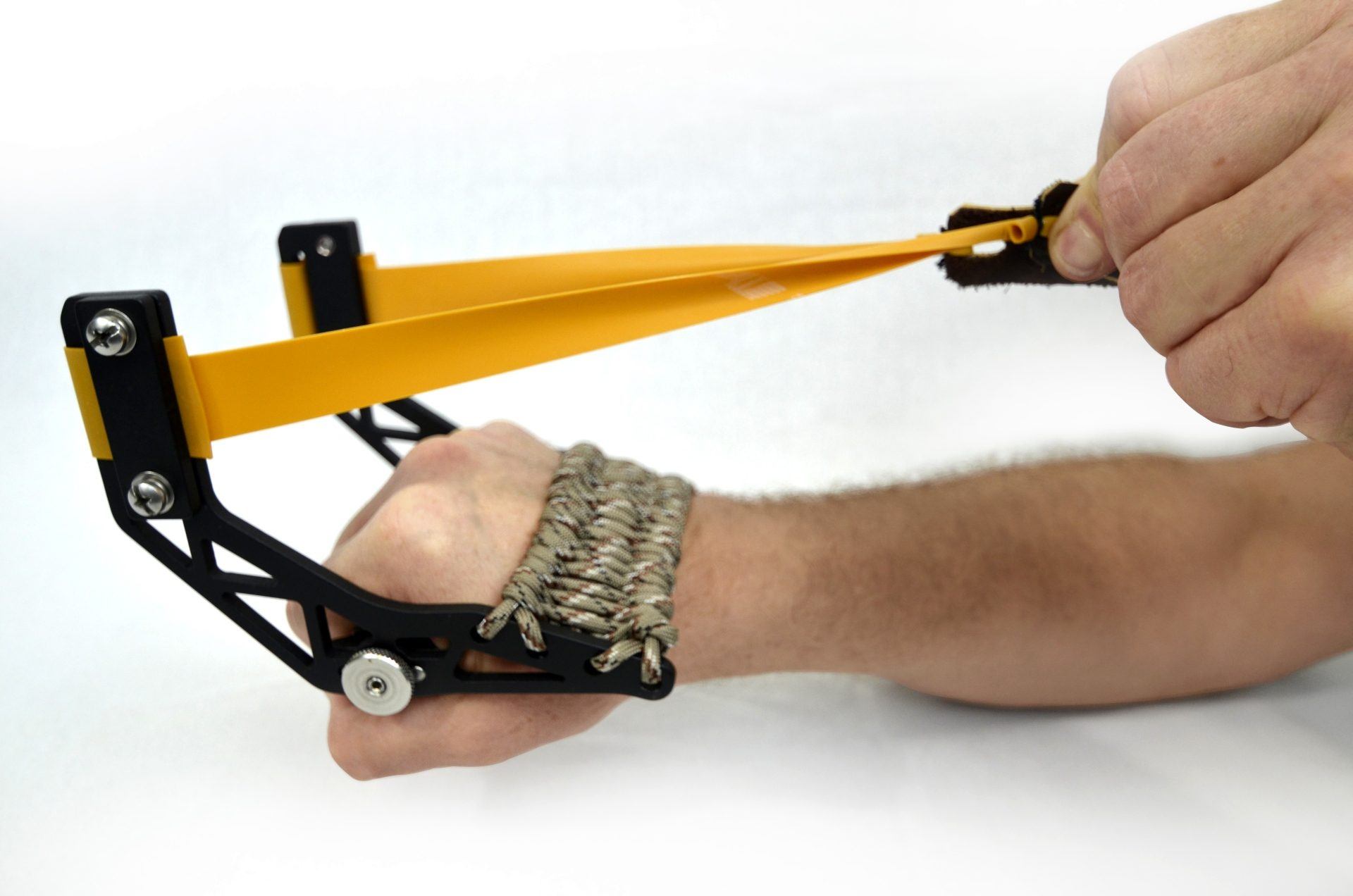


When you compress a spring, you are storing __________ energy.
sound
elastic
light
chemical


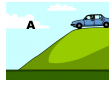
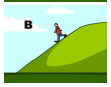
Which passenger has the most potential energy?
A
B
C
D

The formula for calculating the gravitational potential energy in an object is shown above. Which object will have the largest value for its GPE
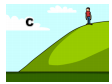
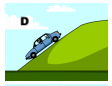
If these are all moving at the same speed, the vehicle with the greatest KE would be
(Think about their sizes)


Determine whether the following example is Potential Energy (PE) or Kinetic Energy (KE):
flashlight turned off
Potential Energy
Kinetic Energy

Calculate the speed of a car that travels 200 meters in 20 seconds.
5 m/s
15 m/s
10 m/s
25 m/s
A train travels 500 meters in 25 seconds. What is its speed?
30 meters per second
10 meters per second
20 meters per second
50 meters per second
Graph the distance versus time for a car that travels 100 meters in 10 seconds.
A vertical line at 10 s
A straight line with a slope of 10 m/s
A horizontal line at 100 m
A curved line with a slope of 5 m/s
Draw a distance-time graph for a bicycle that covers 300 meters in 30 seconds.
A curved line with a slope of 5 meters per second
A straight line with a slope of 10 meters per second
A horizontal line with a slope of 0 meters per second
A zigzag line with a slope of 15 meters per second
Interpret the distance-time graph where the line is horizontal.
The object is moving in a circular path
The object is not moving
The object is moving at a constant speed
The object is accelerating
Explain the meaning of a steep slope on a distance-time graph.
Slow speed or rate of change in distance over time
No movement or change in distance over time
Negative speed or rate of change in distance over time
Fast speed or rate of change in distance over time
What is the average speed of a runner who covers 400 meters in 50 seconds?
5 meters per second
40 meters per second
8 meters per second
10 meters per second
Calculate the average speed of a boat that travels 600 meters in 120 seconds.
5 m/s
10 m/s
3 m/s
8 m/s
What is the difference between velocity and speed?
Velocity is a measure of distance, while speed is a measure of time.
Velocity is always constant, while speed can vary.
Velocity includes direction, while speed does not.
Velocity is used for objects in motion, while speed is used for stationary objects.
A car travels at a speed of 60 km/h. How long will it take to cover a distance of 180 km?
2.5 hours
3 hours
5 hours
4 hours
What is the primary function of the major systems of the human body as described in the learning material?
To perform individual tasks without interacting
To maintain homeostasis
To provide energy to the body
To regulate body temperature only
What is one of the functions of the cardiovascular system?
To produce blood cells
To carry food, water, oxygen, and other needed substances to the body's cells
To regulate body temperature
To control muscle contractions
What is another function of the cardiovascular system?
To synthesize vitamins
To digest food
To carry waste products away from the body's cells
To send nerve signals to the brain
What is the function of the right atrium in the circulatory system?
It pumps oxygen-rich blood to the rest of the body.
It receives oxygen-poor blood from the body and pumps it into the right ventricle.
It pumps oxygen-rich blood into the left ventricle.
It prevents blood from flowing backward.
What does the left ventricle do?
It receives oxygen-poor blood from the body.
It pumps oxygen-poor blood to the lungs.
It pumps oxygen-rich blood to the rest of the body via the aorta.
It prevents blood from mixing with oxygen-poor blood.
What is the role of the septum in the heart?
It sends a signal that makes heart muscle cells contract.
It pumps blood throughout the body.
It is a flap of tissue that prevents blood from flowing backward.
It separates the left side of the heart from the right side and prevents oxygen-rich blood from mixing with oxygen-poor blood.
What is the function of the pacemaker in the heart?
It is a group of cells in the right atrium that send a signal that makes heart muscle cells contract, making the heart beat.
It receives oxygen-rich blood from the lungs.
It pumps oxygen-poor blood to the lungs.
It is a flap of tissue that prevents blood from flowing backward.
What is the purpose of the valve in the circulatory system?
It pumps blood throughout the body.
It separates the left side of the heart from the right side.
It is a flap of tissue that prevents blood from flowing backward.
It sends a signal that makes heart muscle cells contract.
What is the function of arteries in the circulatory system?
To carry blood away from the heart
To carry blood back to the heart
To exchange substances between blood and body cells
To prevent blood from flowing backward
What are capillaries?
The largest artery in the body
Blood vessels that carry oxygen-poor blood from the right side of the heart to the lungs
Tiny vessels where substances are exchanged between the blood and body cells
A major vein that carries blood from the lower body to the heart
Which vessel is known as the largest artery in the body?
Pulmonary artery
Aorta
Superior Vena Cava
Inferior Vena Cava
What is the role of the pulmonary veins in the circulatory system?
They carry oxygen-rich blood from the lungs to the heart
They carry oxygen-poor blood from the heart to the lungs
They carry blood away from the heart
They exchange substances between blood and body cells
What is the function of the valve in the circulatory system?
To exchange substances between blood and body cells
To carry blood back to the heart
To carry blood away from the heart
To prevent blood from flowing backward
What is the function of plasma in the blood?
It is a type of white blood cell.
It is responsible for carrying oxygen and carbon dioxide.
It is the liquid part of the blood, composed mostly of water.
It plays an important role in forming blood clots.
What is the primary role of red blood cells (RBC)?
They fight against infectious diseases.
They are involved in protecting the body against foreign invaders.
They carry oxygen to other cells in the body.
They play an important role in forming blood clots.
What is hemoglobin?
A type of white blood cell.
A cell fragment that plays an important role in forming blood clots.
A protein that binds chemically to oxygen which colors our blood red.
A type of RBC responsible for carrying oxygen and carbon dioxide.
What are leukocytes commonly known as?
Platelets.
Erythrocytes.
Red blood cells.
White blood cells.
What is the role of platelets in the circulatory system?
They are involved in protecting the body against foreign invaders.
They are responsible for carrying oxygen and carbon dioxide.
They are the liquid part of the blood.
They play an important role in forming blood clots.
Where is the heart situated in the body?
Below the lungs
Between the lungs, protected by the ribcage
Above the lungs
Outside the ribcage
What is the function of the heart?
To digest food
To pump blood to the lungs and to the rest of the body
To filter blood
To store oxygen
What does the heart do with the oxygenated blood?
The heart stores the oxygenated blood
The heart pumps the oxygenated blood to the rest of the body
The heart sends the oxygenated blood back to the lungs
The heart cools down the oxygenated blood
What is the function of the right atrium in the heart?
It pumps blood into the aorta
It receives oxygenated blood from the lungs
It receives deoxygenated blood from the body
It pumps blood to the lungs
Through which valve does blood flow after leaving the right ventricle?
Aortic valve
Pulmonic valve
Mitral valve
Tricuspid valve
Where does the blood travel after passing through the left pulmonary veins?
Right atrium
Left atrium
Right ventricle
Left ventricle
What is the role of the aorta in the circulatory system?
It carries deoxygenated blood to the lungs
It carries oxygenated blood to the body
It receives blood from the pulmonary artery
It collects blood from the pulmonary veins
What is the function of arteries in the circulatory system?
To carry oxygenated blood away from the heart
To carry blood from the capillaries back to the heart
To enable the exchange of oxygen with the body
To re-oxygenate the blood in the lungs
What role do capillaries play in the circulatory system?
They carry deoxygenated blood to the lungs
They enable the exchange of oxygen with the body
They pump blood through the heart
They carry oxygenated blood away from the heart
What is the primary function of veins in the circulatory system?
To carry blood from the capillaries back to the heart to be pumped to the lungs
To carry oxygenated blood away from the heart
To enable the exchange of oxygen with the body
To re-oxygenate the blood in the lungs
How many times does the human heart beat in one day?
About 10,000 times
About 35 million times
About 100,000 times
About 2.5 billion times
Approximately how many times will the human heart beat during an average lifetime?
About 100,000 times
About 35 million times
About 2.5 million times
More than 2.5 billion times
How much force does the heart use to pump blood compared to giving a tennis ball a good, hard squeeze?
Less force than squeezing a tennis ball
The same amount of force as squeezing a tennis ball
Twice the amount of force as squeezing a tennis ball
No force is used to pump blood
Compared to the leg muscles of a person sprinting, how hard do the heart muscles work even at rest?
Half as hard
The same
Twice as hard
Not at all
What is the range of a resting pulse for a child?
50 to 70
90 to 120
60 to 100
70 to 110
Which system is primarily responsible for the removal of waste products from the body?
Circulatory System
Nervous System
Excretory System
Respiratory System
What is the main function of the digestive system as shown in the image?
To transport oxygen
To control body temperature
To digest and absorb nutrients
To send neural signals
What is the primary function of the digestive system?
To circulate blood throughout the body
To remove waste from the body
To absorb nutrients from food
To control body temperature
Which system is responsible for removing waste from the body?
Circulatory system
Immune system
Excretory system
Musculoskeletal system
How do the digestive and excretory systems work together?
By circulating blood and oxygen
By processing nutrients that enter the bloodstream and removing waste
By controlling body movements
By enhancing sensory functions
What is the primary function of the digestive system?
To provide sensory information to the brain
To break down food and turn it into energy and nutrients
To pump blood throughout the body
To help the body breathe
What is a calorie defined as in the context of food?
A unit measuring the weight of food
A type of nutrient found in food
The amount of energy needed to raise the temperature of one gram of water by one Celsius degree
A measure of how much food you should eat in a day
What do nutrients in food provide to the body?
The flavor and texture of the food
The substances that provide the raw materials and energy for essential processes
The ability to digest other foods more quickly
The means to eliminate waste from the body
How many kinds of nutrients are necessary for human health?
4
5
6
7
Which of the following is NOT listed as a type of nutrient necessary for human health?
Carbohydrates
Proteins
Fiber
Minerals
What are carbohydrates mainly composed of?
Nitrogen, oxygen, and carbon
Carbon, hydrogen, and oxygen
Carbon, oxygen, and potassium
Hydrogen, oxygen, and nitrogen
What is glucose?
A complex carbohydrate
A type of fiber
A simple carbohydrate
A protein
What is fiber found in?
Animal products
Plant foods
Dairy products
Seafood
What are fats primarily composed of?
Nitrogen, carbon, oxygen
Carbon, oxygen, hydrogen
Carbon, hydrogen, nitrogen
Hydrogen, oxygen, nitrogen
Which type of fats are usually liquid at room temperature?
Saturated fats
Cholesterol
Unsaturated fats
Proteins
What can excessive cholesterol lead to?
Diabetes
Heart disease
Liver failure
Kidney stones
What are proteins made up of?
Fatty acids
Amino acids
Glycerol molecules
Cholesterol units
What is the role of vitamins in the body?
They provide energy for daily activities.
They act as helper molecules in a variety of chemical reactions within the body.
They build and repair body tissues.
They regulate body temperature.
Which of the following is NOT a function of the digestive system?
Breaking down food into molecules.
Absorbing molecules into the blood.
Synthesizing vitamins and minerals.
Eliminating wastes from the body.
What is the most important nutrient?
Vitamins
Minerals
Water
Proteins
What is digestion?
The process by which the body hydrates its cells.
The process by which your body breaks down food into small nutrient molecules.
The process by which nutrients are stored in the body.
The process by which food is chewed and swallowed.
What is absorption?
The elimination of waste products from the body.
The breakdown of food into simpler molecules.
The process by which nutrient molecules pass through the wall of your digestive system into your blood.
The intake of food and liquids through eating and drinking.
What is another name for the digestive tract?
Cardiovascular canal
Alimentary canal
Respiratory tract
Neural pathway
Which of the following is NOT part of the digestive tract?
Liver
Stomach
Esophagus
Small intestine
What organs help in breaking down food with enzymes and chemicals, but are not included in the digestive tract?
Stomach and esophagus
Liver and pancreas
Small and large intestine
Mouth and rectum
Which organ is the starting point of the digestive tract?
Stomach
Mouth
Esophagus
Anus
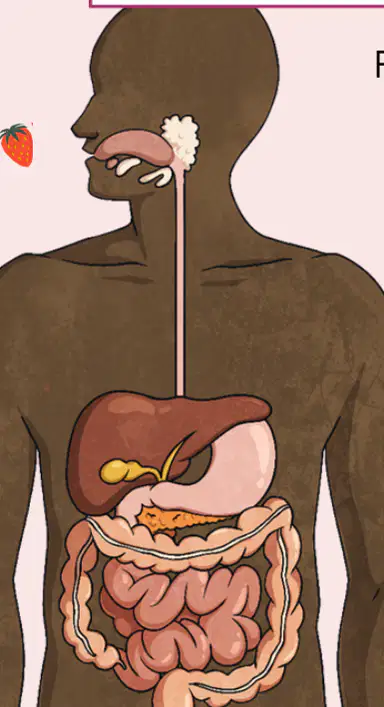
What is the correct sequence of food passage through the digestive tract?
Mouth, esophagus, stomach, small intestine, large intestine, rectum, anus
Mouth, stomach, esophagus, small intestine, large intestine, anus, rectum
Esophagus, mouth, stomach, small intestine, large intestine, rectum, anus
Mouth, esophagus, stomach, large intestine, small intestine, rectum, anus
What is the role of saliva in the digestive system?
It helps in the absorption of nutrients.
It speeds up chemical reactions in the body.
It breaks the food into smaller pieces.
It mixes with food to form a bolus.
What is the function of the enzyme in the digestive system?
It helps in moving food down the esophagus.
It seals off the windpipe to prevent food entry.
It speeds up chemical reactions in the body.
It lubricates the food making it easier to swallow.
What is the purpose of the epiglottis in the digestive system?
It produces a thick, slippery substance.
It breaks down food mechanically.
It seals off the windpipe to prevent food from entering.
It aids in the absorption of food nutrients.
Which term describes the movement of the esophagus walls that helps food move to the stomach?
Bolus
Mucus
Peristalsis
Saliva
What is the primary function of hydrochloric acid in the stomach?
To absorb nutrients
To produce chyme
To break down food and kill bacteria
To move food into the small intestine
Which type of digestion primarily occurs in the stomach?
Chemical digestion
Absorptive digestion
Mechanical digestion
Enzymatic digestion
What is chyme?
A type of enzyme in the stomach
A muscular ring in the stomach
A heavy, pasty liquid created in the stomach
A type of bacteria in the stomach
What role does the sphincter play in the digestive system?
It releases enzymes
It prevents food from returning to the esophagus
It absorbs nutrients
It secretes digestive juices
What happens to the food in the stomach after it is mixed with gastric juices?
It is immediately absorbed into the bloodstream
It forms a liquid called chyme and moves to the small intestine
It solidifies for easier digestion
It is expelled from the body
What is the primary function of the small intestine in the digestive system?
To pump blood throughout the body
To absorb nutrients from digested food
To filter waste from the blood
To produce digestive enzymes
Which part of the small intestine is responsible for absorbing nutrients like vitamin B12 and bile acids?
Duodenum
Jejunum
Ileum
Pancreas
How long is the small intestine?
10-15 feet
22-25 feet
30-35 feet
5-10 feet
What happens to food in the small intestine?
It is stored for future use
It is converted into waste material
It is broken down into simple chemicals
It is cooled down before digestion
Where does the chemical digestion primarily occur in the digestive system?
Stomach
Large intestine
Small intestine
Liver
What is the primary function of the large intestine as described in the text?
To absorb nutrients from food
To break down food particles
To eliminate waste material
To produce bile
What does the liver produce that helps in breaking up fat particles?
Vitamins
Bacteria
Bile
Salt
According to the text, what do the bacteria in the colon help with?
Producing waste
Absorbing salt
Digesting food products
Filtering harmful substances
Which part of the colon is responsible for absorbing fluids and salt?
The first part
The second part
The last part
The middle part
Where is the liver located?
In the lower portion of the abdomen
In the upper portion of the abdomen
Near the heart
Below the lungs
What shape is the pancreas?
Circular
Triangular
Rectangular
Square
What is the primary function of the enzymes produced by the pancreas?
To regulate blood sugar
To produce hormones
To help in digestion by breaking down fat, protein, and starch
To store energy
Which organ is described as pear-shaped and located below the liver?
Pancreas
Gallbladder
Liver
Stomach
Which of the following organs are considered accessory organs of the digestive system?
Liver and stomach
Pancreas and gallbladder
Liver, gallbladder, and pancreas
Stomach and intestines
What is the primary role of bile in the digestive system?
To absorb nutrients
To break down proteins
To break down fats
To produce digestive enzymes
Where is bile stored for later use?
In the liver
In the pancreas
In the gallbladder
In the stomach
Through which tube does bile pass from the gallbladder to the small intestine?
The pancreatic duct
The cystic duct
The bile duct
The hepatic duct
What is the first section of the small intestine where bile enters to help digest fats?
The ileum
The jejunum
The duodenum
The colon
What is the primary function of the stomach in the digestive system as described in the text?
To absorb nutrients from food
To produce hormones that regulate food digestion
To transport nutrients throughout the body
To protect the body from infection
What role do the bacteria in the gut play in immune homeostasis according to the document?
They produce hormones
They absorb nutrients
They influence local and systemic immunity
They transport nutrients
Where does further breakdown and absorption of nutrients primarily occur in the digestive system?
In the stomach
In the small intestine
In the large intestine
In the esophagus
What is the function of Peyer's patches as mentioned in the text?
They regulate the balance of white blood cells
They produce digestive enzymes
They secrete an anti-inflammatory substance
They absorb vitamins and minerals
How long are the intestines in an adult human?
15 feet
25 feet
35 feet
45 feet
How long does it take for food to move through the intestine?
1 hour
3 hours
5 hours
7 hours
What is the maximum time food can stay in the large intestine?
12 hours
18 hours
24 hours
48 hours
Approximately how much peanut butter do Americans consume annually?
700 thousand pounds
700 million pounds
7 million pounds
7 billion pounds
How much chocolate do Americans eat each year?
2 million pounds
20 million pounds
200 million pounds
2 billion pounds
How much weight can the human digestive system handle in a lifetime?
5 tons
15 tons
35 tons
50 tons
What is the primary function of the excretory system as mentioned in the text?
To provide oxygen to the cells
To prevent too much or too little water in the body
To produce metabolic waste
To absorb nutrients
Which of the following is a waste product formed when protein is broken down in the liver?
Oxygen
Glucose
Urea
Hormones
What is carbon dioxide described as in the text?
A nutrient needed by the body
A type of protein
A by-product of cellular respiration
A component of the excretory system
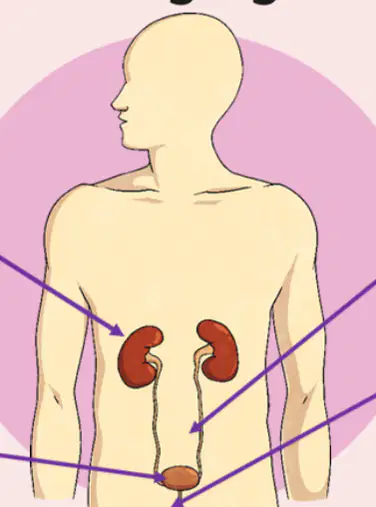
According to the image, which organ is not part of the excretory system?
Kidney
Bladder
Heart
Ureter
What is the role of the organs in the excretory system?
To absorb nutrients and water
To remove harmful metabolic waste products from the blood
To produce metabolic waste
To circulate blood in the body
What is the primary function of the kidneys in the excretory system?
To produce blood
To eliminate urea and other waste materials
To transport oxygen
To absorb nutrients
How many kidneys does a human typically have?
One
Two
Three
Four
What do the ureters connect to in the excretory system?
Kidney to liver
Kidney to bladder
Bladder to urethra
Heart to kidney
What is urine primarily composed of?
Blood cells and oxygen
Nutrients and minerals
Excess water and waste products
Carbon dioxide and salts
What is the approximate size of each kidney?
The size of a pea
The size of a grape
The size of your fist
The size of a football
What is the function of the bladder in the human excretory system?
To filter blood
To collect and store urine before it is excreted
To absorb nutrients
To produce urine
What is the urethra?
A muscle that aids in digestion
A tube that connects the kidney to the bladder
A tube that connects the bladder to the outside of the human body
A type of cell that transports oxygen
Which organ is also known as the urinary bladder to distinguish it from another similarly named organ?
Kidney
Heart
Bladder
Liver
What is the primary function of the kidneys in the excretory system?
To transport oxygen to different parts of the body
To filter blood and remove unwanted substances
To absorb nutrients from digested food
To produce hormones that regulate blood pressure
What happens during the absorption process in the excretory system?
Blood cells are created
Nutrients are absorbed from the food in the intestines
Substances needed by the body are reabsorbed into the blood
Oxygen is absorbed into the bloodstream
What is diffusion in the context of the excretory system?
The process of filtering blood through the kidneys
The movement of molecules from an area of high concentration to an area of lower concentration
The exchange of gases in the lungs
The absorption of water in the large intestine
What is the role of nephrons in the kidneys?
To pump blood throughout the body
To carry oxygen to tissues
To remove wastes from blood and produce urine
To absorb nutrients from digested food
What occurs during the excretion process in the excretory system?
Blood is pumped to the heart
Urine is stored in the bladder and then expelled from the body
Nutrients are absorbed into the bloodstream
Oxygen is delivered to the cells

Which digestive organ STORES/SECRETES bile produced by the liver?
kidneys
intestines
stomach
gall bladder
Which part of the digestive system absorbs most of the nutrients from digested food?
Stomach
Large intestine
Small intestine
Liver
What is the term for the muscle contraction that moves food through the digestive system?
Osmosis
Peristalsis
Diffusion
Respiration
Identify the small intestine in the diagram
Identify the stomach in the diagram
The (a) system consists of a group of organs that help break down food into nutrients and simpler substances. The (b) system helps transport these nutrients and substances throughout the body, and into the cells.
Hydrochloric acid is secreted in the _______________ .
oesophagus
stomach
large intestine
small intestine
Once you consume food and you have chewed it and mixed it with your saliva containing enzymes to begin the breakdown, where does it go next?
esophagus
small intestine and add bile from gallbladder
large intestine to remove water
exit the rectum and anus

The human body is made up of many cells. Certain cells perform specific functions within each human body system.
Find the human body system that changes food into nutrients the body can use.


What is the primary function of the major systems of the human body as described in the learning material?
To perform individual tasks without interacting
To maintain homeostasis
To provide energy to the body
To regulate body temperature only
What is one of the functions of the cardiovascular system?
To produce blood cells
To carry food, water, oxygen, and other needed substances to the body's cells
To regulate body temperature
To control muscle contractions
What is another function of the cardiovascular system?
To synthesize vitamins
To digest food
To carry waste products away from the body's cells
To send nerve signals to the brain
What is the function of the right atrium in the circulatory system?
It pumps oxygen-rich blood to the rest of the body.
It receives oxygen-poor blood from the body and pumps it into the right ventricle.
It pumps oxygen-rich blood into the left ventricle.
It prevents blood from flowing backward.
What does the left ventricle do?
It receives oxygen-poor blood from the body.
It pumps oxygen-poor blood to the lungs.
It pumps oxygen-rich blood to the rest of the body via the aorta.
It prevents blood from mixing with oxygen-poor blood.
What is the role of the septum in the heart?
It sends a signal that makes heart muscle cells contract.
It pumps blood throughout the body.
It is a flap of tissue that prevents blood from flowing backward.
It separates the left side of the heart from the right side and prevents oxygen-rich blood from mixing with oxygen-poor blood.
What is the function of the pacemaker in the heart?
It is a group of cells in the right atrium that send a signal that makes heart muscle cells contract, making the heart beat.
It receives oxygen-rich blood from the lungs.
It pumps oxygen-poor blood to the lungs.
It is a flap of tissue that prevents blood from flowing backward.
What is the purpose of the valve in the circulatory system?
It pumps blood throughout the body.
It separates the left side of the heart from the right side.
It is a flap of tissue that prevents blood from flowing backward.
It sends a signal that makes heart muscle cells contract.
What is the function of arteries in the circulatory system?
To carry blood away from the heart
To carry blood back to the heart
To exchange substances between blood and body cells
To prevent blood from flowing backward
What are capillaries?
The largest artery in the body
Blood vessels that carry oxygen-poor blood from the right side of the heart to the lungs
Tiny vessels where substances are exchanged between the blood and body cells
A major vein that carries blood from the lower body to the heart
Which vessel is known as the largest artery in the body?
Pulmonary artery
Aorta
Superior Vena Cava
Inferior Vena Cava
What is the role of the pulmonary veins in the circulatory system?
They carry oxygen-rich blood from the lungs to the heart
They carry oxygen-poor blood from the heart to the lungs
They carry blood away from the heart
They exchange substances between blood and body cells
What is the function of the valve in the circulatory system?
To exchange substances between blood and body cells
To carry blood back to the heart
To carry blood away from the heart
To prevent blood from flowing backward
What is the function of plasma in the blood?
It is a type of white blood cell.
It is responsible for carrying oxygen and carbon dioxide.
It is the liquid part of the blood, composed mostly of water.
It plays an important role in forming blood clots.
What is the primary role of red blood cells (RBC)?
They fight against infectious diseases.
They are involved in protecting the body against foreign invaders.
They carry oxygen to other cells in the body.
They play an important role in forming blood clots.
What is hemoglobin?
A type of white blood cell.
A cell fragment that plays an important role in forming blood clots.
A protein that binds chemically to oxygen which colors our blood red.
A type of RBC responsible for carrying oxygen and carbon dioxide.
What are leukocytes commonly known as?
Platelets.
Erythrocytes.
Red blood cells.
White blood cells.
What is the role of platelets in the circulatory system?
They are involved in protecting the body against foreign invaders.
They are responsible for carrying oxygen and carbon dioxide.
They are the liquid part of the blood.
They play an important role in forming blood clots.
Where is the heart situated in the body?
Below the lungs
Between the lungs, protected by the ribcage
Above the lungs
Outside the ribcage
What is the function of the heart?
To digest food
To pump blood to the lungs and to the rest of the body
To filter blood
To store oxygen
What does the heart do with the oxygenated blood?
The heart stores the oxygenated blood
The heart pumps the oxygenated blood to the rest of the body
The heart sends the oxygenated blood back to the lungs
The heart cools down the oxygenated blood
What is the function of the right atrium in the heart?
It pumps blood into the aorta
It receives oxygenated blood from the lungs
It receives deoxygenated blood from the body
It pumps blood to the lungs
Through which valve does blood flow after leaving the right ventricle?
Aortic valve
Pulmonic valve
Mitral valve
Tricuspid valve
Where does the blood travel after passing through the left pulmonary veins?
Right atrium
Left atrium
Right ventricle
Left ventricle
What is the role of the aorta in the circulatory system?
It carries deoxygenated blood to the lungs
It carries oxygenated blood to the body
It receives blood from the pulmonary artery
It collects blood from the pulmonary veins
What is the function of arteries in the circulatory system?
To carry oxygenated blood away from the heart
To carry blood from the capillaries back to the heart
To enable the exchange of oxygen with the body
To re-oxygenate the blood in the lungs
What role do capillaries play in the circulatory system?
They carry deoxygenated blood to the lungs
They enable the exchange of oxygen with the body
They pump blood through the heart
They carry oxygenated blood away from the heart
What is the primary function of veins in the circulatory system?
To carry blood from the capillaries back to the heart to be pumped to the lungs
To carry oxygenated blood away from the heart
To enable the exchange of oxygen with the body
To re-oxygenate the blood in the lungs
How many times does the human heart beat in one day?
About 10,000 times
About 35 million times
About 100,000 times
About 2.5 billion times
Approximately how many times will the human heart beat during an average lifetime?
About 100,000 times
About 35 million times
About 2.5 million times
More than 2.5 billion times
How much force does the heart use to pump blood compared to giving a tennis ball a good, hard squeeze?
Less force than squeezing a tennis ball
The same amount of force as squeezing a tennis ball
Twice the amount of force as squeezing a tennis ball
No force is used to pump blood
Compared to the leg muscles of a person sprinting, how hard do the heart muscles work even at rest?
Half as hard
The same
Twice as hard
Not at all
What is the range of a resting pulse for a child?
50 to 70
90 to 120
60 to 100
70 to 110
The Law of Conservation of Energy states:
Energy can created or destroyed but not transformed
Energy cannot be created or destroyed, it can only transformed from one form to another form
Energy can't be created, destroyed or transformed
All the above
Energy can not be created nor destroyed.
Newton's Laws of Motion
Big Bang Theory
The Law of Conservation of Momentum
The Law of Conservation of Energy
The Law of Conservation of Energy is also known as:
First Law of Thermodynamics
Second Law of Thermodynamics
Third Law of Thermodynamics
None of the above
Which type of energy has to do with objects in motion?
Potential
Kinetic
Which of these has the most potential energy.
A
B
C
D
If a football player wants to become better at tackling by increasing his or her kinetic energy, how can the player do this?
Increase his/her height
Increase his/her speed
Increase his/her mass
Decrease his/her speed
When you compress a spring, you are storing __________ energy.
sound
elastic
light
chemical
Which passenger has the most potential energy?
A
B
C
D
The formula for calculating the gravitational potential energy in an object is shown above. Which object will have the largest value for its GPE
If these are all moving at the same speed, the vehicle with the greatest KE would be
(Think about their sizes)
Determine whether the following example is Potential Energy (PE) or Kinetic Energy (KE):
flashlight turned off
Potential Energy
Kinetic Energy

Which systems interact with each other to move the arm?
Nervous
Skeletal
Muscular
All of the above

The brain can be thought of as the "nucleus" and is part of which body system?
Excretory
Skeletal
Nervous
Circulatory
The peripheral nervous system consists of...
The brain and spinal cord
The heart and blood vessels
The brain and blood vessels
A network of nerves

Which of the following attaches MUSCLES to Bone?
Tendon
Ligament
Cartilage
Fascia
The central nervous system consists of...
Network of nerves
Brain and spinal cord
Brain and network of nerves
Network of nerves and spinal cord

In order to maintain homeostasis, the systems of the human body work together to keep a constant internal temperature. which of the following best describes how the human body responds in a cold environment?
The nervous system signals the muscles of the muscular system to contract and warm the body.
The skeletal system produces more blood cells that circulate through he body vessels, increasing the warmth of the body.
The digestive system produces more hormones to warm the body.
The circulatory system delivers less carbon dioxide to the muscular system, resulting in stiffening of the muscles.

The interaction of the skeletal and muscular systems to produce movement is coordinated by which human body system?
Respiratory
Circulatory
Nervous
Excretory

Organ systems work together to meet the needs of the human body. How is the skeletal system related to the nervous system?
The brain determines how the skeleton develops.
The brain and spinal cord hold the skeleton together.
The skeletal system works as part of the nervous system.
The skeleton protects the brain and spinal cord.

Which of the following is an example of voluntary muscle action?
pupils dilating in reaction to light
the heart pumping blood through the body
fingers typing on a keyboard
the stomach moving food to the intestines.

Which phrase defines the term homeostasis?
removal of waste materials produced by the cells of the body.
division of cells that make up the body.
maintenance of a stable environment inside the body.
regulation of the environment outside the body.
Which body system receives stimuli from inside and outside of the body and communicates a response to all of the body's systems?
Respiratory System
Nervous System
Musculoskeletal System
Excretory System
What parts of the body belong to the peripheral nervous system?
brain, spinal cord, and nerves
brain and spinal cord
spinal cord and nerves in the arms/legs
all of the nerves in the arms/legs
Part of the musculoskeletal system is the skeleton. There are 206 bones in an adult human skeleton. Any place where two bones meet is called a ________. There are some that can rotate in a circle, some that can open and close, and some that do not move at all.
ligament
joint
tendon
socket
A soccer player has been taken to the hospital with a painful injury. The doctor explains that she has ripped the place in her ankle where the bone was attached to the muscle. Bones cannot move without muscles. What did the soccer player rip?
joint
ligament
socket
tendon
What type of voluntary muscle is attached to bones and provides the force needed to move the bones?
skeletal muscle
smooth muscle
cardiac muscle
Some bones make blood to replace the blood cells that die as they age. What two systems are working closely together?
musculoskeletal and circulatory system
musculoskeletal system and respiratory system
nervous and musculoskeletal systems
circulatory and nervous system
The brain controls the breakdown of food. It also controls the movement of food through the tubes using smooth muscles. What three systems are working togehter?
circulatory, respiratory, and nervous systems
nervous, musculoskeletal and respiratory system
excretory, digestive and nervous system
nervous, digestive, and musculoskeletal systems.
Movement that you can't control and can be a reflex are called
Unconscious
Involuntary
Voluntary
Carefully thought out
What are the eyes, ears, nose and tongue?
Special organs
Motor organs
Big organs
Sensory organs
What are the three types of muscles (select all that apply)
Smooth
Skeletal
Cardiac
Cartilage
What type of muscles makes up your internal organs?
Smooth
Skeletal
Cardiac
How do you know that bone is made up of living tissue?
I know bone is alive because it forms new bone tissue as I grow
I know bone is alive because I grew, bone tissue replaced most of my cartilage with the bones I have now
I know bone is alive because even when I am fully grown, bones
All of the above
All parts of your nervous system contain ________. These are the tiny cells that quickly pass along signals to and from your brain through your nervous system.
photons
protons
neurons
electrons
What is the most complex structure?
Tissue
Organ
Organ System
Cell
Reorder the following from simplest to most complex.
Organelle
Cell
Tissue
Organ
Organ System
The smallest unit of all organisms are _____.
cells
tissues
organs
Groups of tissues form ______________.
cells
tissues
organs
In order to maintain homeostasis, the systems of the human body work together to keep a constant internal temperature. which of the following best describes how the human body responds in a cold environment?
The nervous system signals the muscles of the muscular system to contract and warm the body.
The skeletal system produces more blood cells that circulate through he body vessels, increasing the warmth of the body.
The digestive system produces more hormones to warm the body.
The circulatory system delivers less carbon dioxide to the muscular system, resulting in stiffening of the muscles.

What is an example of the musculoskeletal system and the nervous system interacting to maintain homeostasis?
the brain sending a message to move a muscle.
the skull providing nutrients for brain growth and repair.
the leg muscle providing energy to the brain.
the skull providing nutrients for brain growth and repair.
Which part of the skeletal system protects the heart and lungs?
cranium/skull
pelvis
scapula
ribs
The skeletal system has several jobs. Select one of the following that describe its jobs.
send messages between the brain and the body
makes red blood cells and stores minerals
creates hormones
carries blood through out the body


The nerves in your fingertips are part of the ___ nervous system
central
peripheral

