
 Worksheets
Early Civilizations of China
Total questions: 36
Worksheet time: 27mins
How did the Shang leaders help their people to live and grow in population?
They made them work on public projects.
They organized groups of farmers to clear and prepare new land.
They built pillars to apologize.
They created provinces ruled by governors.
Followers of Daoism believe that the Dao is …
The natural way of the universe
An orderly society based on relationships
Harsh punishment for small crimes
Following the First Teacher
Which relationship was the most important in Confucianism?
Friend to friend
Parents and children (father and son)
Husband and wife
Older brother and younger brother
In the Han social order, who was given little respect?
Slaves
Scholars
Merchants
Farmers
Which industry was especially important on the Silk Road?
Bronze working
Farming
Silk Production
Acupuncture
What was the right to rule called that allowed Zhou leaders to declare they’d won power?
The Warring States Period
The Mandate of Heaven
Confucianism
Legalism
What was an oracle bone?
tool to measure earthquakes
to keep objectionable material from being revealed
devotion of children to their parents
animal bone or shell carved with written characters used to predict the future
Which of the following best describes a philosophy?
general study of knowledge and the world
wall to hold back water
tool to measure earthquakes
dustlike material that can form soil
What is the civil service?
to set rules to make things more similar
devotion of children to their parents
the people who work for a government
to keep objectionable material from being revealed
What does the term cuisine mean?
general study of knowledge and the world
tool to measure earthquakes
long wall running east and west along the Chinese empire’s northern border
style of food
What is loess?
dustlike material that can form soil
to keep objectionable material from being revealed
wall to hold back water
military ruler
Which of the following best describes filial piety?
tool to measure earthquakes
to keep objectionable material from being revealed
devotion of children to their parents
single person or group who controls the production of a good or service
What was a warlord?
wall to hold back water
representative of a government sent to another country
long wall running east and west along the Chinese empire’s northern border
military ruler
Which of the following best describes an envoy?
general study of knowledge and the world
representative of a government sent to another country
to set rules to make things more similar
style of food
What is the purpose of a dike?
the people who work for a government
wall to hold back water
representative of a government sent to another country
total disorder and confusion
What does it mean to censor?
to keep objectionable material from being revealed or to ban
the people who work for a government
general study of knowledge and the world
single person or group who controls the production of a good or service
Chinese civilization began along two rivers. Which rivers?
Chang Jiang (Yangzi River) and Huang He (Yellow River)
Ganges and Indus
Nu and Brahmaputra
Tigris and Euphrates
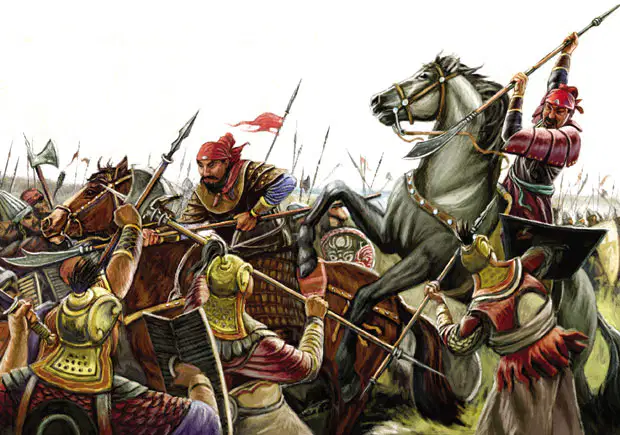
The time between the Zhou and Qin dynasties was called China’s _______________ period.
Shang Dynasty
Daoism
Warring States
Han Dynasty
Which dynasty came up with a writing system?
Shang Dynasty
Zhou Dynasty
Han dynasty
Qin dynasty
Legalism had some benefits, such as creating a uniform system of laws. What was one of it's downfalls?
Punishments were often too harsh
Punishments weren't hard enough
There were no punishments
What was an effect of the Silk Road being developed?
People brought new ideas and religions such as Buddhism to China
China was attacked and decimated
The road was made of silk

Look at the map of Asia and the barriers the Chinese people had to overcome. What creates the northern barrier of China's geographical isolation?
Himalaya Mountains
Taklamakan Desert
Gobi Desert
Pacific Ocean
Why was it important that civil service positions were not hereditary (inherited)?
so officials would be well-qualified
so officials would be diverse
so officials would not all know each other
so officials would be well-traveled

The form of art shown here was developed during what dynasty?
Han
Shang
Zhou
Qin

Which phrase replaces the question mark in the diagram?
competition for wealth
order and stability
people are basically evil
development of bureaucracy
By what means did Zhou rulers keep control over all the different regions of their kingdom?
by keeping a strong army ready to put down any rebellion
by treating the people with kindness and respect
by starting a civil service based on the ideas of Confucius
by putting family members in charge of individual regions
Which was the first dynasty in Ancient China?
Shang
Zhou
Han
Confucius
_________________ was a harsh ruler from the Qin Dynasty credited with unifying China, standardization and building the Great Wall of China.
Shi Huangdi
Moses
Confucius
Siddharta Gautama
Which of Ancient China's dynasties gave China its name?
Han
Qin
Xia
Shang
Which of the following is NOT one of the five relationships described by Confucius?
Ruler and subject
Friend and friend
Parent and child
Teacher and student
Which spirits were considered the most important in early China?
Famous philosophers
Ancestors
Mythical creatures
Warriors and kings
Which of the following is an achievement of the Han dynasty?
Construction of the Great Wall
Invention of the printing press
Establishment of the Roman Empire
Development of the Silk Road
Which of the following inventions is credited to the Han period in Chinese history?
Printing Press
Gunpowder
Compass
Paper
What was the primary purpose of the Great Wall of China?
To serve as a trade route
To protect against invasions
To promote cultural exchange
To mark the boundary of the empire
Which philosophy emphasized strict laws and harsh punishments in Ancient China?
Confucianism
Daoism
Legalism
Buddhism
What was the significance of the Mandate of Heaven in Chinese history?
It justified the rule of the emperor
It was a religious text
It was a military strategy
It was a trade agreement

