
 Worksheets
Chapter 20 (Moon) - Test Review
Total questions: 54
Worksheet time: 27mins
Name
Class
Date
1.

What is the center of gravity in our solar system?
a)
Earth
b)
Moon
c)
Sun
2.

Is there a pattern to the changing appearance of the moon?
a)
Yes
b)
No
3.
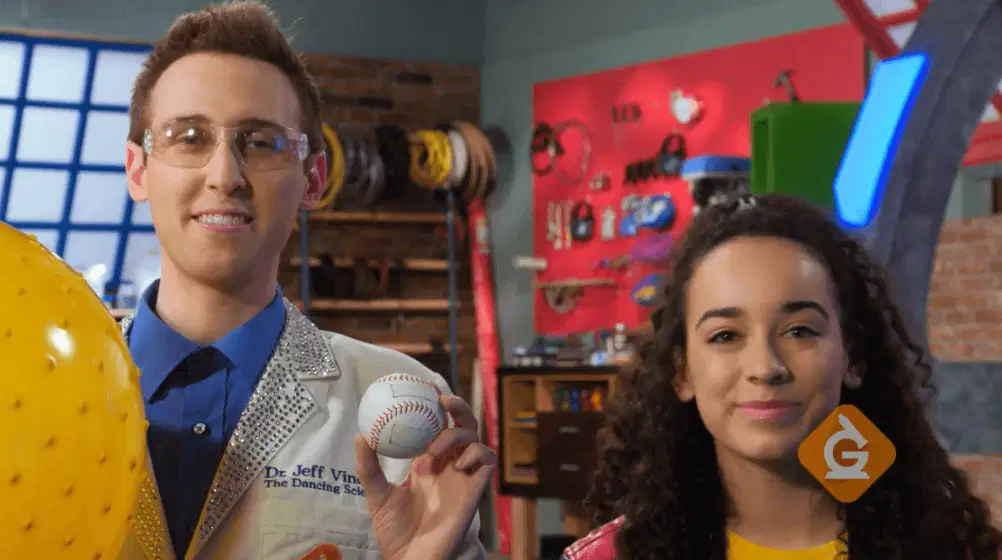
What can be done to make the baseball appear smaller?
a)
move it closer
b)
move it further away
c)
it's not possible
4.

Where does the light that allows us to see the moon come from?
a)
Earth
b)
moon
c)
sun
d)
stars
5.

What do we call this phase of the moon?
a)
crescent moon
b)
quarter moon
c)
full moon
d)
gibbous moon
6.

What is this phase of the moon called?
a)
quarter moon
b)
new moon
c)
half moon
d)
gibbous moon
7.
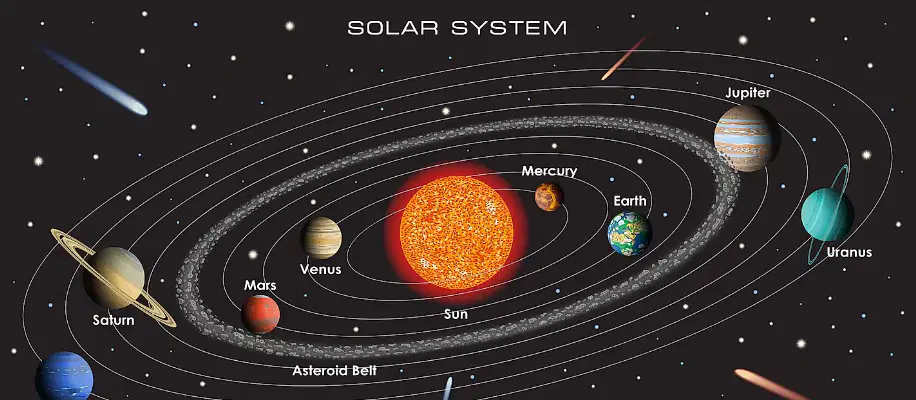
Which characteristic of the Sun primarily determines the orbits of planets in our solar system?
a)
large volume
b)
mostly made of hydrogen
c)
strong gravitational field
d)
high surface temperatures
8.
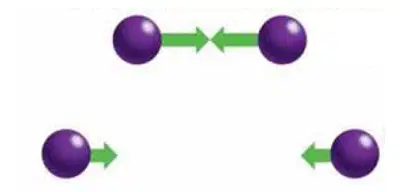
The further away objects are
a)
the stronger the gravitational pull.
b)
the weaker the gravitational pull.
c)
the gravitational pull does not change.
9.
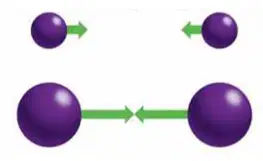
The more mass either object has
a)
the stronger the gravitational pull.
b)
the weaker the gravitational pull.
c)
the gravitational pull does not change.
10.
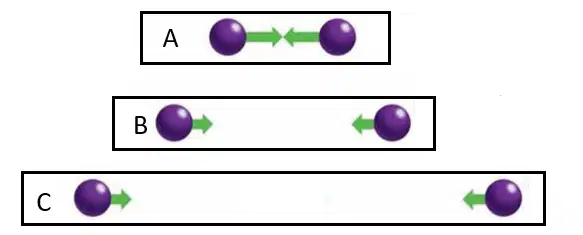
Which objects would have the least gravity between them? (Assume all objects have the same mass.)
a)
A
b)
B
c)
C
11.

Earth's rotation give us
a)
the seasons.
b)
day and night.
c)
a year.
12.

The following picture best represents the Earth
a)
rotating
b)
revolving
13.
Which relationship would a scientist most likely model using calculations based on the law of universal gravitation?
a)
the motion of planets within the solar system
b)
the internal structure and position of the Moon
c)
factors that affect Earth’s atmosphere and climate
d)
natural events that change the shape of Earth’s surface
14.
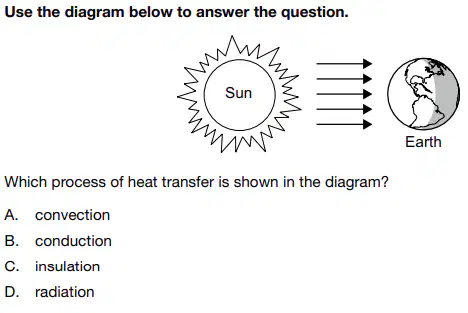
a)
A
b)
B
c)
C
d)
D
15.

Mia has drawn a picture of Earth. She has forgotten to add the labels. Which letter shows the axis?
a)
X
b)
Y
c)
Z
16.
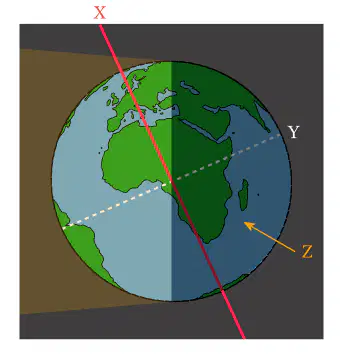
Mia has drawn a picture of Earth. She has forgotten to add the labels. Which hemisphere does Z point to?
a)
Northern
b)
Southern
17.
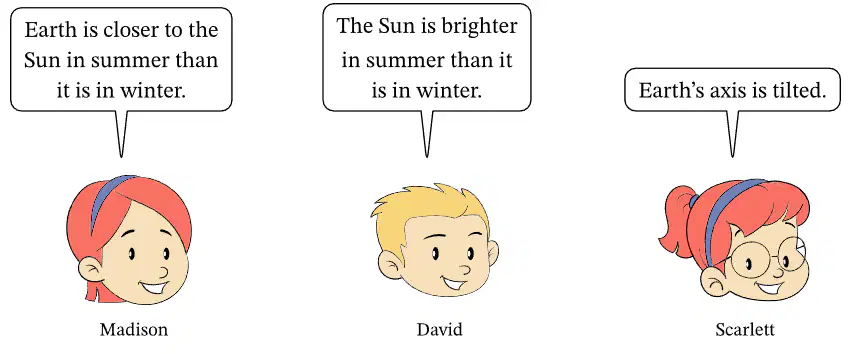
Madison, David, and Scarlett are talking about why we have seasons. Who is right?
a)
Scarlett
b)
Madison
c)
David
18.

The spin of an object around its axis.
a)
orbit
b)
revolution
c)
rotation
19.
Which property of the Sun most affects the strength of gravitational attraction between the Sun and Earth?
a)
radius
b)
shape
c)
mass
d)
temperature
20.

During which lunar phase might a solar eclipse occur?
a)
full moon
b)
new moon
c)
first quarter moon
d)
crescent moon
21.
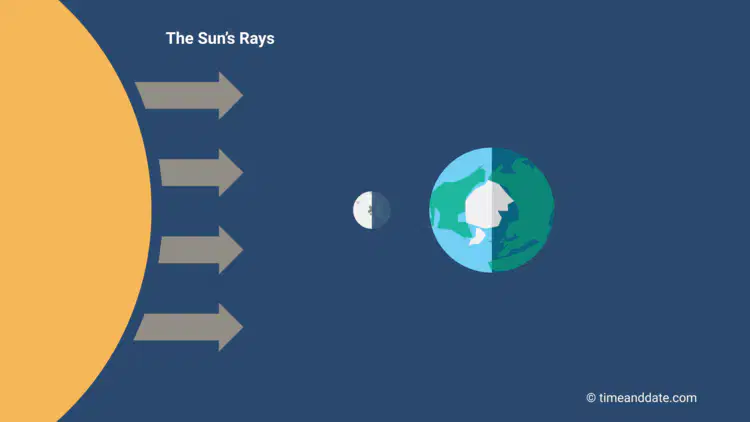
For a solar eclipse to occur, what has to happen?
a)
The sun must be directly between Earth and the moon.
b)
The moon must be directly between Earth and the Sun.
c)
Earth must be directly between the Sun and the moon.
22.

During a solar eclipse...
a)
The Sun is blocked
b)
The Earth is blocked
c)
The Moon is blocked.
23.
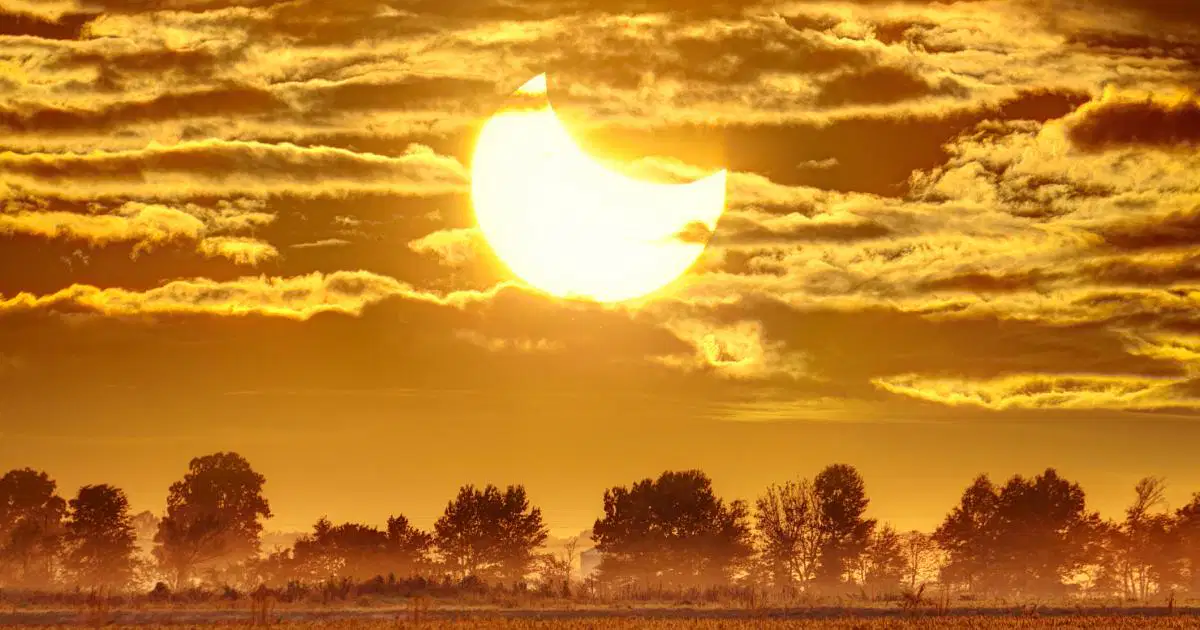
A __________ solar eclipse happens when the Moon comes between the Sun and Earth, but the Moon only partially covers the Sun.
a)
partial
b)
total
c)
lunar
24.
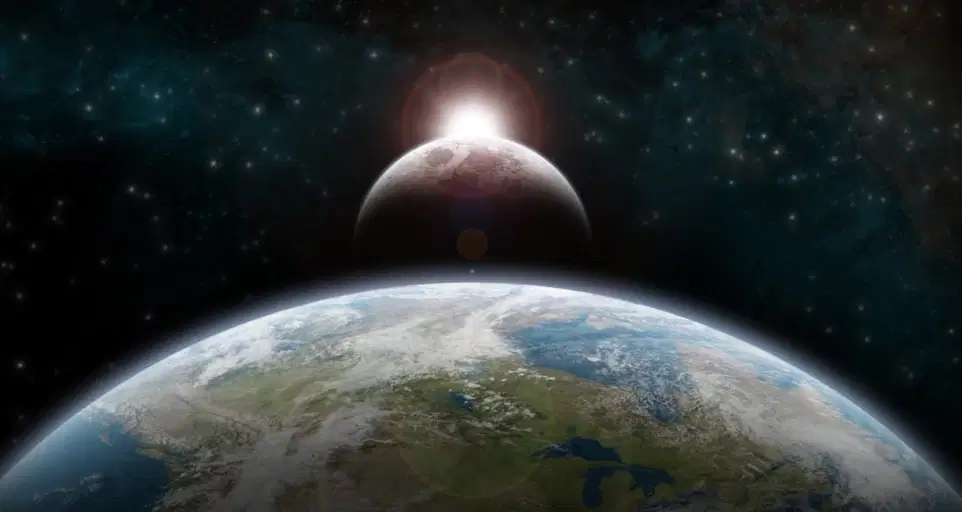
In order to have an eclipse, the Moon, Sun and Earth have to be?
a)
Below each other
b)
Above each other
c)
In alignment
25.

We can see the Moon completely illuminated during this phase.
a)
New
b)
Full
c)
Waning
d)
Waxing
26.

We cannot see the Moon when it is in this phase.
a)
New
b)
Full
c)
Waning
d)
Waxing
27.
Means it is getting smaller.
a)
New
b)
Full
c)
Waning
d)
Waxing
28.
Means it is getting bigger
a)
New
b)
Full
c)
Waning
d)
Waxing
29.

a)
Waxing
b)
Waning
30.
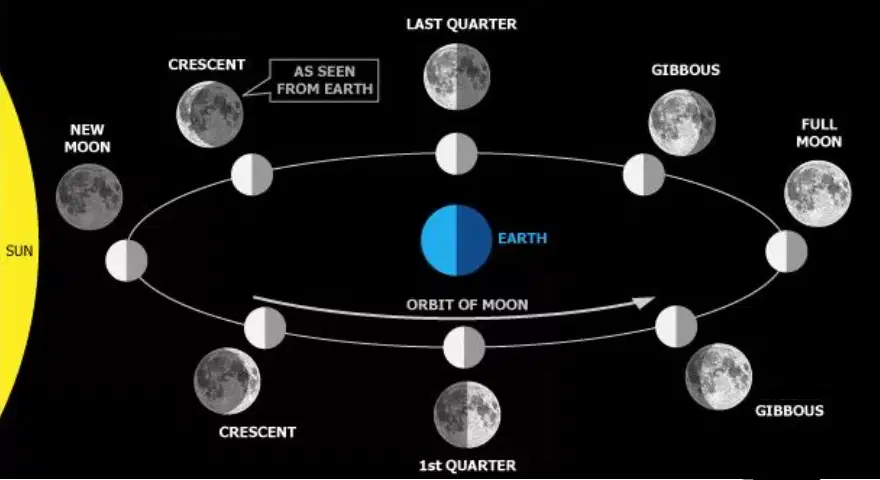
What causes the Moon to change phases?
a)
its small diameter
b)
its rotation on its axis
c)
its movement around Earth
31.

The Moon’s phase is waning when it changes from
a)
first quarter to a full moon.
b)
last quarter to a new moon.
c)
new moon to first quarter
32.

Because the Moon’s periods of rotation and revolution are the same, it
a)
rotates backwards.
b)
never really moves.
c)
keeps the same side always facing Earth.
33.
The lit part of the Moon or a planet that can be seen from Earth.
a)
craters
b)
highlands
c)
maria
d)
phase
34.
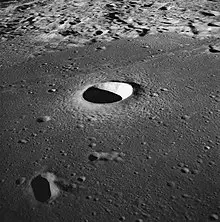
Formed when objects from space crashed into the Moon.
a)
craters
b)
highlands
c)
maria
d)
phase
35.

Large, flat dark areas on the Moon
a)
craters
b)
highlands
c)
maria
d)
phase
36.
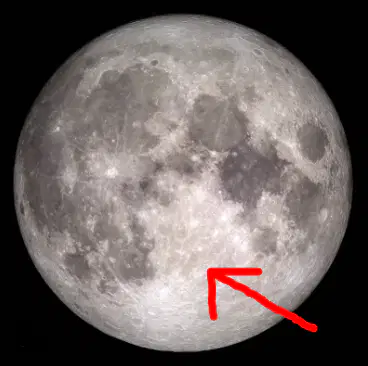
Light-colored areas on the Moon’s surface.
a)
craters
b)
highlands
c)
maria
37.

During one lunar cycle, the Moon
a)
completes its east-to-west path across the sky exactly once.
b)
completes its entire sequence of phases.
c)
progresses only from the new moon phase to the full moon phase.
d)
revolves around Earth twice.
38.

Why can we see the Moon?
a)
It reflects sunlight.
b)
It goes through phases.
c)
It produces its own light.
39.

What causes the Moon to revolve around Earth?
a)
the Sun’s gravity
b)
the Moon’s lack of gravity
c)
Earth’s gravity
40.
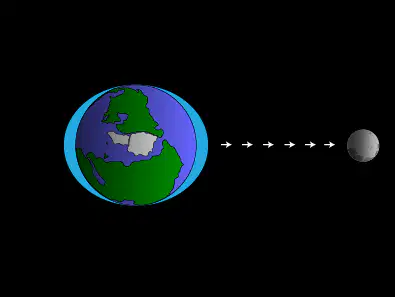
Which of the following produces tidal bulges?
a)
tide
b)
new moon
c)
full moon
d)
Moon’s gravity
41.
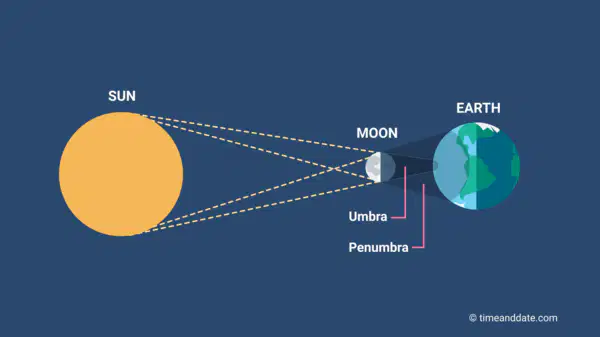
What is the moon's phase when solar eclipses occur?
a)
tide
b)
new moon
c)
full moon
d)
Moon’s gravity
42.

What is the moon's phase when lunar eclipses occur?
a)
tide
b)
new moon
c)
full moon
d)
Moon’s gravity
43.

What causes the phases of the Moon to change?
a)
the Moon’s craters
b)
the Moon’s rotation
c)
the Moon’s revolution
44.
Which is NOT an effect of the motions of the Moon?
a)
solar eclipses
b)
the lunar cycle
c)
seasons on Earth
d)
high and low tide
45.
How are the revolutions of the Moon and Earth alike?
a)
Both are produced by gravity.
b)
Both are revolutions around the Sun.
c)
Both orbits are the same size.
d)
Both take the same amount of time.
46.
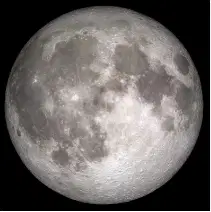
We can see the Moon completely illuminated during this phase.
a)
New
b)
Full
c)
Waning
d)
Waxing
47.
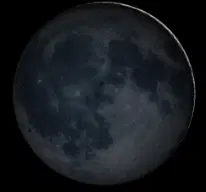
We cannot see the Moon when it is in this phase.
a)
New
b)
Full
c)
Waning
d)
Waxing
48.
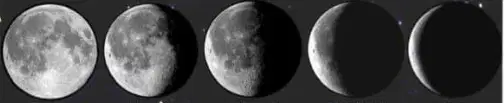
Means it is getting smaller (full moon to new moon).
a)
New
b)
Full
c)
Waning
d)
Waxing
49.

Means it is getting bigger (new moon to full moon)
a)
New
b)
Full
c)
Waning
d)
Waxing
50.
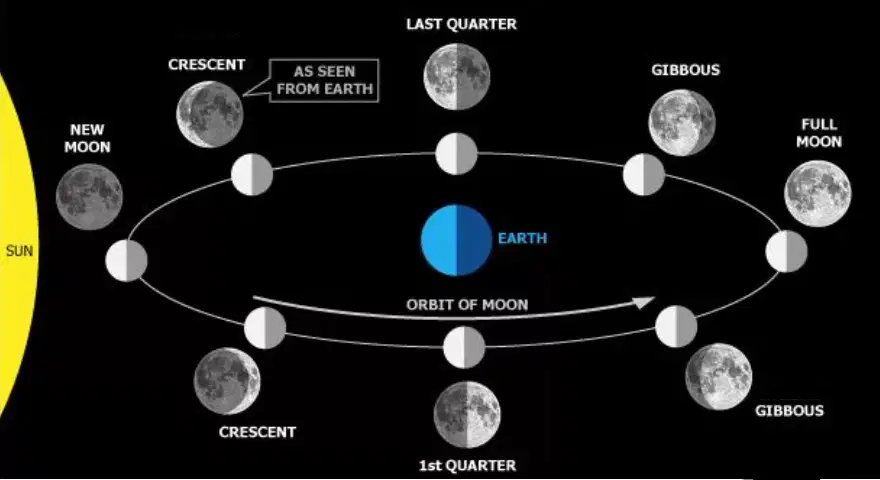
What causes the Moon to change phases?
a)
its small diameter
b)
its rotation on its axis
c)
its movement around Earth
51.
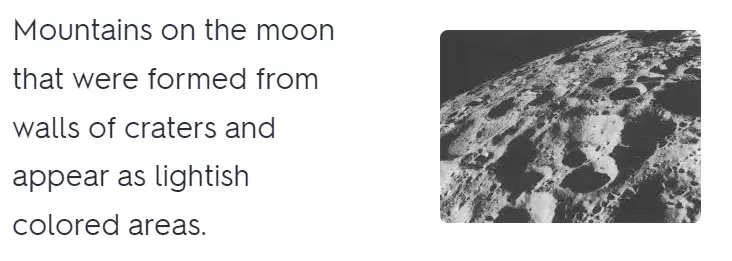
a)
craters
b)
highlands
c)
maria
d)
rays
52.
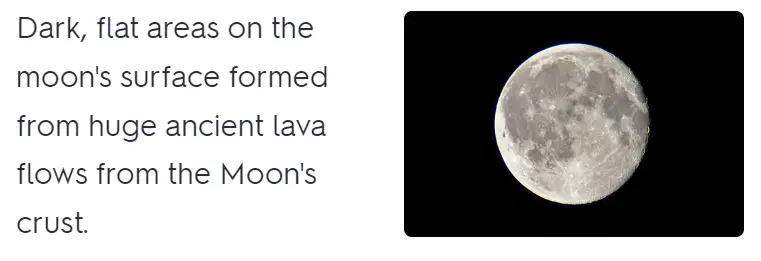
a)
craters
b)
highlands
c)
maria
d)
rays
53.
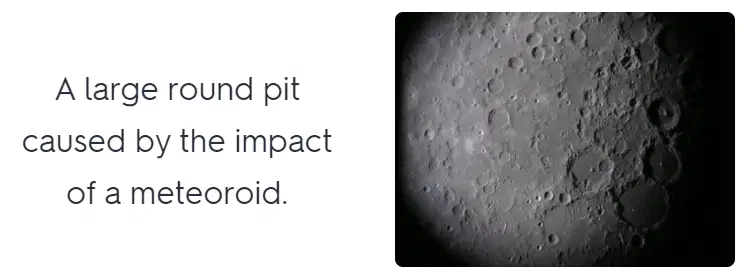
a)
craters
b)
highlands
c)
maria
d)
rays
54.
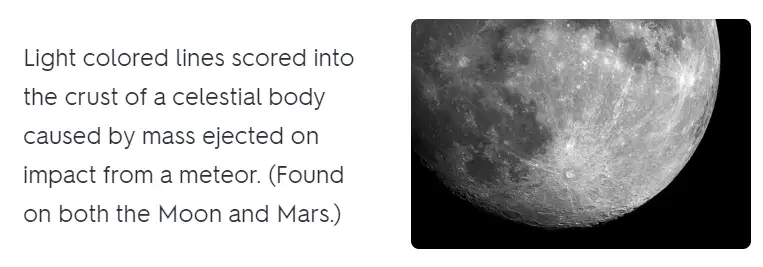
a)
craters
b)
highlands
c)
maria
d)
rays
100 %

