wayground logo

Free Printable Worksheets

Font size

S
M
L
XL
Worksheets

Spring 2024 IPS Practice Final

Total questions: 75

Worksheet time: 40mins
Name
Class
Date
1.
Two objects, A and B, have the same momentum. If Object B has a greater velocity than Object A, then
a)
Object A is moving faster than Object B
b)
both objects have the same mass
c)
Object A has a smaller mass than Object B
d)
Object B has a smaller mass than Object A
2.
Which of the following have shorter wavelengths and can ionize atoms, causing damage to living cells?
a)
infrared, visible light, x-rays
b)
ultraviolet light, gamma rays, x-rays
c)
radio, microwave, infrared
d)
visible light, ultraviolet light, infrared
3.
The photoelectric effect is a phenomenon in which light, when it strikes a metal, produces photoelectrons. The photoelectric effect provides evidence to support which of the following claims?
a)
Metals produce electrons when exposed to light.
b)
Electrons can be converted into photons.
c)
Electromagnetic radiation such as light behaves like a particle
d)
Light has more energy than an electric circuit.
4.
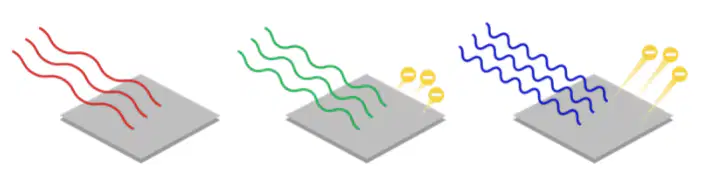
The image below shows different energy light sources hitting metal. Based on the photoelectric effect, what can you conclude based on the picture?
a)
when any frequency or intensity of light hits strikes a piece of metal, electrons are emitted
b)
the shorter the wavelength and higher the frequency of light, the greater the energy of the electrons emited.
c)
light is a particle because it can strike metal and emit particles at all colors of light
5.
True or false: Light is both a wave and a particle
a)
True
b)
False
6.
The part of the electromagnetic spectrum you can see is called visible light.
a)
true
b)
false
7.
Which of the following is NOT a form of electromagnetic radiation?
a)
radio waves
b)
gamma rays
c)
gravity
d)
visible light
8.
Which of the following is correct regarding the relationship of frequency and wavelength?
a)
As frequency increases, wavelength also increases.
b)
As frequency decreases, wavelength also decreases.
c)
As frequency decreases, wavelength increases.
9.
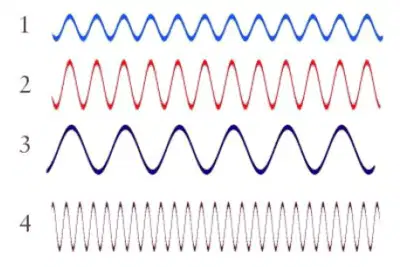
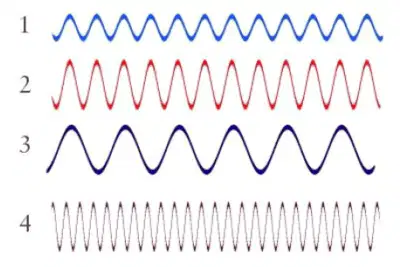
Which wave has the highest frequency?
a)
1
b)
2
c)
3
d)
4
10.
Which wave has the greatest wavelength?
a)
1
b)
2
c)
3
d)
4
11.
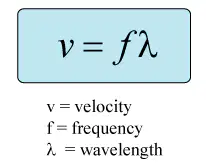
What is the velocity of a wave that has a frequency of 200Hz and a wavelength of 4m
a)
50
b)
800
c)
204
d)
1000
12.
Which of the following electromagnetic waves has the lowest frequency and lowest energy
a)
Radio waves
b)
Microwaves
c)
Gamma waves
d)
UV
13.
Which type of radiation can be dangerous?
a)
ionizing
b)
non-ionizing
14.
A waves energy is ___________related to its frequency
a)
indirectly
b)
directly
15.
Which of the following cannot be explained by the wave theory of light?
a)
photoelectric effect
b)
refracton
c)
reflection
16.
Light cannot be refracted (bent).
a)
True
b)
False
17.

Gamma rays are characterized by their extremely high energy and short wavelengths. Which of the following are potential applications of gamma rays? Select all that apply. (2)

a)

sterilizing medical equipment

b)

powering household appliances

c)

detecting hidden explosives in luggage

d)

broadcasting television signals
18.
Light can travel through a medium (matter) or vacuum (lack of matter).
a)
True
b)
False
19.
A wave has a wavelength of 15m and a frequency of 10Hz. What is the wave speed?
a)
1.5
b)
150
c)
0.15
20.
Waves can transmit ___________and ______________
a)
Energy and Information
b)
Matter and Energy
c)
Matter and Information
21.
True or False: constructive interference of a way results in a wave with a larger amplitude
a)
True
b)
False
22.
On a rollercoaster, the potential energy is _____________ at the top of a hill.
a)
Greatest
b)
Least
23.
If you were to add up kinetic and potential energy at each red circle on the track, what statement would be true?
a)
Kinetic and potential energy adds up to 100% at each location.
b)
Kinetic energy is greater.
c)
Potential energy is greater.
d)
Potential energy is equal to kinetic energy at each location.
24.
During which portion of this roller coaster ride would the roller coaster car have the most kinetic energy?
a)
Kinetic energy is highest at the lowest portion of the track.
b)
Kinetic energy is lowest at the lowest portion of the track.
c)
Kinetic energy is highest at the highest portion of the track.
d)
The location on the track does not affect kinetic energy.
25.
Which statement best describes the energy changes that occur with photosynthesis?
a)
Electromagnetic (Light) Energy to Chemical Energy
b)
Chemical Energy to Thermal Energy to Kinetic Energy.
c)
Potential Energy to Kinetic Energy
d)
Nuclear Energy to Chemical Energy and then to thermal energy.
26.
Using the following picture; where is potential energy greatest?
a)
at the top
b)
at the bottom
27.
What type of energy is shown in the picture?
a)
Thermal
b)
Nuclear
c)
Electric
d)
Mechanical
28.
What is the kinetic energy of a marble and the very bottom of a ramp if its mass is 4kg and is moving 4m/s? (1/2mv^2)
a)
32 J
b)
16 J
c)
12 J
d)
8 J
29.
If a 2kg marble at the top of the 6 meter high roller coaster has a 150J of potential energy and 0 J of kinetic energy, what must the energy be at the bottom of coaster?
a)
300 J
b)
600 J
c)
150 J
d)
12 J
30.
Which best explains the energy transfers of this cranking flashlight?
a)
Mechanical Energy to Electrical Energy to Light Energy
b)
Mechanical Energy to Chemical Energy, to Electrical Energy
c)
Light Energy to Electrical Energy to Chemical Energy
d)
Potential Energy to Kinetic Energy to Light Energy
31.
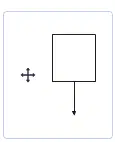
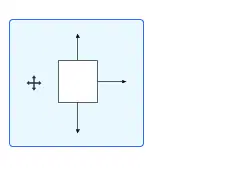
Which free body diagram represents moving a book across a desk with acceleration while being opposed by friction
a)
A
b)
B
c)
C
d)
D
e)
E
32.
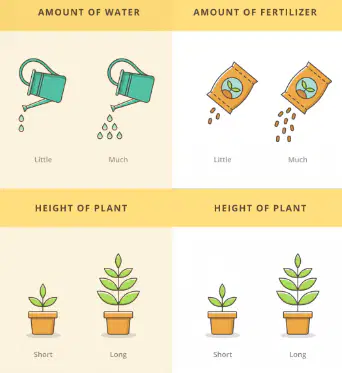
The following plants were all planted with the same type of soil and both were set in the same place. What is the control, independent variable and dependent variable?
a)
Control is the soil and location, independent is the amount of water/ fertilizer and dependent is the height of the plant
b)
Control is the amount of water/ fertilize, soil and location, independent is the soil and place and dependent is the height of the plant
c)
Control is the height of the plant , independent is the amount of water/ fertilizer and dependent is the soil and location
33.
What is the momentum of a 2000kg bus moving at 2m/s?
a)
4000 kg m/s
b)
2000 kg m/s
c)
8000 kg m/s
34.
Two cars, one twice as heavy as the other, move down a hill at the same speed. How does the momentum of the heavier car compare to that of the lighter car
a)
They have the same momentum
b)
The lighter car will have twice the momentum
c)
The heavier car will have twice the momentum
d)
Cannot be determined with the information provided
35.
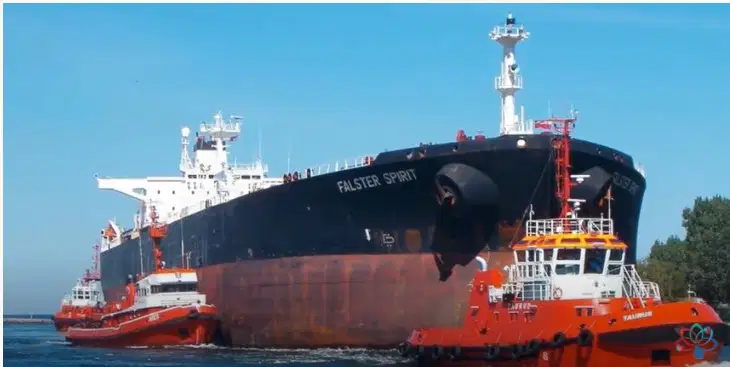
What gives this tanker most of it's momentum?
a)
The velocity
b)
The acceleration
c)
The speed
d)
The mass
36.
Two identical balls roll towards each other at the same speed and collide, which statement best describes the motion of the objects after the collision?
a)
One ball will remain stationary and the other ball will bounce back at a greater speed.
b)
Both balls will bounce off each other and travel about equal distances in opposite direction
c)
The balls will collide and one ball will keep traveling in the same direction as the other ball.
37.
A 2000 kg elephant is traveling north at 6 m/s. A 2 kg falcon is traveling south at 107 m/s. Which animal has the greatest momentum
a)
falcon
b)
elephant
38.
____________________is the rate at which the velocity changes.
a)
accleration
b)
force
c)
mass
d)
speed
39.

In a physics experiment, a student measures the acceleration of a cart on a frictionless track when different forces are applied. The student uses a force meter to apply varying forces and records the resulting accelerations. Given the relationship (force = mass x acceleration), estimate the mass of the cart if a force of 10 N results in an acceleration of 2 m/s².

a)

2 kg

b)

5 kg

c)

10 kg

d)

20 kg

40.
A 50kg crate is pushed to an acceleration of 2m/s2. What is the force on the crate?
a)
100 N
b)
25 N
c)
0.04 N
d)
50 N
41.
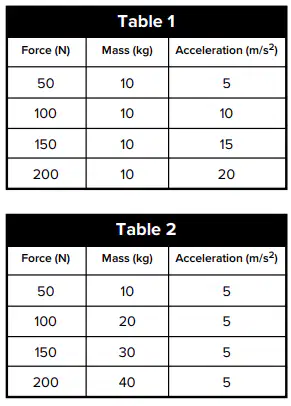
Newton’s second law of motion describes the mathematical relationship among the net force on an object, the mass of that object, and its acceleration. What does analysis of the data in Tables 1 and 2 tell us about that relationship? Select all that apply. (Select two)
a)
When mass is constant, acceleration increases as net force increases.
b)
When acceleration is constant, net force increases as mass increases.
c)
When mass is constant, acceleration decreases as net force increases.
d)
When acceleration is constant, net force decreases as mass increases
42.
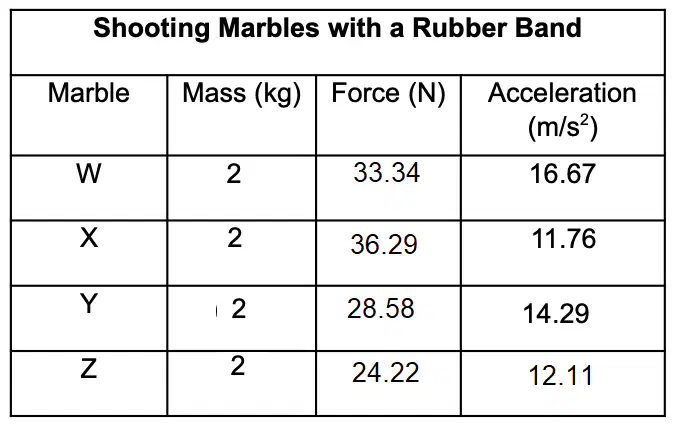
The results of an investigation with marbles are shown in the table. Friction and air resistance can be ignored. Which data for the marbles fails to conform with the laws of motion as defined by Newton’s second law?
a)
W
b)
X
c)
Y
d)
Z
43.
If the mass of an object doubles, then the acceleration is ________ when the force is kept the same.
a)
halved
b)
doubled
c)
stays the same
44.
A vehicle with _______________ mass will have a greater acceleration when compared to larger vehicles.
a)
less
b)
greater
c)
zero
d)
incresasing
45.
The initial momentum of a golf ball rolling down a track is 10 kg m/s. It collides with a 20kg block at rest. What is the final momentum?
a)
10 kg m/s
b)
20 kg m/s
c)
30 kg m/s
46.
What are some of the ways to change the momentum of an object?
a)
increase it's mass
b)
decrease it's mass
c)
increase its velocity
d)
decrease its velocity
e)
all of the above
47.
When the speed of an object is doubled, its momentum
a)
remains unchanged in accord with the conservation of momentum.
b)
doubles
c)
quadruples
d)
decreases
48.

A stationary skateboard is on a flat surface. A tennis ball is thrown horizontally and hits the skateboard. Which of the following statements are true regarding the momentum of the system? (select 3 that are true)

a)

The momentum of the skateboard is zero before being hit by the tennis ball

b)

The total momentum of the system increases after the tennis ball hits the skateboard

c)

The total momentum of the system decreases after the tennis ball hits the skateboard

d)

The momentum of the tennis ball is transferred partially to the skateboard

e)

The total momentum of the system remains constant
49.
Car crashes result in injury due to the ______________ that occurs upon impact. Seatbelts and airbags can reduce the severity of car crash injuries due to the fact that they increase the __________________ that the force is being applied to the passenger during the crash.
a)
constant momentum, time
b)
change in momentum, acceleration
c)
change in momentum, time
d)
force, distance
50.
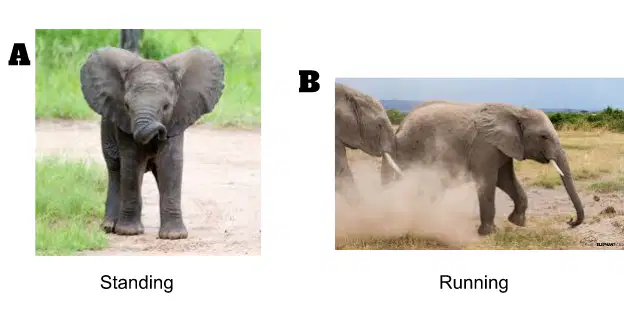
The same elephant is in two different pictures, when does it have more momentum?
a)
Picture A
b)
Picture B
c)
Both A and B, its the same
51.
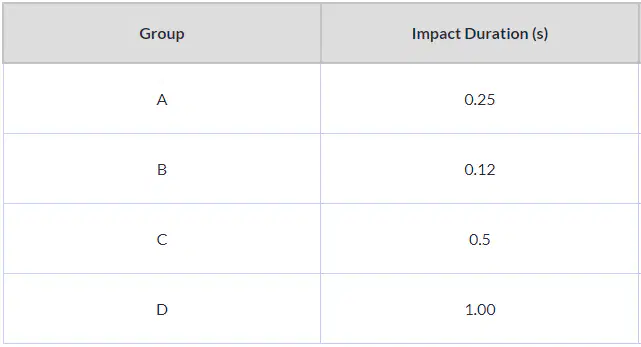
Different groups are designing a car to protect an egg. The duration of impact time was recorded Rank the groups in order from least amount of damage to highest (LEAST DAMAGE to GREATEST)
a)
D < C < A < B
b)
B < C < A < D
c)
D < A < C < B
52.
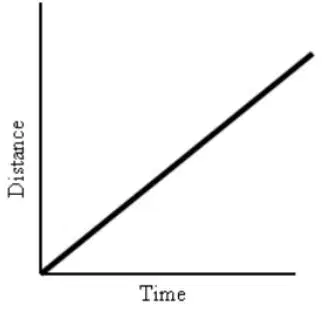
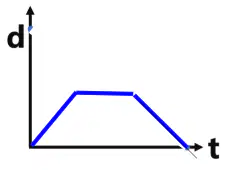
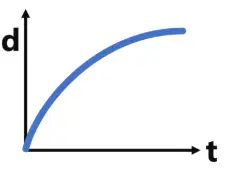
Using the image below, which graph would represent the objects motion?
a)
Graph 1
b)
Graph 2
c)
Graph 3
d)
Graph 4
53.
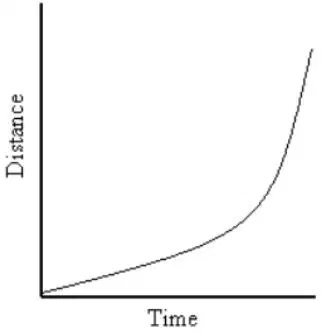
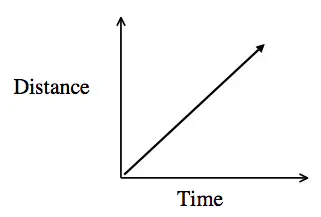
On this time vs. distance graph, what does the line represent?
a)
Constant Speed
b)
Acceleration
c)
Stationary (not moving)
d)
Deceleration
54.

Which of the following are true about forces? (Choose 3)

a)

A force can accelerate objects

b)

A force is a type of energy

c)

A force can be a push or a pull

d)

A force is used by superheroes

e)

A force can change the direction of an object
55.
Using Newton's second law (Force = mass x acceleration) determine the force required to move a 1000kg with an acceleration of 4 m/s2
a)
1000 N
b)
500 N
c)
4000 N
d)
250 N
56.
Which of the following accurately describes speed
a)
speed is the rate direction changes.
b)
speed is the change in position
c)
speed is the rate at which an object moves.
57.
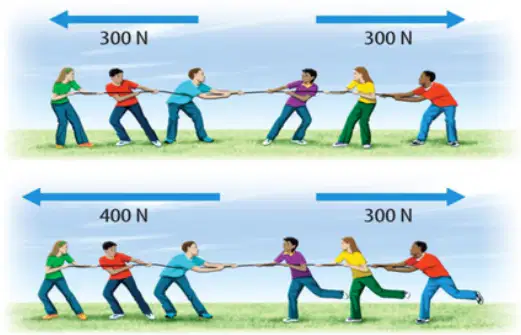
Which image shows balanced forces
a)
top
b)
bottom
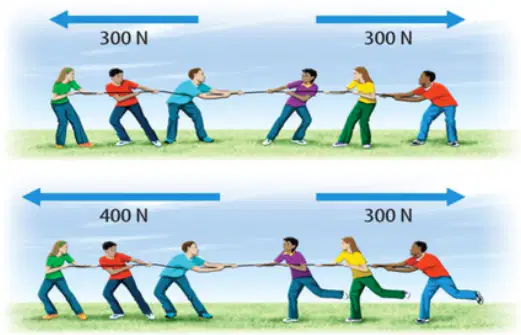
58.
Which team won the tug of war and by how much
a)
left by 100 N
b)
right by 100 N
c)
left by 700 N
d)
right by 700 N
59.
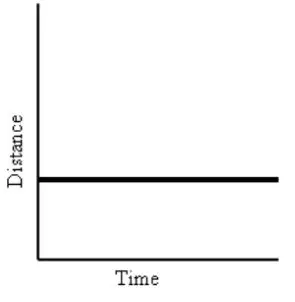
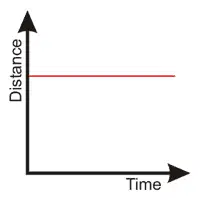
This time-distance graph is showing what representation?
a)
Stationary (not moving)
b)
Constant Speed
c)
Acceleration
d)
Deceleration
60.
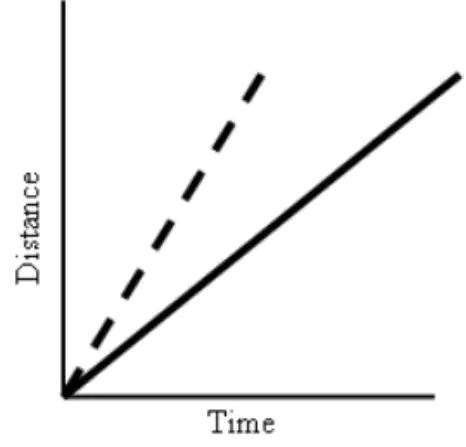
Based on the graph, which line indicates an object moving at a greater speed
a)
The solid line indicates an object moving faster
b)
The dashed line indicates an object moving faster
61.
What physical quantity is represented by the slope of the line on a distance vs time graph
a)
acceleration
b)
motion
c)
speed / velocity
d)
force
62.
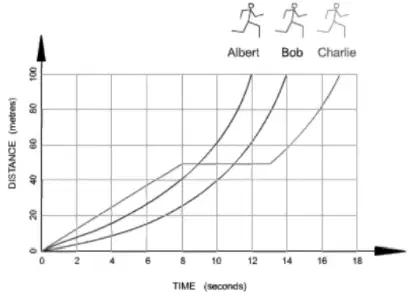
Who won the race?
a)
Albert
b)
Bob
c)
Charlie
63.
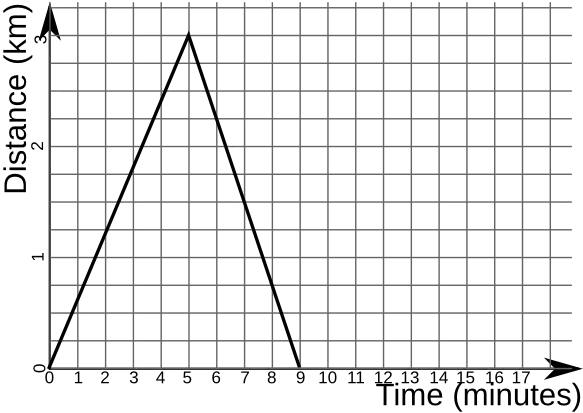
Match the statement with the graph below
a)
object leaves home, increase speed, and continues away
b)
object leaves home, stops and then continues back home
c)
object leaves home, and increases speed
64.
Match the statement with the graph
a)
object leaves home but increases speed
b)
objects leaves home and starts to slow down
c)
object travels back toward the start
65.
Which diagram shows a book accelerating across a surface (assume no friction)
a)
Option 1
b)
Option 2
c)
Option 3
66.

which of the following does NOT belong in the electromagnetic spectrum:

a)

X-ray

b)

sound wave

c)

ultra violet rays

d)

microwaves

67.

Compared to the frequency and wavelength of a photon of red light, a photon of blue light has

a)

lower frequency and longer wavelength

b)

lower frequency and shorter wavelength

c)

higher frequency and shorter wavelength

d)

higher frequency and longer wavelength

68.

Which of the following could cause an acceleration?

a)

A balance between two forces

b)

A balance between three forces

c)

When forces are unbalanced

d)

Zero forces

69.
A box is pushed left with 35 N and right with 40 N of force. The box has a mass of 5 kg. What is the acceleration?
a)
5 m/s2
b)
1 m/s2
c)
25 m/s2
d)
8 m/s2
70.

High frequency waves have _________ wavelength.

a)

varying

b)

long

c)

the same

d)

short

71.

Photoelectric effect provides the evidence for the ______ nature of radiation.

a)

dual

b)

wave

c)

particle

d)

electromagnetic

72.

Gravitational potential energy depends on the strength of gravity, ________ and ________ of the object.

a)

height and mass

b)

friction and movement

c)

mass and movement

d)

height and friction

73.
Which picture has the most potential energy?
a)
Picture A
b)
Picture B
74.
What is the magnitude (size) and direction of the net force?
a)
5 N to the Right
b)
5 N to the Left
c)
10 N to the Right
d)
4 N to the Left
75.

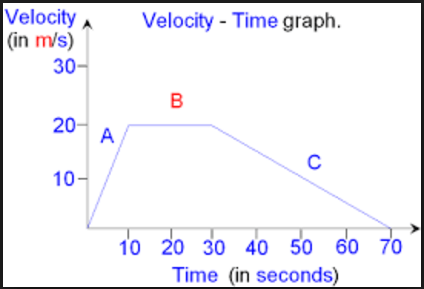
This is a velocity-time graph. What is the object doing in segment C?

a)

Speeding up

b)

Slowing down

c)

Constant Velocity

d)

Not moving