wayground logo

Free Printable Worksheets

Font size

S
M
L
XL
Worksheets

Earth Science Pre/Post-Assessment

Total questions: 40

Worksheet time: 43mins

Name
Class
Date
1.

What does the Big Bang Theory tell us

a)

About the popular television show.

b)

the entire universe was once condensed in the form of primeval atom, or a dense mass.

c)

how the universe began.

2.
The universe is expanding!  This means that:
a)
all of the galaxies are spreading out.
b)
the universe must have started from a single point.
c)
the universe is cooling down.
d)
all of the above.
3.
If a star is being observed from Earth and it's light has shifted towards the red side of the electromagnetic spectrum it would be...
a)
Moving towards the Earth
b)
Moving away from the Earth
c)
This is a trick question that cannot be answered
d)
It isn't a star, it is a very large blueberry.
4.
All stars begin their life in a
a)
Main Sequence
b)
Nebula
c)
Protostar
d)
Black Dwarf
5.
The life cycles of stars are determined by their:
a)
mass (size)
b)
color
c)
distance from Earth
d)
luminosity
6.
A gigantic explosion that causes the death of a large star is called
a)
pulsar
b)
red giant 
c)
supernova
d)
black hole
7.
Which has the LONGEST wavelength and, therefore, the lowest frequency/energy
a)
Gamma Rays
b)
Radio Waves
c)
Visible Light
d)
Infrared rays
8.
How are electromagnetic waves different from other waves? 
a)
They have very short wavelengths 
b)
They transmit energy instead of matter 
c)
They can travel through empty space
d)
They can change direction by reflection 
9.
As the frequency of an electromagnetic wave increases, the amount of energy in that wave...
a)
increases.
b)
decreases.
c)
stays the same.
10.
Planets orbit the Sun in a shape called a(n)
a)
circle
b)
ellipse
c)
focus
d)
perihelion
11.
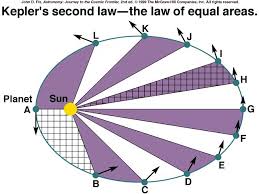
Where is the planet moving faster
a)
Position A to B
b)
Position B to C
c)
Position H to I
d)
Position I to J
12.
The farther away a planet is from the sun, the _______ it takes it to orbit the sun once. 
a)
longer
b)
shorter
13.
What are the two types of crust
a)
continental and oceanic
b)
ocean and upper
c)
lower and upper
d)
pizza and subway
14.
This layer of Earth is solid Iron and Nickel
a)
Outer Core
b)
Mantle
c)
Inner Core
d)
Crust
15.
This layer of Earth is the thickest part
a)
crust
b)
outer core
c)
mantle
d)
inner core
16.

Most geologists think that the movement of Earth’s plates is caused by _______

a)

convection.

b)

continental drift.

c)

subduction.

d)

conduction.

17.

The fact that similar fossils are found on both sides of the ocean is evidence of

a)

magnetic reversal.

b)

global positioning.

c)

continental drift.

d)

oceanic drift.

18.
The area where two tectonic plates meet.
a)
mantle
b)
focus
c)
plate boundary
d)
convection
19.
Waves move out through the ground from the ..........
a)
rift
b)
hypocenter
c)
epicenter
d)
fault line
20.
The huge pieces of the earth's crust are called ____________________________. 
a)
crust
b)
plates
c)
directions
d)
seismos
21.
Which travels fastest, always being the first detected by seismic stations?
a)
P waves
b)
S waves
22.
What is Magma when it reaches the surface of Earth?
a)
Lava
b)
Mafic Magma
c)
Felsic Magma
d)
None of these
23.
Explosive eruption that hurls ash, gases, cinders, and bombs from the main vent.
a)
Volcano bomb
b)
Geyser
c)
Geothermal energy
d)
Pyroclastic flow
24.
The Hawaiian islands are made from this type of volcano.
a)
Composite
b)
Cinder Cone
c)
Shield
d)
Big
25.
The natural chemical or physical processes that breaks down rock on Earth's surface.
a)
weathering
b)
erosion
c)
deposition
d)
jackhammering
26.
The process by which water, ice, wind or gravity moves weathered rock and soil from one place to another.
a)
weathering
b)
erosion
c)
deposition
d)
dumptruck
27.
This type of weathering occurs when rock is physically broken down into smaller pieces of rock.
a)
mechanical weathering
b)
chemical weathering
c)
erosion weathering
d)
deposition
28.
This type of weathering occurs when rocks weaken then break down due to chemical changes in the composition of the rock.
a)
mechanical weathering
b)
chemical weathering
c)
erosion weathering
d)
deposition
29.
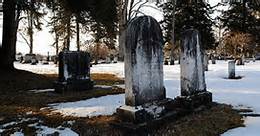
These gravestones have slowly broken down and turned a blackish color due to the action of:
a)
ice wedging
b)
abrasion
c)
acid rain
d)
mechanical weathering
30.
Valleys created by downcutting streams are ___- shaped
a)
W
b)
U
c)
V
d)
Y
31.

Deposition is likely to occur in a river

a)

on the outside bank, when the water speeds up

b)

on the outside bank where the water slows down

c)

along the inside bank where the water speeds up

d)

along the inside bank where the water slows down

32.

Erosion is most likely greatest at locations

a)

A and B

b)

B and C

c)

C and D

d)

D and A

33.

Which letter has a higher velocity?

a)

A

b)

B

34.

Which layer of the atmosphere has weather?

a)

troposphere

b)

stratosphere

c)

mesosphere

d)

thermosphere

35.

Which of the following are greenhouse gases?

a)

Carbon dioxide

b)

Methane

c)

Water vapor

d)

All answers are correct

36.

What TREND does the graph show us?

a)

the earth temperature is always increasing

b)

the earth's temperature has steadily increased since 1900

c)

the earth's temperature has steadily rising since the 1960s

d)

the earth's temperature decreased during the 19th and 20th centuries

37.

Water that fills the cracks and spaces in underground soil and rock layers is

a)

salt water

b)

rainwater

c)

groundwater

d)

water vapor

38.
97% of Earth's water is __________ water.
a)
Fresh
b)
Salt
39.
In the water cycle, water moves between land, living things, bodies of water on Earth's surface, and the _____________________.
a)
School
b)
Animals
c)
Ocean
d)
Atmosphere
40.
The process by which a gas changes to a liquid is 
a)
evaporation
b)
condensation
c)
solution
d)
transpiration