Wayground logo

Free Printable Worksheets

Font size

S
M
L
XL
Worksheets

Diff Geo Final Review

Total questions: 85

Worksheet time: 4hrs 28mins
Name
Class
Date
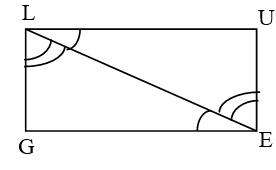
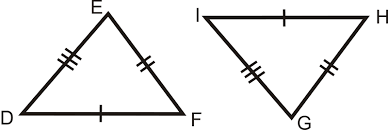
1.
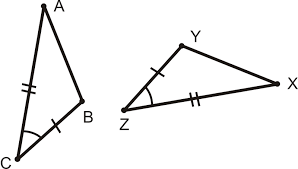
Which triangle congruence theorem can be used to prove the triangles are congruent?
a)
SAS
b)
SSS
c)
ASA
d)
HL
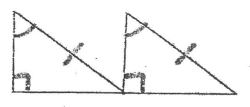
2.
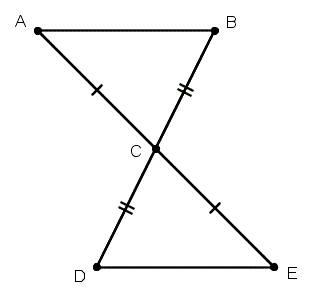
Which triangle congruence theorem can be used to prove the triangles are congruent?
a)
SSS
b)
ASA
c)
AAS
d)
SAS
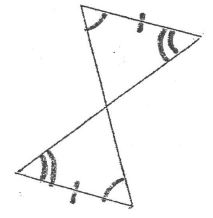
3.
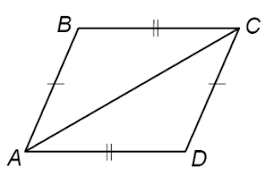
Which triangle congruence theorem can be used to prove the triangles are congruent?
a)
AAS
b)
SSS
c)
Not enough information given
d)
ASA
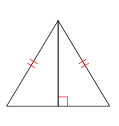
4.
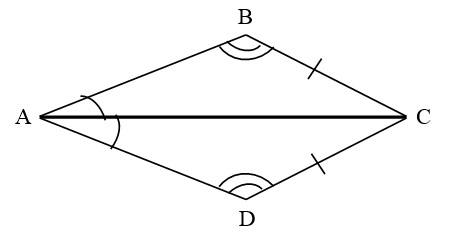
Which triangle congruence theorem can be used to prove the triangles are congruent?
a)
AAS
b)
SSS
c)
SAS
d)
SSA
5.
Which triangle congruence theorem can be used to prove the triangles are congruent?
a)
SAS
b)
Not enough information
c)
SSS
d)
AAS
6.

Which triangle congruence theorem can be used to prove the triangles are congruent?

a)

SSS

b)

SAS

c)

ASA

d)

NONE

7.
a)
Congruent by HL
b)
Congruent by SAS
c)
Congruent by SSS
d)
Not Necessarily Congruent
8.
Name the postulate, if possible, that makes the triangles congruent.
a)
SAS
b)
ASA
c)
AAS
d)
Not Possible
9.
Name the postulate, if possible, that makes the triangles congruent.
a)
SSS
b)
SAS
c)
ASA
d)
AAS
10.

Identify the correct triangle congruence theorem.

a)

ASA

b)

AAS

11.

Identify the correct triangle congruence theorem.

a)

ASA

b)

AAS

12.
How are the triangles congruent?
a)
HL
b)
SSS
c)
SAS
d)
AAS
13.
What are the five ways to prove triangles congruent?
a)
SSS, ASA, AAS, SAS, HL
b)
SSS, SSA, HL, AAS, SAS
c)
SAS, SSA, HL, AAS, SSS
d)
HL, SAS, SSA, SSS, ASA
14.

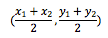
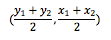
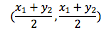
Which of the following is the correct midpoint formula given two endpoints (x1, y1) and (x2, y2)?
a)
b)
c)
d)
15.

The middle of a line is called the _______________.

a)

endpoint

b)

midpoint

c)

slope

d)

distance

16.

What formula would I use to find the x-coordinate of the midpoint between (3,9) and (5,9)

a)

3+52\frac{3+5}{2}  

b)

3+92\frac{3+9}{2}  

c)

5+92\frac{5+9}{2}  

d)

9+92\frac{9+9}{2}  

17.

What formula would I use to find the y-coordinate of the midpoint between (3,9) and (5,9)

a)

3+52\frac{3+5}{2}  

b)

3+92\frac{3+9}{2}  

c)

5+92\frac{5+9}{2}  

d)

9+92\frac{9+9}{2}  

18.

What is the x-coordinate of the midpoint between (-4,4) and (-2,2)?

a)

3

b)

-3

c)

4

d)

6

19.

What is the y-coordinate of the midpoint between (-4,4) and (-2,2)?

a)

3

b)

-3

c)

4

d)

6

20.

Find the midpoint of the line segment with the given endpoints (1,1) and (9,9)

a)

(5,5)

b)

(1,9)

c)

(17,17)

d)

(-4,-4)

21.
A polygon with six sides is called a(n) ______________.
a)
hexagon
b)
pentagon
c)
decagon
d)
septagon
22.
The sum of the interior angles of a polygon is __________________ where n is the number of sides.
a)
(n - 2)180
b)
(n - 1)180
c)
360
d)
(n - 3)(180)
23.
Find the sum of the interior angles of a nonagon.
a)
1260
b)
900
c)
1620
d)
180
24.
Solve for x. 
a)
100
b)
120
c)
125
d)
130
25.
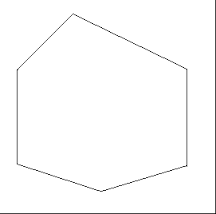
What is the sum of the interior angles of the hexagon shown?
a)
180° 
b)
540° 
c)
720° 
d)
1080° 
26.
What is the sum of interior angles for a pentagon?
a)
900
b)
540
c)
360
d)
108
27.
An angle that is exactly 90 degrees.
a)
right
b)
acute
c)
obtuse
d)
straight
28.
Find the measure of the missing angle.
a)
90o
b)
100
c)
130o
d)
50o
29.
The Triangle Sum Theorem states that the sum of all angles in a triangle is ______. 
a)
45°
b)
90°
c)
180°
d)
360°
30.
What is the measure of ONE interior angle in a regular pentagon (5-sides)?
a)
90°
b)
108°
c)
120°
d)
180°
31.
What is the measure of ONE interior angle in a regular hexagon (6 sides)?
a)
60°
b)
80°
c)
108°
d)
120°
32.
Find the area
a)
96 cm2
b)
48 cm2
c)
36 cm2
d)
48 cm
33.
Find the area.
a)
12.75
b)
191.25
c)
19.125
d)
95.625
34.

Find the area of the following polygon.

a)

15 in2

b)

240 in2

c)

120 in2

d)

20 in2

35.

Classify the quadrilateral by its most specific name.

a)

parallelogram

b)

rectangle

c)

rhombus

d)

square

e)

trapezoid

36.

Classify the quadrilateral by its most specific name.

a)

parallelogram

b)

kite

c)

square

d)

quadrilateral

e)

trapezoid

37.

Classify the quadrilateral by its most specific name.

a)

parallelogram

b)

kite

c)

square

d)

rhombus

e)

trapezoid

38.

Classify the quadrilateral by its most specific name.

a)

parallelogram

b)

kite

c)

square

d)

rhombus

e)

trapezoid

39.

Classify the quadrilateral by its most specific name.

a)

parallelogram

b)

rectangle

c)

square

d)

rhombus

e)

trapezoid

40.
What is the distance around a circle?
a)
Circumference
b)
Area
c)
Diameter
d)
Radius
41.

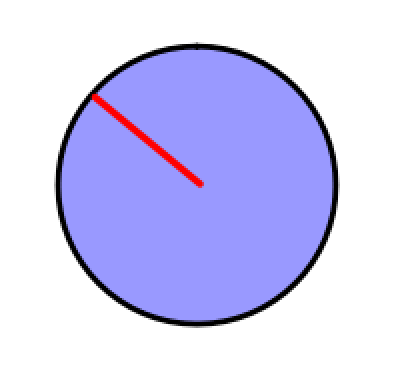
Is the red line a radius or diameter of the circle?

a)

Radius

b)

Diameter

42.

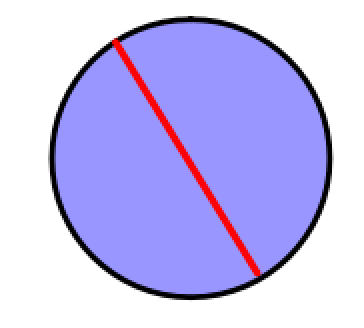
Is the red line a radius or diameter of the circle?

a)

Radius

b)

Diameter

43.
If my radius is 10ft, what is my diameter?
a)
20ft
b)
5ft
c)
31.4ft
d)
62.8ft
44.

Find the radius of a circle who's diameter is 40 ft.

a)

40ft

b)

80ft

c)

20ft

d)

45ft

45.

A _________ is a segment in a circle that has endpoints on the circle.

a)

Radius

b)

Diameter

c)

Chord

d)

Arc

46.

Identify a chord.

a)

RT

b)

LT

c)

WL

d)

LR

47.

Identify all radii.

a)

DB, FC, BF

b)

FC, DF, FB

c)

EA, DB, FB

d)

CF, DF, EA

48.

If the diameter of a circle is 15 in, find the circumference.

a)

30 cm

b)

30π cm

c)

15π cm

d)

15 cm

49.

Find the exact circumference.

a)

24π cm

b)

7π cm

c)

25π cm

d)

25

50.

Find the exact circumference.

a)

58 mi

b)

29π mi

c)

42π mi

d)

58π mi

51.

Find the arc length of the circle. (Leave answers in terms of π\pi . Do not round your answer.)

a)

27π27\pi km

b)

π18\frac{\pi}{18} km

c)

15π15\pi km

d)

15π2\frac{15\pi}{2}

52.
Find the measure of arc AB.
a)
17
b)
34
c)
68
d)
146
53.
Find the length of the bold arc.Leave pi in your answer.
a)
5688π ft
b)
15.8π ft
c)
150.4π ft
d)
54,150 ft
54.
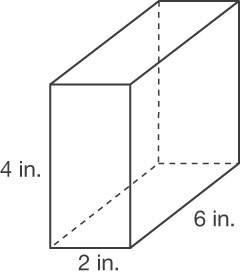
Find the total surface area of the prism.
a)
48 square inches
b)
64 square inches
c)
88 square inches
d)
76 square inches
55.
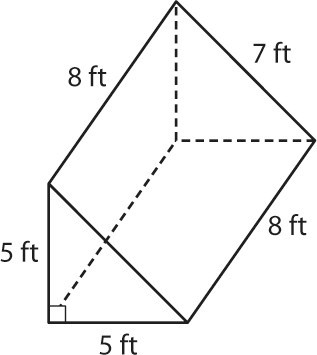
Find the total surface area of the prism.
a)
161 square feet
b)
1,700 square feet
c)
75 square feet
d)
186 square feet
56.

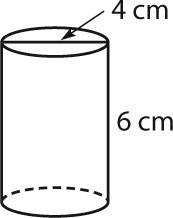
Find the total surface area of the cylinder.

a)

25.13 square cm

b)

75.40 square cm

c)

50.27 square cm

d)

100.53 square cm

57.
The units for Volume are always 
a)
squared
b)
cubed
58.
Determine the radius of the penny
a)
59.66 mm
b)
9.5 mm
c)
38 mm
d)
119.32 mm
59.
What is the formula for volume of a CONE?
a)
V = π r²
b)
V = π r² h
c)
V =  ⅓ π r² h
d)
V =  ⅓ L W H
60.
What is the volume formula for a sphere?
a)
V = (4 ∕ 3)πr3
b)
V = (1 ∕ 3)πr2h
c)
V = πr2h
d)
V = (1 ∕ 3)Bh
61.
What is the formula for the volume of a pyramid?
a)
V = P*h
b)
V = B*h
c)
V = (1/3)P*h
d)
V = (1/3)B*h
62.
What is the formula for volume of a CYLINDER?
a)
V = π r²
b)
V = π r² h
c)
V =  ⅓ π r² h
d)
V =  ⅓ L W H
63.
V = 4/3⋅π⋅r3
a)
Sphere
b)
Cube
c)
Triangular Pyramid
d)
Rectangular Prism
64.
V = π⋅r2⋅H
a)
Cylinder
b)
Cone
c)
Sphere
d)
Cube
65.

A rectangle has a base of 10 mm and a height of 6 mm, and we double the height, what is the new perimeter and area?

a)

Perimeter = 22 mm and Area = 120 mm

b)

Perimeter = 44 mm and Area = 120 mm

c)

Perimeter = 32 mm and Area = 240 mm

d)

Perimeter = 32 mm and Area = 240 mm

66.

The volume of a rectangular prism is 16 in3. If the dimensions are changed by a scale factor of 2, what is the new volume?

a)

32 in3

b)

64 in3

c)

128 in3

d)

256 in3

67.

When the dimensions of a solid are changed by a scale factor, what happens to the volume?

a)

It changes by the scale factor

b)

It changes by the scale factor squared

c)

It changes by the scale factor cubed

d)

None of the above

68.

A Cylinder has a volume of 36 cm3. If the dimensions are changed by 1/2, what is the new volume?

a)

18 cm3

b)

9 cm3

c)

4.5 cm3

d)

72 cm3

69.

Find the given angle.

a)

59°

b)

118°

c)

70°

d)

242°

70.

What is the measure of arc FE?

a)

54°

b)

126°

c)

117°

d)

31.5°

71.

Find the measure of arc NM

a)

192o

b)

217o

c)

186o

d)

124o

72.

Find a and b.

a)

a = 74°

b = 93°

b)

a = 93°

b = 74°

c)

a = 87°

b = 106°

d)

a = 106°

b = 93°

73.

Determine the value of x using the information in the diagram.

a)

72º

b)

45º

c)

36º

d)

27º

74.

Determine the value of x using the information in the diagram.

a)

190º

b)

130º

c)

120º

d)

70º

75.

Determine the value of x using the information in the diagram.

a)

136º

b)

70º

c)

68º

d)

66º

76.

Determine the value of x in the diagram.

a)

6

b)

7

c)

8

d)

9

77.

Determine the value of x in the diagram.

a)

3

b)

6

c)

9

d)

12

78.

Determine the value of x using the information given in the diagram.

a)

x = 14

b)

x = 9.33

c)

x = 19

d)

x = 21

79.

Find the value of x.

a)

15

b)

18

c)

21

d)

24

80.
Solve for x.
a)
29
b)
33
c)
41.5
d)
50
81.
a)
5
b)
7
c)
6
d)
8
82.
a)
6
b)
13
c)
10
d)
9
83.

Find the value of X. Round to the nearest tenth.

a)

5.5

b)

6.1

c)

5.7

d)

5.2

84.

Given 2 intersecting secants, which formula should we use to solve for their lengths.

a)

Outside x Whole = Outside x Whole

b)

Tangent² = Outside x Whole

c)

Part x Part = Part x Part

d)

a² + b² = c²

85.

Find the center: (x+4)2+(y−2)2 = 25\left(x+4\right)^2+\left(y-2\right)^2\ =\ 25

a)

(4, 2)

b)

(-4, -2)

c)

(-4, 2)

d)

(4, -2)