
 Worksheets
LECTURE 1 CELL BIO
Total questions: 158
Worksheet time: 3hrs 38mins
Which of the following are not major features of Eukaryotic Cells?
Membrane
Carbohydrates
Proteins
Energetics
monomers that are linked together to form a polymers. Those polymers are considered?
Energetics
Sugurs
Membranes
Macromolecules
What is the most abundant macromolecule in a cell?
Proteins
Carbohydrates
Lipids
Nucleic Acid
What type of protein stores small molecules and ions?
Transport Proteins
Receptor Proteins
Storage Proteins
Signal Proteins
Which of the following define a Receptor Protein?
Activate & Deactivate genes
Detect & Transmit signal to response machinery
Catalyze chemical Reactions
Provide Motive Force
When Enzymes catalyze a chemical reaction in certain organelles in a cell, the production of ions need to be placed in specialized regions in a cellular context. What protein would be responsible for this action to occur?
Motor Proteins
Transport Proteins
Structural Proteins
Storage Proteins
The function of a protein is dictated by what?
Molecular Concentration within a cell
The organelle
Structure of the protein
If genes are activated or deactivated
Which type of macromolecule serves as the main component of cell membranes?
Proteins
Carbohydrates
Lipids
Nucleic Acids
What is the primary function of nucleic acids in cells?
Energy Storage
Genetic Information Storage
Structural Support
Signal Transduction
Which type of protein is primarily involved in catalyzing biochemical reactions?
Structural Proteins
Enzymes
Transport Proteins
Receptor Proteins
What is the main function of carbohydrates in cells?
Genetic Information Storage
Energy Storage
Signal Transduction
Structural Support
Which type of protein is responsible for muscle contraction?
Enzymes
Motor Proteins
Transport Proteins
Receptor Proteins
What is the primary role of structural proteins in cells?
Energy Storage
Genetic Information Storage
Providing Structural Support
Signal Transduction
Which protein structure involves the peptide bonds between amino acids?
primary
secondary
tertiary
quaternary
Which protein involves R group bonding to form the final three dimensional structure?
primary
secondary
tertiary
quaternary
What component of the polypeptide is the next amino acid added forming the peptide bond?
amino group
hydrogen
carboxyl group
R groups
Identify the pairing and number of bonds in DNA double helix
A pairs with T (2 bonds) & G pairs with C (3 bonds)
A pairs with G (2 bonds) & T pairs with C (3 bonds)
A pairs with T (3 bonds) & G pairs with C (2 bonds)
A pairs with G (3 bonds) & T pairs with C (2 bonds)
How is DNA/RNA synthesis directionally oriented?
new nucleotides are added to 5' phosphate
new nucleotides are added to 3' phosphate
new nucleotides are added to 5' hydroxyl
new nucleotides are added to 3' hydroxyl
Describe the orientation of the phospholipids in the membrane.
Phospholipids orient in bilayer with hydrophilic heads on exterior
Phospholipids orient in monolayer with hydrophilic head on extracellular
Phospholipids orient in bilayer with hydrophobic tails on exterior
Phospholipids orient in monolayer with hydrophobic tails on extracellular
Which of the following is NOT in the monomer of a protein?
Amine Group
R Group
Carboxyl Group
Nitrogenous Base


Each amino acid is different from the other due to....
The R group
The amino group
The carboxyl group
The central carbon


What is this molecule called?
nucleotide
fatty acid
amino acid
monosaccharide

Which colored box highlights the amino group?
Blue (left)
Turquoise (top)
Orange
Red
Purple

Which colored box is different for every amino acid?
Blue (left)
Turquoise (top)
Orange
Red
Purple

Which colored box is the reason this is an organic molecule?
Blue (left)
Turquoise (top)
Orange
Red
Purple

Which colored box highlights the carboxyl group?
Blue (left)
Turquoise (top)
Orange
Red
Purple
What is the name for a chain of amino acids?
Polypeptide chain
Triglycerides
Polysaccharides
Nucleotides
What is the name of the bond that joins two amino acids together?
Ester bond
Glycosidic bond
Peptide bond
Nucleic bond
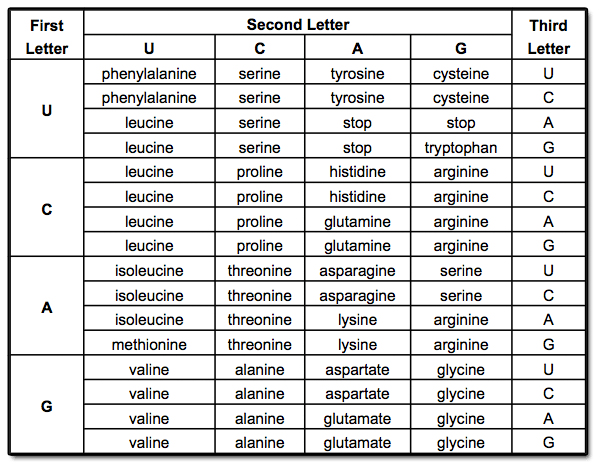

Where does TRANSCRIPTION occur?
Nucleus
Ribosome
Cytoplasm
Mitochondria
The correct sequence of mitosis:
metaphase, anaphase, telophase, prophase
prophase, metaphase, anaphase, telophase
prophase, anaphase, metaphase, telophase
telophase, metaphase, prophase, anaphase
During which cycle can you identify chromosomes
G1 phase
G2 phase
S phase
M phase
Identical halves of a chromosome are called?
Cousins
Chromatids
Centromere
Centrosome
Chromosomes are visible and spindle fibers start to appear
prophase
metaphase
telophase
anaphase
Sister Chromatids separate from each other
prophase
telophase
anaphase
metaphase
Chromosomes line along the center of the cell
anaphase
prophase
metaphase
telophase
In which phase of the cell cycle does the DNA copy itself?
G0
G1
S
G2
M
In which phase of the cell cycle does the cell just "hang out"?
G0
G1
M
G2
S
In which phase of the cell cycle does the cell grow and synthesize most of its proteins?
G0
G1
S
G2
M
In which phase of the cell cycle does the cell divide?
G0
G1
S
G2
M


Which elements can be found in proteins?
C
H
N
P
O
Pick the protein:
sucrose
keratin
glucose
starch
cheese
What can make an enzyme not work?
changing the pH
change the shape
changing the temperature
change the size
which of the following terms refers to the order in which amino acids are linked together in a protein.
Primary
Secondary
Tertiary
Quaternary
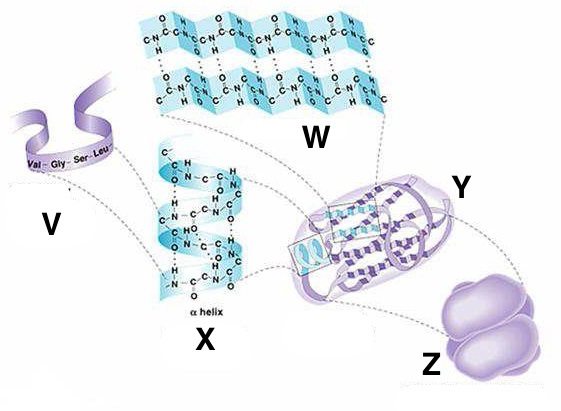
What is one of the functions of a protein?
cell energy
enzymes
long term energy storage
contain genetic information
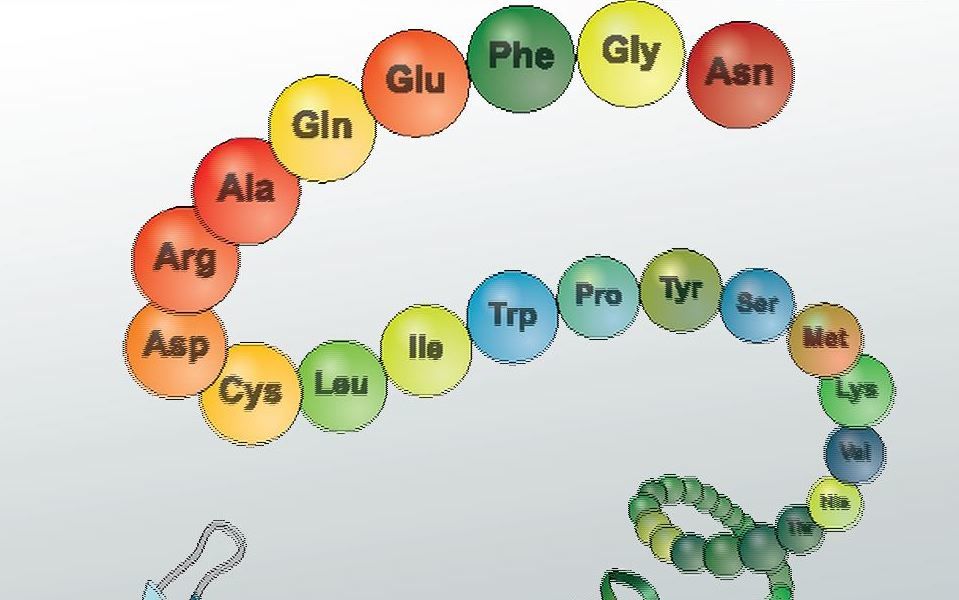

Which of the following describes the secondary structure of proteins?
The sequence of amino acids
The α-helix and β-pleated sheet folding
The folding of the polypeptide chain due to the 'R' groups
The joining of different protein molecules to make one big molecule
What is a of the functionsof a protein?
cell energy
structure
long term energy storage
contain genetic information

Why is folding so important in proteins?
It gives them a unique, 3-D functional shape
It makes them look tidier
It makes every protein molecule different from the next even if they are the same type
The folding is random so is not that important at all

The main bonding in the secondary structure of a protein is due to.....
covalent bonding
ionic bonding
hydrogen bonding
polar bonding

The tertiary structure folding in proteins is primary due to the interactions of....
the 'R' groups
the 'P' groups
the 'A' groups
the 'S'

What is it called when the unique 3-D shape of a protein has been disrupted or 'unravelled'?
Denaturation
Deproteination
Decoupling
Depeptidasing

Which of the following give a protein its unique 3-D shape? (3)
the unique sequence of amino acids in the primary structure
hydrogen bonding to form alpha-helixes and beta-pleated sheets in the secondary structure.
unique interactions between the 'R' groups in the tertiary structure
random folding due to temperature and extreme pH throughout the folding process
unique sequence of monosaccharides in the quaternary structure
Atoms "stick" together through
thick and thin
chemical bonds
adhesion
cohesion
Molecules that have a positively charged side and a negatively charged side are called ____ molecules.
polar
nonpolar
imbalanced
weird
What type of bond holds many water molecules together?
covalent
hydrogen
ionic
metallic
Water has the highest ____ of any other non-metallic liquid.
adhesion
cohesion
bond
polarity
Substances that CANNOT break the cohesion of water are said to be
hydrophobic
hydrophilic
Since more substances can be dissolved in water than any other substance on Earth, it is called the
universal solvent
ultimate solution
united states
untied shoes
Solid water (ice) is ____ dense than liquid water and therefore it floats.
MORE
LESS

The R group of this amino acid is ___ and the hydrogens attached
the black carbons
the blue nitrogen
The red carbonyl
The green carbon
This amino acid is
polar
nonpolar

This amino acid is ____ because its R group has an OH
Polar
Non-polar

This is a ___ amino acid
polar
nonpolar

This amino acid is:
Polar
Nonpolar

This amino acid is ____. Notice that some of the carbons are not shown.
Polar
Non-polar

This amino acid is
Polar
Non-polar

The R-group here is facing ___ (Use the amino and CO2H to orient yourself)
Left
Up
Right
Down

Is this polar?
Yes
No
This is a polar amino acid
True
False
How often does an Alpha Helix complete a rotation?
every 3.4 amino acids
every 3.6 amino acids
every 3.5 amino acids
every 3.7 amino acids
How long are the peptide chains in beta sheets?
3 to 10 amino acids long
10 amino acids long
3 to 9 amino acids long
2 to 8 amino acids long

What type of arrangement is this structure?
Parallel Arrangement
Antiparallel Arrangement
What classifies the secondary structure of protein?
Spiral pattern
Folding pattern
Looping pattern
Zig zag pattern

What type of arrangement is this structure?
Parallel Arrangement
Antiparallel Arrangement
What two groups form a hydrogen bond to stabalize the Alpha helix?
Carboxyl acid and Amide Hydrogen
Carbonyl oxygen and Amine hydrogen
Carbonyl oxygen and Amide hydrogen
Carboxyl acid and Amine hydrogen
How many amino acid residues can an Alpha helix have?
up to 10 amino acid residue
up to 4 amino acid residue
up to 20 amino acid residue
up to 40 amino acid residue
What beta formation does a parallel arrangement create?
Beta turn
Beta hairpin
Beta loop
Beta propellers
What beta formation does an Antiparallel arrangement create?
Beta hairpin
Beta turn
Beta loop
Beta propeller
Which of the following is untrue about homology modeling?
Homology modeling predicts protein structures based on sequence homology with known structures
It is also known as comparative modeling
The principle behind it is that if two proteins share a high enough sequence similarity, they are likely to have very similar three-dimensional structures
It doesn’t involve the evolutionary distances anywhere
In Side Chain Refinement step, A side chain can be built by searching every possible conformation at every torsion angle of the side chain to select the one that has the lowest interaction energy with neighboring atoms.
True
False
Which of the following is untrue about Backbone Model Building Step?
Once optimal alignment is achieved, residues in the aligned regions of the target protein can assume a similar structure as the template proteins
Coordinates of the corresponding residues of the template proteins can be simply copied onto the target protein
If the two residues differ, everything other than the backbone atoms can be copied
If the two aligned residues are identical, coordinates of the side chain atoms are copied along with the main chain atoms
Which of the following is untrue about Sequence Alignment Step?
Once the structure with the highest sequence similarity is identified as a template, the full-length sequences of the template and target proteins need to be realigned using refined alignment algorithms to obtain optimal alignment
The realignment is the most critical step in homology modeling
The realignment directly affects the quality of the final model
Errors made in the alignment step can be corrected in the following modeling steps
Which of the following describes the secondary structure of proteins?
The sequence of amino acids
The α-helix and β-pleated sheet folding
The folding of the polypeptide chain due to the 'R' groups
The joining of different protein molecules to make one big molecule
The main bonding in the secondary structure of a protein is due to.....
covalent bonding
ionic bonding
hydrogen bonding
polar bonding
The tertiary structure folding in proteins is primary due to the interactions of....
the 'R' groups
the 'P' groups
the 'A' groups
the 'S'
which of the following terms refers to the order in which amino acids are linked together in a protein.
Primary
Secondary
Tertiary
Quaternary
The chain of amino acids folds and coils on itself
Primary
Secondary
Tertiary
Quaternary
The entire polypeptide forms a three-dimensional structure
Primary
Secondary
Tertiary
Quaternary
Two or more polypeptides attached together and work as one unit
Primary
Secondary
Tertiary
Quaternary
Proteins that are roughly spherical
globular proteins
fibrous proteins
enzymatic proteins
storage proteins
motor proteins
a conserved part of a given protein sequence and (tertiary) structure , function, and exist independently
(a)
How many nucleotides code for 1 amino acid?
1
2
3
4

Primary Structure
Secondary Structure
Tertiary structure
Quaternary Structure
Sequence of amino acids
Primary Structure
Secondary Structure
Tertiary structure
Quaternary Structure
Is like the order of letters in a very long word. If left to chance, there would be 20 127 different ways of making a polypeptide chain 127 amino acids long.
Primary Structure
Secondary Structure
Tertiary structure
Quaternary Structure
Dictates protein structure, due to the chemical nature of the backbone and the side chains (R groups) of the amino acids along the polypeptide.
Primary Structure
Secondary Structure
Tertiary structure
Quaternary Structure
Linear chain of amino acids
Primary Structure
Secondary Structure
Tertiary structure
Quaternary Structure
Regions stabilized by hydrogen bonds between atoms of the polypeptide backbone
Primary Structure
Secondary Structure
Tertiary structure
Quaternary Structure

Regions stabilized by hydrogen bonds between atoms of the polypeptide backbone
Primary Structure
Secondary Structure
Tertiary structure
Quaternary Structure
A
Alpha Helix
Beta Pleated Sheet
Hydrogen Bond
Peptide Bond
B
Alpha Helix
Beta Pleated Sheet
Hydrogen Bond
Peptide Bond
C
Alpha Helix
Beta Pleated Sheet
Hydrogen Bond
Peptide Bond
Segments of their polypeptide chains repeatedly coiled or folded in patterns that contribute to the protein’s overall shape.
Primary Structure
Secondary Structure
Tertiary structure
Quaternary Structure
Result of hydrogen bonds between the repeating constituents of the polypeptide backbone (not the amino acid side chains).
Primary Structure
Secondary Structure
Tertiary structure
Quaternary Structure
Within the backbone, the oxygen atoms have a partial negative charge, and the hydrogen atoms attached to the nitrogens have a partial positive charge (see Figure 2.14); therefore, hydrogen bonds can form between these atoms.
Primary Structure
Secondary Structure
Tertiary structure
Quaternary Structure
A delicate coil held together by hydrogen bonding between every fourth amino acid
Primary Structure
Secondary Structure
Tertiary structure
Quaternary Structure
A delicate coil held together by hydrogen bonding between every fourth amino acid
Alpha Helix
Beta Pleated Sheet
Hydrogen Bond
Peptide Bond
Two or more segments of the polypeptide chain lying side by side (called β strands) are connected by hydrogen bonds between parts of the two parallel segments of the polypeptide backbone.
Alpha Helix
Beta Pleated Sheet
Hydrogen Bond
Peptide Bond
Two or more segments of the polypeptide chain lying side by side (called β strands) are connected by hydrogen bonds between parts of the two parallel segments of the polypeptide backbone.
Primary Structure
Secondary Structure
Tertiary structure
Quaternary Structure
Three-dimensional shape stabilized by interactions between side chains
Primary Structure
Secondary Structure
Tertiary structure
Quaternary Structure
Hydrophobic interaction. As a polypeptide folds into its functional shape, amino acids with hydrophobic (nonpolar) side chains usually end up in clusters at the core of the protein, out of contact with water.
Primary Structure
Secondary Structure
Tertiary structure
Quaternary Structure
Covalent bonds called disulfide bridges may further reinforce the shape of a protein. Disulfide bridges form where two cysteine monomers, which have sulfhydryl groups (¬SH) on their side chains, are brought close together by the folding of the protein.
Primary Structure
Secondary Structure
Tertiary structure
Quaternary Structure

Primary Structure
Secondary Structure
Tertiary structure
Quaternary Structure
Association of two or more polypeptides
Primary Structure
Secondary Structure
Tertiary structure
Quaternary Structure
Overall protein structure that results from the aggregation of two or more polypeptide subunits.
Primary Structure
Secondary Structure
Tertiary structure
Quaternary Structure

Primary Structure
Secondary Structure
Tertiary structure
Quaternary Structure

Primary Structure
Secondary Structure
Tertiary structure
Quaternary Structure

The chain of amino acids folds and coils on itself
Primary
Secondary
Tertiary
Quaternary
The entire polypeptide forms a three-dimensional structure
Primary
Secondary
Tertiary
Quaternary
During the tertiary folding stage, polar amino acids will orient themselves on the ____________ of the molecule.
interior
exterior
positive side
negative side

To prevent protein aggregation, ___________ bind to hydrophobic patches, and ___________ provide an isolated space for proteins to fold properly.
chaperonins, chaperones
chaperones, chaperonins
PDI enzymes, the ER
In the tertiary structure of proteins, interacting amino acids
are near each other in the amino acid sequence
form hydrogen bonding networks with adjacent amino acids
are not necessarily near each other in the primary sequence
involve only cystine residues
Proper folding of proteins often requires molecular chaperones. Which of the following is not true about molecular chaperones?
all molecular chaperones are proteins themselves
they help prevent hydrophobic segments of proteins from binding to each other
their binding to unfolded proteins is a passive, energy-free process
their sizes range from monomers to large multisubunit proteins
Which phase of the cell cycle is characterized by DNA replication?
G0
G1
S
G2
M

