
 Worksheets
Long Test ITEP 204
Total questions: 45
Worksheet time: 31mins
Describe subquery.
i. It is a query inside another query is possible
ii. Subqueries can be found in different parts of SELECT statements, each with different distinction and requirements.
iii. Subqueries can be inserted into any clauses in the SELECT statement.
The following are the main ways of classifying queries, except:
Which of the following statements is false?
Correlated subquery is a subquery that is related to the outer query while uncorrelated subquery is unrelated and independent of the outer query.
Which of the following are the characteristics of a subquery?
i. A subquery is a query (SELECT statement) inside another query.
ii. A subquery is normally expressed inside parentheses.
iii. The first query in the SQL statement is known as the outer query.
iv. The query inside the SQL statement is known as the inner query.
Type of subquery where the subquery is related to the outer query.
Type of subquery where the subquery is unrelated and completely independent of the outer query.
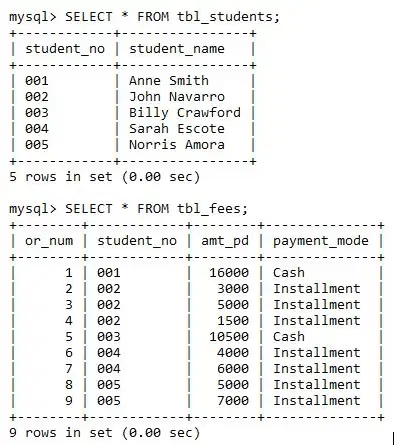
Using the two tables given, what will be the output of the subquery that performs the following syntax, such as SELECT student_no,student_name FROM tbl_students WHERE (SELECT SUM(amt_pd) FROM tbl_fees WHERE tbl_students.student_no = tbl_fees.student_no) <= 12000;

a.

b. From Subquery

c. Correlated Subquery

d. Uncorrelated Subquery
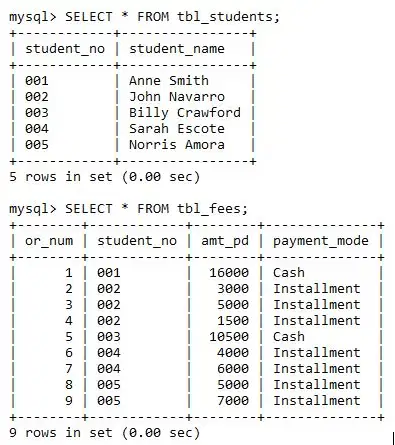
Using the two tables given, What will be the output of the subquery that performs the following syntax, such as SELECT student_no,student_name FROM tbl_students WHERE (SELECT SUM(amt_pd) FROM tbl_fees WHERE tbl_students.student_no = tbl_fees.student_no) > 12000;

a.

b.

c.

d.
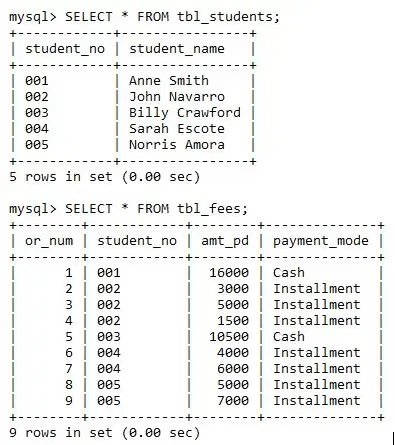
Using the two tables given, What will be the output of the subquery that performs the following syntax, such as SELECT student_no,student_name FROM tbl_students WHERE (SELECT MIN(amt_pd) FROM tbl_fees WHERE tbl_students.student_no = tbl_fees.student_no) < 5000;

a.

b.

c.

d.

Using the two tables given, What will be the output of the subquery that performs the following syntax, such as SELECT student_name, (SELECT COUNT(student_no) FROM tbl_fees WHERE tbl_students.student_no = tbl_fees.student_no) as 'Number of Transaction' FROM tbl_students ORDER by tbl_students.student_no;

a.

b.
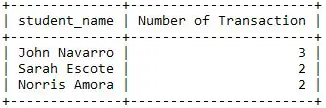
c.
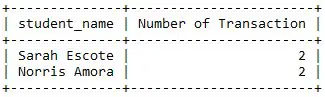
d.
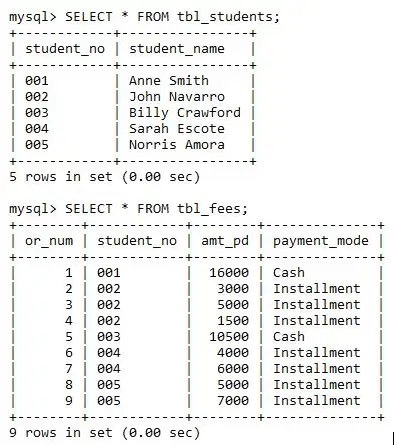
Using the two tables given, What will be the output of the subquery that performs the following syntax, such as SELECT student_name FROM tbl_students,tbl_fees WHERE tbl_students.student_no = tbl_fees.student_no and tbl_fees.payment_mode = 'Cash' GROUP by tbl_students.student_name,tbl_students.student_no;
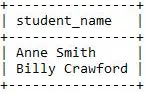
a.
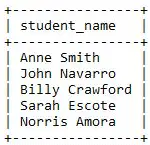
b.

c.

d.
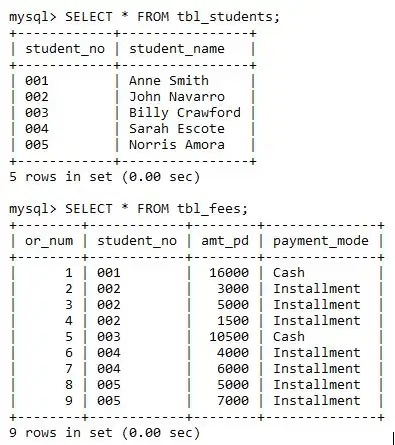
Using the two tables given, What will be the output of the subquery that performs the following syntax, such as SELECT student_no,student_name FROM tbl_students WHERE (SELECT SUM(amt_pd) FROM tbl_fees WHERE tbl_students.student_no = tbl_fees.student_no) > 11000;
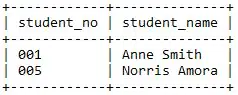
a.
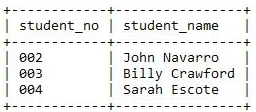
b.
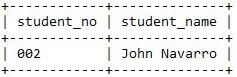
c.
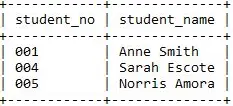
d.
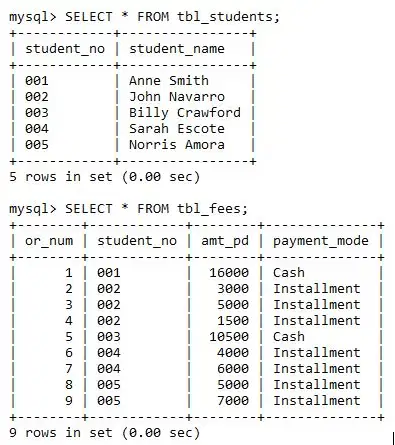
Using the two tables given, What will be the output of the subquery that performs the following syntax, such as SELECT student_no,student_name FROM tbl_students WHERE student_no IN (SELECT student_no FROM tbl_fees WHERE payment_mode='Installment');
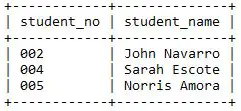
a.
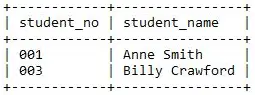
b.
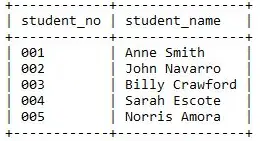
c.

d.
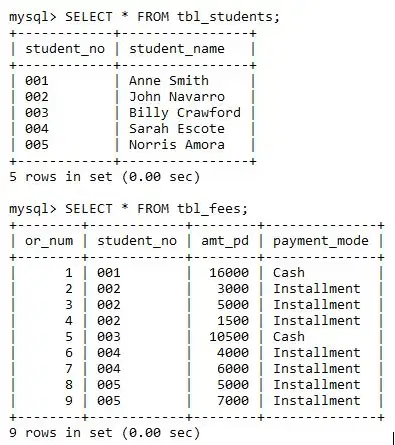
Using the two tables given, What will be the output of the subquery that performs the following syntax, such as SELECT student_no,student_name FROM tbl_students WHERE student_no IN (SELECT student_no FROM tbl_fees WHERE payment_mode='Cash');
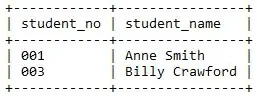
a.

b.
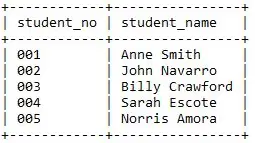
c.
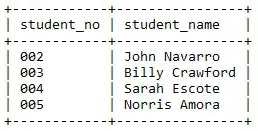
d.
It tries to figure out how to execute queries in the most efficient way possible.
Choose the most optimized query below:
Choose the most optimized query below:
For query optimization, it is recommended to place as many conditions as possible in the WHERE clauses and as few as possible in the HAVING clause.
Describe index.
i. an ordered set of values that contains the index key
ii. index has an index key which causes improvement in data access speed occurs.
iii. data structure used in database systems to perform faster look up
What is the syntax for creating an index?
This clause will be added at the beginning of the SELECT statement to see how MySQL internally performed this query.
In database systems, an index is a data structure that allows for slower lookups.
Searches on the indexed column or columns can be improved significantly with indexes.
What is the correct query for removing the index name ilastname from the tbl_student?
It is not important to retain many generations of backups.
It is a separate file where the DBMS keeps track of the database transactions.
Which of the following information is not included in the log file?
What is the point of synchronization between the database and the transaction log file?
One of the facilities provided by the DBMS which assists in recovery that creates backup copies of the database on a regular basis.
What enables the system to recover the database to a consistent state after a failure?
According to Inmon,the following are the characteristics of a data warehouse except:
This characteristic of a data warehouse creates a tracker that is used to generate reports which includes data changes over time.
This is used to interact with the warehouse to obtain information. Business users use the information obtained for strategic decision-making.
Area of the data warehouse where it performs all the operations associated with the extraction and loading of data into the warehouse.
Operational Data Store is a part of Data Warehouse Architecture. What does Operational Data Store mean?
Describe OLAP.
Describe detailed data as part of a data warehouse architecture.
It is discovering meaningful new correlations, patterns, and trends by mining large amounts of data.
What term was used by IBM to describe the original notion of a data warehouse?
A characteristic of a data warehouse wherein the data are saved in a globally acceptable manner having consistent naming conventions, measurements, encoding structures, and physical characteristics.
According to IBM, a data warehouse is a topic-oriented, integrative, real-time-variant, and non-volatile data collecting system.
The use of a data warehouse requires the use of a small amount of disk space to get the most out of a data warehouse
In the situation of a hidden problem, the developer must then decide whether to address the issue in the data warehouse or the source system.
Successful data warehousing implementation may give a significant competitive advantage since decision-makers can access data on customers, trends, and demands.

