
 Worksheets
Psychology Semester Test
Total questions: 40
Worksheet time: 3hrs 20mins
Name
Class
Date
1.
Which gland is responsible for releasing hormones that activate the sympathetic nervous system?
a)
Adrenal.
b)
Hypothalamus.
c)
Thyroid.
d)
Pancreas.
2.
After a car accident, Jordan has trouble walking in a straight line and keeps losing balance. Their movements seem clumsy and uncoordinated, even though their muscles are not weak. Which part of Jordan’s brain was most likely damaged?
a)
Hippocampus
b)
Broca’s area
c)
Cerebellum
d)
Amygdala
3.
After suffering a stroke, Maria notices that her hands sometimes shake uncontrollably, and she has difficulty starting voluntary movements like standing up or reaching for objects. Which brain structure was most likely affected?
a)
Basal Ganglia
b)
Cerebellum
c)
Wernicke’s area
d)
Hippocampus
4.
A person involved in a severe accident loses the ability to regulate basic functions like breathing and heart rate, and becomes unconscious. Which part of their brain is likely damaged?
a)
Wernicke's area
b)
Broca's area
c)
Amygdala
d)
Medulla
5.
Which system is responsible for processing sensory information, coordinating voluntary and involuntary actions, and transmitting signals throughout the body?
a)
Muscular system
b)
Circulatory system
c)
Nervous system
d)
Digestive system
6.
Which part of the peripheral nervous system controls voluntary muscle movements?
a)
Sympathetic nervous system
b)
Parasympathetic nervous system
c)
Somatic nervous system
d)
Autonomic nervous system
7.
Which system is responsible for regulating involuntary functions such as heart rate, respiratory rate, and digestion through a balance of two opposing mechanisms?
a)
Endocrine system
b)
Lymphatic system
c)
Autonomic nervous system
d)
Musculoskeletal system
8.
Following a traumatic event, a person becomes unusually calm and no longer responds with fear or anger to situations that would normally provoke those emotions. Which brain structure was likely damaged?
a)
Wernicke's area
b)
Broca's area
c)
Amygdala
d)
Medulla
9.
After a head injury, a gymnast has poor coordination, balance problems, and difficulty with fine motor tasks like writing or buttoning clothes. What part of the brain is damaged?
a)
Cerebellum
b)
Occipital Lobe
c)
Amygdala
d)
Hippocampus
10.
A journalist struggles to speak fluently and produces short, incomplete sentences after a stroke, though he understands language. Which area of his brain is damaged?
a)
Wernicke's area
b)
Broca's area
c)
Hippocampus
d)
Cerebellum
11.
A man cannot form new memories after surgery to remove a brain tumor, though he remembers events from before the surgery. What brain structure was likely damaged?
a)
Cerebellum
b)
Hippocampus
c)
Wernicke's Area
d)
Medulla
12.
A musician starts speaking fluently but with nonsensical sentences and has trouble understanding others after a stroke. What part of her brain is affected?
a)
Wernicke's Area
b)
Broca's Area
c)
Hippocampus
d)
Cerebellum
13.
After finishing a challenging workout, Jamie notices her breathing slowing and her heart rate returning to normal. This recovery process is attributed to Jamie's __________.
a)
Parasympathetic nervous system
b)
Muscular system
c)
Sympathetic nervous system
d)
Respiratory system
14.
While preparing dinner, Alex accidentally touches a hot stove and immediately pulls his hand away. Which system is primarily responsible for Alex's sensation of the heat and his reflexive response?
a)
Autonomic nervous system
b)
Somatic nervous system
c)
Endocrine system
d)
Immune system
15.
Lena is about to give a presentation and suddenly feels her stomach churn, her palms sweat, and her heart race. Which system in Lena's body is responding to her nervousness?
a)
Muscular system
b)
Somatic nervous system
c)
Autonomic nervous system
d)
Respiratory system
16.
Alex finds it hard to stay awake during the day and feels excessively sleepy even after a full night's sleep. Which gland is responsible in this scenario?
a)
Pituitary
b)
Adrenal
c)
Thyroid
d)
Pineal
17.
Morgan feels very anxious in social situations and has difficulty forming close relationships. Which gland is responsible in this scenario?
a)
Pituitary
b)
Adrenal
c)
Thyroid
d)
Pineal
18.
Jordan experiences frequent, intense bursts of energy and anxiety, often feeling 'wired' and unable to relax. Which gland is responsible in this scenario?
a)
Pituitary
b)
Adrenal
c)
Thyroid
d)
Pineal
19.
According to the APA Code of Ethics, psychologists should:
a)
Share client information freely with colleagues
b)
Require students to share personal information for training
c)
Offer services only in areas they are competent in
d)
Withhold records if a client hasn't paid
20.
According to the APA Ethics Code, in therapy, psychologists must:
a)
Keep all information confidential, even if the client is in danger
b)
Always use the same treatment approach for all clients
c)
Inform clients about the therapy process and any risks before beginning
d)
Maintain relationships with clients outside of therapy
21.
What is the correct definition of psychology?
a)
The study of human behavior in social settings
b)
The scientific study of behavior and mental processes
c)
The analysis of dreams and unconscious thoughts
d)
The examination of brain structure and function
22.
Who is known as the "father of modern psychology"?
a)
Sigmund Freud
b)
William James
c)
Edward Titchener
d)
Wilhelm Wundt
23.
What is the main focus of functionalism in psychology?
a)
Breaking down mental processes into basic components
b)
Studying the unconscious mind
c)
Examining how behavior and mental processes help organisms adapt
d)
Analyzing how people perceive objects as whole patterns
24.
Which psychologist is associated with classical conditioning?
a)
Sigmund Freud
b)
Wilhelm Wundt
c)
William James
d)
Ivan Pavlov
25.
What is the primary emphasis of Gestalt psychology?
a)
The unconscious mind's influence on behavior
b)
How people perceive whole patterns rather than individual components
c)
The structure of the mind and its basic elements
d)
The function of consciousness in survival
26.
Which modern perspective in psychology emphasizes the role of genetics and brain function?
a)
Cognitive
b)
Humanistic
c)
Sociocultural
d)
Biopsychological
27.
What is the focus of the psychodynamic perspective in modern psychology?
a)
Observable behaviors and environmental factors
b)
Mental processes such as perception and memory
c)
Unconscious processes and internal conflicts
d)
Cultural factors and social interactions
28.
Emily is a high school student who has been feeling anxious and overwhelmed due to an upcoming exam. Which of the following best represents the behavioral perspective?
a)
Emily's anxiety is due to an imbalance of neurotransmitters in her brain, such as low levels of serotonin or an overactive amygdala
b)
Emily’s anxiety is the result of past experiences where she was rewarded for doing well on tests and punished (e.g., bad grades, criticism) when she did poorly, leading her to develop a conditioned fear response.
c)
Emily's anxiety stems from her irrational thoughts about the exam, such as thinking, "If I fail this test, my entire future is ruined."
d)
Emily's anxiety is influenced by societal pressures, such as the cultural importance placed on academic success and the expectations of her peers, parents, and teachers.
29.
James is struggling with motivation at his new job. He feels anxious and unproductive, even though he knows he has the skills to succeed. Which of the following best reflects the cognitive perspective?
a)
James’ lack of motivation could be due to an imbalance of chemicals in his brain, affecting his ability to stay focused and productive.
b)
James’ anxiety and lack of motivation might be linked to unresolved childhood conflicts or unconscious fears of failure.
c)
James is demotivated because he keeps thinking, "I’m not good enough" and "I’ll never meet expectations," leading to feelings of inadequacy and anxiety.
d)
James' lack of motivation is influenced by the company’s work culture, which emphasizes competitiveness and high achievement, causing him stress and anxiety.
30.
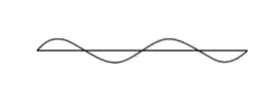
Instead of seeing 4 separate curved images in a line, our eyes follow the path of the wavy line as it intersects the horizontal line . This gestalt principle is called _____.
a)
Continuity
b)
Similarity
c)
Proximity
d)
Figure Ground
31.
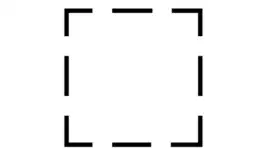
Even though the dotted line gives us an incomplete picture, our mind fills in the gaps so we see a square .
a)
Closure
b)
Figure Ground
c)
Similarity
d)
Proximity
32.
Which statement best describes the difference between sensation and perception?
a)
Sensation is influenced by expectations, while perception is purely biological.
b)
Sensation is the process of detecting physical energy, while perception is the process of interpreting that energy.
c)
Sensation involves the brain only, while perception involves sensory organs only.
d)
Sensation and perception are identical processes.
33.
Your eyes adapt to being in a dark movie theater after several minutes. This is an example of:
a)
Sensory deprivation
b)
Perceptual constancy
c)
Sensory adaptation
d)
Selective attention
34.
A student notices the smell of popcorn when entering the cafeteria, but after a few minutes, she no longer notices it. Which conclusion connects this situation to the ABCs of Sensation?
a)
Her perceptual set prevented her from detecting the smell.
b)
Her JND increased due to signal detection theory.
c)
Sensory adaptation reduced her sensitivity to the smell over time.
d)
She reached her absolute threshold for smell detection.
35.
A student sees an afterimage of green after staring at a red shape for 30 seconds. Which theory best explains this?
a)
Trichromatic theory
b)
Place theory
c)
Opponent-process theory
d)
Frequency theory
36.
Which of the following symptoms is MOST characteristic of Borderline Personality Disorder (BPD)?
a)
Constant need for attention and admiration
b)
Long-term pattern of distrust and suspicion of others
c)
Intense and unstable relationships with rapid emotional shifts
d)
Lack of interest in social relationships
37.
A person with Paranoid Personality Disorder is MOST likely to interpret a harmless comment as:
a)
A sign of friendship
b)
A personal attack or threat
c)
A random misunderstanding
d)
A mistake they made
38.
A key difference between Paranoid Personality Disorder and Schizotypal Personality Disorder is that individuals with Schizotypal PD:
a)
Have strong social support networks
b)
Experience odd thoughts and behaviors beyond just distrust
c)
Are more likely to lie for personal gain
d)
Are generally unaware of their symptoms
39.
An individual who dresses in unusual ways, speaks in vague or metaphorical language, and believes they have telepathic powers fits BEST with which disorder?
a)
Borderline Personality Disorder
b)
Paranoid Personality Disorder
c)
Schizotypal Personality Disorder
d)
Antisocial Personality Disorder
40.
A key difference between Avoidant Personality Disorder and Social Anxiety Disorder is that individuals with Avoidant PD
a)
Only fear one specific type of social situation
b)
Want social connections but feel too inadequate to pursue them
c)
Have no desire for social interaction
d)
Are usually unaware of their symptoms
100 %

