
 Worksheets
First Aid
Total questions: 70
Worksheet time: 1hrs 22mins

CPR means .....
Cardiopulmonary Reflex
Cardio Pulse Response
Cardiopulmonary Resuscitation

With an unresponsive person, CPR takes over for which body systems?
Nervous
Circulatory
Digestive
Muscular
Respiratory

A cycle of CPR is .....
30 compressions / 2 breaths at 150 compressions per minute
20 compressions / 3 breaths at 100 compression per minute
30 compressions / 2 Breaths at 100-120 compressions per minute

Adult CPR compressions should be ....
1inch
1 1/2 inches
2 inches
Which of the following statements is incorrect about performing chest compressions?
allow the chest to come half way to it's normal position
minimize interruptions
press down at least 2 inches
You are first to the scene and you find an unresponsive person who is not breathing and has thrown up. You feel full CPR is not something you are comfortable giving them. What would be the next best thing for you to do?
chest compression only CPR
go and get help
do not start CPR
If you are alone and come upon a person who may need CPR, the first thing you should do is:
activate the emergency response system
go for an AED
make sure the scene is safe

Effective chest compressions
allows the chest to return to its normal position
are delivered fast at a rate of 100 to 120 compressions per minute
are smooth, regular, and given straight up and down
all of the above
If during the second analysis, the AED prompts "no shock advised", you should?
check the pad placement on the person's chest
reset the AED by turning it off for 10 seconds
resume CPR until the AED reanalyzes or you find an obvious sign of life
On the Glasgow Coma Scale, The verbal response test is divided to _____ levels
4
5
6
You are called to see a patient who has fallen through a plate glass door. As you approach the patient you observe that their eyes are extremely swollen and they are unable to open them. How would you record the eye component of the scale?
1
3
not tested
A concussion occurs when your brain:
brain is over used
shifts and bumps against your skull
temperature is too high
Some signs of a concussion are:
Problems sleeping
Headache
Blurry vision
All of these
All concussions are the same for everyone.
True
False
Repeated hits to the head over time can cause long term brain damage.
True
False
If you received a hit to the head you should:
Get information from the internet
See a doctor
Shake it off and continue
The best way to recover from any concussion is to:
Get plenty of rest
Wait at least 24 hours to play again
Take medication
Reading and/or playing video games will help your brain to heal after a concussion.
True
False
Trouble balancing and a persisstant headache could be a sign that you have a concussion.
True
False
A concussion is a type of brain injury that disrupts normal brain function caused by a blow to the head.
True
False
What is anaphylaxis?
A mild allergic reaction that affects only the skin
A severe allergic reaction that can affect the whole body
A psychological response to allergens
What does the term 'allergen' refer to?
A type of bacteria that causes infections
A substance that can cause an allergy
A protein that the body needs
What is anaphylaxis commonly triggered by?
Cold weather
Physical exercise
Allergens like foods and insect stings
What should be done when someone experiences a severe allergic reaction?
Wait for symptoms to resolve on their own
Take immediate emergency action
Drink plenty of water
What is a common respiratory symptom of anaphylaxis?
Flushing
Wheezes or stridor
Low blood pressure
Which of the following is a symptom related to the skin during an anaphylaxis?
Itchiness
Loss of consciousness
wheezing
What is the immediate action recommended for moderate to severe anaphylaxis?
Take an antihistamine
Call 9-1-1 immediately
Wait to see if symptoms improve
What can untreated anaphylaxis lead to within 30 minutes?
Recovery
Mild discomfort
Death
What is the role of an antihistamine in treating mild anaphylaxis?
It increases histamine production
It slows down or stops the actions of histamine
It intensifies the allergic reaction

What is the first step in using the device shown in the image, after checking the expiration date, when administering an injection?
Press the orange end against the skin
Remove the blue cap
Check the expiration date

Where should the orange end of the device be administered?
On the arm
On the thigh
On the abdomen
Which of the following is a true statement about asthma?
Asthma is caused by a virus
Asthma is caused by harmful bacteria
Asthma is fairly common condition
In what way is an asthma attack similar to a heart attack?
Both involve the constriction of an internal passageway
Both usually result in death
Both are caused by exposure to air pollution
What is the direct cause of asthma attacks?
Swelling and excess mucous in the airways
Excess fluid in the air sacs
Infection of the lungs
Which of these can trigger an asthma attack?
Clean, dry air
Drinking a lot of water
Intense anger or stress
What can you infer from the fact that many superstar athletes have asthma?
Asthma isn't really a serious condition
With proper care, asthmatics can do basically anything
Pro athletes can afford to have to have their asthma cured
A 95 year old patient has an accidental fall while going to the bathroom without assistance. It appears the patient has sustained a bone fracture to the right leg. The leg’s shape is deformed and the patient is unable to move it. The patient is alert and oriented but in pain. What will you do FIRST after confirming the patient is safe and stable?
Immobilize the fracture with a splint.
Administer pain medication.
Elevate the extremity above heart level.
A female patient is brought to the emergency room with an injury to her lower leg from an ATV accident. You notice a white tip of a bone protruding through the skin as you cut her pant leg off. Her injury is described as what kind of fracture.
Comminuted
Compound
Simple

Type of fracture?

Transverse Fracture
Greenstick Fracture

Bone breaks incompletely, occurs most commonly during the childhood stages of life.
Compression Fracture

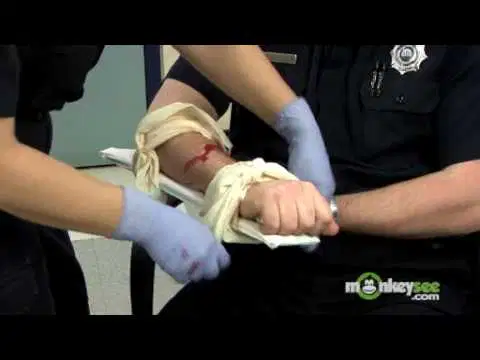
What is the purpose of splinting?
To increase flexibility
To reduce swelling
To immobilize and protect an injured body part
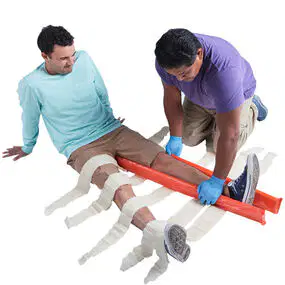
Explain the importance of immobilizing a fractured limb before splinting.
To make the splinting process more challenging
To prevent further damage and reduce pain, stabilize the injury site, and minimize complications during splinting.
To increase blood flow to the injured area
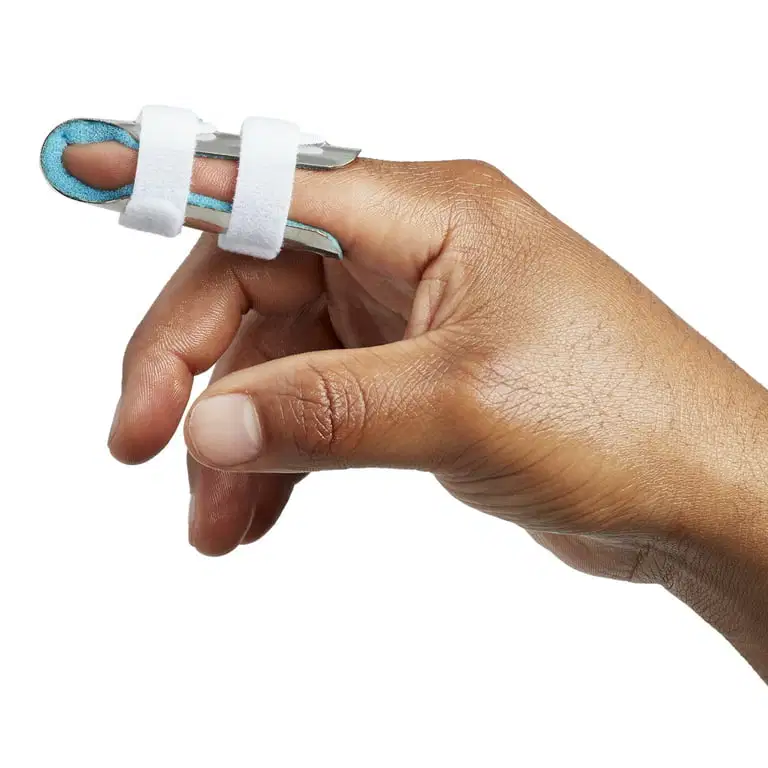
Describe the steps to properly apply a splint to a suspected fracture.
Use a splint that is too loose to allow movement
Skip checking for circulation issues
Check for circulation issues, immobilize the area, pad the splint, secure it in place, and reassess circulation.
What materials are used to wrap someone? check all that apply
Ace Bandage
Tape or metal clips
Padding
Choose all of the materials needed to perform the sling and swathe technique. Check all that apply
Splints
Triangular bandage
ACE wraps/or additional triangular bandages
Safety pins
The fingers should remain accessible (not covered) in a sling and swathe.
True
False
Is a concussion considered a brain injury?
Yes
No
Patient has a GCS score of 10. What is the severity of injury?
Mild
Moderate
Severe
Which of the following is not a component of Cushing triad?
Hypertension
Bradycardia
Irregular respiration
Hypotension
What is mild head injury?
GCS 9-13
GCS 3-8
GCS 14 or 15 with LOC
During a first aid class, Lily, Evelyn, and Maya learned about the recovery position. What is the primary purpose of the recovery position?
It's a more comfortable position for napping
It's a warmer position for cold days
It protects the victim's airway
Imagine Harper, Lily, and David are learning about first aid. They come across the Recovery Position. When SHOULD they use the Recovery Position?
When they have a pulse but no respirations
When the victim is breathing and responsive
When the victim is breathing but unresponsive
Aiden and Zoe are learning about first aid. They are curious to know, how does the Recovery Position help a person in need?
It makes breathing easier for the person and allows fluid to drain from their mouth
It makes breathing easier and the person is more likely to wake up
It makes breathing easier and allows you to open the mouth to check nothing is there
When would be the appropriate time to use a tourniquet?
when there is a bleeding wound on the neck
when there is a wound on an extremity which won't stop bleeding.
never use a tourniquet
Where do you place a tourniquet at on the body?
directly on the end of the wound.
approximately 2 inches below the wound
approximately 2 inches above the wound
If the bleeding does not stop after the application of a tourniquet, apply a second tourniquet.
What type of bleeding produces bright red blood spurts with each heartbeat?
arterial bleeding
venous bleeding
hemorrhage
What are pressure bandages used for when a person is bleeding ?
to stop and/or control the bleeding
to clean the wound
to sterilize the wound
Define hemorrhage?
uncontrollable bleeding
sudden death
heart attack
Which is the most dangerous type of bleeding?
Arterial
Venous
capillary
What is the very first step of taping an ankle?
3 anchor strips
Spray with tuff skin
Place foot in proper position

What is the name of the step that has the arrows on it?
Stirrup
Heel Lock
Figure 8

What is wrong with the positioning of the ankle?
It is in dorsiflexion
It is in plantar flexion
It is in inversion

What technique is pictured with the arrows
Figure 8
Heel lock
Stirrup

