
 Worksheets
Financial Literacy Quiz
Total questions: 112
Worksheet time: 2hrs 52mins
Dominic, Destiny, and Ana are planning a fun trip. Which of the following financial values should they have to avoid overspending?
Budget
Savings
Investments
All of the above
Hey Brittany, Sindel, and Ana! What do you think are the coolest perks and the biggest challenges of earning a college degree?
Hey Jonathan, Karolyn, and Julian! Can you explain what Gross Pay and Net Pay are? What's the big difference between the two? And how would you plan your budget based on your pay?
Miranda and Donovan are discussing their paychecks. Which of the following are deductions that are automatically withdrawn from their paychecks?
Federal and state taxes
Health insurance premiums
Charitable donations
Union dues
Imagine you're chatting with Miranda, Efrain, and Alma about the awesome perks your employer might offer. Can you list as many benefits as you can think of?
Dominic and Sindel are discussing ways to boost their credit scores. Which of the following actions will positively affect your credit score?
Paying bills on time
Maxing out credit cards
Ignoring debt
Missing loan payments
Destiny and Mario are discussing financial habits. Which of the following will negatively affect your credit score?
Paying bills late
Having a high credit card balance
Opening multiple new credit accounts quickly
All of the above
Imagine Dominic and Samantha are discussing how the government funds its activities. Dominic asks, 'From where does the government make its money for Discretionary Spending?' Samantha responds, 'And where does the government get the money to pay for certain mandated obligations to the citizens?'
Taxes and borrowing
Foreign aid
Private donations
State funds
Hey Ana, Shalom, and Jonathan! Ever wondered what a Credit Score is? And what score you should aim for when buying your dream house? Let's dive in!
Hey Efrain and Dominic, when buying a home, what does the Option Period tell you?
The time frame to secure financing
The period to negotiate repairs
The duration to finalize the purchase
The time to conduct inspections and cancel the contract
Hey Samantha, Efrain, and Shalom! Can you name three fun and effective ways to protect yourself from Identity Theft?
Julian, Alma, and Dominic are discussing their budgets. According to the 50, 30, 20 Rule, what percent should they allocate to each category?
50% to needs, 30% to wants, 20% to savings
50% to wants, 30% to needs, 20% to savings
50% to savings, 30% to needs, 20% to wants
50% to needs, 30% to savings, 20% to wants
Destiny and Chris are discussing loans. Destiny asks, "If you have a low Credit Score, can you still get a loan? If you do get the loan, what would be some things you would see happening with the loan?"
Yes, but the interest rate will be higher
No, you cannot get a loan with a low Credit Score
Yes, and the interest rate will be lower
Yes, but you will need a co-signer
Hey Samantha and Jonathan, why do you think it's important to have a good Credit Score? How can having a stellar Credit Score make a difference in your life?
Hey there, future financial wizards! 🌟 What exactly is an Emergency Fund? Can you think of some smart reasons to dip into it? And what about some not-so-smart reasons? Share three good reasons and three bad reasons. Let's hear from Jerry, Dominic, and Karolyn!
Sindel and Mario are planning a party. What is overspending?
Using money you get to spend.
Using more money than you have available.
Using money you have in the bank.
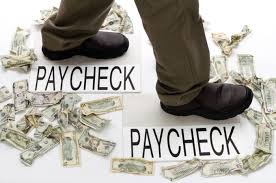
Miguel, Efrain, and Chris are discussing their spending habits. What is a reason why so many Americans live paycheck-to-paycheck?
Many people are paying themselves first and then spending
Many people only buy what they NEED, not what they WANT
Many people impulse shop
Many people spend within their budget

Are you getting excited for Christmas?


Dominic and Julissa are discussing their finances. Dominic says, 'Anything that you spend money on is called what?'
income
expense
deposit
withdrawal
Dominic and Samantha are discussing their finances. Check all statements that are true about a balanced budget.
A balanced budget is when you have more expense than income.
A balanced budget is when you have the same number of ten dollar bills as one dollar bills.
A balanced budget is when income is equal to or greater than expenses.
A balanced budget helps you make responsible spending and saving decisions.
Shalom and Ana are planning to use the 50/30/20 rule for their budget. How will they split their budget?
50% needs, 30% wants, 20% savings
50% budget, 30% needs, 20% wants
50% saving, 30% needs, 20% wants
$50 needs, $30 wants, $20 savings
Match the following
Income
The money a person gets from a job or for performing a service
Savings
Money that is set aside for later use
Expenses
Items that use up one's income
Budget
A plan for tracking a person's income and expenses.
Alma and Mario are discussing their bank accounts. What is it called when someone doesn't have enough money in an account to cover a charge?
Insufficient funds
Compound interest
Pending charge
Negative balance

Donovan and Miranda are at the electronics store with a $50 bill. Their total purchase, after tax, comes to $49.95. Can they afford this purchase?
Yes
No
Not sure
Personal finance is like a game! Dominic says it's (a) behavior, while Miranda thinks it's (b) head knowledge. What do you think?
80%
20%
30%
70%
60%
40%
Sindel and Chris are planning to save some money in the bank while ensuring they have enough for their needs. This behavior is...
Not responsible
Irresponsible
Financially Responsible
Income

When Samantha and Jerry plan their budget or go shopping, what do they need to know?
How much they will get paid next week.
How much money they have
Weekend plans
Samantha and Dominic are discussing financial habits. What is the purpose of a budget?
To limit spending and track income and expenses
To obtain a high credit score
To borrow money from friends or family
Jerry, Sindel, and Jonathan are discussing their top spending categories. Can you guess what one of the top spending categories for teenagers is?
Food
Vacations
Hobbies
Medical Expenses
Ana and Chris are planning a fun trip! Making a ________ helps them see how much $ they have and decide how much they can spend.
savings account
job
check book
budget

Brittany and Chris are discussing financial literacy. What is the first rule of financial literacy?
Spend your money - you earned it.
Always put your money in a safe place.
Never lend money to friends.
Pay yourself first.

Julissa has $225.25 and she decides to buy some cool gadgets for $175.75. How much money does Julissa have left?
(a)
Imagine Miranda and Chris are planning for their future. What do they call the money they put away or in a bank for the future?
Expense
Savings
Income
Shalom and Chris were discussing finances. Shalom said, 'You will go into (a) if you spend more money than you have.'
Hey Julian and Alma, should you spend ALL your money the same day that you get it?
Yes, live like a rockstar!
No, save some for later!
Sure, why not?
Chris, Samantha, and Jonathan are planning for prom night! Can you guess how much the average high school student spends on prom expenses?
$1,000
$500
$750
$1,500
Do you consider yourself to be a spender or a saver of money?
spender
saver
Brittany, Karolyn, and Jonathan are planning a surprise party. Why is it important for them to set aside money in case of …...
a decrease in expenses
income increases
routine expenses
unexpected expenses
Who can help you budget your money wisely, just like Samantha, Efrain, and Ana do?
strangers
neighbors
family
Ana and Julian are considering buying a nearby cleaning company that would bring in an extra $5,000 quarterly. How much extra income would they have in a year?
$15,000
$6,000
$60,000
$20,000
Imagine you're helping Jerry, Samantha, and Ana with their personal finance skills. Which of these outcomes are they more likely to achieve? Check all that apply.
A person can avoid opportunity cost.
A person can be more prepared to meet basic needs.
A person can avoid financial decision-making
A person can spend money thoughtfully to accumulate assets.
A person can spend wisely to avoid financial problems.
Sindel and Julian are discussing their paychecks. What is gross pay?
The money that you earn before taking out deductions
The money that you earn after taking out deductions
Julian and Destiny are discussing their paychecks. What is net pay?
The money that you earn before taking out deductions
The money that you earn after taking out deductions
Julissa has a regular hourly rate of $10.75. In a week when she worked 40 hours and had deductions of $55 for federal income tax, $26.75 for social security tax, and $6.25 for Medicare tax, her net pay was:
$430
$342
$375
$397
Imagine Chris and Sindel are discussing their finances. Chris asks, 'What do you call the money a worker has earned from January 1 until now?' Can you help them out?
net earning
gross earnings
earnings year-to-date
pay period
Miranda and Mario are discussing their dream jobs. What is the term for a fixed regular payment, typically paid on a monthly or biweekly basis but often expressed as an annual sum, made by an employer to an employee?
Salary
Education
Wage
Your Money
Ana and Jerry are discussing their paychecks. Ana's paycheck shows a gross pay of $250 and a net pay of $200. How much money did she have in deductions this pay period?
$50.00
$200.00
$250.00
$450.00
Sindel and Chris are discussing apartment rentals. Sindel says a security deposit covers the rent for the first month when moving into an apartment. Is she correct?
True
False

Miranda and Efrain are discussing ways to save money. What is a fun and effective strategy they can use?
1st, spend money on all expenses; put the rest into saving
Tap into your savings on a regular basis to purchase small items, like snacks
Pay yourself first - set aside money for savings each month
Keep your spending and saving money together in 1 account
Hey Donovan, Shalom, and Ana! What’s the golden rule of financial literacy?
Spend your money - you earned it.
Always put your money in a safe place.
Never lend money to friends.
Pay yourself first.
Julissa and Mario are discussing ways to get out of debt. Which of the following is not a good idea?
Quit borrowing money
Get a part-time job or work overtime
Sell something
Borrow money from your parents to pay for the debt
Dominic and Ana are discussing the debt snowball method of getting out of debt. Which of the following is not recommended in this method?
List your debts in order from smallest to largest balance and focus on paying the smallest debt off first.
Every extra dollar you get should be thrown at the largest debt first.
Attack your debt with intensity.
Every time you pay off a debt, you add its old minimum payment to your next debt payment.
Shalom, Mario, and Karolyn are planning a fun trip. What do they need to create to manage their expenses?
A detailed plan for spending money
A list of favorite items to buy
A record of past purchases
A type of savings account

Christie makes changes to her budget at the end of every month. What is her reason for doing this in terms of smart financial planning?
She is not satisfied with the monthly budget outcome.
Her needs keep changing, so she changes her monthly budget.
She is reviewing her goals and aligning the budget to work toward them.
She keeps changing her mind about her goals.
Bank statements, credit statements, and records of cash expenses help you to estimate your ________.
credit score
emergency fund needs
expenses
available investments
Earning a degree can be expensive but which example shows why it might be worth it?
You are more likely to earn more money over your lifetime than if you did not have a degree.
A degree allows you to earn a salary instead of an hourly wage.
You can get a job that pays back the costs of a degree.
A high school diploma allows you earn money instead of going into debt.
True or false: You earned a grant your first semester in college, but you failed a class. Now you have to pay a portion of the grant back.
___________________ are fees paid to a school in order to attend and receive instruction.
Scholarships
Loans
Tuition
Tutoring
Living on campus while earning your degree can help you save money on...
transportation.
room and board.
books and supplies.
tuition.
What are the benefits of attending a local community college?
It is cheaper to earn an Associate’s degree at a community college and then transfer to a four-year
college to finish.
You can live at home and save dorm fees while earning an Associate’s degree.
Choosing a local community college within closer driving range saves on transportation costs.
All of the above.

What is a benefit of going to college and having a college degree?
Lower lifetime earnings
Lower interest rates on future loans
Expanded professional and social netowrk
Guaranteed starting salary of $50,000 after graduation
Money earned when something is sold. It is usually stated as a percentage
commission
collateral
liquid asset
liability
Having a great credit score will make it easier for you to get into a better educational institution.
True
False
Textbooks, transportation and room and board are all...
included in the price of attending a college or university.
additional costs for attending a college or university.
included in a school's tuition.
usually offered to students who stay on campus.
Which is NOT considered an additional cost beyond tuition for higher education?
Textbooks and supplies
Academic counseling
Room and board
Transportation
Preparing to pay for higher education can start in 9th grade or earlier by...
applying for scholarships.
opening a 529 plan.
taking out student loans.
applying for grants.
financial aid
Personal finance is (a) behavior, (b) head knowledge.
Which of the following answers lists 4 year colleges from generally the least expensive to most expensive?
In-state public university, private university, out-of-state public university
In-state public university, out-of-state public university, private university
Private university, in-state public university, out-of-state public university
Out-of-state public university, private university, in-state public university
Money earned through work.
withdrawal
expense
deposit
income
The money that a worker earned from January 1 until now is his or her
net earning
gross earnings
earnings year-to date
pay period
Everyone interested in post secondary education should complete the Free Application for Federal Student Aid (FAFSA) because...
it gives you access to private student loans.
it gives you access to private student loans.
it allows you to be eligible for federal student aid and other scholarships and grants.
it is a requirement for college admission.
What is the total amount of money an employee earns in a pay period before deductions?
Net Earnings
Salary
Gross Earnings
Net Pay
This is the total amount that you actually earn before anything is subtracted:
Taxes
Budget
Deductions
Gross Pay
Buying a nearby cleaning company that would bring in an extra $5,000 quarterly.
$15,000
$6,000
$60,000
$20,000
What factors affect a credit score?
Type of debt
New Debt
Duration of Debt
All of the above
What are the two most important factors in calculating your credit score?
Which of the following does NOT contribute to your credit score?
Your payment history
Your debt-to-credit ratio
Length of credit history
Which banks issued your credit cards
Which of the following things does NOT affect your credit score?
Paying your bills on time
Your parents' credit rating.
Skipping payments on your cell phone account
The kind of credit you have
What is a benefit of having a good credit score?
Loan sharks will be less likely to bother you.
You'll get accepted to better education institutions.
You'll get more job offers.
When you need a loan, you'll have more loan offers to pick from.
Which of the following service providers may use credit scores to decide whether a person can buy a service and/or what price he or she will pay?
Gas/Electric Company
Care Loan Lender
Credit Card Issuer
All of the answer choices are correct.
Which of these credit scores represents the worst credit rating?
702
350
810
512
You can improve bad credit in a few months.
True
False
Your credit score rules your life - that's reality. Which of these statements is NOT reality?
The lower the credit score, the greater chance you have of being ripped off when it comes to the rate you will pay for everything.
If you are from a low-income family, your chances of being hurt because of risk-based financing are a lot greater simply because you are from a low-income family.
You make payments on time but they do not help your credit score because your payments are being made to a "rent-to-own" company
You can ignore your credit score, and won't be hurt by doing so
Payment history accounts for around _______ of your credit score.
1/2
3/4
35%
90%
All of the following would show up on a credit report EXCEPT...
Who is in charge of your credit record and credit score?
Your parents
The businesses that gives you a loan or rent you an apartment.
Your high school business teacher.
You
Which statement is true?
Since my credit score is going to impact my freedom, my job, and my goodie collection, I should start thinking about my credit score now.
Credit scores don't have anything to do with me yet. After my thirtieth birthday. That's when I'll worry about credit scores!
Jim is 23 and has 1 credit card. What would be the best way to improve his credit score; (hint: choose 2 correct answers)
Get 4 more credit cards in the next 3 months
Diversify his credit - get a loan for the car he needs
Make sure he pays his payments in full and on time
Increase his credit utilization rate
Only credit bureaus keep records of your payment history, not other companies
True
False
Which of the following is a voluntary deduction?
Federal Income Tax
FICA Tax
State Income Tax
Union Dues
What does FICA stand for?
(a)
A single person will have less income tax withheld than a married employee.
True
False
Do people get to keep all the money they make at a job?
Yes!
No, you have some money taken out for taxes and other things.
No clue
What is the purpose of the W-4 form?
To file your tax return.
To determine how much your gross pay should be.
To inform your employer of how much federal income tax to withhold from your paychecks.
To avoid paying income taxes on your paychecks.
Madison earns $1,050.33 each pay. How much will be deducted for Social Security taxes?
$65.12
$16.94
$62.12
$37.50
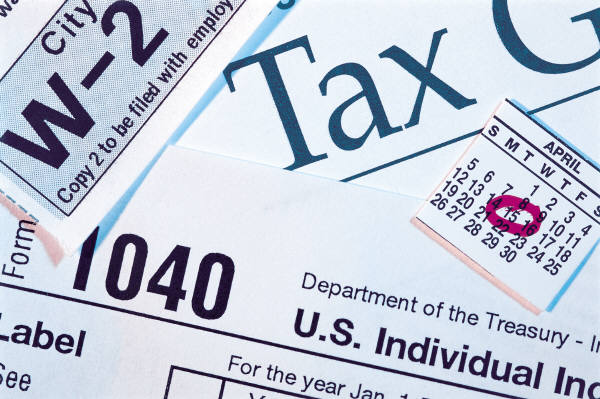
Which of the following things is TRUE about the W-2 form EXCEPT...
You get 1 W-2 form every year, even if you had multiple jobs
It contains information you'll need to fill out a 1040
It lets you know how much you earned last year
It lets you know how much was withheld from your paychecks
What does the W-2 form tell you?
How much you've earned and how much taxes you've paid in the last year.
When to file your tax return.
How much federal income tax your employer will withhold from your paycheck.
How often your employer will be paying you.
Match the following
Income
The money a person gets from a job or for performing a service
Savings
Money that is set aside for later use
Expenses
Items that use up one's income
Budget
A plan for tracking a person's income and expenses.
Personal finance is (a) behavior, (b) head knowledge.
(a) based on the number of credits you receive and you should NOT count on it as a sole retirement fund.
(a) Never borrow money to invest.
Making a ________ helps you see how much $ you have and decide how much you can spend.
savings account
job
check book
budget
Match the following
Income
The money a person gets from a job or for performing a service
Savings
Money that is set aside for later use
Expenses
Items that use up one's income
Budget
A plan for tracking a person's income and expenses.

