
 Worksheets
Intro to Robotics ACP
Total questions: 56
Worksheet time: 2hrs 32mins
What does a 1:6 gear ratio mean?
It means the input gear has to turn 1 time to turn the output gear 6 times.
It means the output gear has to turn 1 time to turn the input gear 6 times.

When a input gear is larger than a output gear you have.....
Increased Speed
Increased Torque

What is the function of the smaller or "idle" gear?
Makes the output gear turn slower
Makes the output gear turn faster
Makes the larger gears turn in opposite directions.
Makes the larger gears turn in the same direction.

A 36 tooth driving gear (connected to the motor) is moving a 12 tooth driven gear. What is the gear ratio?... It has a speed advantage.
3:1
1:3
3:3
1:1

A 12 Tooth driving gear (connected to the motor) is connected to a 36 tooth driven gear. What is the gear ratio and mechanical advantage?
3 : 1 Torque Advantage
3 : 1 Speed Advantage
no Mechanical Advantage
1 : 3 Torque Advantage
What is the gear ratio with a driving gear with 40 teeth and a driven gear with 8 teeth?
Make sure ratio is reduced to lowest terms
8 : 40
1 : 5
5 : 1
40 : 8
What is the Gear Ratio of a driven gear with 8 teeth and a driving gear with 32 teeth?
Make sure ratio is reduced to lowest terms
8 : 32
32 : 8
1 : 4
4 : 1
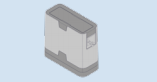
What is this part?
brain
smart motor
beam
corner connector
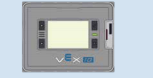
What is this part?
robot brain
controllor
sensor
motor
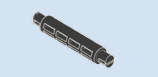
What is this part?
connector pin
shaft
standoff
standoff connector

What is this part?
rubber shaft collar
wheel hub
tire
gear
The VEX IQ motors are designed to accept a ______ which can be run thru a gear or wheel.
cable
program
shaft rod
o-ring
How can you increase the speed of your robot?
Put a big gear on the motor and a small gear on the wheel
Put a small gear on the motor and a big gear on the wheel
Lower the RPMs
Change drivers
The "chip" on the brain and radio are called what?
Power chip
Smart Motor
Smart Radio
Smart Sensor
The more torque your robot has, the faster it will go...
True
False
What would be a good gear set for a drag race?
60 tooth on the motor/12 tooth on the wheel
12 tooth on the motor/60 tooth on the wheel
36 tooth on the motor/36 tooth on the wheel
12 tooth on the motor/12 tooth on the wheel
For a pushing challenge, what would be the best gear setup?
60 tooth on motor/12 tooth on wheel
12 tooth on motor/12 tooth on wheel
36 tooth on motor/36 tooth on wheel
12 tooth on motor/60 tooth on wheel

What does the VEX IQ Bumper Switch do when it is pressed?
It increases the speed of the robot.
It stops the robot immediately.
It sends a signal to the robot's brain.
It changes the direction of the robot.

What can the Touch LED on a VEX IQ robot be used for?
Measuring the distance to an object.
Detecting the color of an object.
Indicating the status of the robot.
Increasing the robot's speed.
In block coding, what does a loop block do?
It stops the program.
It repeats a set of instructions a specific number of times.
It makes the robot move faster.
It sends a signal to an external device.
What is the general function of the VEX IQ Bumper Switch in a robot's code?
By using it to start the robot.
By using it to stop the robot's program.
By using it as a trigger for certain actions when pressed.
By using it to increase the brightness of the Touch LED.
What is an essential concept to understand when starting with block coding?
How to write complex mathematical equations.
The use of loops and conditionals.
The need for understanding binary code.
The importance of high-speed internet connectivity.
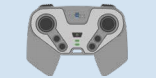
What is this part?
robot brain
radio
motor
controller
The ___ detects obstacles by measuring the time taken for ultrasonic sound waves to bounce back
distance sensor
touch LED
color sensor
bumper switch

What will this cause the Robot to do?
When this program starts the Touch LED will display red
This program will drive in a square
This program will drive forward unless the Color Sensor detects red.
This program moves the Robot backwards when the button is pushed

Name that VexIQ...
Sensor-bot
Claw-bot
Hexbug
Manipulators
If you wanted to pick up cubes with the VexIQ claw-bots arm, which of the following mechanical advantages would be best to have?
Torque
Speed
Dimension
Motion

What does this program do?
Lower the claw 90 degrees
Raise the claw 90 degrees


Which direction will the large gear travel?
No way to determine this with the information provided.
Both
Left
Right

This gear train has NO mechanical advantage.
True
False
Unknown with information provided
The purpose of a gear train is to...
provide all gears with mechanical advantages
cause energy output from motor to brain
transfer motion from one part of a robot to another
transfer radio signals for tele-operative purposes
What happens when forces are balanced on your robot?
The robot moves
The robot will not move
The robot's mass will decrease
The robot's mass will increase
Which of the following best describes an unbalanced force?
All the forces are balanced
Force applied in one direction is the same as the force applied in the opposite direction
Force applied in multiple directions balance each other out
Force applied in one direction is greater than the force applied in the opposite direction
Initial force input for your robot comes from the
Wheels
Shafts
Motors
Gears
In order for a robot to push or pull another object, the force generated by the robot must be
Greater than any opposing forces.
Less than any opposing forces.
Equal to any opposing forces.
What is a gear train?
A type of VEX IQ robot
A mechanism made up of two or more gears
One gear that is moved to different places on a robot between builds
A type of force
Using gears for mechanical advantage allows us to multiply or reduce that amount of _____ force without having to adjust the _____ force or change the direction of rotation.
Directional, speed
Speed, torque
Mechanical, electrical
Output, input
TRUE or FALSE: Center of mass is the point on an object where force is applied so that it moves without rotation.
TRUE
FALSE
What is mass?
Another name for planetary force
The speed of an object as it moves
The amount of force applied by gravity to an object
The amount of matter or substance that makes up an object
Understanding where the center of mass is on your robot can help you do which of the following?
Add mass to your robot without making it tip over
Manipulate the gear train more quickly
Code the Bumper Switch in VEXcode IQ

What behavior will the VR Robot perform if the condition of the Left Bumper Sensor being pressed is TRUE?
The VR Robot will continue to drive forward forever.
The VR Robot will drive in reverse for 50 millimeters (mm) and then turn left for 90 degrees.
The VR Robot will stop moving.
The VR Robot will drive forward for 50 millimeters (mm) and then turn right for 90 degrees.

What part of the block do you
select to change the direction of the drive forward block?
1
2
3
4

Identify this block.
drive block
control block
drawing block
sensing block

Which of the following describes why a Repeat block would be used in a project?
To repeat certain blocks forever.
To save space and time for blocks that repeat more than once in a project.
To only run a stack of blocks one time.
To run an attached stack of blocks when the project is started.

What behavior will the VR robot perform if the condition of the Left Bumper Sensor being pressed is TRUE?
The VR robot will continue to drive forward forever.
The VR robot will drive in reverse for 50mm and then turn left for 90 degrees.
The VR robot will stop moving.
The VR robot will drive forward for 50mm and then turn right for 90 degrees.

In this project, how many times will the [Drive] block be repeated?
It will be repeated forever.
It will repeat 100 times.
It will repeat 90 times.
It will repeat once.

This project is intended to drive the robot forward for 300mm, then turn right for 180 degrees, and drive forward for 300mm to return to its original location, however it is not working as intended. Which of the following best describes the problem in the project?
The [Turn for] block should be replaced with a [Turn] block
The parameter of the [Turn for] block should be set to 90 degrees
The second [Drive] block should be set to reverse
Both [Drive] blocks should be replaced with [Drive for] blocks with the parameters set to ‘forward’ and ‘300 mm’

How can the following example be simplified by using a [Repeat] block?
By placing the drive forward and turn blocks in a [Repeat] block that repeats four times.
By placing the drive forward block in a [Repeat] block that repeats four times.
By placing the turn block in a [Repeat] block that repeats four times.
By changing all of the parameters of the drive forward blocks to 400mm instead of 200 mm.

Which of the following best explains why a [Repeat until] block was used in this project instead of a [Wait until]?
Using a [Wait until] block would block the project flow. The VR Robot would be waiting until the Down Eye Sensor detected red before doing anything else. This would cause the VR Robot not to move.
Using a [Wait until] block allows the robot to drive forward for 300 millimeters (mm) and then turn right for 90 degrees, forever.
Using a [Wait until] block allows the condition of an object being detected to be constantly checked. This allows the VR Robot to drive toward an object when it is detected and turn if not.
Using a [Wait until] block allows the conditions of the [If then else] block to be skipped. This allows the project flow to execute much faster, as the condition of an object being detected only need to be checked once in the project.

