
 Worksheets
practice test web, erosion, renewable and non-erosion
Total questions: 48
Worksheet time: 2hrs 16mins
non-renewable resource
can be replaced
limited amounts
there is plenty of
wood
renewable
non-renewable
natural gas
renewable
non-renewable
wind
renewable
non-renewable

A students places different samples of soils in 5 different cups with a whole at the bottom. They place another cup right below each cup and pour water into the top cup. The student then measures the time it takes for the water to begin to drip from the bottom of each cup.
What property is the student most likely testing with this procedure?
The differences of texture between wet and dry soils.
How well different soils retain water.
How much water is needed to dissolve different soils.
The amount of time it takes different soils to dry.
process by which
weathered and eroded
material is deposited by
wind, water, and ice
Conserve
Humus
Soil
Deposition
the movement of
weathered material by
wind, water, or ice (e.g.
glaciers)
Erosion
Humus
Soil
Weathering

The original source of energy for a food web is...
plants
sun
producers
decomposers

Arrows in a food web represent...
eating
sunlight
energy
matter

What are the 3 agents of change responsible for changing landforms?
wind
water
ice
steam
U-shaped valleys and moraines are created by...
glaciers
fast water
wind
giants with shovels

This landform is called a...
Sand Dune
Sea Arch
Delta
U-Shaped Valley

What agent of change caused the SEA arch?
Water
Mud
Glacier

Which object would a magnet attract?
a glass bottle
a piece of paper
a steel paper clip
a rubber eraser

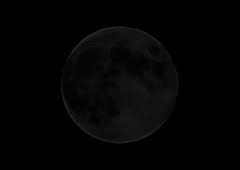


This model is showing us a...
lunar eclipse
solar eclipse
phases of the moon
earth eclipse

This image is showing us a.....
solar eclipse
lunar eclipse
phases of the moon
earth eclipse
When the sun gets lower in the sky, shadows get______.
longer
gone
shorter
darker
Shadows are longest during _______.
morning and evening
noon
night
Shadows are shortest around______.
morning and evening
noon
night
When an object blocks the path of light, what is formed?
A problem
A fog
A reflection
A shadow

Where will the tree's shadow be?
A
B
C

What is camouflage?
an inherited behavior, something the animal is born knowing what to do
allows an animal to blend in with its surroundings
a set of instructions given from parent to offspring
a characteristic of an organism

Many animals in an ecosystem depend on other animals for —
shelter
water and air
energy
support

Is a mushroom growing from the ground living, or nonliving?
What is an organism?
An organism is a non-living thing like air, water, and the sun.
An organism is a living thing that can live on its own.
An organisms is a living thing such as rocks and plants.
An organism is a non-living thing like people, plants, and animals.
Freezing is what happens when
a liquid changes to solid
gas changes to liquid
solid changes to liquid
Condensation happens when
gas changes to liquid.
liquid changes to gas.
water vapor changes to ice
The process of a liquid changing to gas is called
vaporization

a force that pulls objects toward each other
Friction
Force
Gravity
Magnetism


A rain gauge is a device that collects rainfall.
True
False

What is the temperature on the thermometer?
95° F
96° F
97° F
98° F

