wayground logo

Free Printable Worksheets

NEW

Font size

S
M
L
XL
Worksheets

Food Chain and Symbiosis

Total questions: 30

Worksheet time: 27mins

Name
Class
Date
1.

This is an example of

a)

food chain

b)

food web

2.
A food chain shows the transfer of ___ from one organism to another. 
a)
matter
b)
consumers
c)
energy
d)
habitat
3.
How do producers obtain energy?
a)

They do photosynthesis.

b)
They consume plants.
c)
They consume primary consumers.
d)
They consume secondary consumers.
4.
A food web can be broken down into several seperate
a)
food chains
b)
food pyramids
c)
producers
d)
consumers
5.
__________ is an organism that only eats plants for energy.
a)
Carnivore
b)
Herbivore
c)
Omnivore
d)
Terivore
6.
__________ is an organism that only eats meat for energy.
a)
Omnivore
b)
Borivore
c)
Herbivore
d)
Carnivore
7.
__________ is an organism that eats BOTH plants and animals for energy.
a)
Omnivore
b)
Darnivore
c)
Carnivore
d)
Herbiovre
8.
In this food chain, what will happen if the frogs become extinct?
a)
The snakes will increase.
b)
The grasshoppers will decrease.
c)
The eagles will remain the same.
d)
The grasshoppers will increase.
9.
What percentage of energy is passed on to each tropic level?
a)
10%
b)
50%
c)
90%
d)
100%
10.
an example of producer consumer relationship would be
a)
lion eating a deer
b)
grasshopper getting energy from grass
c)
hawk getting energy from snakes
d)
earthworm breaking down dead material
11.
Use the diagram to answer the question.
The Mayfly is a food source for which 3 organisms?
a)
Frog, Dragon Fly and snake
b)
Frog, trout and dragon fly
c)
Frog, salamander and trout
d)
Frog and phytoplankton
12.
Use the diagram answer the question.
What is a fitting description for this diagram?
a)
A Food Chain
b)
An Ecosystem
c)
A Food Web
d)
Biotic and Abiotic Factors
13.

Which of the following is producer/autotroph?

a)

rabbit

b)

frog

c)

tree

d)

worm

14.

Using the food web which of the following is a primary consumer?

a)

butterfy

b)

snake

c)

fox

d)

frog

15.

Using food web which of the following is a secondary consumer?

a)

snake

b)

worm

c)

butterfy

d)

squirrel

16.

Which of the following shows the symbiotic relationship between the Rodent and the Bird?

a)

Competition (interspecific)

b)

Parasitism

c)

Mutualism

d)

Competition (intraspecific)

17.
a relationship that occurs when two or more organims of the same species need the same resource at the same time
a)

competition (interspecific)

b)

mutualism

c)
predation
d)

competition (intraspecific)

18.
1.  A bee and a flower work together to benefit each other. This is an example of _________________. The bee helps the flower by pollinating it and the flower helps the bee by providing it with nectar. 
a)

commensalism

b)

parasitism

c)

mutualism

19.
A coyote captures, kills, and eats a rabbit. What type of symbiotic relationship is this?
a)
mutualism
b)
commensalism
c)
parasitism
d)
predation
20.

Symbiosis between mosquito and human...

a)

Predation

b)

Parasitism

c)

Mutualism

d)

Commensalism

21.
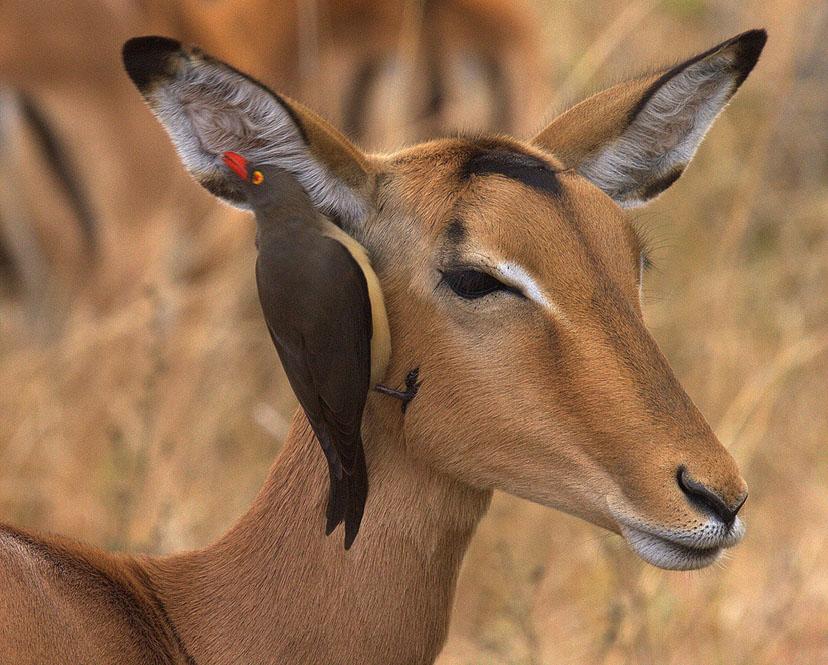
Red-billed oxpeckers are birds that often feed on parasites that infest impala.  This is an example of _______.
a)
commensalism
b)
mutualism
c)
neutralism
d)
competition
22.

Barnacles create home sites by attaching themselves to whales. In this relationship, the whales are neither harmed nor benefited. What type of symbiosis is this relationship?

a)

parasitism

b)

commensalism

c)

mutualism

23.
Remoras attach themselves to a shark’s body. They then travel with the shark and feed on the leftover food scraps from the shark’s meals. The relationship neither harms nor benefits the shark. 
a)
parasitism
b)
commensalism
c)
mutualism
24.
Mistletoe extracts water and nutrients from a spruce tree. The spruce tree is harmed. 
a)
parasitism
b)
commensalism
c)
mutualism
25.
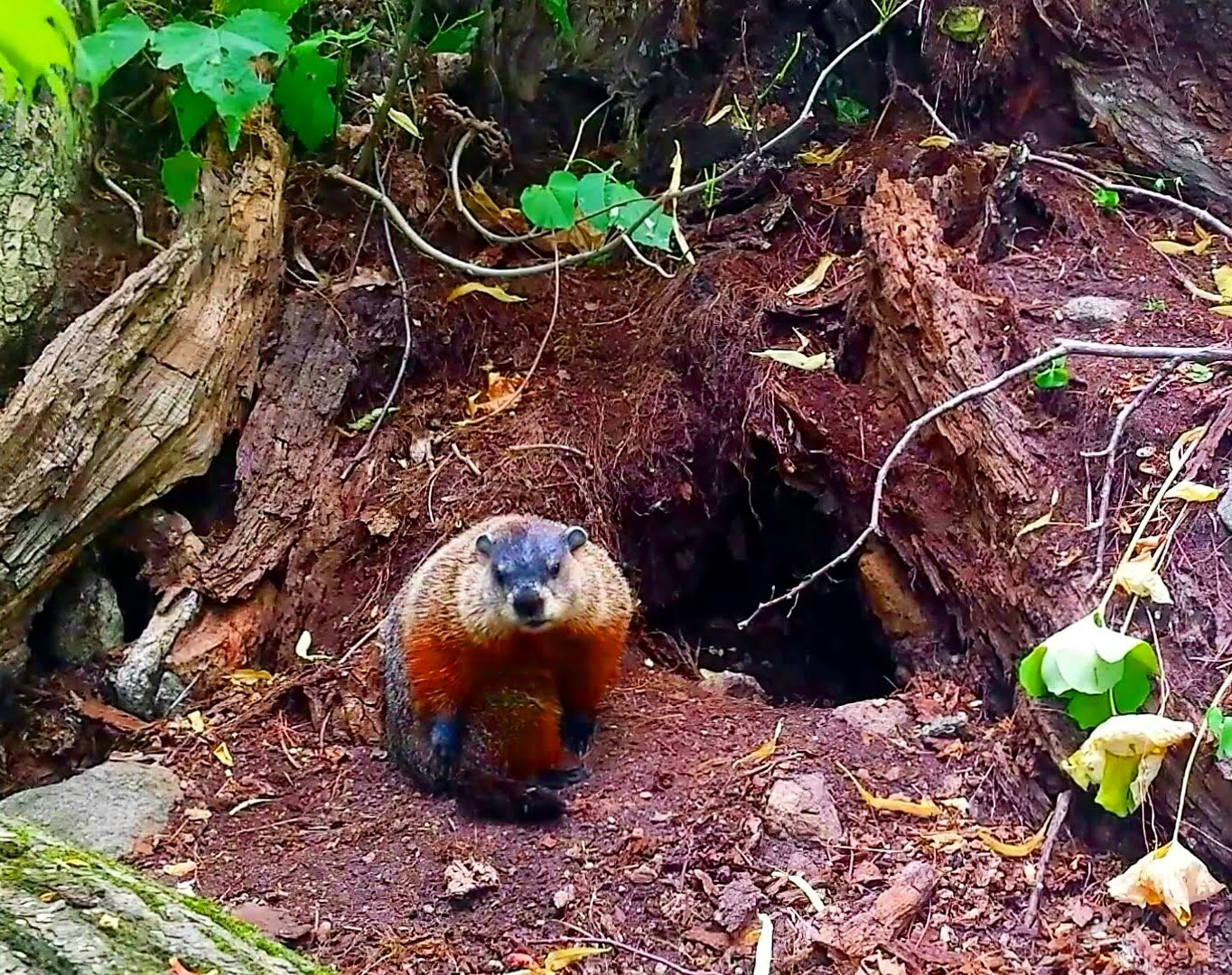
What type of symbiosis?  Skunks often live in burrows that have been dug and abandoned by woodchucks.  
a)
commensalism
b)
mutualism
c)
parasitism
d)
predation
26.
Ticks will feed on a deer’s blood and harm the deer.
a)
parasitism
b)
commensalism
c)
mutualism
27.

One organism hunts and eats another organism.

a)

predation

b)

mutualism

c)

carnivore

d)

parasitism

28.
Yucca flowers are pollinated by yucca moths. The moths lay their eggs in the flowers where the larvae hatch and eat some of the developing seeds. Both species benefit. 
a)
parasitism
b)
commensalism
c)
mutualism
29.

Orchid vines are skinny and grow on the trunk of trees to get more light and space with no negative effect.

a)

Mutualism

b)

Commensalism

c)

Parasitism

d)

Competition

30.

Tarantula and cactus

a)

Mutualism

b)

Competition

c)

Neutralism

d)

Amensalism