
 Worksheets
FINAL
Total questions: 175
Worksheet time: 3hrs 57mins

Stacy is rowing a boat. She wants the boat to move forward. According to Newton's Third Law, in which direction should she move her paddle in the water?
Backwards
Above her head
Forward
East
An archer shoots an arrow. The action force is the bowstring against the arrow, the reaction force is...
Air resistance against the bow
the arrow's push against the bowstring
the grip of the archer's hand on the bow
F=ma
This equation goes with which law? Newton's (a) Law of Motion
David walks 3 km north, and then turns east and walks 4 km. What is the distance?
7 km
3 km
4 km
1 km
Which term means speed with a direction?
(a)
The distance and direction an object moves from a starting position is the object's ____________.
displacement
position
distance
speed
If you travel 1.5 km north from your house at noon, and at 6pm you travel 5 km south, what is your displacement?
6.5 km north
6.5 km south
3.5 km north
3.5 km south
You go to the mall 10 km away and take 15 minutes to get there. What is your speed? (in km/min; round to 2 decimals)
Kendra is walking home and her house is 200 m away. It takes her 20 seconds to get home. What was her speed?
400 m/s
200 m/s
25 m/s
10 m/s
Abby is driving at a speed of 30 km/hr over a distance of 600 km. How long will it take her to go 600 km?
300 hr
20 hr
15 hr
90 hr
Aaron is driving 70 km/hr for 3 hours. What distance did he cover?
25 km
210 km
70 km
1.5 km
Jermaine runs exactly 2 laps around a 400 meter track. What is the displacement in meters?
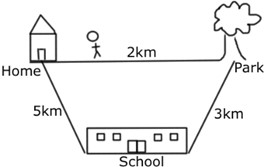
Jerry walked from home to school, then from the school to the park. What is his total distance?
2 km
5 km
8 km
10 km
Jerry walked from home to school, then from the school to the park. What is his total displacement?
2 km
5 km
8 km
10 km
Who do you agree with?
Anita: “A projectile’s vx changes because of gravity, and its vy remains constant.”
Barry: “Both vx and vy are constant.”
Chris: “A projectile has no acceleration in the vertical dimension but it does accelerate horizontally.”
Dave: “A projectile has vertical acceleration and a constant horizontal velocity”
Suppose Lemming A runs off the edge of the cliff at 2 m/s and Lemming B runs off the edge at 1 m/s. Which will hit the ground first?
A
B
Both at the same time
If a ball thrown straight up into the air takes 4 seconds to reach the top (peak), how long will it take to travel from the peak back to the original position?
0s
1s
3s
4s
The fact that an apple and a watermelon, dropped simultaneously from the same height, would hit the ground at the same time indicates that
you don't like apples or watermelons.
greater masses have greater acceleration.
lesser masses have greater acceleration.
acceleration is independent of mass.
Which of the following would NOT be considered a projectile?
A cannonball fired towards a distant castle.
A cannonball rolling down a slope.
A cannonball fired straight outward from a castle wall.
A cannonball after it rolls off the edge of a cliff.
What is the acceleration due to gravity?
(a)

At what point is vx= 0 m/s?
A
B
C
D
None of these points
At what point is vy= 0 m/s?
A
B
C
D
None of these points
The equation to calculate momentum is
(a)
A mountain climber with a force of 90 N scales a 100 m cliff. How much work is done by the mountain climber?
15 J
45 J
0 J
5 J

Two people are lifting the same weight as shown in the animation. If they both do 10 reps, who will do the most work?
Bro A
Bro B
They both will do the same work
Can't tell without knowing the weight they are lifting
In order for work to be done, what two things need to happen?
Object needs to move in any direction
Object needs to have acceleration and speed
Object must move and must move in the direction of the force applied
Object needs to feel force, it doesn't matter if it moves
A __________ is a combination of two or more simple machines
Simple Machine
Compound Machine
Efficient Machine
Useful Machine
The purpose of machines is to _______________.
Make us look cool
Make work easier
Change the way work is done
What is the equation for efficiency (%)
output work divided by input work x 100
input work divided by output work x 100
output work divided by net force x 100
Input work divided by net force x 100
Machines change the way work is done in what way?
Increase speed
change the direction of a force
Increase force
All of the above
(a) = output force / input force
You push a refrigerator with a horizontal force of 100 N. If you move the refrigerator a distance of 5 m while you are pushing, how much work do you do?
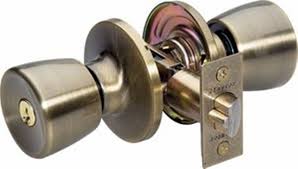
You do 20 J of work in pushing a crate up a ramp. If the output work from the inclined plane is 11 J, then what is the efficiency of the inclined plane?
A crate weighs 950 N. If you can use a pulley system to lift that crate with a force of only 250 N, then what is the mechanical advantage of the pulley system?


When the force is perpendicular to the motion, the work being done is 0.
True
False

A cook will use an oven mitt to pick up a hot pan because cloth is a(n) ________ and keeps the heat from their hand.
Conductor
Insulator
Light Transfer
Heat transfer

Which of the boxes shows the correct direction of heat transfer? Choose all that apply.
A
B
C
D
Match the following vocabulary terms to the definition
Thermal Energy
Heat
Conductor
Allows thermal energy to pass through (GO)
Insulator
DOES NOT allow thermal energy to pass (STOP)
This type of thermal energy transfer can take place in solids, liquids, & gases when two objects are touching.
(a)

Convection Current
A circular motion of air that causes wind and changes in weather
The transfer of energy by electromagnetic waves.
A type of heat transfer that occurs through the movement of fluids.
The transfer of energy from one particle of matter to another within an object or between two objects that are in direct contact.
The transfer of thermal energy (heat) by electromagnetic waves
(a)
As temperature increases, molecules _____________
move slower
move the same
move faster
stop moving
Energy is the ability to do __________
bonds
work
atoms
molecules
All matter is made up of atoms that are constantly moving
True
False
Match the following terms to the correct definition
Kinetic Energy
Energy in motion
Potential Energy
Stored energy
Work
Force that causes motion
Force
A push or pull
What is the unit of measurement for potential energy?
Watts
Joules
Newtons
Meters
Energy stored by objects due to their position above Earth’s surface.
potential energy
kinetic energy
gravitational potential energy
mechanical energy
Energy stored in chemical bonds.
mechanical energy
chemical potential energy
elastic potential energy
kinetic energy
Energy stored by something that can stretch or compress.
elastic potential energy
gravitational potential energy
chemical potential energy
potential energy
Power is...
the difference of work and energy
how fast work changes
how fast energy changes
how strong you are
The law of conservation of energy states that (a) cannot be (b) or (c)
An athlete eats a bowl of pasta, then rides in a bicycle race.
Chemical to kinetic
Gravitational potential to kinetic
Mechanical to radiant
Kinetic to potential
A rock in Death Valley, California, becomes hot during a summer afternoon.
radiant (light) to radiant (thermal)
thermal to chemical
radiant to chemical
radiant (thermal) to chemical
What is the unit for power?
Watts
Joules
Newtons
kg
You transform 950 J of chemical energy into mechanical energy to push a sofa. If it took you 5.0 s to move the sofa, what was your power?
A 4.0-kg ceiling fan is placed 2.5 m above the floor. What is the gravitational potential energy of the Earth-ceiling fan system relative to the floor?
A jogger with a mass of 60.0 kg is moving forward at a speed of 3.0 m/s. What is the jogger’s kinetic energy from this forward motion?
If it returns to its shape after being deformed, it's called what?
(a)
A spring is 0.38m long. When it is pulled by a force of 2.0 N, it stretches to 0.42 m. What is the spring constant? Assume the spring behaves elastically.
Label the forces acting in this picture.
applied force
tension
normal
gravity
push or pull that causes an object to move, stop, or change direction
force
unit used to measure force
Newton
something returning to its original shape after being squeezed or stretched
elastic
force transmitted through a rope , string, cable, or wire when it is pulled tight by forces acting from opposite ends
tension
push or pull exerted by a magnet
magnetism
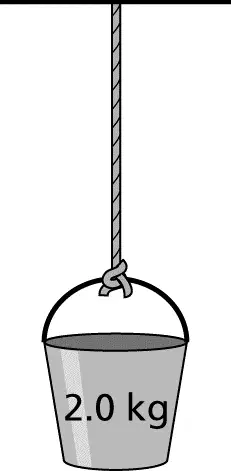
What is the tension on the rope?
A spring with constant k is elongated from equilibrium by a distance x. If it were stretched to a distance of 2x, how would the spring constant change?
k would decrease by 1/2
k would increase to twice as large
k would remain the same
Which of the following springs is the stiffest?
A spring that requires a force of 2000 N to compress it by 6.8 m.
A spring that requires a force of 4000 N to stretch it by 9.0 m.
A spring that requires a force of 8000 N to compress it by 45 m.
A spring that requires a force of 4800 N to stretch it by 14 m.
Entropy refers to the balance of TEMPERATURE among two or more systems.
Entropy refers to the average kinetic ENERGY of the molecules.
Entropy refers to the INABILITY to destroy or create energy.
Zeroth law of thermodynamics is:
Kinetic energy of molecules of a gas is zero
Ideal gas does not contain molecules
If two systems are thermal equilibrium third one is also in equilibrium
Absolute zero temperature cannot be obtained
The amount of sliding friction depends on which things?
acceleration
type of surface
weight of the moving object
velocity
Which of the following is NOT considered a "fluid"
air
jeans
water
carpet
The two factors that determine the amount of friction between two objects are...?
force
velocity
color
what device is made of coils of wire with an electrical current in order to generate magnetic field
magnet
generator
electrons
electromagnet
Generators are devices that convert (a) energy into (b) energy.
What power source doesn't require a turbine to turn at all?
(a)
If a magnet is pushed into a coil, voltage is induced across the coil. If the same magnet is pushed into a coil with twice the number of loops,
half as much voltage is induced.
the same voltage is induced.
twice as much voltage is induced.
four times as much voltage is induced.
A transformer has 150 turns in its primary coil and 50 turns in its secondary coil. If the input voltage is 12 V, what is the output voltage?
Electricity flowing in one direction is (a) current while the electricity made by generators is (b) current
Current technology enables humans to store large amounts of electricity.
true
false
electric generator
electric motor
electromagnetic induction
magnet
gains protons
Decide if these are conductors or insulators
copper
metal coat hanger
paper clip
poster board
plastic coat hanger
clothing
True or False: A positive object gained protons.
True
False
If you touch a charged object to the ground, what happens?
It gains protons
It neutralizes
It gains neutrons
It becomes more charged
I touched a negatively charged rod to a neutral object, and some negative charge was transferred to the object. This is an example of...
charging by induction
charging by polarization
charging by contact
not being smart - you should never do that
I bring a positively charged rod near a neutral metal sphere, which causes the negative charge within the sphere to move toward the rod, and the positive charge to move away from the rod. This is an example of...
charging by induction
charging by polarization
charging by contact
charging by friction
A device that detects electric charge by the repelling of two thin metal leaves at the end of a metal rod.
voltmeter
electrometer
galvanometer
electroscope
What is the difference between wet- and dry-cell batteries?
The charge flows different directions
The electrolytes
How dangerous they are
The voltage difference in a graphing calculator is 6V, and the resistance is 1,200Ω. What is the current going through the batteries of the graphing calculator?
Match the vocab to the definition
Temperature
Measure of the particle's kinetic energy
Thermal Energy
Sum of the KE & PE of the particles
Heat
Thermal E transferred from high to low
Specific Heat
The amount of heat to increase 1kg by 1C
1K is equal to (a) °C
Match the following
Q=m(Tf-Ti)C
Q
change in thermal energy
m
mass
Tf
final temperature
Ti
initial temperature
C
specific heat
A wooden block has a mass of 20.0 kg and a specific heat of 1,700 J/(kg · °C). Find the change in thermal energy of the block as it warms from 15.0°C to 25.0°C.
Water has a relatively ___ specific heat.
high
low
Match the following vocab words to their definitions
magnetism
the properties & interactions of magnets
magnetic field
the lines of force around a magnet
magnetic pole
where the magnetic forces are strongest
magnetic domain
groups of atoms that line up together

Objects made from metals such as iron, nickel and cobalt are (a) .

When the same pole from two magnets are placed near one another, they will __________.
attract
stick to each other
repel
lose gravity

When (a) poles are placed near one another, they will attract.
Label the unlabeled poles of the magnet
N
S
E
W
Label the unlabeled poles of the magnet
N
S
E
W
Match the following
Fossil Fuel
Coal, natural gas, & crude oil
Petroleum
crude oil liquid from decayed organisms
Nonrenewable resource
resource that can't be replaced quickly
Why are coal, oil, and natural gas nonrenewable resources?
We can make them again.
Someday they may disappear completely.
Nature can't replace them after they are used.
You can make a new one.
Fractional distillation separates this fossil fuel
petroleum
natural gas
coal
Match the following
electromagnet
wire coiled around iron core
electric motor
electric energy --> mechanical energy
galvanometer
measures current with electromagnet
solenoid
wire with current wrapped into coil
What can be done to increase the number of magnetic objects that an electromagnet picks up?
Increase the current going through the coils
Remove the nail from the center of the wire
Increase the number of coils in the solenoid
Spread the coils out across the nail

The diagram shows a (a) .
The current in a clothes dryer is 15 A
when it is plugged into a 240-volt outlet. What is the power of the clothes dryer?
A toaster oven is plugged into an outlet where the voltage difference is 120V. How much power does the toaster oven use if the current in the oven is 10A?
A refrigerator operates on average for 10.0 h a day. If the power rating of the refrigerator is 700W, how much electrical energy does the refrigerator use in one day?
A hair dryer has a power of 1,200 W. How much electrical energy does the hair dryer use in 3 minutes?

This image represents what type of circuit?
(a)
A flashlight bulb uses 2.4W of power when the current in the bulb is 0.8A. What is the voltage difference supplied by the batteries.

Insulator

power source

conductor

Switch
What is the speed of a sound wave that has a wavelength of 2.00 m and a frequency of 170.5 Hz?
What happens when sound waves are reflected?
Echo
No echo
Sound is heard in another room
If the moon is approximately 4x10⁵ (400,000) km from the Earth determine the time it takes light to travel from Earth to the moon and back. (round to 2 decimals)
Match the following
when wave acts like particle
Photon
vibrating electric charges
Electromagnetic Wave
300,000 km/s
Speed of Light
When the wavelength increases the frequency will
increase
decrease
remain same
none of these

Which EM waves are invisible? (more than one correct answer)
radio
visible
ultraviolet
gamma rays
Which type of electromagnetic wave travels fastest through a vacuum?
radio
gamma rays
visible light
They all travel at the same speed.
Which wavelengths of the EM spectrum are dangerous to life?
radio, micro and gamma
gamma, infrared, and UV
Infrared, UV and X Rays
UV, X rays and Gamma
Refraction occurs when waves enter a new (a) and change (b) .
Match the wave behavior to its example picture

Refraction

Reflection

Diffraction

Interference
What is the definition reflection?
The bending of waves as they enter a new medium
Bouncing back of waves from a surface that it can’t pass through
The bending of waves as they pass through openings or around corners
When two interfering waves have a displacement in the same direction, two crests and two troughs overlap. Increased amplitude.
A mechanical wave is a disturbance in matter that transfers energy through ________.
solid
liquid
gas
all of the above
What is the definition of Diffraction?
The bending of waves as they enter a new medium
Bouncing back of waves from a surface that it can’t pass through
When two interfering waves have a displacement in the opposite direction, crest and trough overlap. Zero amplitude.
The bending of waves as they pass through openings or around corners

The wavelength can be measured from (Hint: check ALL that apply)
Two identical points of a wave.
crest to crest
top to bottom
trough to trough
Match the following
wave
repeated motion transferring energy
medium
matter that waves go through
mechanical wave
must go through a medium
longitudinal wave
matter goes same direction
transverse wave
matter at right angle to direction
The longer the wavelength the _______ the frequency
Waves with a high frequency have a _________ wavelength
sound wave
longitudinal wave that can only travel through matter
compression
when particles in a wave are packed closely together
rarefaction
when particles in a wave are spread apart
pitch
the perception of how high or low a sound seems
echo
when a sound wave is reflected

Match the following
Using reflected soundwaves underwater to detect
Sonar
The study of sound
Acoustics
Animals using reflected soundwaves to detect
Echolocation
Sound with frequency > 20,000 Hz
Ultrasound
Post-test
Match the following
How much energy is tranferred
Intensity
How we experience intensity
Loudness
High or low (frequency)
Pitch
unit for loudness
decibel (dB)
change in pitch because of motion
Doppler Effect
True or False: Volume is the same as intensity.
false
true
What is a Free Body Diagram?
Visual representation of force
Visual representation of objects
Visual representation of force and objects interactions
Visual representation of gravity
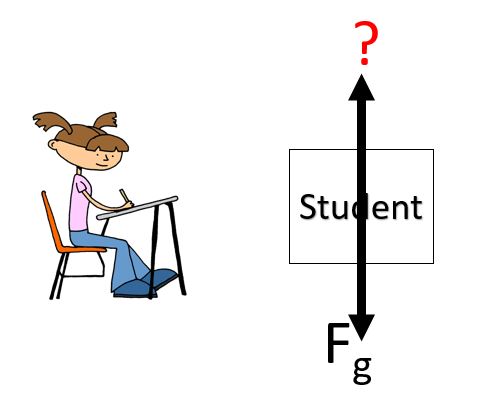
Name the missing force.... (shown by the ?)
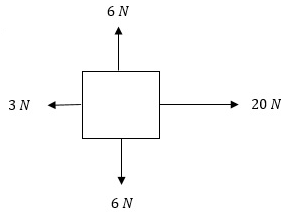
What is the NET FORCE of this diagram?
17 N, right
17 N, left
23 N, right
12 N, up
Which of the following will increase the resistance of a wire?
using a thicker/wider wire
using a shorter wire
increasing the temperature of the wire
using silver instead of copper
The Law of Conservation of Charge states that _____.
charge can be created and destroyed but NOT transferred.
charge cannot be created and destroyed but it can be transferred.
charge cannot be created and destroyed and it cannot be transferred.
none of the above
The force of gravity is dependent on an object's ________.
mass
volume
temperature
speed

Which of the following are in the correct order from least to greatest frequency?
Radio, Visible, Gamma
Visible, Radio, Gamma
Gamma, Radio, Visible
Gamma, Visible, Radio
Which of the following are in correct order from longest to shortest wavelength?
microwaves, infrared, ultraviolet, x-rays
microwaves, x-rays, infrared, ultraviolet
x-rays, ultraviolet, infrared, microwaves
infrared, ultraviolet, x-rays, microwaves
Sound waves travel the fastest through ---
Liquids
Gases
Solids
This type of thermal energy transfer can take place in fluids (liquids & gases). Rising of warmer fluid and sinking of cooler fluid forms a current.
(a)
Match the following

convection

conduction

radiation
Match the type of friction to the example of it.
A car driving
rolling friction
a couch not moving
static friction
pushing a box along the floor
sliding friction
parachuting
fluid friction
Match the following
the force that causes electric charges to move
Electric Field
moving electrons
Current
What slows down electrons
Resistance
the cause of current flowing due to differences in numbers of electrons
Voltage
a device to detect electric charge
Electroscope
Match the EM wave to its description
phones & TVs use this wave with longest wavelength
Radio
Very dangerous, shortest wavelength most energy
Gamma
Given off as heat
Infrared
Can cause sunburn
Ultraviolet
These vibrate water molecules making them heat up
Microwaves
Match the unit to what it measures
newton (N)
Force
meter per second squared (m/s^2)
Acceleration
ampere (A)
Current
kelvin (K)
Temperature
hertz (Hz)
Frequency
Match the unit to the thing it measures
kg m/s
momentum
joule (J)
energy/work
watt (W)
power
decibel (dB)
loudness
ohm (Ω)
resistance

